
Introduction
The world’s race to decarbonise runs, quite literally, through the cobalt mines of one of its poorest countries. Global demand for cobalt has tripled over the past decade and is projected to double again by 2035, driven above all by its use in the lithium-ion batteries that power electric vehicles and portable electronics. Cobalt’s high energy density and durability as a cathode material make it central to this technology, and no viable substitute yet exists at comparable scale (Calvão et al., 2021).
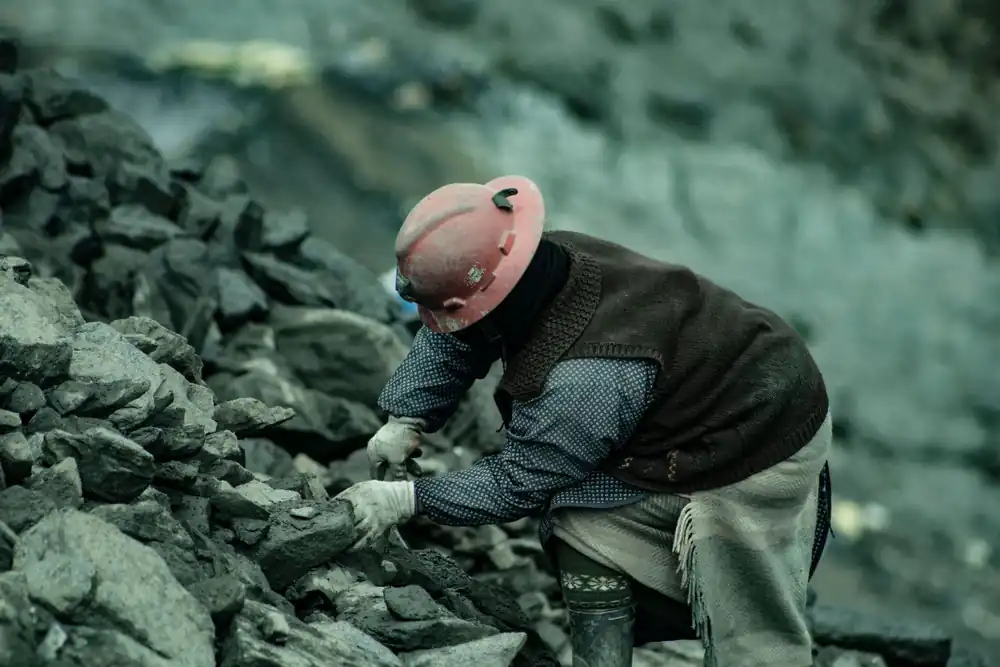
This demand converges overwhelmingly on the Democratic Republic of the Congo (DRC), which supplies over 75 percent of the world’s mined cobalt, extracted almost entirely from the Lualaba and Haut-Katanga provinces in the country’s southeast, a region known as the Copperbelt (Cobalt Institute, n.d.). Amid this mineral wealth, the DRC remains one of the world’s poorest countries: more than 87 percent of the population was estimated to live on less than US$1.25 a day, and the country ranked last on the United Nations (UN)’s Human Development Index among countries with sufficient data (Amnesty International, 2013).
Cobalt extraction in the DRC is not a single, uniform activity. The majority of production, an estimated 70-80 percent, comes from large-scale industrial mining: capital-intensive, mechanised operations typically run by major domestic and multinational companies (OECD, 2019). Alongside these industrial concessions, artisanal and small-scale mining (ASM) accounts for a smaller but historically significant share of production, estimated at between 15 and 30 percent depending on the year and market conditions. ASM is informal and labour-intensive, and supports millions of livelihoods in communities with few other options (Save the Children, n.d.; World Economic Forum, 2020).
This coexistence of industrial and artisanal mining is central to understanding the human rights dimensions of the DRC’s cobalt sector, because it produces two distinct sets of risks rather than one undifferentiated problem: hazardous conditions and child labour within ASM, and displacement and land loss in communities affected by the expansion of industrial concessions. This article argues that cobalt’s necessity for the energy transition does not, by itself, make its extraction just. The conditions under which it is mined matter as much as the end use of the mineral, and persistent gaps in governance and enforcement mean the human costs of the transition fall disproportionately on the workers and communities least able to bear them.
Human Rights Abuses in Artisanal Mining
Artisanal mining is not a marginal activity: an estimated 70,000 to 150,000 people worked as artisanal miners in Katanga during the region’s mining boom, and more recent estimates suggest that, including dependents, close to 2,000,000 people rely on artisanal cobalt mining in Lualaba province alone for their survival (Amnesty International, 2013; Baumann-Pauly, 2023).
This activity is dangerous by design. Miners dig their own shafts, often extending tens of metres underground without structural supports and with poor ventilation. Researchers who visited mining sites in southern DRC found that the vast majority of miners worked without even basic protective equipment such as gloves, work clothes, or facemasks, despite chronic exposure to cobalt dust that can cause a potentially fatal lung disease and other respiratory illness. Women working in ASM described carrying sacks of cobalt ore weighing up to 50 kilograms and suffered lung and body pain from the same lack of protective equipment as their male counterparts. Tunnel collapses are common: Radio Okapi, the UN-run radio station, reported more than 80 fatal accidents involving artisanal miners in the former Katanga province between September 2014 and December 2015 alone, a figure researchers believe understates the true toll, since many accidents go unrecorded and bodies remain buried underground (Amnesty International, 2016).
A decade of formalisation efforts illustrates how quickly these hazards return once oversight lapses. At the Mutoshi mine, a pilot project fenced the site, issued protective equipment, and used excavation machinery to create safer open pits rather than hand-dug tunnels; over two years, more than 3,000,000 hours were worked without a single fatality. When the project ended in 2020, workers resumed digging unsupported shafts, protective equipment went unreplaced, and five miners died in hand-dug mines in November 2022 alone, prompting one miner to tell researchers, “We now work in fear” (Baumann-Pauly, 2023).
Child labour is the second consistently documented abuse. Estimates of the number of children working in DRC mines vary, but a widely cited figure from the mid-2010s put the number at approximately 40,000 children across southern DRC, and more recent reporting cites tens of thousands still working at mine sites daily (Amnesty International, 2016; Save the Children, n.d.). Children interviewed for Amnesty International’s 2016 research described working up to 12 hours a day carrying heavy loads for one to two dollars a day, exposed to the same cobalt dust as adult miners but without gloves or masks; some described being beaten by mine security guards for trespassing on company concessions. The involvement of children in this kind of hazardous mining work is recognised internationally as one of the worst forms of child labour, which governments are obligated to prohibit and eliminate (Amnesty International, 2016).
These abuses persist not for lack of legal protection but for lack of enforcement. The DRC’s 2002 Mining Code and its 2003 Regulations offer almost no guidance on safety equipment or the handling of hazardous substances for artisanal miners, and the country’s Child Protection Code (2009) nominally guarantees free primary education, but chronic state underfunding means schools still charge monthly fees that many mining families cannot afford, pushing children toward paid labour instead of the classroom. Government capacity to enforce even the limited protections that exist is minimal: in 2014, the Ministry of Labour employed just 20 inspectors to cover the entire mining region of southern DRC, and a national action plan drafted in 2011 to eliminate the worst forms of child labour by 2020 had still not been formally adopted four years later (Amnesty International, 2016).
The government agency created specifically to support artisanal miners has itself been chronically under-resourced; its underpaid or unpaid agents have been documented extracting informal “taxes” and fees from miners, compounding rather than relieving the exploitation the agency was meant to address. The DRC has ratified most core international human rights treaties relevant to this sector, including the International Covenant on Economic, Social and Cultural Rights, the Convention on the Rights of the Child, and the African Charter on the Rights and Welfare of the Child — obligations that exist on paper but are not reliably translated into protection on the ground (Amnesty International, 2013).
Displacement and Industrial Mining Expansion
As industrial mining expands to meet global demand, communities living and farming on concession land face a different but equally serious set of human-rights risks: forced eviction, demolition, and the loss of the land they depend on for their livelihoods. Much of this expansion has been driven by foreign, and particularly Chinese, investment. China has for years been the dominant destination for the DRC’s copper and cobalt, importing over 90 percent of its cobalt concentrate from the DRC in 2012 (Amnesty International, 2013).
A multi-billion-dollar resources-for-infrastructure deal between Chinese state construction companies and the DRC’s state-owned mining company, Gécamines, created the Sino-Congolese joint venture Sicomines, and Chinese companies have since become dominant players in industrial mining in Katanga through further joint ventures with Gécamines, backed by close financial and diplomatic ties between the two governments. This is part of a broader shift: for much of the past two decades, the DRC’s copper and cobalt were extracted primarily by artisanal miners while industrial concessions sat largely dormant amid political instability, but that balance has reversed as industrial mining has accelerated (Amnesty International, 2013).
In and around Kolwezi, the DRC’s cobalt capital, Amnesty International and the Congolese organisation IBGDH documented multinational mining companies forcibly evicting communities from their homes and farmland to expand industrial-scale copper and cobalt projects, affecting families in densely populated urban neighbourhoods as well as farmers on the city’s outskirts. The organisations also documented other abuses connected to this expansion, including sexual assault (Al Jazeera, 2023). Communities were found to be trapped between mining projects, forced to abandon their homes and means of subsistence with no meaningful avenue for redress (Amnesty International, 2023).
This is not a new pattern: reporting from a decade earlier documented the same dynamic, with artisanal miners pushed off mining sites, sometimes violently, and farming communities facing eviction, alongside disruption from drilling, construction, dust, noise, and pollution, as multinational companies moved into Katanga (Amnesty International, 2013).
Under international human rights law, an eviction is only lawful as an absolute last resort, after all feasible alternatives have been explored through genuine consultation, with adequate notice, compensation for losses, and measures to prevent evictees from becoming homeless or vulnerable to further rights violations. In the DRC, the legal framework meant to guarantee these protections has significant structural gaps (Amnesty International, 2023).
All land in the country is formally vested in the state, and land for mining is granted as concessions by the Minister of Mines; where mining concessions overlap with land people already live and work on, the Mining Code provides only limited requirements for consultation and compensation, and that compensation applies only to people with formally recognised rights to their land. This excludes a large share of the people actually affected: informal mining townships that sprang up over the past two decades were, in many cases, never registered with the authorities, meaning the people living there, sometimes for years, are treated in law as having no rights to the land and no security of tenure at all (Amnesty International, 2013).
While legal protections exist on paper, enforcement remains the weak link. The DRC has adopted laws to curtail forced evictions in the mining sector, but has repeatedly failed to implement or enforce them, and in some documented cases authorities have actively facilitated the very evictions those laws were meant to prevent.
This failure spans both state and companies: under the UN Guiding Principles on Business and Human Rights, states must enforce human-rights protections and companies bear an independent responsibility to respect them through ongoing due diligence — a responsibility Amnesty International found the mining companies operating around Kolwezi were not meeting, prompting calls for a moratorium on mass evictions pending a full review of the implementation gaps (Amnesty International, 2023).
What Has Been Done, and Why It Isn’t Enough
Efforts to address these abuses span international organisations, companies, and the Congolese government, and some have produced real results — but ones that remain narrow, fragile, or dependent on funding and oversight that has not proven durable.
On child labour, targeted programmes have shown what is achievable. Since 2021, Save the Children has reintegrated child miners into school and vocational training through its “Catch-Up Clubs”, combining financial support for families with psychosocial care. The International Labour Organization’s GALAB project, building on its earlier COTECCO programme (2018-2024), pursues a stated goal of “zero children in the mining sector”, while its SCREAM programme uses art and media to let children voice their own experiences of mining work. The African Development Bank’s PABEA-Cobalt project had extricated more than 9,000 children from artisanal cobalt mines and reintegrated them into school or training by the end of 2024, and the DRC government created CISTEMA in 2020 to coordinate national action on the issue (Salama, 2025).
On working conditions, the Mutoshi formalisation pilot discussed above remains the clearest evidence of what protective measures can achieve, and the World Economic Forum held it up as a model for formalising ASM elsewhere in the DRC. But its collapse once external funding and oversight ended illustrates the limits of company-funded pilots: without durable state capacity behind them, such gains cannot survive a shock like a pandemic (World Economic Forum, 2020).
Broader frameworks exist to guide a more systemic response: companies are urged to follow the Organisation for Economic Co-operation and Development’s Due Diligence Guidance for Responsible Mineral Supply Chains, and researchers argue that formalising ASM, including sites operating within industrial concessions, through access controls, safer extraction, and empowered miners’ cooperatives is essential to responsible sourcing (Salama, 2025; World Economic Forum, 2020). Yet these remain guidance and pilot projects rather than binding, funded, nationwide systems, while the poverty driving child labour and the industrial expansion driving displacement continue largely unchecked.
As Amnesty International’s Secretary-General argued in response to the 2023 Kolwezi evictions, climate justice demands a just transition, and decarbonising the global economy should not come at the cost of further human rights violations (Amnesty International, as cited in Al Jazeera, 2023). A transition cannot be considered just simply because its end product is marketed as green; the conditions under which the mineral is extracted are part of the transition’s moral accounting, not separate from it.
Conclusion
The cobalt that powers the world’s shift away from fossil fuels is extracted under conditions that expose the limits of treating “green” as a synonym for “just”. Rising global demand for cobalt has concentrated extraction in one of the world’s poorest countries, where it takes two distinct forms: artisanal mining, which offers a vital but precarious livelihood at the cost of hazardous conditions and child labour, and industrial mining, whose expansion has repeatedly displaced the communities and farmland in its path.
Both forms of extraction operate within a legal and governance framework that is, on paper, reasonably comprehensive, but consistently fails in enforcement, whether through under-resourced labour inspectorates, land laws that exclude unregistered communities from compensation, or companies and authorities that fail to meet the formally accepted responsibilities relating to safeguarding human rights. Where interventions have worked, from the Mutoshi formalisation pilot to targeted child-reintegration programmes, they have shown what is possible, but also how easily those gains are lost once external funding, oversight, or political will lapses.
The result is a transition whose environmental benefits are shared globally while its human costs are absorbed locally: by artisanal miners working without protective equipment, by children carrying sacks of ore instead of attending school, and by farming communities losing land they cannot get back. A just energy transition cannot be measured only by the emissions it avoids. It must also ask who is paying; in health, safety, land, and childhood, for the minerals that make it possible, and whether the world’s clean-energy ambitions are willing to keep imposing that price on the DRC’s poorest communities.
Bibliography
Al Jazeera. (2023, September 12). Mining of cobalt, copper in DRC leading to human rights abuses: Report. Retrieved August 19, 2026, from https://www.aljazeera.com/news/2023/9/12/mining-of-cobalt-copper-in-drc-leading-to-human-rights-abuses-report.
Amnesty International. (2013). Democratic Republic of the Congo: Profits and loss: Mining and human rights in Katanga (Report No. AFR 62/001/2013). Retrieved August 17, 2026, from https://www.amnesty.nl/content/uploads/2016/11/afr620012013en.pdf.
Amnesty International. (2016). This is what we die for: Human rights abuses in the Democratic Republic of the Congo power the global trade in cobalt (Report No. AFR 62/3183/2016). Retrieved August 18, 2026, from https://www.amnesty.org/fr/wp-content/uploads/2021/05/AFR6231832016ENGLISH.pdf.
Amnesty International. (2023). Powering change or business as usual? Forced evictions at industrial cobalt and copper mining sites in the Democratic Republic of the Congo (Report No. AFR 62/7009/2023). Retrieved August 19, 2026, from https://www.amnesty.org/en/documents/AFR62/7009/2023/en/.
Baumann-Pauly, D. (2023). Cobalt mining in the Democratic Republic of the Congo: Addressing root causes of human rights abuses. NYU Stern Center for Business and Human Rights & Geneva Center for Business and Human Rights. Retrieved August 17, 2026, from https://bhr.stern.nyu.edu/publication/cobalt-mining-in-the-democratic-republic-of-the-congo-addressing-root-causes-of-human-rights-abuses/.
Calvão, F., McDonald, C. E. A., & Bolay, M. (2021). Cobalt mining and the corporate outsourcing of responsibility in the Democratic Republic of Congo. The Extractive Industries and Society, 8(4), Article 100884. Retrieved August 18, 2026, from https://doi.org/10.1016/j.exis.2021.02.004.
Cobalt Institute. (n.d.). Responsible sourcing. Retrieved August 19, 2026, from https://www.cobaltinstitute.org/responsible-sustainable-cobalt/responsible-sourcing/.
OECD. (2019). Interconnected supply chains: A comprehensive look at due diligence challenges and opportunities sourcing cobalt and copper from the Democratic Republic of the Congo. OECD Publishing. Retrieved August 17, 2026, from https://doi.org/10.1787/576804e7-en.
Salama, O. (2025, May 27). The current state of child labour in cobalt mines in the Democratic Republic of the Congo. Humanium. Retrieved August 18, 2026, from https://www.humanium.org/en/the-current-state-of-child-labour-in-cobalt-mines-in-the-democratic-republic-of-the-congo/.
Save the Children. (n.d.). DRC cobalt mines: Child labour and the green transition. Retrieved August 19, 2026, from https://www.savethechildren.net/stories/drc-cobalt-mines-child-labour-and-green-transition.
World Economic Forum. (2020). Making mining safe and fair: Artisanal cobalt extraction in the Democratic Republic of the Congo [White paper]. Retrieved August 17, 2026, from https://www3.weforum.org/docs/WEF_Making_Mining_Safe_2020.pdf.