
INTRODUCTION
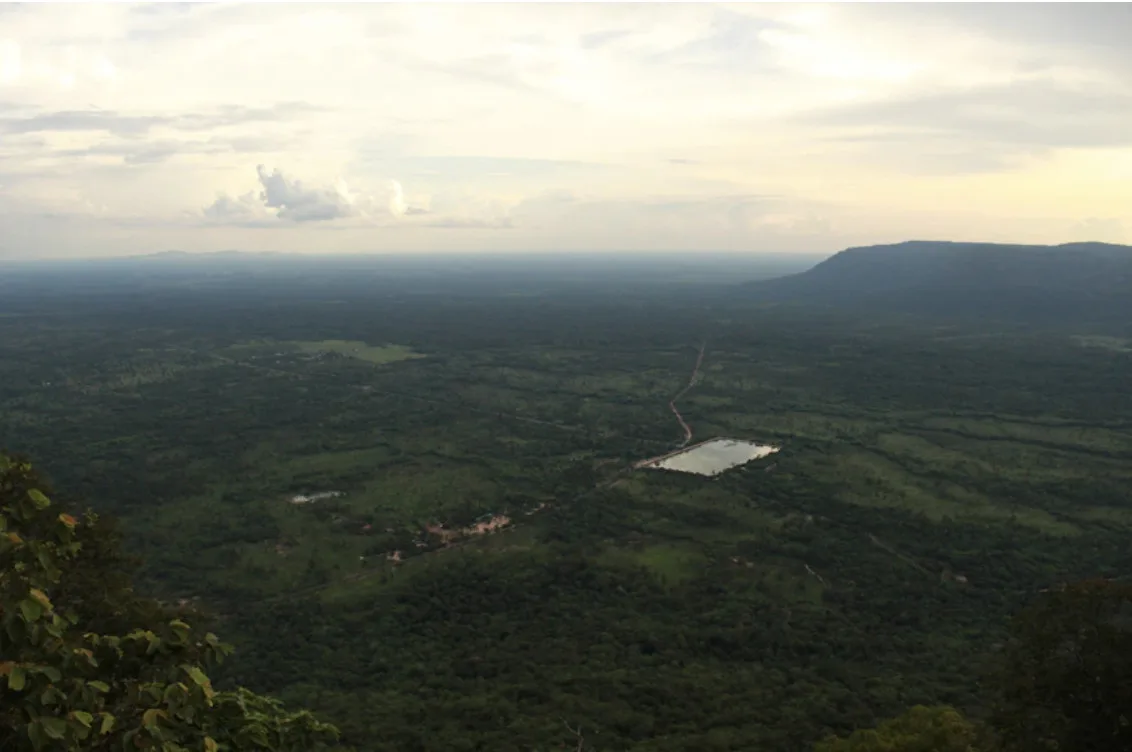
Cambodia’s rich cultural and historical legacy can be witnessed through the Preah Vihear Temple, an architectural wonder of the Khmer Empire that has been acknowledged as a World Heritage Site by the United Nations Educational, Scientific, and Cultural Organization (UNESCO) since 2008 (Sotheary, 2025). The site is geographically located close to Thailand and Cambodia’s borders. This position has rendered the temple vulnerable to hostilities during the on-going tensions between the two countries. The recent military outbreak in the region has resulted in many reports of damage, both the temple’s structural integrity and its surrounding environment (Amarthalingam, 2025). This phenomenon raises urgent questions on the implementation of international legal frameworks and whether the existing rules are sufficient to safeguard the Preah Vihear Temple.
This article aims to examine the legal protections provided to the Preah Vihear Temple under international humanitarian law (IHL) and relevant cultural heritage conventions, particularly in times of armed conflict. It will first contextualise whether the ongoing hostilities qualify as an international armed conflict (IAC) and what international legal instruments apply in such a situation. The analysis will then assess whether the damage inflicted upon the temple constitutes a violation of the applicable international law. Finally, the article will propose impartial recommendations and concrete measures to address the issues.
CLASSIFICATION OF CONFLICT AND INTERNATIONAL HUMANITARIAN LAW
It is argued that the roots of the dispute could be traced back to the ambiguous border demarcations, which left sovereignty over the Preah Vihear Temple, but not the surrounding land (Head & Ng, 2025). The International Court of Justice (ICJ) in its 1962 ruling has decided in favour of Cambodia’s sovereignty over the temple itself, although disagreement persists over the precise boundary line and the surrounding area (ICJ, Temple of Preah Vihear (Cambodia v. Thailand), 1962). In mid-2025, renewed clashes between Thai and Cambodian forces across the border have reignited concerns over the temple’s preservation. Mostly, the concerns came from reports, which are disputed by both parties, indicating artillery shelling and ground combat, which caused significant damage to the temple (Head & Ng, 2025; Human Rights Watch, 2025).
To determine the full scope of legal protections applicable to the Preah Vihear Temple, it is crucial to classify the nature of the hostilities between Thailand and Cambodia first. Pursuant to Common Article 2 of the Geneva Conventions, an International Armed Conflict (IAC) exists whenever there is a resort to armed force between two or more states. This state of conflict does not need to be recognised by any of the warring states. Provided that the hostilities involve regular armed forces of Thailand and Cambodia, the war falls within this classification of armed conflict and thus activates the application of IHL (Human Rights Watch, 2025).
Generally, the fundamental principles of distinction, proportionality, and precaution, as well as the Geneva Conventions and their Additional Protocol I, would apply in the IAC between Thailand and Cambodia. Violations of these principles in relation to cultural property may amount to war crimes under Article 8(2)(b)(ix) of the Rome Statute of the International Criminal Court (ICC).
In addition, there are several legal frameworks that particularly govern the protection of cultural heritage, such as the 1954 Hague Convention for the Protection of Cultural Property in the Event of Armed Conflict (1954 Hague Convention) and the 1999 Second Protocol to the Hague Convention (1999 Second Protocol). Article 4 of the 1954 Hague Convention obliges state parties to refrain from any hostility directed against cultural property unless imperative military demands otherwise. Furthermore, its 1999 Second Protocol addresses the protective measures and establishes individual criminal responsibility for violations against the obligations to respect cultural property in Chapter IV.
The 1972 UNESCO Convention Concerning the Protection of the World Cultural and Natural Heritage also regulates a continuous duty for states parties to preserve sites possessing outstanding universal value. While its core provisions, such as Article 5, outline specific peacetime measures (e.g., legal, technical, and administrative safeguards), the fundamental obligation to protect the heritage for future generations remains in effect during armed conflict. Thus, its provisions remain relevant in wartime in the case where a World Heritage Site, including the Preah Vihear Temple, become a collateral or deliberate target of an attack in hostilities. Since Cambodia and Thailand are members of the aforementioned legal instruments, they are bound to comply with the obligations therein.
POSSIBLE INFRINGEMENTS AND ACCOUNTABILITY MECHANISMS
First, the use of heavy artillery in proximity to the temple suggests a possible failure to take all feasible precautions to avoid harm to cultural property, as required by Article 8 of the 1999 Second Protocol. Even if the temple was not the intended target, the foreseeable risk of collateral damage imposes an obligation on military commanders to select alternative tactics or weapons with less destructive impact.
Moreover, if evidence emerges that Thai or Cambodian forces deliberately positioned military assets within or near the temple complex, a practice known as human shielding, this would constitute a grave breach of IHL (International Committee of the Red Cross, n.d.). Article 15 of the 1999 Second Protocol explicitly prohibits using cultural property in a manner that exposes it to destruction, and such acts could trigger individual criminal responsibility. Furthermore, the apparent lack of immediate post-damage assessments and reparative actions by the involved parties may contravene expectations for state cooperation in mitigating harm to World Heritage Sites (Chheng, 2025).
There are several feasible mechanisms to address these potential violations. UNESCO has an ongoing mission called the International Coordination Committee to assess the damage, whose investigative role could lead to a formal condemnation and recommendations for restorative measures (UNESCO, 2014). While UNESCO lacks enforcement powers, its findings can exert diplomatic pressure and mobilise international support for the temple’s protection. Taking into consideration the limitations of judicial mechanisms, UNESCO’s advisory should be able to bridge into a diplomatic dialogue. Negotiated agreements between Thailand and Cambodia might be the most pragmatic avenue for demilitarising the vicinity of the Preah Vihear Temple and establishing joint monitoring mechanisms.
In a scenario where deliberate attacks on the temple are substantiated, there might be sufficient gravity for the ICC to embark on its investigation and prosecute individuals responsible under its war crimes provisions of the Rome Statute. However, it should be noted that only Cambodia is a party to the Rome Statute of the ICC. As provided under Articles 13 and 14 of the Rome Statute, this would require either a referral by the UN Security Council or voluntary acceptance of jurisdiction by Thailand, both of which are unlikely in the current political climate.
CONCLUSION AND RECOMMENDATIONS
Regardless of the political hindrance, it is indisputable that the protection of Preah Vihear Temple requires immediate action and sustained commitment from all stakeholders. There are several urgent recommendations to be taken into consideration:
- Thailand and Cambodia should establish a demilitarised zone around the temple through a bilateral agreement or a mediation facilitated by the ASEAN or the UN;
- Thailand and Cambodia should integrate cultural property protection into military training and explore a bilateral heritage agreement for joint monitoring and restoration;
- UNESCO should create a task-force specifically for conflict heritage to supervise the compliance of governing legal frameworks.
These immediate measures must be coordinated with long-term strategies, including:
- Establishment of community-based monitoring programs.
- Implementation of regional cooperation through ASEAN to develop conflict-sensitive heritage protection frameworks.
Beyond the legal obligations, preserving the Preah Vihear Temple represents a test of the collective commitment to humanity’s shared history. Success will require coordinated diplomatic demands, innovative protection mechanisms, and sustained engagement with local communities who serve as the temple’s most invested guardians. As the hostilities continue, all parties must create a balance between military necessities and preservation duties, ensuring the world’s architectural treasure survives.
BIBLIOGRAPHY
Amarthalingam, S. (2025, July 27). Eleventh-century Preah Vihear Temple badly damaged by heavy gunfire. Kiripost. Accessed August 14, 2025. https://kiripost.com/stories/eleventh-century-preah-vihear-temple-badly-damaged-by-heavy-gunfire/.
Chheng, N. (2025, July 25). Culture minister warns of damage to Preah Vihear, urges UNESCO intervention. The Phnom Penh Post. Accessed August 16, 2025. https://www.phnompenhpost.com/national/culture-minister-warns-of-damage-to-preah-vihear-urges-unesco-intervention/.
Head, J., & Ng, K. (2025, July 24). Twelve killed in Thailand-Cambodia military clashes on disputed border. BBC News. Accessed August 15, 2025. https://www.bbc.com/news/articles/c80p8z0y0eko.
International Committee of the Red Cross. (n.d.). Fundamentals of international humanitarian law: Basic rules and principles [Casebook section]. ICRC. Accessed August 14, 2025. https://casebook.icrc.org/law/fundamentals-ihl.
International Committee of the Red Cross. (1977). Protocol Additional to the Geneva Conventions of 12 August 1949, and relating to the Protection of Victims of International Armed Conflicts (Additional Protocol I).
International Committee of the Red Cross. (1949). Geneva Convention for the Amelioration of the Condition of the Wounded and Sick in Armed Forces in the Field (GC I).
International Committee of the Red Cross. (1949). Geneva Convention for the Amelioration of the Condition of Wounded, Sick and Shipwrecked Members of Armed Forces at Sea (GC II).
International Committee of the Red Cross. (1949). Geneva Convention Relative to the Treatment of Prisoners of War (GC III).
International Committee of the Red Cross. (1949). Geneva Convention Relative to the Protection of Civilian Persons in Time of War (GC IV).
International Committee of the Red Cross. (n.d.). Rule 97: Human Shields. Accessed August 15, 2025. https://ihl-databases.icrc.org/en/customary-ihl/v1/rule97.
International Court of Justice (ICJ). (1962). Case concerning the Temple of Preah Vihear (Cambodia v. Thailand). Merits, Judgment of 15 June 1962.
Sotheary, S. (2025, July 7). Preah Vihear Temple marks 17 years as World Heritage Site. Khmer Times. Accessed August 14, 2025. https://www.khmertimeskh.com/501712860/preah-vihear-temple-marks-17-years-as-world-heritage-site/.
United Nations Educational, Scientific, and Cultural Organization (UNESCO). (2014, October 1). Establishment of an International Coordination Committee (ICC) for Preah Vihear Temple, Included in the World Heritage List. Executive Board Hundred and Ninety-Fifth Session 195 EX/32.
UNESCO. (1999). Second Protocol to the Hague Convention of 1954 for the Protection of Cultural Property in the Event of Armed Conflict [Treaty]. 2253 U.N.T.S. 212.
UNESCO. (1972). Convention Concerning the Protection of the World Cultural and Natural Heritage [Treaty]. 1037 U.N.T.S. 151.
UNESCO. (1954). Convention for the Protection of Cultural Property in the Event of Armed Conflict [Treaty]. 249 U.N.T.S. 240.