
Introduction
If you look up “morality” on Google, the first definition that appears is “principles concerning the distinction between right and wrong or good and bad behaviour” (Oxford Languages, n.d.). At first glance, this seems rather straightforward. Yet, amid our busy schedules, we rarely stop to consider the actors who treat these principles as guiding mantras in what can feel like a cut-throat, even dystopian world. This is where civil society organisations (CSOs) come in. Across Europe and beyond, these organisations work across a range of causes, from women’s health and human rights to animal welfare and climate action. In most vulnerable domains, you will find a CSO working persistently to improve conditions.
A closer look at the everyday realities within CSOs reveals a far more complex picture. Funding uncertainties hang over these organisations like a dark cloud ready to burst at any moment, and competition remains intense, with many scrambling to secure adequate funding from a limited number of programmes. At the same time, public trust is not guaranteed. Instances of misconduct within the sector have contributed to increased scrutiny, prompting some observers to question the motivations behind CSOs’ moral claims. Meanwhile, committed and highly skilled staff often continue their work despite comparatively low remuneration, driven largely by their dedication to the cause. These challenges do not end there. They are further compounded by shifting political dynamics. As the political landscape within the European Union evolves, CSOs operating in a region frequently characterised as a champion of Western values increasingly face political criticism. Debates surrounding the European Green Deal emphasise this tension, with several NGOs accused by right-leaning political actors of merely advancing the European Commission’s agenda. Although such allegations were later debunked, they nonetheless highlight how easily the legitimacy and intentions of CSOs can be called into question (Griera et al., 2025).
This is in no way an attempt to justify the misdeeds committed within our sector, nor to excuse scandals such as Oxfam in Haiti (BBC, 2018). What it does seek to do, however, is lay out the challenges faced by actors operating across the broad CSO spectrum. As one such actor, this piece takes a deeper dive into the external and internal struggles that define our everyday reality. CSOs fight not only for just causes, but also to survive in an increasingly harsh environment.
External Challenges
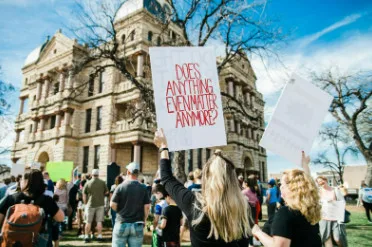
CSOs often step in to cover the gaps left behind by distant and rigid government institutions by engaging directly with citizens. They make vital contributions by amplifying marginalised voices, monitoring rights violations, and holding power accountable in a manner that formal institutions alone often cannot. Yet, despite playing this momentous role, they face a range of external challenges that threaten their very existence. These challenges go beyond questions of funding. They include far-reaching regulations that contribute to the shrinking of civic space, deliberate smear campaigns and delegitimisation efforts by political actors, and a widespread climate of mistrust fuelled by scandals involving organisations within the same sector.
Funding Cuts
Running an NGO is no easy feat: when working to advocate for specific causes, financial pressures are constant. Organisations must build and maintain an online presence while keeping their physical operations running. At the same time, they need to remain visible to existing sponsors while continuously initiating new efforts to attract fresh support. All of this requires substantial funding, which is inherently limited when organisations are not operating for profit. To prevent funding shortages from bringing their work to a halt, thousands of non-governmental organisations (NGOs) are forced to compete within a tough ecosystem marked by scarce resources and high demand.
Within the European Union (EU), large-scale funds might seem impressive at first glance. The proposed AgoraEU programme for the next Multiannual Financial Framework (2028–2034) totals around 8.6 billion euros over seven years, structured across strands for culture (Creative Europe+), media, and civil society/democracy (CERV+) (European Commission, 2025). At face value, this represents a considerable increase compared to current separate programmes: CERV (around 1.5–1.6 billion euros for 2021–2027) and Creative Europe (around 2.44 billion euros for the same period). Yet a closer look complicates the picture. Merging these programmes blurs the lines between support for cultural and audiovisual sectors and core civil society or human rights advocacy, potentially easing eligibility for some while diluting focus and resources for others (Saris, 2025). What initially appears as a boost can start to look gloomy for many CSOs, as competition intensifies, administrative burdens grow, and funding shifts toward broader cultural priorities rather than targeted rights-based work.
More broadly, the sudden dismantling of the United States Agency for International Development (USAID) in 2025 delivered a severe blow. Established in the 1960s to support humanitarian and development projects worldwide, USAID had long provided critical funding to numerous CSOs. Its abrupt cuts halted aid to vulnerable groups in developing countries, including LGBTQIA+ programmes, polio eradication efforts, and HIV/AIDS treatment through the President’s Emergency Fund for AIDS Relief (PEPFAR). Clinics closed almost overnight. Medications ran short. Local NGOs lost funding suddenly and dealt with immediate collapse (Seddon, 2025). These shocks only intensified the funding pressures under which CSOs already operate, compounding the challenges they face in sustaining essential work.
Shrinking of Civic Space
One might assume that because CSOs contribute to good governance, governments worldwide would foster a cooperative environment for them. In reality, the opposite is often true. Reports indicate that serious restrictions on CSOs exist across Asia, Africa, the Middle East, Latin America, and Europe, resulting in a shrinking civic space. According to the latest CIVICUS Monitor findings, civil society faces severe attacks in 122 of 198 countries tracked worldwide (CIVICUS, 2025). With only 195 recognised countries in total, this means that more than half impose consequential barriers to CSO operations (Worldometer, n.d.).
These restrictions take many forms. Some laws specifically target foreign funding, with governments labelling organisations receiving international support as “foreign agents” or entities pursuing external “financial interests”. Non-compliance can lead to heavy fines, registration suspensions, or outright bans (Panchulidze, 2024). Other, more direct methods include threats of arrest during public events. Authorities frequently target activists and human rights defenders at peaceful protests, vigils, or demonstrations, using arrests, detentions, or excessive force not only to intimidate individuals but to send a broader message to the civil society sector.
Smear Campaigns
Even beyond overt legal or political tactics, CSOs face a rising wave of smear campaigns, often driven by governments or aligned political forces. Under the pretext of demanding greater transparency, dubious allegations are levelled to portray these organisations as traitors or unaccountable actors (Muižnieks, 2017). A prominent example occurred in 2025, when right-wing figures in the European Parliament claimed that NGOs were misusing EU funds to advance the Commission’s agenda. While these accusations were later shown to lack evidence, the intent was clear: to sow doubt in the public mind, erode trust, and ultimately restrict the support that enables CSOs to continue their work (Griera et al., 2025). For CSOs, these external attacks, whether financial, regulatory, or reputational, are more than isolated incidents. They form an ecosystem of pressures that constantly tests the resilience and adaptability of organisations trying to keep hope alive in a sceptical world. Each allegation, each restriction, and each funding cut ripples across the sector, forcing CSOs to navigate survival while staying true to their missions.
Every CSO operates in such environments daily, navigating these mounting external challenges while pursuing the broader good of society. They refuse to let these odds define or derail their mission. Instead, they persist in amplifying voices, monitoring violations, and holding power accountable, even as the space for their work continues to shrink. Their work is often unseen, yet each small victory represents a triumph against forces that would otherwise silence them. The stakes are high, and the pressures unrelenting, but these organisations continue to carve out space for change. While these external pressures create a formidable landscape, the difficulties do not end there. The next section turns inward to examine the internal struggles many organisations face. These internal dynamics often compound external threats and test CSOs’ resilience from within.
Internal Challenges
One might assume that a CSO would function through a shared commitment to common goals. In practice, however, internal dynamics are often far more complex. Governance structures, particularly boards shaped by reputation and professional networks, play a noteworthy role in steering organisational direction. In some cases, this influence subtly reshapes priorities over time.
Although CSOs operate on a non-profit basis, hierarchy continues to define how these organisations function. Board members, many of whom are otherwise involved in successful businesses or elite professional circles, often engage with CSOs partly to associate themselves with a positive public image. At the same time, because CSOs do not generate profit and rely heavily on state funding or external donors, dependence on board members increases. Their networks become central to mobilising funds, which in turn grants them greater leverage within the organisation. Alongside this, funding rarely arrives without conditions. These conditions often shape, and at times restrict, the course of action and priorities that CSOs are expected to pursue for defined periods of time. Over time, this can create internal tensions between long-term mission commitments and short-term funding requirements. Decisions that appear strategic on paper may feel compromising in practice.
For employees working within these structures, the situation is markedly different. Most remain involved not because the organisation provides financial security but because they believe in the cause. CSOs are bound by regulatory frameworks that limit incentives such as high salaries or performance-based bonuses, making commitment to the mission, rather than material reward, the primary driver for staff and volunteers alike (Seibel, 2022).
Conclusion
While numerous challenges continue to hinder the everyday functioning of CSOs, these do not alter their long-term purpose. Despite periods of constraint and disillusionment, particularly in the face of rights violations, political shifts, or increasing pressure on civic space, CSOs continue to operate with resilience and a sustained commitment to their core missions. These organisations often persist quietly, navigating uncertainty while continuing to support communities and causes that would otherwise remain unaddressed.
In such an environment, the responsibility does not rest solely with civil society itself. When negative narratives about CSOs circulate, there is a moral obligation to look beyond surface-level claims and engage more critically with the context in which these organisations operate. Taking the time to examine underlying structures, constraints, and motivations allows for a more informed understanding, rather than accepting simplified or reactionary portrayals at face value. Lastly, in an increasingly contested and polarised political environment, the space available to civil society cannot be taken for granted. Recognising this reality is a fundamental first step toward ensuring that diverse voices can continue to participate meaningfully in shaping social change.
Bibliography
BBC News. (2018, February 21). Oxfam Haiti allegations: How the scandal unfolded. Retrieved from https://www.bbc.com/news/uk-43112200
CIVICUS. (2025). People power under attack 2025. CIVICUS Monitor. Retrieved February 9, 2026, from https://monitor.civicus.org/globalfindings_2025/
European Commission. (2025, July 16). Proposal for a regulation of the European Parliament and of the Council establishing the ‘AgoraEU’ programme for the period 2028-2034, and repealing Regulations (EU) 2021/692 and (EU) 2021/818 (COM(2025) 550 final). EUR-Lex. https://eur-lex.europa.eu/legal-content/EN/TXT/?uri=CELEX:52025PC0550
Griera, M., Guillot, L., Braun, E., & Gros, M. (2025, February 4). Fact-check: Did the European Commission really pay NGOs to lobby for the Green Deal? POLITICO. https://www.politico.eu/article/fact-check-european-commission-ngo-lobby-green-deal-activist/
Muižnieks, N. (2017, April 4). The shrinking space for human rights organisations. Council of Europe, Commissioner for Human Rights. https://www.coe.int/en/web/commissioner/-/the-shrinking-space-for-human-rights-organisations
Oxford Languages. (n.d.). Morality. In Google. Retrieved February 12, 2026, from https://www.google.com/search?q=morality+meaning
Panchulidze, E. (2024, September 13). A new wave of repression on civic space: Democracy support community failing to respond. European Democracy Hub. https://europeandemocracyhub.epd.eu/a-new-wave-of-repression-on-civic-space/
Saris, L. (2025, October 16). Support for civil society in the next MFF. European Policy Centre. https://www.epc.eu/publication/support-for-civil-society-in-the-next-mff/
Seddon, S. (2025, February 7). What is USAID and why is Trump poised to ‘close it down’? BBC News. https://www.bbc.com/news/articles/cleyjwnx5ko
Seibel, W. (2022). Successful failure: Functions and dysfunctions of civil society organizations. In M. Hoelscher, R. A. List, A. Ruser, & S. Toepler (Eds.), Civil society: Concepts, challenges, contexts: Essays in honor of Helmut K. Anheier (pp. 69–81). Springer. https://doi.org/10.1007/978-3-030-98008-5
Worldometer. (n.d.). How many countries are there in the world? (2026) – Total & list. https://www.worldometers.info/geography/how-many-countries-are-there-in-the-world/