
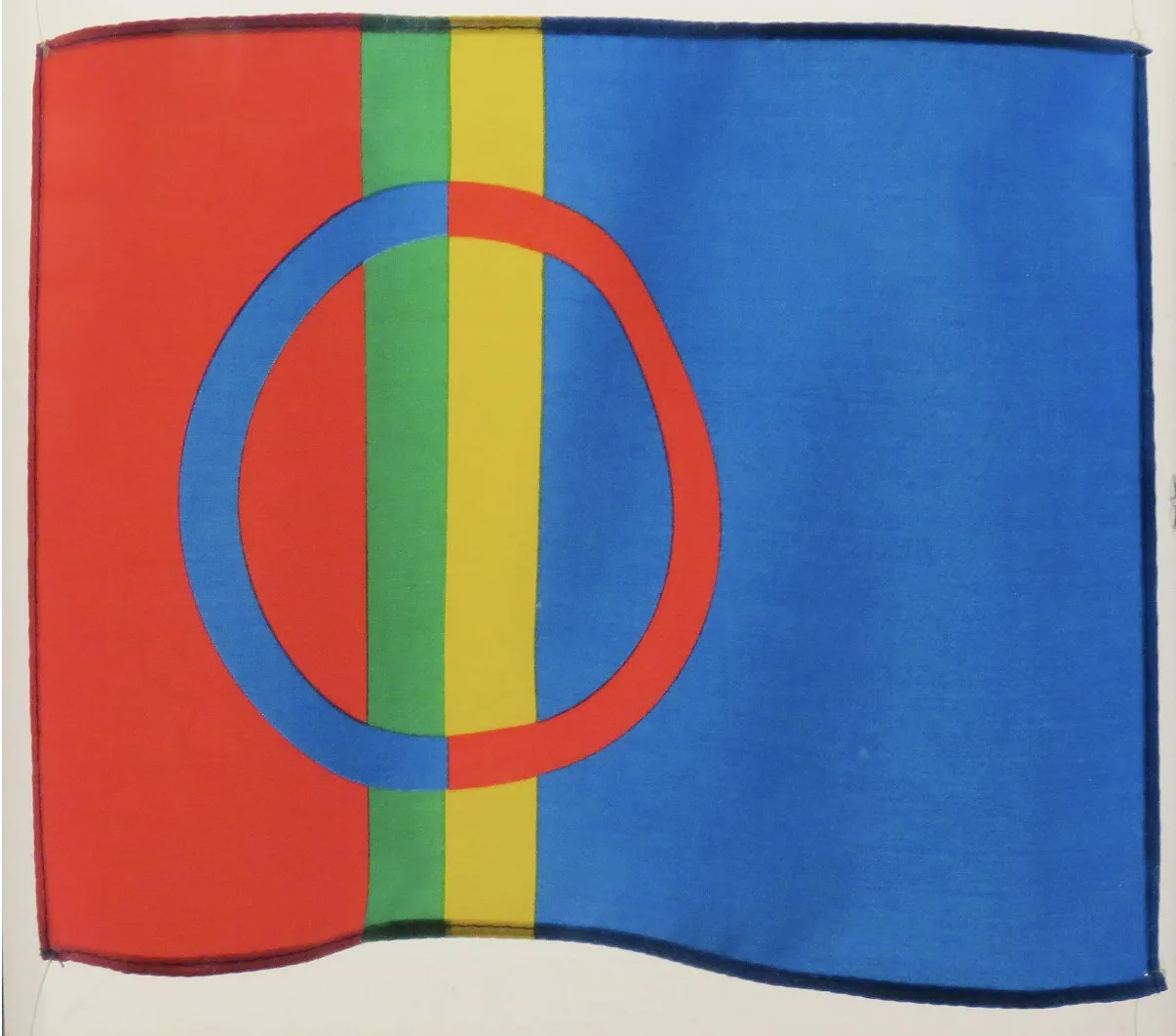
Earlier this year, the Swedish government gave the mining company Beowulf Mining PLC processing permission for its planned iron mine in the north of Sweden in Gállok. This means that Beowulf Mining are one step closer to building this proposed mine which has been in the works since 2006 when they first gained exploration rights to search for minerals in the area (Gállok: Gruvan, kritiken och konsekvenserna för naturen, 2022). The main issues at hand argued by those who oppose the mine is that it violates the rights of the Indigenous Sami people who live and work in the area, and that it will disrupt and negatively impact the Sami tradition of herding reindeer (Gruva i Gállok, 2022). The Swedish government, on the other hand, argues that the opening of the mine is necessary for Sweden to have access to the resources to meet its climate goals (Näringsdepartementet, 2022). There is then a clash between those who want to preserve the environment and traditional way of life, and those who believe the mine is necessary for Sweden’s future. The decision to open the mine has been criticised by human rights, environmental groups, the Sami people and even by the United Nations Human Rights Council, whose experts at the beginning of this year gave their opinion and urged Sweden to not issue a permit to the iron mine due to its cultural and environmental impact (Gállok: Gruvan, kritiken och konsekvenserna för naturen, 2022; Sweden: Open pit mine, 2022).
Who are the Sami people?
The Sami are an Indigenous people who live in Northern parts of Norway, Sweden, Finland and Russia, who have their own culture and language that is distinct from the nation-states they reside in. They are well known for their traditional livelihood for reindeer herding, a right given exclusively to them under Swedish law (Torp, 2013). However only about 10% of the Sami population is actively engaged in reindeer herding (Furberg, Evengård & Nilsson, 2011).
In Sweden, the Sami are legally recognized as a minority group and since 1993 have been granted the right to their own parliament called the ‘Sametinget’. The Sami in Norway and Finland also have been granted this right in 1989 and 1996 respectively. Despite this, the Sametinget has limited decision-making powers, with its role primarily focused on cultural, linguistic and educational matters, and the allocation of funds given by the Swedish government (Sametinget, 2016). It acts as a “consultative body” over issues pertaining to the Sami rather than an ordinary legislative assembly that proposes and votes on legislation (Mörkenstam, 2005). This also means it only has limited say over decisions made by the Swedish government. This is particularly visible with the building of the Gállok mine, with the prioritisation of the need for minerals over the impact it would have on Sami reindeer herding.
Impact of the Proposed Mine
The opposition to the Gállok mine stems from two main points, the first being the effect it will have on the Sami tradition of reindeer herding. The argument is that the construction and opening of the mine will block current paths for moving reindeer between grazing lands as the proposed location covers these traditional routes. The building of required infrastructure for transporting minerals will also block these paths (Kallakgruvan får stora konsekvenser för samers rättigheter, 2021). This means that herders must adapt to the changing environment by finding alternative, non-traditional routes for their reindeer and assist in trekking through these new paths. The second impact stems from environmental concerns of what the mine will do to the environment from the pollution that will arise from its use. This includes the polluting and reduction of groundwater for vegetation, as well as dust that would also reduce the food available for grazing.
Researchers investigating the impact of previous mines in land used by the Sami community have shown that the concerns raised by the locals are not unfounded. They found that the blocking of paths changed the movement behaviour of reindeer, requiring the use of helicopters to guide reindeers in the right direction or other heavy machinery to recover reindeer who have gone astray. This burdens herders with increased costs and increased labour time. Herders are then also forced to use non-traditional means to maintain their livelihoods due to being displaced by the mine (Larsen et al., 2022). They also found that pollution from the mines in terms of dust that covers the groubd and reduced groundwater minimises vegetation in grazing areas, meaning that reindeer have less food available. Less food means higher mortality rates and ultimately less income for Sami herders, whilst buying food supplements further increases the economic burden on herders (Larsen et al., 2022). This is also a deviation from the tradition of Sami herding, as they are no longer living self-sufficiently off the land. We see that the two factors are intertwined with one another and how they undermine the traditions and practices of the Sami people. Other impacts on the environment that these mines have had is the failure of companies to return excavated lands to their previous state. Even after they have been abandoned, the mines continue to block the paths of the herds, while pipes left behind pose a threat to herders on scooters and ATVs if hit (Larsen et al., 2022). The rehabilitation of the land is one of the requirements imposed by the Swedish government on Beowulf mining if they build the proposed Gállok mine (Näringsdepartementet, 2022). If previous records are anything to go by then after the land is used, then it will be left in a state of disrepair which will continue to impact reindeer herding.
The Swedish government argues that the opening of the mine in Gállok is a necessity for the future, due to the steel requirements needed to transition to green energy and combat climate change. This includes the production of electric cars, wind power and railroads (Näringsdepartementet, 2022). The counterargument made by locals is that the minerals that are mined are not rare enough to warrant the building of the mine (SVT, 2022). Despite opposition from locals, some favour the building of the mine due to the job prospects that it will bring to the area (MacPhail, Lindahl & Bowles, 2022).
Alongside the lifestyle impacts the mine has, there is also a legal aspect that needs to be analysed. As a recognized Indigenous people they are covered under Article 27 of the UN Covenant on Civil and Political Rights which states, “In those States in which ethnic, religious or linguistic minorities exist, persons belonging to such minorities shall not be denied the right in community with the other members of their group, to enjoy their own culture, to profess and practise their own religion, or to use their own language” (International standards, n.d). This means the mine and its impact on the Sami community is a violation of Article 27 which is made even due to the previously discussed fact that the Sami have little actual decision-making power and thus say from their own parliament about these matters. In addition to this, only since 2017 have mining companies been required to consult with local actors and even then for the Sami it only asks for their opinion who have no decision-making power over the issues (McPhail et al., 2021).
Current State of the Mine
On the 20th of June 2022, Naturskyddsföreningen (the Swedish environmental organisation, Swedish Society for Nature Conservation), announced that they were taking the government’s decision in March to approve the Gállok mine to court for legal review as they argue the mine would violate The Swedish Environmental Code due to the environmental impact it would cause. A week earlier the Sami village of Jåhkågasska also brought the case to the Supreme Administrative Court of Sweden in which they argue that the mine violates the Basic Laws of Sweden and international law as it impacts the Sami’s rights as people (Naturskyddsföreningen tar Gállok-ärendet, 2022; Jåhåkgasska, 2022). Since these announcements not much has happened or been reported in the case of the Gállok mine; neither Beowulf mining, the Sami parliament, the Swedish government nor Naturskyddsföreningen have made any statements regarding the current status of the situation.
References
Furberg, M., Evengård, B., & Nilsson, M. (2011). Facing the limit of resilience: perceptions
of climate change among reindeer herding Sami in Sweden. Global health action, 4(1), 8417.
Gállok: Gruvan, kritiken och konsekvenserna för naturen. (2022, February 25).
Naturskyddsföreningen. Retrieved from https://www.naturskyddsforeningen.se/artiklar/gallok-gruvan-kritiken-och-konsekvenserna-for-naturen/
Gruva i Gallok: Svensk Regeringen Agerar Som om Urfolksrätten Inte Fanns. (2022, March
22). Amnesty International. Retrieved from https://www.amnesty.se/aktuellt/gruva-i-gallok-svenska-regeringen-agerar-som-om-urfolksratten-inte-fanns/.
International standards: Special Rapporteur on minority issues. (n.d.). United Nations Human
Rights Office of the High Commissioner. Retrieved from https://www.ohchr.org/en/special-procedures/sr-minority-issues/international-standards
Jåhkågasska: “Förhoppning är att det aldrig blir en gruva i Gállok”. (2022, June 16). SVT
Nyheter. Retrieved from https://www.svt.se/nyheter/sapmi/jahkagasska-sameby-forhoppning-ar-att-det-aldrig-blir-en-gruva-i-g-llok
Kallakgruvan får stora konsekvenser för samers rättigheter. (2021, September 9). Civil Rights
Defenders. Retrieved from https://crd.org/sv/2021/09/09/kallakgruvan-far-stora-konsekvenser-for-samers-rattigheter
Larsen, R. K., Boström, M., District, M. R. H., District, V. S. R. H., District, V. R. H., &
Wik-Karlsson, J. (2022). The impacts of mining on Sámi lands: A knowledge synthesis from three reindeer herding districts. The Extractive Industries and Society, 9, 101051.
MacPhail, F., Lindahl, K. B., & Bowles, P. (2022). Why do Mines Fail to Obtain a Social
License to Operate?: Insights from the Proposed Kallak Iron Mine (Sweden) and the Prosperity/New Prosperity Gold–Copper Mine (Canada). Environmental Management, 1-18.
Mörkenstam, U. (2005). Indigenous peoples and the right to self-determination: The case of
the Swedish Sami people. The Canadian journal of native studies, 25(2), 433-461.
Naturskyddsföreningen tar Gállok-ärendet till domstol. (2022, June 20).
Naturskyddsföreningen. Retrieved from https://via.tt.se/pressmeddelande/naturskyddsforeningen-tar-gallok-arendet-till-domstol?publisherId=3236031&releaseId=3325309
Niia, A. (2022, February 3). Samebyarna: Omöljigt att sambruka området med gruvan. SVT
Nyheter. https://www.svt.se/nyheter/sapmi/sameby-vill-att-bearbetningskoncession-avslas-i-g-llok-kallak
Näringsdepartementet. (2022). Information gällande beslutet om bearbetningskoncession
Kallak K nr 1. Regeringskansliet. https://www.regeringen.se/artiklar/2022/03/information-gallande-beslutet-om-kallak
Sametinget. (2016). Organization. Sámediggi. Retrieved from
https://www.sametinget.se/9690.
Sweden: Open pit mine will endanger indigenous lands and the environment – UN experts.
(2022, February 10). United Nations Human Rights Office of the High Commissioner. Retrieved from https://www.ohchr.org/en/press-releases/2022/02/sweden-open-pit-mine-will-endanger-indigenous-lands-and-environment-un
Torp, E. (2013). The legal basis of Sami reindeer herding rights in Sweden. Arctic Review on
Law and Politics, 4(1), 43-61.