
Reports
Addressing Inequalities: A Comprehensive Policy Framework for the Realization of Economic, Social, and Cultural Rights
- UN team
- 19 February 2025
In today’s rapidly evolving global landscape, realising economic, social, and cultural rights (ESCR) is essential for ensuring that individuals and communities can live with dignity. ESCR encompasses access to education, healthcare, adequate housing, decent work, and the enjoyment of cultural life. When effectively upheld, these rights not only alleviate hardships associated with poverty and social exclusion but also create an environment conducive to diversity and innovation.
A growing body of international frameworks, such as the 2030 Agenda for Sustainable Development, underscores the imperative of leaving no one behind. This highlights the urgent need to address systemic barriers perpetuating inequality, including discriminatory laws, inadequate social protection, and unequal resource distribution.
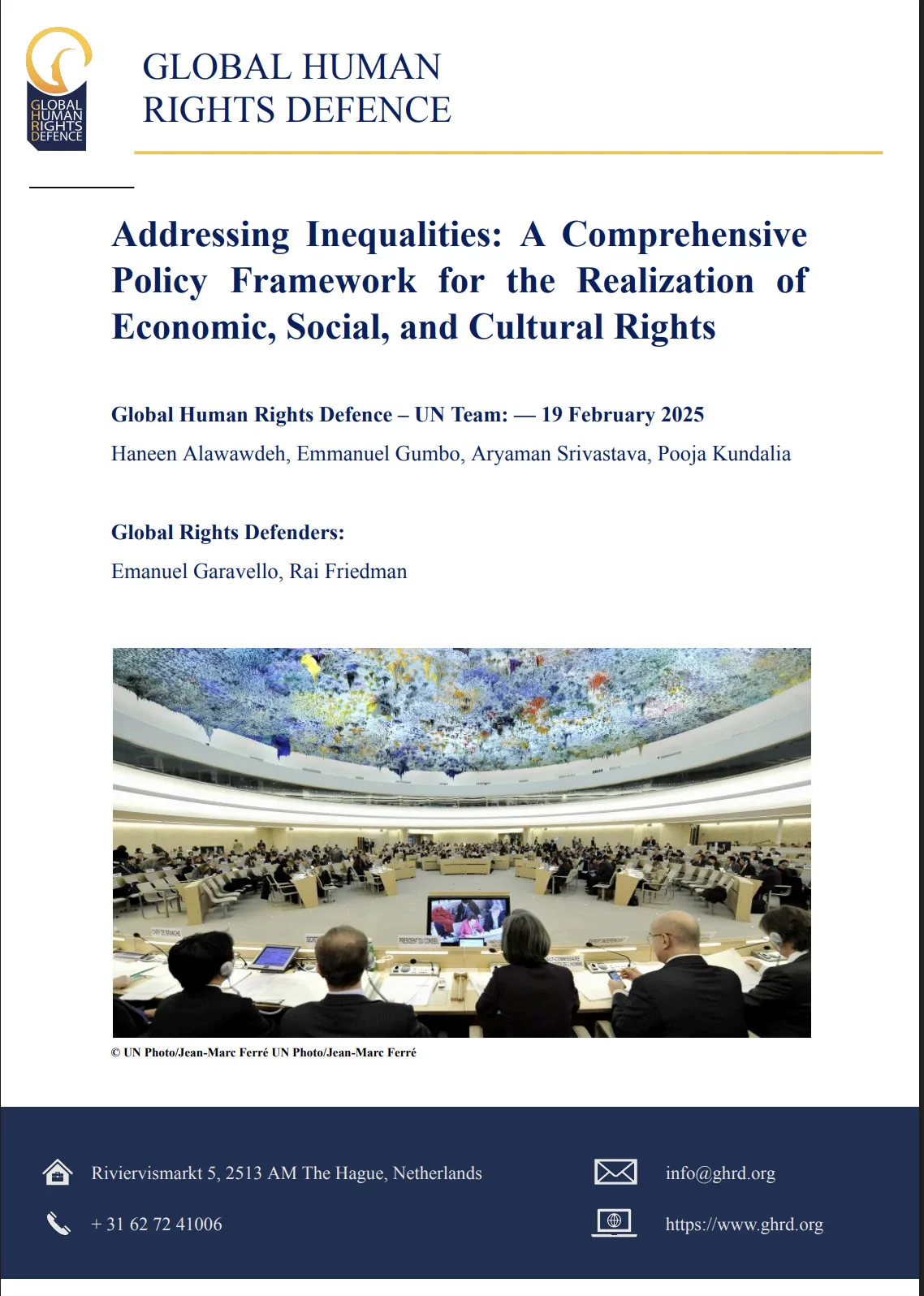
This report is informed by insights from the Panel on Economic, Social, and Cultural Rights within the Context of Addressing Inequalities (HRC Res. 54/22), convened during the 57th Session of the Human Rights Council. The discussions from this panel emphasised the critical issue of inequality and highlighted the necessity of realising ESCR as a fundamental pillar for building peaceful and thriving societies. The insights derived from the panel discussions align with global commitments, drawing attention to both persistent challenges and innovative solutions. By focusing on best practices and lessons learned from diverse regional contexts, the discussions underscore the importance of multisectoral approaches and international cooperation in safeguarding these rights.
A growing body of international frameworks, such as the 2030 Agenda for Sustainable Development, underscores the imperative of leaving no one behind. This highlights the urgent need to address systemic barriers perpetuating inequality, including discriminatory laws, inadequate social protection, and unequal resource distribution.
This report is informed by insights from the Panel on Economic, Social, and Cultural Rights within the Context of Addressing Inequalities (HRC Res. 54/22), convened during the 57th Session of the Human Rights Council. The discussions from this panel emphasised the critical issue of inequality and highlighted the necessity of realising ESCR as a fundamental pillar for building peaceful and thriving societies. The insights derived from the panel discussions align with global commitments, drawing attention to both persistent challenges and innovative solutions. By focusing on best practices and lessons learned from diverse regional contexts, the discussions underscore the importance of multisectoral approaches and international cooperation in safeguarding these rights.
✨ AI summary
In today’s rapidly evolving global landscape, realising economic, social, and cultural rights (ESCR) is essential for ensuring that individuals and communities can live with dignity. ESCR encompasses access to education, healthcare, adequate housing, decent work, and the enjoyment of cultural life. When effectively upheld, these rights not only alleviate hardships associated with poverty and social exclusion but also create an environment conducive to diversity and innovation.
A growing body of international frameworks, such as the 2030 Agenda for Sustainable Development, underscores the imperative of leaving no one behind. This highlights the urgent need to address systemic barriers perpetuating inequality, including discriminatory laws, inadequate social protection, and unequal resource distribution.
This report is informed by insights from the Panel on Economic, Social, and Cultural Rights within the Context of Addressing Inequalities (HRC Res. 54/22), convened during the 57th Session of the Human Rights Council. The discussions from this panel emphasised the critical issue of inequality and highlighted the necessity of realising ESCR as a fundamental pillar for building peaceful and thriving societies. The insights derived from the panel discussions align with global commitments, drawing attention to both persistent challenges and innovative solutions. By focusing on best practices and lessons learned from diverse regional contexts, the discussions underscore the importance of multisectoral approaches and international cooperation in safeguarding these rights.
A growing body of international frameworks, such as the 2030 Agenda for Sustainable Development, underscores the imperative of leaving no one behind. This highlights the urgent need to address systemic barriers perpetuating inequality, including discriminatory laws, inadequate social protection, and unequal resource distribution.
This report is informed by insights from the Panel on Economic, Social, and Cultural Rights within the Context of Addressing Inequalities (HRC Res. 54/22), convened during the 57th Session of the Human Rights Council. The discussions from this panel emphasised the critical issue of inequality and highlighted the necessity of realising ESCR as a fundamental pillar for building peaceful and thriving societies. The insights derived from the panel discussions align with global commitments, drawing attention to both persistent challenges and innovative solutions. By focusing on best practices and lessons learned from diverse regional contexts, the discussions underscore the importance of multisectoral approaches and international cooperation in safeguarding these rights.
Share this report
Facebook
X
LinkedIn
WhatsApp