Reports
Annual Human Rights Report 2024: Election, July Revolution, and Minorities in Bangladesh
- Bangladesh Campaign
- 13 December 2024
2024 has been a year of incidents triggering human rights issues in Bangladesh. The
country has witnessed a radical shift in its governance, led by a mass uprising after more than
a decade-long fascism, resulting in gross violations of human rights and democracy. The
human rights circumstances in Bangladesh in 2024 can be categorised under three events –
the national election, the ‘July Massacre’, and the post-July minority rights. The year began
for the Bangladeshi people with the desire for their right to vote in a fair election, which has
been missing for the last two if not three, national elections. While international agencies and
foreign governments expressed their concerns over the one-sided election, the people inside
the country, raising their voices against it, faced significant difficulties, including enforced
disappearances, extra-judicial killings, illegal arrests, and torture in prison. The Hasina
government not only misused their power by involving law enforcement agencies and the
security forces but also engaged their so-called student wing.
The oppression continued to take place, but the situation escalated with the
government’s move surrounding the ‘quota’ system in education and jobs. Reserving more
than 50 percent of the seats and not considering reform would trigger the mass population,
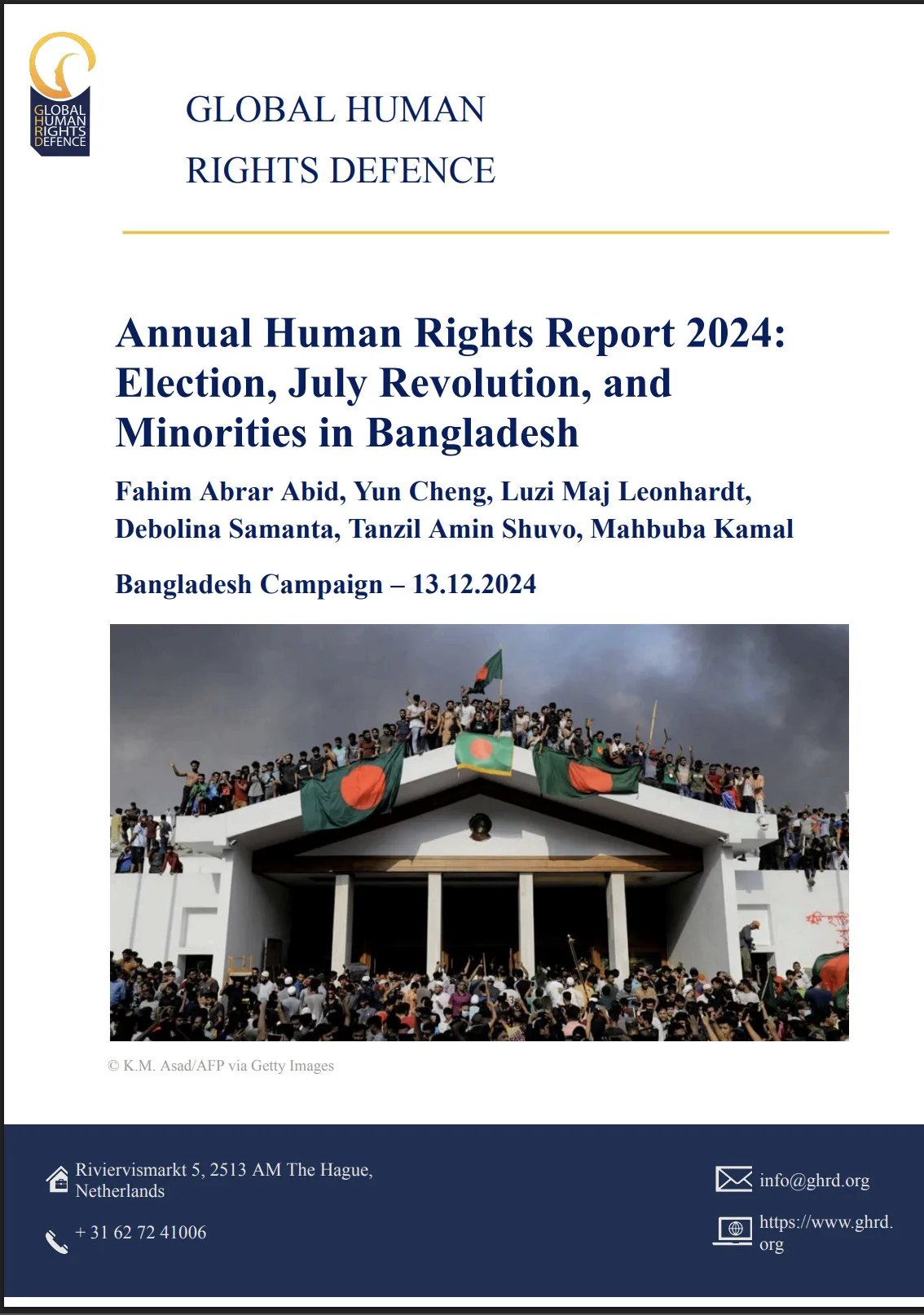
who have long been victims of systemic oppression. Following a month-long revolution by
the students, with the participation of people from every sphere of life, the former prime
minister fled the country. The whole ministry cabinet and higher government employees,
including leading police officers, also went into hiding, but at least 1000 people died, and
20,000 more were injured by the conduct of the previous regime to suppress the ‘July
Revolution’. This massacre made the nation strong and led to the overthrowing of the Hasina
government.
While an interim government led by the Nobel Laureate Dr Yunus was formed,
attacks on minorities took place since the day of Hasina’s fleeing. These attacks include
political as well as religious extremist agendas. Although the interim government tried to
control the situation, urging everyone to maintain harmony, the four-month ruling of this
government has witnessed at least two big incidents in the country concerning minority rights
protection. Among them, one is surrounding the indigenous minority living in the Chittagong
Hill Tracts, often a victim of military intervention coupled with Bengali settlers, and the other
one is centring the Hindu religious minority following the arrest of one of their religious
leaders on sedition charges. This report will highlight all three major events that
demonstrated human rights violations.
country has witnessed a radical shift in its governance, led by a mass uprising after more than
a decade-long fascism, resulting in gross violations of human rights and democracy. The
human rights circumstances in Bangladesh in 2024 can be categorised under three events –
the national election, the ‘July Massacre’, and the post-July minority rights. The year began
for the Bangladeshi people with the desire for their right to vote in a fair election, which has
been missing for the last two if not three, national elections. While international agencies and
foreign governments expressed their concerns over the one-sided election, the people inside
the country, raising their voices against it, faced significant difficulties, including enforced
disappearances, extra-judicial killings, illegal arrests, and torture in prison. The Hasina
government not only misused their power by involving law enforcement agencies and the
security forces but also engaged their so-called student wing.
The oppression continued to take place, but the situation escalated with the
government’s move surrounding the ‘quota’ system in education and jobs. Reserving more
than 50 percent of the seats and not considering reform would trigger the mass population,
who have long been victims of systemic oppression. Following a month-long revolution by
the students, with the participation of people from every sphere of life, the former prime
minister fled the country. The whole ministry cabinet and higher government employees,
including leading police officers, also went into hiding, but at least 1000 people died, and
20,000 more were injured by the conduct of the previous regime to suppress the ‘July
Revolution’. This massacre made the nation strong and led to the overthrowing of the Hasina
government.
While an interim government led by the Nobel Laureate Dr Yunus was formed,
attacks on minorities took place since the day of Hasina’s fleeing. These attacks include
political as well as religious extremist agendas. Although the interim government tried to
control the situation, urging everyone to maintain harmony, the four-month ruling of this
government has witnessed at least two big incidents in the country concerning minority rights
protection. Among them, one is surrounding the indigenous minority living in the Chittagong
Hill Tracts, often a victim of military intervention coupled with Bengali settlers, and the other
one is centring the Hindu religious minority following the arrest of one of their religious
leaders on sedition charges. This report will highlight all three major events that
demonstrated human rights violations.
✨ AI summary
2024 has been a year of incidents triggering human rights issues in Bangladesh. The
country has witnessed a radical shift in its governance, led by a mass uprising after more than
a decade-long fascism, resulting in gross violations of human rights and democracy. The
human rights circumstances in Bangladesh in 2024 can be categorised under three events –
the national election, the ‘July Massacre’, and the post-July minority rights. The year began
for the Bangladeshi people with the desire for their right to vote in a fair election, which has
been missing for the last two if not three, national elections. While international agencies and
foreign governments expressed their concerns over the one-sided election, the people inside
the country, raising their voices against it, faced significant difficulties, including enforced
disappearances, extra-judicial killings, illegal arrests, and torture in prison. The Hasina
government not only misused their power by involving law enforcement agencies and the
security forces but also engaged their so-called student wing.
The oppression continued to take place, but the situation escalated with the
government’s move surrounding the ‘quota’ system in education and jobs. Reserving more
than 50 percent of the seats and not considering reform would trigger the mass population,
who have long been victims of systemic oppression. Following a month-long revolution by
the students, with the participation of people from every sphere of life, the former prime
minister fled the country. The whole ministry cabinet and higher government employees,
including leading police officers, also went into hiding, but at least 1000 people died, and
20,000 more were injured by the conduct of the previous regime to suppress the ‘July
Revolution’. This massacre made the nation strong and led to the overthrowing of the Hasina
government.
While an interim government led by the Nobel Laureate Dr Yunus was formed,
attacks on minorities took place since the day of Hasina’s fleeing. These attacks include
political as well as religious extremist agendas. Although the interim government tried to
control the situation, urging everyone to maintain harmony, the four-month ruling of this
government has witnessed at least two big incidents in the country concerning minority rights
protection. Among them, one is surrounding the indigenous minority living in the Chittagong
Hill Tracts, often a victim of military intervention coupled with Bengali settlers, and the other
one is centring the Hindu religious minority following the arrest of one of their religious
leaders on sedition charges. This report will highlight all three major events that
demonstrated human rights violations.
country has witnessed a radical shift in its governance, led by a mass uprising after more than
a decade-long fascism, resulting in gross violations of human rights and democracy. The
human rights circumstances in Bangladesh in 2024 can be categorised under three events –
the national election, the ‘July Massacre’, and the post-July minority rights. The year began
for the Bangladeshi people with the desire for their right to vote in a fair election, which has
been missing for the last two if not three, national elections. While international agencies and
foreign governments expressed their concerns over the one-sided election, the people inside
the country, raising their voices against it, faced significant difficulties, including enforced
disappearances, extra-judicial killings, illegal arrests, and torture in prison. The Hasina
government not only misused their power by involving law enforcement agencies and the
security forces but also engaged their so-called student wing.
The oppression continued to take place, but the situation escalated with the
government’s move surrounding the ‘quota’ system in education and jobs. Reserving more
than 50 percent of the seats and not considering reform would trigger the mass population,
who have long been victims of systemic oppression. Following a month-long revolution by
the students, with the participation of people from every sphere of life, the former prime
minister fled the country. The whole ministry cabinet and higher government employees,
including leading police officers, also went into hiding, but at least 1000 people died, and
20,000 more were injured by the conduct of the previous regime to suppress the ‘July
Revolution’. This massacre made the nation strong and led to the overthrowing of the Hasina
government.
While an interim government led by the Nobel Laureate Dr Yunus was formed,
attacks on minorities took place since the day of Hasina’s fleeing. These attacks include
political as well as religious extremist agendas. Although the interim government tried to
control the situation, urging everyone to maintain harmony, the four-month ruling of this
government has witnessed at least two big incidents in the country concerning minority rights
protection. Among them, one is surrounding the indigenous minority living in the Chittagong
Hill Tracts, often a victim of military intervention coupled with Bengali settlers, and the other
one is centring the Hindu religious minority following the arrest of one of their religious
leaders on sedition charges. This report will highlight all three major events that
demonstrated human rights violations.
Share this report
Facebook
X
LinkedIn
WhatsApp