
Reports
Azerbaijani Women: From Soviet Influence to Post-Independence Challenges
- GHRD Team
- 14 August 2024
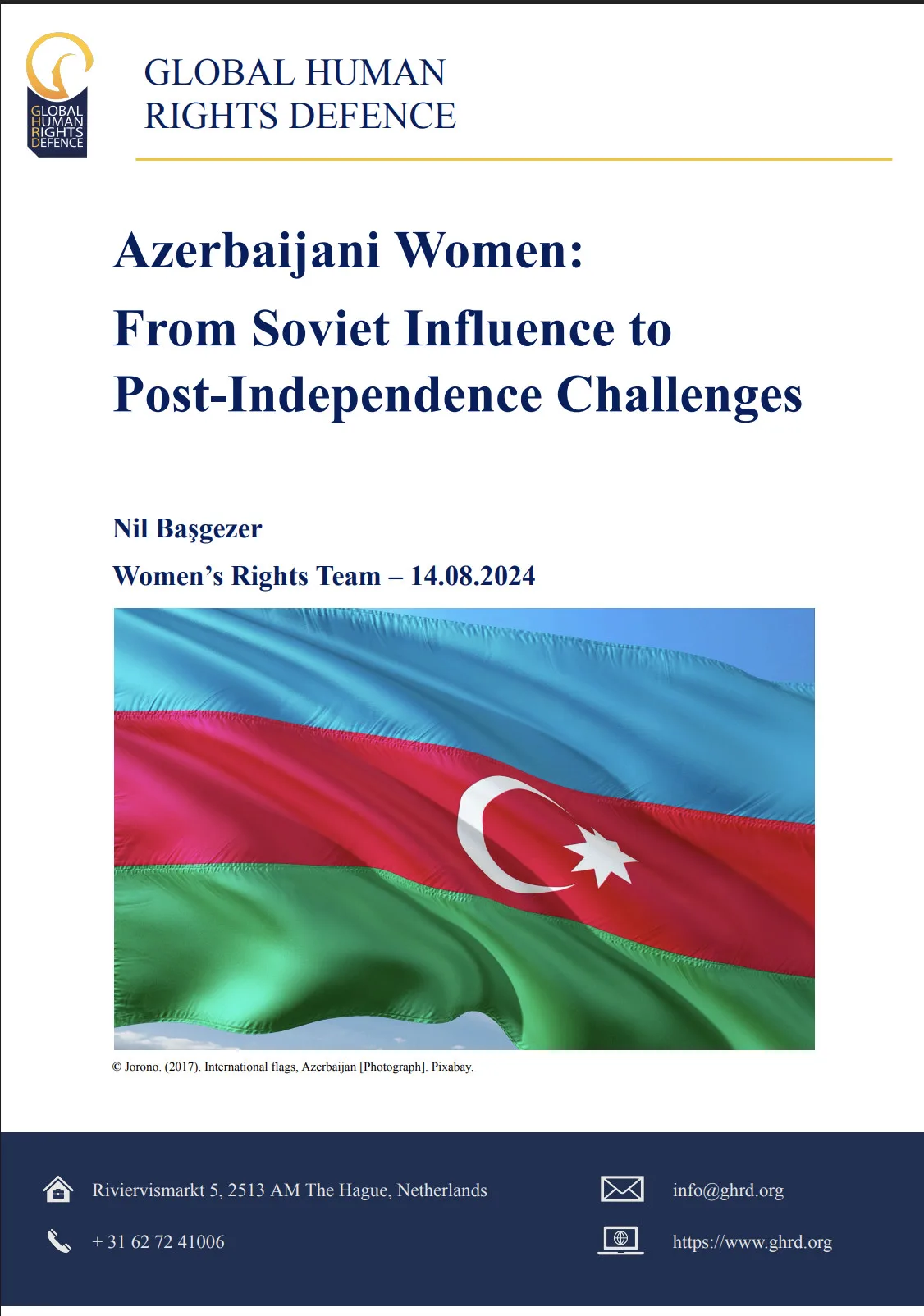
Azerbaijan, previously one of the fifteen republics under the Soviet Union, attained independence following the Soviet Union’s dissolution in 1991. After declaring independence, Azerbaijan joined the United Nations in 1992. The population of Azerbaijan is predominantly Muslim, with 95 percent adhering to Islam. Shi’a Muslims make up the largest sect (Heyat, 2008).
Azerbaijan offers a unique case for examining the interaction of religion, colonialism, state socialism, nationalism, and ethnicity in shaping women’s status and gender norms. Positioned geopolitically between the East and West, Azerbaijan exemplifies the diversity of women’s experiences in the Muslim world, challenging common Western stereotypes (Tohidi, 1996).
Under Soviet rule, Azerbaijan was influenced by socialist ideologies that promoted an official doctrine of egalitarianism (Najafizadeh & Mennerick, 2003). Despite the persistence of patriarchal norms within society and family, women in Soviet Azerbaijan were granted equal rights in education, employment, healthcare, and legal matters. The government encouraged women’s participation in political and social spheres, instituting quotas to ensure women’s representation at all governmental levels. However, men continued to dominate the majority of government and administrative positions, holding over 60 percent of these roles (Tohidi, 1996, 1997). Even with these policies to foster gender equality, women encountered numerous challenges and contradictions due to entrenched cultural traditions and mentalities (Tohidi, 1996). In addition to their professional responsibilities, women also bore the primary burden of household chores and childcare, leading to a dual workload.
When asked about the impact of the Soviet system on women in Azerbaijani society, many Azerbaijani women highlight the high levels of education and the abandonment of the veil as significant achievements of the Soviet era. For Muslim women in the Soviet Union, the widespread unveiling that took place in the 1920s and early 1930s was a symbolic gesture of liberation and a practical step that enabled their participation in public and social life, which was regarded as essential for achieving equality (Nfa, 2002).
Muslim women in Soviet Azerbaijan attained a significant degree of emancipation, especially when compared to women in other Muslim societies. They made substantial progress in education, employment, primary health care, and legal rights concerning family and personal status. However, they continued to face dilemmas, contradictions, and dualities in terms of their overall freedom and liberation (Tohidi, 1996).
The concept of womanhood in Soviet Azerbaijan was partly shaped in opposition to the image of Russian womanhood. Since Azerbaijan was fully annexed by Tsarist Russia in the early 19th century, the interplay of modernity and traditionalism in gender roles, along with other social aspects, has been influenced by the distinction between the Muslim Azeri (“us”) and non-Muslim Russian/Soviet (“them”) (Tohidi, 1996). This duality highlighted the cultural and religious differences between the predominantly Muslim Azerbaijani society and the largely secular Russian influence, emphasising the need to preserve Azeri identity amid external pressures.
The emancipatory progress of Azeri women is particularly evident when compared to their pre-Soviet status and to the situation of women in other Muslim countries like Iran and Turkey. Universal education and female literacy, which reached 99.9 percent (compared to 70 percent in Turkey and 42 percent in Iran among 15-24-year-olds) (UNDP, 1994, p. 144), and the significant educational attainment of women (46 percent of highly and semi-specialised professionals), are notable achievements of Muslim women in Soviet Azerbaijan. In health care, despite environmental damage, especially in the Soviet East, the level of primary health care and overall health status of the population were comparable to those in developed countries by the late 1980s.
Although occupational segregation by gender existed as in other countries, women in Azerbaijan made up about 43 percent of the workforce in the national economy (compared to 31 percent in Turkey and 10 percent in Iran) (UNDP, 1994, p. 162).
Since Azerbaijan declared independence on August 30th, 1991, the gendered identity formation has continued with greater intensity and variety in the nation’s post-Soviet rebuilding process. Gender-related issues and representations are now integral to the ideological landscape where national identity, cultural authenticity, and independence are debated, especially in the context of ongoing interethnic conflicts (Tohidi, 1996).
Azerbaijan offers a unique case for examining the interaction of religion, colonialism, state socialism, nationalism, and ethnicity in shaping women’s status and gender norms. Positioned geopolitically between the East and West, Azerbaijan exemplifies the diversity of women’s experiences in the Muslim world, challenging common Western stereotypes (Tohidi, 1996).
Under Soviet rule, Azerbaijan was influenced by socialist ideologies that promoted an official doctrine of egalitarianism (Najafizadeh & Mennerick, 2003). Despite the persistence of patriarchal norms within society and family, women in Soviet Azerbaijan were granted equal rights in education, employment, healthcare, and legal matters. The government encouraged women’s participation in political and social spheres, instituting quotas to ensure women’s representation at all governmental levels. However, men continued to dominate the majority of government and administrative positions, holding over 60 percent of these roles (Tohidi, 1996, 1997). Even with these policies to foster gender equality, women encountered numerous challenges and contradictions due to entrenched cultural traditions and mentalities (Tohidi, 1996). In addition to their professional responsibilities, women also bore the primary burden of household chores and childcare, leading to a dual workload.
When asked about the impact of the Soviet system on women in Azerbaijani society, many Azerbaijani women highlight the high levels of education and the abandonment of the veil as significant achievements of the Soviet era. For Muslim women in the Soviet Union, the widespread unveiling that took place in the 1920s and early 1930s was a symbolic gesture of liberation and a practical step that enabled their participation in public and social life, which was regarded as essential for achieving equality (Nfa, 2002).
Muslim women in Soviet Azerbaijan attained a significant degree of emancipation, especially when compared to women in other Muslim societies. They made substantial progress in education, employment, primary health care, and legal rights concerning family and personal status. However, they continued to face dilemmas, contradictions, and dualities in terms of their overall freedom and liberation (Tohidi, 1996).
The concept of womanhood in Soviet Azerbaijan was partly shaped in opposition to the image of Russian womanhood. Since Azerbaijan was fully annexed by Tsarist Russia in the early 19th century, the interplay of modernity and traditionalism in gender roles, along with other social aspects, has been influenced by the distinction between the Muslim Azeri (“us”) and non-Muslim Russian/Soviet (“them”) (Tohidi, 1996). This duality highlighted the cultural and religious differences between the predominantly Muslim Azerbaijani society and the largely secular Russian influence, emphasising the need to preserve Azeri identity amid external pressures.
The emancipatory progress of Azeri women is particularly evident when compared to their pre-Soviet status and to the situation of women in other Muslim countries like Iran and Turkey. Universal education and female literacy, which reached 99.9 percent (compared to 70 percent in Turkey and 42 percent in Iran among 15-24-year-olds) (UNDP, 1994, p. 144), and the significant educational attainment of women (46 percent of highly and semi-specialised professionals), are notable achievements of Muslim women in Soviet Azerbaijan. In health care, despite environmental damage, especially in the Soviet East, the level of primary health care and overall health status of the population were comparable to those in developed countries by the late 1980s.
Although occupational segregation by gender existed as in other countries, women in Azerbaijan made up about 43 percent of the workforce in the national economy (compared to 31 percent in Turkey and 10 percent in Iran) (UNDP, 1994, p. 162).
Since Azerbaijan declared independence on August 30th, 1991, the gendered identity formation has continued with greater intensity and variety in the nation’s post-Soviet rebuilding process. Gender-related issues and representations are now integral to the ideological landscape where national identity, cultural authenticity, and independence are debated, especially in the context of ongoing interethnic conflicts (Tohidi, 1996).
✨ AI summary
Azerbaijan, previously one of the fifteen republics under the Soviet Union, attained independence following the Soviet Union’s dissolution in 1991. After declaring independence, Azerbaijan joined the United Nations in 1992. The population of Azerbaijan is predominantly Muslim, with 95 percent adhering to Islam. Shi’a Muslims make up the largest sect (Heyat, 2008).
Azerbaijan offers a unique case for examining the interaction of religion, colonialism, state socialism, nationalism, and ethnicity in shaping women’s status and gender norms. Positioned geopolitically between the East and West, Azerbaijan exemplifies the diversity of women’s experiences in the Muslim world, challenging common Western stereotypes (Tohidi, 1996).
Under Soviet rule, Azerbaijan was influenced by socialist ideologies that promoted an official doctrine of egalitarianism (Najafizadeh & Mennerick, 2003). Despite the persistence of patriarchal norms within society and family, women in Soviet Azerbaijan were granted equal rights in education, employment, healthcare, and legal matters. The government encouraged women’s participation in political and social spheres, instituting quotas to ensure women’s representation at all governmental levels. However, men continued to dominate the majority of government and administrative positions, holding over 60 percent of these roles (Tohidi, 1996, 1997). Even with these policies to foster gender equality, women encountered numerous challenges and contradictions due to entrenched cultural traditions and mentalities (Tohidi, 1996). In addition to their professional responsibilities, women also bore the primary burden of household chores and childcare, leading to a dual workload.
When asked about the impact of the Soviet system on women in Azerbaijani society, many Azerbaijani women highlight the high levels of education and the abandonment of the veil as significant achievements of the Soviet era. For Muslim women in the Soviet Union, the widespread unveiling that took place in the 1920s and early 1930s was a symbolic gesture of liberation and a practical step that enabled their participation in public and social life, which was regarded as essential for achieving equality (Nfa, 2002).
Muslim women in Soviet Azerbaijan attained a significant degree of emancipation, especially when compared to women in other Muslim societies. They made substantial progress in education, employment, primary health care, and legal rights concerning family and personal status. However, they continued to face dilemmas, contradictions, and dualities in terms of their overall freedom and liberation (Tohidi, 1996).
The concept of womanhood in Soviet Azerbaijan was partly shaped in opposition to the image of Russian womanhood. Since Azerbaijan was fully annexed by Tsarist Russia in the early 19th century, the interplay of modernity and traditionalism in gender roles, along with other social aspects, has been influenced by the distinction between the Muslim Azeri (“us”) and non-Muslim Russian/Soviet (“them”) (Tohidi, 1996). This duality highlighted the cultural and religious differences between the predominantly Muslim Azerbaijani society and the largely secular Russian influence, emphasising the need to preserve Azeri identity amid external pressures.
The emancipatory progress of Azeri women is particularly evident when compared to their pre-Soviet status and to the situation of women in other Muslim countries like Iran and Turkey. Universal education and female literacy, which reached 99.9 percent (compared to 70 percent in Turkey and 42 percent in Iran among 15-24-year-olds) (UNDP, 1994, p. 144), and the significant educational attainment of women (46 percent of highly and semi-specialised professionals), are notable achievements of Muslim women in Soviet Azerbaijan. In health care, despite environmental damage, especially in the Soviet East, the level of primary health care and overall health status of the population were comparable to those in developed countries by the late 1980s.
Although occupational segregation by gender existed as in other countries, women in Azerbaijan made up about 43 percent of the workforce in the national economy (compared to 31 percent in Turkey and 10 percent in Iran) (UNDP, 1994, p. 162).
Since Azerbaijan declared independence on August 30th, 1991, the gendered identity formation has continued with greater intensity and variety in the nation’s post-Soviet rebuilding process. Gender-related issues and representations are now integral to the ideological landscape where national identity, cultural authenticity, and independence are debated, especially in the context of ongoing interethnic conflicts (Tohidi, 1996).
Azerbaijan offers a unique case for examining the interaction of religion, colonialism, state socialism, nationalism, and ethnicity in shaping women’s status and gender norms. Positioned geopolitically between the East and West, Azerbaijan exemplifies the diversity of women’s experiences in the Muslim world, challenging common Western stereotypes (Tohidi, 1996).
Under Soviet rule, Azerbaijan was influenced by socialist ideologies that promoted an official doctrine of egalitarianism (Najafizadeh & Mennerick, 2003). Despite the persistence of patriarchal norms within society and family, women in Soviet Azerbaijan were granted equal rights in education, employment, healthcare, and legal matters. The government encouraged women’s participation in political and social spheres, instituting quotas to ensure women’s representation at all governmental levels. However, men continued to dominate the majority of government and administrative positions, holding over 60 percent of these roles (Tohidi, 1996, 1997). Even with these policies to foster gender equality, women encountered numerous challenges and contradictions due to entrenched cultural traditions and mentalities (Tohidi, 1996). In addition to their professional responsibilities, women also bore the primary burden of household chores and childcare, leading to a dual workload.
When asked about the impact of the Soviet system on women in Azerbaijani society, many Azerbaijani women highlight the high levels of education and the abandonment of the veil as significant achievements of the Soviet era. For Muslim women in the Soviet Union, the widespread unveiling that took place in the 1920s and early 1930s was a symbolic gesture of liberation and a practical step that enabled their participation in public and social life, which was regarded as essential for achieving equality (Nfa, 2002).
Muslim women in Soviet Azerbaijan attained a significant degree of emancipation, especially when compared to women in other Muslim societies. They made substantial progress in education, employment, primary health care, and legal rights concerning family and personal status. However, they continued to face dilemmas, contradictions, and dualities in terms of their overall freedom and liberation (Tohidi, 1996).
The concept of womanhood in Soviet Azerbaijan was partly shaped in opposition to the image of Russian womanhood. Since Azerbaijan was fully annexed by Tsarist Russia in the early 19th century, the interplay of modernity and traditionalism in gender roles, along with other social aspects, has been influenced by the distinction between the Muslim Azeri (“us”) and non-Muslim Russian/Soviet (“them”) (Tohidi, 1996). This duality highlighted the cultural and religious differences between the predominantly Muslim Azerbaijani society and the largely secular Russian influence, emphasising the need to preserve Azeri identity amid external pressures.
The emancipatory progress of Azeri women is particularly evident when compared to their pre-Soviet status and to the situation of women in other Muslim countries like Iran and Turkey. Universal education and female literacy, which reached 99.9 percent (compared to 70 percent in Turkey and 42 percent in Iran among 15-24-year-olds) (UNDP, 1994, p. 144), and the significant educational attainment of women (46 percent of highly and semi-specialised professionals), are notable achievements of Muslim women in Soviet Azerbaijan. In health care, despite environmental damage, especially in the Soviet East, the level of primary health care and overall health status of the population were comparable to those in developed countries by the late 1980s.
Although occupational segregation by gender existed as in other countries, women in Azerbaijan made up about 43 percent of the workforce in the national economy (compared to 31 percent in Turkey and 10 percent in Iran) (UNDP, 1994, p. 162).
Since Azerbaijan declared independence on August 30th, 1991, the gendered identity formation has continued with greater intensity and variety in the nation’s post-Soviet rebuilding process. Gender-related issues and representations are now integral to the ideological landscape where national identity, cultural authenticity, and independence are debated, especially in the context of ongoing interethnic conflicts (Tohidi, 1996).
Share this report
Facebook
X
LinkedIn
WhatsApp