
Reports
Breaking Barriers: Addressing and Overcoming Workplace Discrimination
- Asia Team
- 28 February 2025
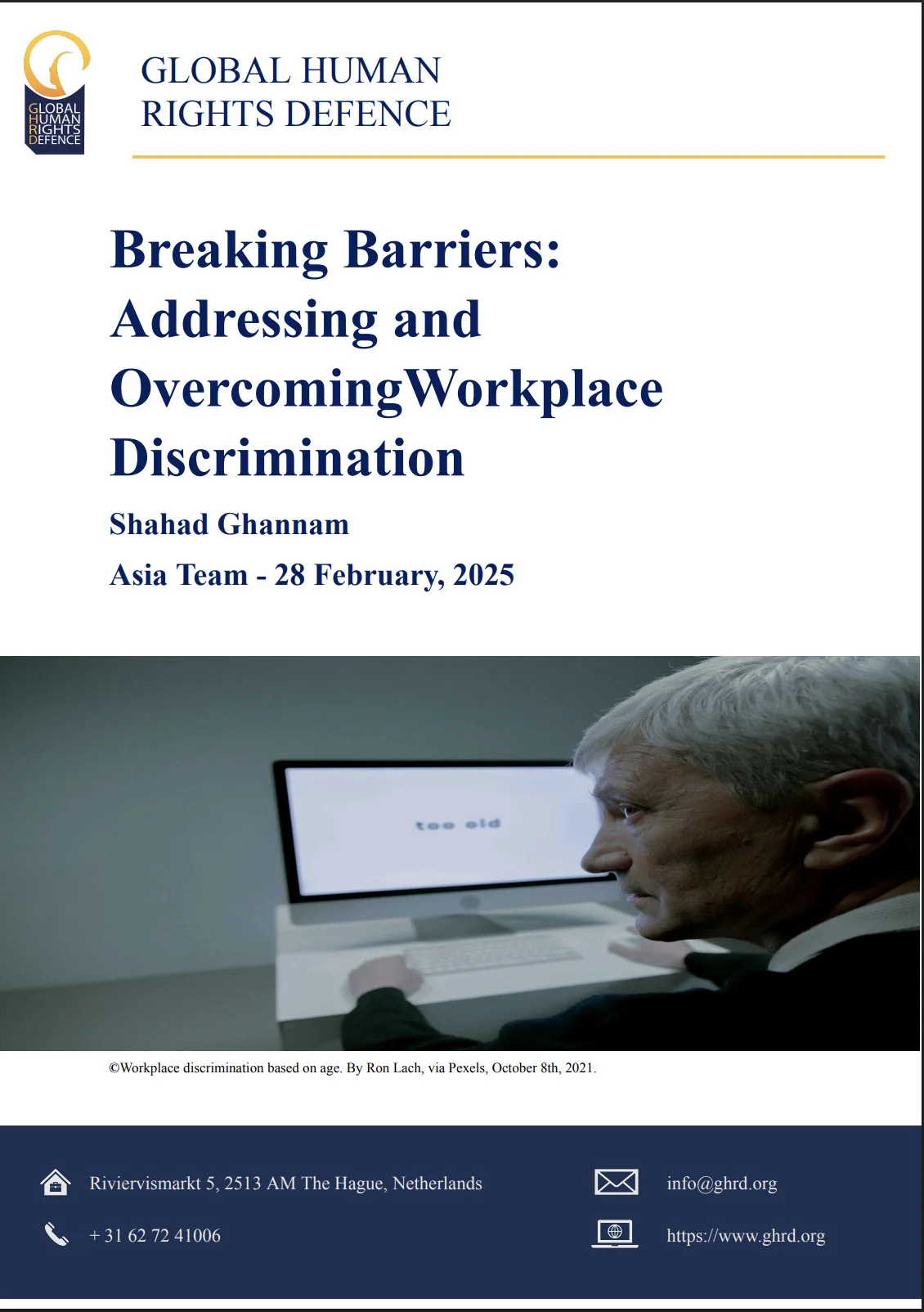
Workplace discrimination remains a persistent challenge across industries, affecting employees’ rights, well-being, and professional opportunities. Despite legal frameworks designed to prevent discrimination, individuals continue to face unequal treatment based on factors such as age, gender, race, disability, and sexual orientation. These discriminatory practices not only violate fundamental rights but also create barriers to career progression, fair compensation, and workplace inclusion. Addressing these issues is not just a matter of legal compliance but an essential step toward fostering a work environment that is diverse, fair, and equitable.
This report examines workplace discrimination through an in-depth analysis of its prevalence, impact, and the effectiveness of existing policies. It integrates both legal research and firsthand data collected through a survey conducted among employees from various industries and geographic regions. By capturing real-world experiences, the report aims to identify patterns of discrimination and assess how individuals navigate workplace biases.
To ensure a comprehensive understanding, the report is structured into three main chapters. The first chapter explores the different types of workplace discrimination, outlining the legal protections that exist at the international and national levels. The second chapter presents the findings of the survey, offering a closer look at the respondents’ demographics, the types of discrimination they have experienced or witnessed, and the extent to which these incidents are reported or addressed. The third chapter delves into the consequences of workplace discrimination, examining its impact on employees’ personal well-being and professional development.
Workplace discrimination is not only a challenge for individuals but also has broader societal and economic consequences. It contributes to job dissatisfaction, high employee turnover, and reduced workplace productivity, ultimately affecting businesses and economies at large. Addressing these issues is also essential for fulfilling global commitments such as the United Nations Sustainable Development Goals (SDGs), particularly SDG 5 on gender equality and SDG 8 on decent work and economic growth. By understanding how discrimination manifests in the workplace and assessing the effectiveness of existing policies, this report seeks to contribute to the development of more inclusive and equitable work environments that benefit employees and employers alike.
✨ AI summary
Workplace discrimination remains a persistent challenge across industries, affecting employees’ rights, well-being, and professional opportunities. Despite legal frameworks designed to prevent discrimination, individuals continue to face unequal treatment based on factors such as age, gender, race, disability, and sexual orientation. These discriminatory practices not only violate fundamental rights but also create barriers to career progression, fair compensation, and workplace inclusion. Addressing these issues is not just a matter of legal compliance but an essential step toward fostering a work environment that is diverse, fair, and equitable.
This report examines workplace discrimination through an in-depth analysis of its prevalence, impact, and the effectiveness of existing policies. It integrates both legal research and firsthand data collected through a survey conducted among employees from various industries and geographic regions. By capturing real-world experiences, the report aims to identify patterns of discrimination and assess how individuals navigate workplace biases.
To ensure a comprehensive understanding, the report is structured into three main chapters. The first chapter explores the different types of workplace discrimination, outlining the legal protections that exist at the international and national levels. The second chapter presents the findings of the survey, offering a closer look at the respondents’ demographics, the types of discrimination they have experienced or witnessed, and the extent to which these incidents are reported or addressed. The third chapter delves into the consequences of workplace discrimination, examining its impact on employees’ personal well-being and professional development.
Workplace discrimination is not only a challenge for individuals but also has broader societal and economic consequences. It contributes to job dissatisfaction, high employee turnover, and reduced workplace productivity, ultimately affecting businesses and economies at large. Addressing these issues is also essential for fulfilling global commitments such as the United Nations Sustainable Development Goals (SDGs), particularly SDG 5 on gender equality and SDG 8 on decent work and economic growth. By understanding how discrimination manifests in the workplace and assessing the effectiveness of existing policies, this report seeks to contribute to the development of more inclusive and equitable work environments that benefit employees and employers alike.
This report examines workplace discrimination through an in-depth analysis of its prevalence, impact, and the effectiveness of existing policies. It integrates both legal research and firsthand data collected through a survey conducted among employees from various industries and geographic regions. By capturing real-world experiences, the report aims to identify patterns of discrimination and assess how individuals navigate workplace biases.
To ensure a comprehensive understanding, the report is structured into three main chapters. The first chapter explores the different types of workplace discrimination, outlining the legal protections that exist at the international and national levels. The second chapter presents the findings of the survey, offering a closer look at the respondents’ demographics, the types of discrimination they have experienced or witnessed, and the extent to which these incidents are reported or addressed. The third chapter delves into the consequences of workplace discrimination, examining its impact on employees’ personal well-being and professional development.
Workplace discrimination is not only a challenge for individuals but also has broader societal and economic consequences. It contributes to job dissatisfaction, high employee turnover, and reduced workplace productivity, ultimately affecting businesses and economies at large. Addressing these issues is also essential for fulfilling global commitments such as the United Nations Sustainable Development Goals (SDGs), particularly SDG 5 on gender equality and SDG 8 on decent work and economic growth. By understanding how discrimination manifests in the workplace and assessing the effectiveness of existing policies, this report seeks to contribute to the development of more inclusive and equitable work environments that benefit employees and employers alike.
Share this report
Facebook
X
LinkedIn
WhatsApp