
Reports
Conquering the Right to Abortion
- GHRD Team
- 8 May 2024
“Never forget that it only takes a political, economic, or religious crisis for
women’s rights to be called into question. These rights can never be taken for granted.
You must remain vigilant throughout your life” (de Beauvoir, 1949).
This famous French quote from Simone de Beauvoir from 1949 still resonates
strongly with feminist activist movements today. Unfortunately, even though de Beauvoir is a
feminist figure of the previous century, her powerful words remain relevant in today’s society
to drive the fight for women’s rights. Women’s rights remain at risk in societies across the
globe, particularly sexual and reproductive rights. Nonetheless, statistics indicate that six out
of every ten unintended pregnancies result in induced abortions, with around 45 percent of
these procedures being categorised as unsafe, primarily
happening in the Global South (WHO, 2021). In Latin
America, 97 percent of women live in a state where access to
abortion is legally restricted. In sub-Saharan Africa, nearly 6.2
million unsafe abortions are performed each year, resulting in
at least 15,000 deaths. In Europe, women are sometimes
forced to listen to the foetus’s heartbeat before seeking an
abortion (FIDH, 2022).
These statistics alone highlight the
necessity of adequate abortion care, especially when viewing
them in light of an endless list of women’s rights violations.
So much so that abortion remains one of the leading causes of
death in the 21st century (FIDH, 2022)
.It is now clear that feminist progress faces extensive backlash, and the right to
abortion has not been spared. Among the decisions that have shaken the world, the reversal of
the precedent established in Roe v. Wade’s case is often the first to be mentioned. Many U.S.
States have since banned medical termination of pregnancy or restricted access to it.
Argentina, which legalised abortion in 2020, may also face renewed scrutiny over abortion
rights under its current president, Javier Milei, who has pledged to hold a referendum to
determine whether abortion will remain legal. However, the Americas are not the only places
where the right to abortion is set aside. As previously noted, the same concerning changes are
happening across Europe, even after an 80-year trend of liberalisation of abortion laws.
These concerning events may mark the beginning of a new wave of regressive legal
frameworks for abortion rights. In reaction to these events, the label “fundamental right”
seems to be on everyone’s lips. However, the right to abortion, often regarded as fundamental,
is currently not recognised as such by the law.
According to Etienne Picard, a French professor of public law, fundamental rights can
be described as a set of rights so essential to the human being that they would naturally
demand respect and recognition. They are rights that prevail over other rights in a judicial
order. This idea of a naturally binding and universally applicable group of rights is enticing.
However, some States have weaponized fundamental rights to justify their continued
violation of women’s sexual and reproductive rights.
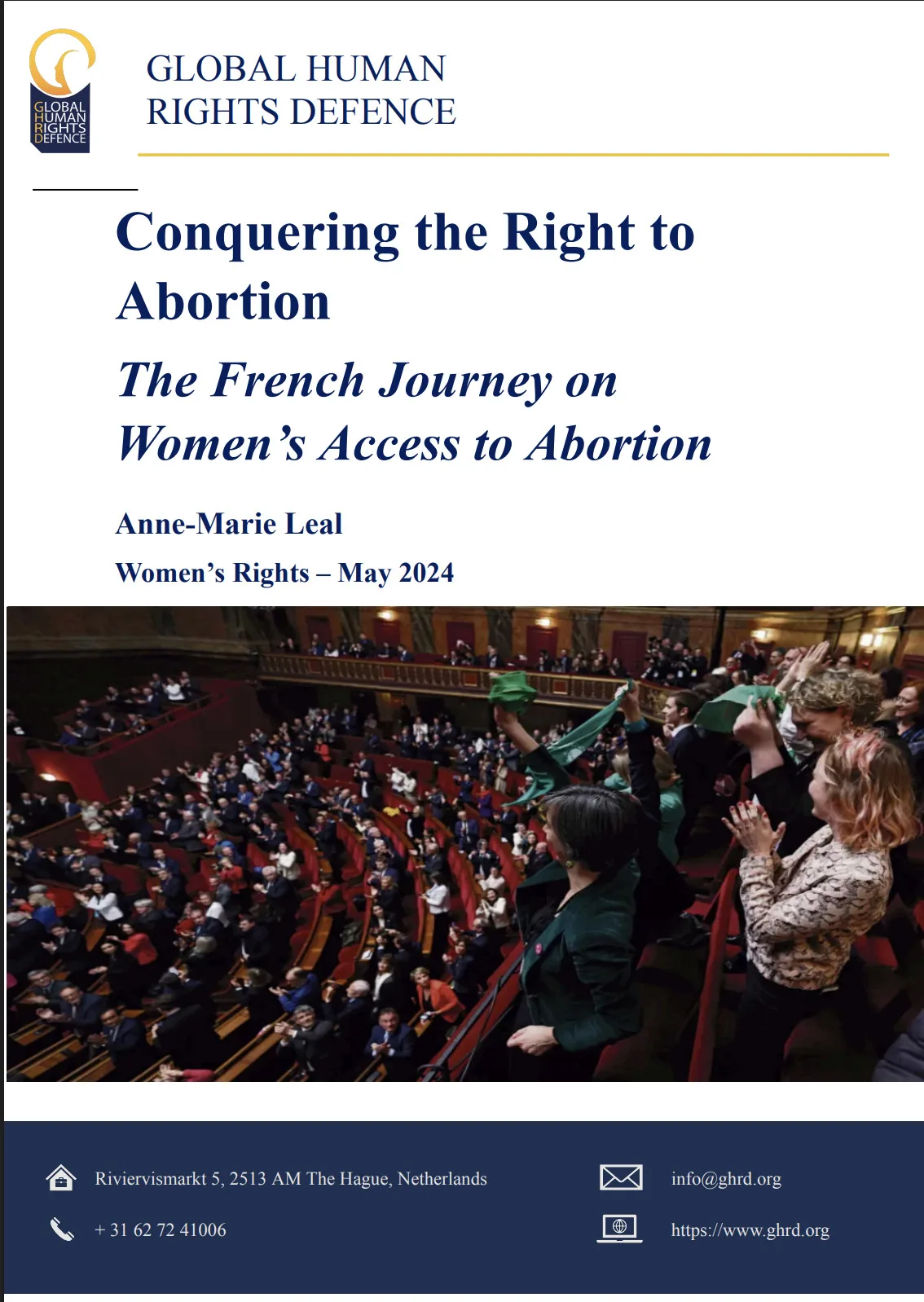
Yet this is not the case of France, which on March 8th, 2024, became the first country
in the world to codify the freedom to abortion in its Constitution. To gain insight into France’s
progress regarding women’s access to abortion, this report will explore the history of the
liberalisation of medically terminated pregnancies (Chapter 1). Subsequently, it will review
the very long legislative efforts towards constitutionalising abortion rights (Chapter 2).
Finally, it will delve into the significance of constitutionalising human rights and assess
France’s efforts in this regard (Chapter 3).
women’s rights to be called into question. These rights can never be taken for granted.
You must remain vigilant throughout your life” (de Beauvoir, 1949).
This famous French quote from Simone de Beauvoir from 1949 still resonates
strongly with feminist activist movements today. Unfortunately, even though de Beauvoir is a
feminist figure of the previous century, her powerful words remain relevant in today’s society
to drive the fight for women’s rights. Women’s rights remain at risk in societies across the
globe, particularly sexual and reproductive rights. Nonetheless, statistics indicate that six out
of every ten unintended pregnancies result in induced abortions, with around 45 percent of
these procedures being categorised as unsafe, primarily
happening in the Global South (WHO, 2021). In Latin
America, 97 percent of women live in a state where access to
abortion is legally restricted. In sub-Saharan Africa, nearly 6.2
million unsafe abortions are performed each year, resulting in
at least 15,000 deaths. In Europe, women are sometimes
forced to listen to the foetus’s heartbeat before seeking an
abortion (FIDH, 2022).
These statistics alone highlight the
necessity of adequate abortion care, especially when viewing
them in light of an endless list of women’s rights violations.
So much so that abortion remains one of the leading causes of
death in the 21st century (FIDH, 2022)
.It is now clear that feminist progress faces extensive backlash, and the right to
abortion has not been spared. Among the decisions that have shaken the world, the reversal of
the precedent established in Roe v. Wade’s case is often the first to be mentioned. Many U.S.
States have since banned medical termination of pregnancy or restricted access to it.
Argentina, which legalised abortion in 2020, may also face renewed scrutiny over abortion
rights under its current president, Javier Milei, who has pledged to hold a referendum to
determine whether abortion will remain legal. However, the Americas are not the only places
where the right to abortion is set aside. As previously noted, the same concerning changes are
happening across Europe, even after an 80-year trend of liberalisation of abortion laws.
These concerning events may mark the beginning of a new wave of regressive legal
frameworks for abortion rights. In reaction to these events, the label “fundamental right”
seems to be on everyone’s lips. However, the right to abortion, often regarded as fundamental,
is currently not recognised as such by the law.
According to Etienne Picard, a French professor of public law, fundamental rights can
be described as a set of rights so essential to the human being that they would naturally
demand respect and recognition. They are rights that prevail over other rights in a judicial
order. This idea of a naturally binding and universally applicable group of rights is enticing.
However, some States have weaponized fundamental rights to justify their continued
violation of women’s sexual and reproductive rights.
Yet this is not the case of France, which on March 8th, 2024, became the first country
in the world to codify the freedom to abortion in its Constitution. To gain insight into France’s
progress regarding women’s access to abortion, this report will explore the history of the
liberalisation of medically terminated pregnancies (Chapter 1). Subsequently, it will review
the very long legislative efforts towards constitutionalising abortion rights (Chapter 2).
Finally, it will delve into the significance of constitutionalising human rights and assess
France’s efforts in this regard (Chapter 3).
✨ AI summary
“Never forget that it only takes a political, economic, or religious crisis for
women’s rights to be called into question. These rights can never be taken for granted.
You must remain vigilant throughout your life” (de Beauvoir, 1949).
This famous French quote from Simone de Beauvoir from 1949 still resonates
strongly with feminist activist movements today. Unfortunately, even though de Beauvoir is a
feminist figure of the previous century, her powerful words remain relevant in today’s society
to drive the fight for women’s rights. Women’s rights remain at risk in societies across the
globe, particularly sexual and reproductive rights. Nonetheless, statistics indicate that six out
of every ten unintended pregnancies result in induced abortions, with around 45 percent of
these procedures being categorised as unsafe, primarily
happening in the Global South (WHO, 2021). In Latin
America, 97 percent of women live in a state where access to
abortion is legally restricted. In sub-Saharan Africa, nearly 6.2
million unsafe abortions are performed each year, resulting in
at least 15,000 deaths. In Europe, women are sometimes
forced to listen to the foetus’s heartbeat before seeking an
abortion (FIDH, 2022).
These statistics alone highlight the
necessity of adequate abortion care, especially when viewing
them in light of an endless list of women’s rights violations.
So much so that abortion remains one of the leading causes of
death in the 21st century (FIDH, 2022)
.It is now clear that feminist progress faces extensive backlash, and the right to
abortion has not been spared. Among the decisions that have shaken the world, the reversal of
the precedent established in Roe v. Wade’s case is often the first to be mentioned. Many U.S.
States have since banned medical termination of pregnancy or restricted access to it.
Argentina, which legalised abortion in 2020, may also face renewed scrutiny over abortion
rights under its current president, Javier Milei, who has pledged to hold a referendum to
determine whether abortion will remain legal. However, the Americas are not the only places
where the right to abortion is set aside. As previously noted, the same concerning changes are
happening across Europe, even after an 80-year trend of liberalisation of abortion laws.
These concerning events may mark the beginning of a new wave of regressive legal
frameworks for abortion rights. In reaction to these events, the label “fundamental right”
seems to be on everyone’s lips. However, the right to abortion, often regarded as fundamental,
is currently not recognised as such by the law.
According to Etienne Picard, a French professor of public law, fundamental rights can
be described as a set of rights so essential to the human being that they would naturally
demand respect and recognition. They are rights that prevail over other rights in a judicial
order. This idea of a naturally binding and universally applicable group of rights is enticing.
However, some States have weaponized fundamental rights to justify their continued
violation of women’s sexual and reproductive rights.
Yet this is not the case of France, which on March 8th, 2024, became the first country
in the world to codify the freedom to abortion in its Constitution. To gain insight into France’s
progress regarding women’s access to abortion, this report will explore the history of the
liberalisation of medically terminated pregnancies (Chapter 1). Subsequently, it will review
the very long legislative efforts towards constitutionalising abortion rights (Chapter 2).
Finally, it will delve into the significance of constitutionalising human rights and assess
France’s efforts in this regard (Chapter 3).
women’s rights to be called into question. These rights can never be taken for granted.
You must remain vigilant throughout your life” (de Beauvoir, 1949).
This famous French quote from Simone de Beauvoir from 1949 still resonates
strongly with feminist activist movements today. Unfortunately, even though de Beauvoir is a
feminist figure of the previous century, her powerful words remain relevant in today’s society
to drive the fight for women’s rights. Women’s rights remain at risk in societies across the
globe, particularly sexual and reproductive rights. Nonetheless, statistics indicate that six out
of every ten unintended pregnancies result in induced abortions, with around 45 percent of
these procedures being categorised as unsafe, primarily
happening in the Global South (WHO, 2021). In Latin
America, 97 percent of women live in a state where access to
abortion is legally restricted. In sub-Saharan Africa, nearly 6.2
million unsafe abortions are performed each year, resulting in
at least 15,000 deaths. In Europe, women are sometimes
forced to listen to the foetus’s heartbeat before seeking an
abortion (FIDH, 2022).
These statistics alone highlight the
necessity of adequate abortion care, especially when viewing
them in light of an endless list of women’s rights violations.
So much so that abortion remains one of the leading causes of
death in the 21st century (FIDH, 2022)
.It is now clear that feminist progress faces extensive backlash, and the right to
abortion has not been spared. Among the decisions that have shaken the world, the reversal of
the precedent established in Roe v. Wade’s case is often the first to be mentioned. Many U.S.
States have since banned medical termination of pregnancy or restricted access to it.
Argentina, which legalised abortion in 2020, may also face renewed scrutiny over abortion
rights under its current president, Javier Milei, who has pledged to hold a referendum to
determine whether abortion will remain legal. However, the Americas are not the only places
where the right to abortion is set aside. As previously noted, the same concerning changes are
happening across Europe, even after an 80-year trend of liberalisation of abortion laws.
These concerning events may mark the beginning of a new wave of regressive legal
frameworks for abortion rights. In reaction to these events, the label “fundamental right”
seems to be on everyone’s lips. However, the right to abortion, often regarded as fundamental,
is currently not recognised as such by the law.
According to Etienne Picard, a French professor of public law, fundamental rights can
be described as a set of rights so essential to the human being that they would naturally
demand respect and recognition. They are rights that prevail over other rights in a judicial
order. This idea of a naturally binding and universally applicable group of rights is enticing.
However, some States have weaponized fundamental rights to justify their continued
violation of women’s sexual and reproductive rights.
Yet this is not the case of France, which on March 8th, 2024, became the first country
in the world to codify the freedom to abortion in its Constitution. To gain insight into France’s
progress regarding women’s access to abortion, this report will explore the history of the
liberalisation of medically terminated pregnancies (Chapter 1). Subsequently, it will review
the very long legislative efforts towards constitutionalising abortion rights (Chapter 2).
Finally, it will delve into the significance of constitutionalising human rights and assess
France’s efforts in this regard (Chapter 3).
Share this report
Facebook
X
LinkedIn
WhatsApp