
Reports
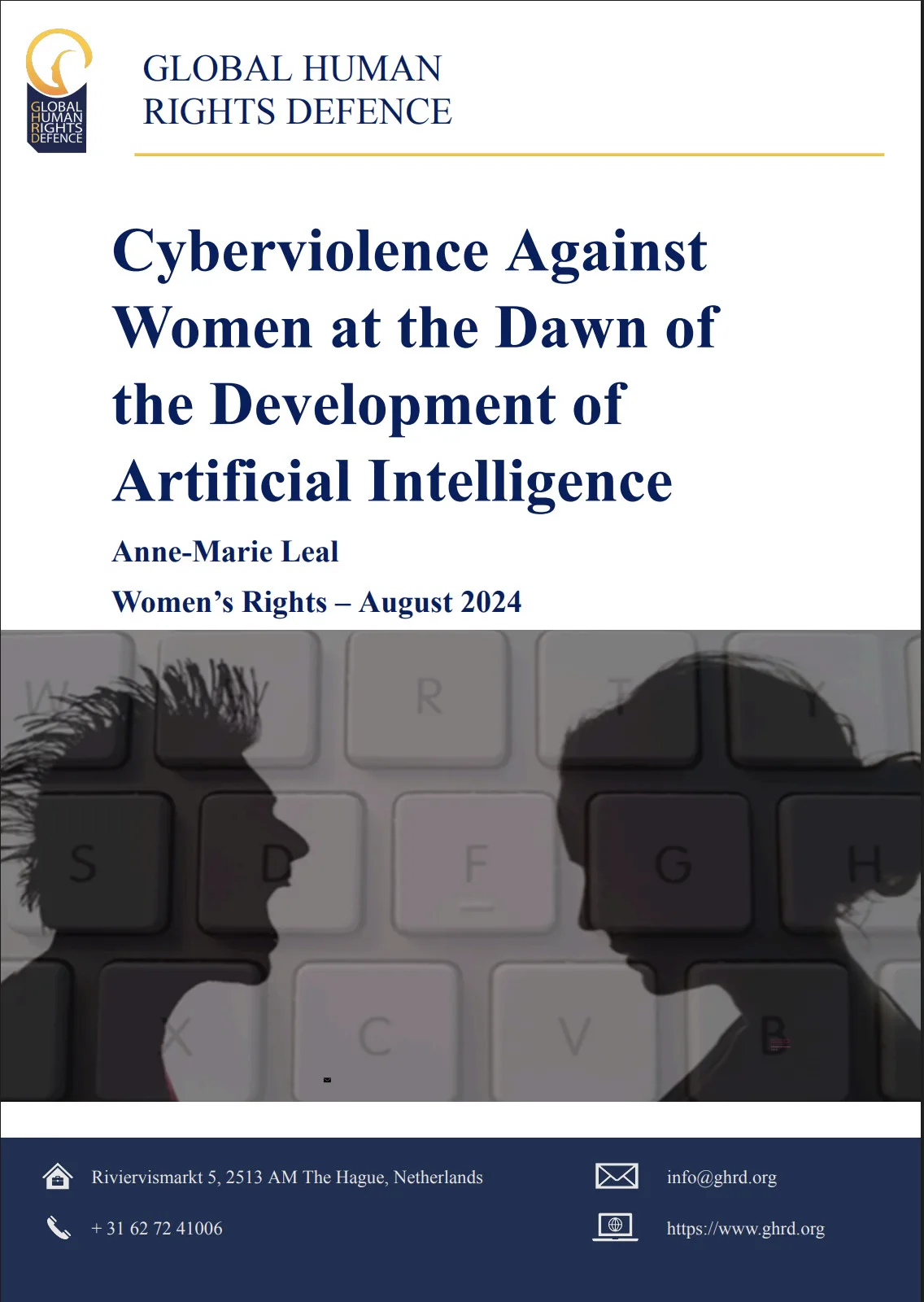
Cyberviolence Against Women at the Dawn of the Development of Artificial Intelligence
- GHRD Team
- 8 August 2024
In recent years, the upheaval caused by the digital revolution has led to the transformation of violence against women and girls. The increase in internet access worldwide and the widespread use of digital technologies have fostered the development of a new type of violence, cyberviolence. While women and girls already face daily physical, sexual, and psychological violence in the streets, at home, in public transport, or at their place of study or work, technological advances and the ease of access to the online world have amplified the existing threat, giving rise to cyberviolence. Today, cyberviolence against women and girls adds to the long list of violations of women’s rights and contributes to their insecurity by imposing itself as a continuum of violence between virtual and real spheres.
Nowadays, violence against women is the subject of numerous conventions. Physical and psychological gender-based violence has long been addressed by international law. However, cyberviolence has not yet been integrated into these instruments, likely due to its recent emergence. Nevertheless, studies like the one conducted by Plan International in 2020 reveals that 50 percent of women experience more harassment online than in the street and that 58 percent of girls have experienced online harassment (Plan International, 2020). Another survey conducted by Amnesty International confirms those alarming numbers and points out that 46 percent of women claim to have experienced online harassment or misogynistic and sexist harassment (Amnesty International, 2017).
Cyberviolence is a widespread and devastating problem among youth. It is an intersectional form of violence, exhibiting varying patterns and degrees of vulnerability and risk for different groups of women and girls. Violence against women can take many forms, especially in an online environment, including cyberharassment, cyber stalking, trolling, identify theft, non-consensual use of intimate images and videos, threats and calls to violence, sexist hate speech, induction to self-harm, unlawful access to messages or social media accounts, breach of the prohibitions of communication imposed by courts, grooming, or human trafficking. Perpetrators can be partners or ex-partners, colleagues, schoolmates or, as is often the case, anonymous individuals. Some women are particularly exposed, such as women’s rights defenders, journalists, bloggers, video gamers, public figures, and politicians. Violence and abuse online may limit women’s right to express themselves equally, freely, and without fear. These crimes are committed on the internet, through social media and messaging platforms, and by means of electronic devices. Cyberviolence affects women disproportionately, not only causing them psychological harm and suffering but also deterring them from digital participation in political, social, and cultural life (Council of Europe, n.d).
The complex nature of cyberviolence and its consequences on women’s rights are increasingly drawing attention from current scientific and professional practitioners. To gain insight into the nature of cyberviolence, Chapter 1 discusses the legal framework on online gender-based violence (OGBV). Subsequently, Chapter 2 examines different forms of cyberviolence. Finally, Chapter 3 delves into the escalation of cyberviolence due to the advancement in Artificial Intelligence (AI).
Nowadays, violence against women is the subject of numerous conventions. Physical and psychological gender-based violence has long been addressed by international law. However, cyberviolence has not yet been integrated into these instruments, likely due to its recent emergence. Nevertheless, studies like the one conducted by Plan International in 2020 reveals that 50 percent of women experience more harassment online than in the street and that 58 percent of girls have experienced online harassment (Plan International, 2020). Another survey conducted by Amnesty International confirms those alarming numbers and points out that 46 percent of women claim to have experienced online harassment or misogynistic and sexist harassment (Amnesty International, 2017).
Cyberviolence is a widespread and devastating problem among youth. It is an intersectional form of violence, exhibiting varying patterns and degrees of vulnerability and risk for different groups of women and girls. Violence against women can take many forms, especially in an online environment, including cyberharassment, cyber stalking, trolling, identify theft, non-consensual use of intimate images and videos, threats and calls to violence, sexist hate speech, induction to self-harm, unlawful access to messages or social media accounts, breach of the prohibitions of communication imposed by courts, grooming, or human trafficking. Perpetrators can be partners or ex-partners, colleagues, schoolmates or, as is often the case, anonymous individuals. Some women are particularly exposed, such as women’s rights defenders, journalists, bloggers, video gamers, public figures, and politicians. Violence and abuse online may limit women’s right to express themselves equally, freely, and without fear. These crimes are committed on the internet, through social media and messaging platforms, and by means of electronic devices. Cyberviolence affects women disproportionately, not only causing them psychological harm and suffering but also deterring them from digital participation in political, social, and cultural life (Council of Europe, n.d).
The complex nature of cyberviolence and its consequences on women’s rights are increasingly drawing attention from current scientific and professional practitioners. To gain insight into the nature of cyberviolence, Chapter 1 discusses the legal framework on online gender-based violence (OGBV). Subsequently, Chapter 2 examines different forms of cyberviolence. Finally, Chapter 3 delves into the escalation of cyberviolence due to the advancement in Artificial Intelligence (AI).
✨ AI summary
In recent years, the upheaval caused by the digital revolution has led to the transformation of violence against women and girls. The increase in internet access worldwide and the widespread use of digital technologies have fostered the development of a new type of violence, cyberviolence. While women and girls already face daily physical, sexual, and psychological violence in the streets, at home, in public transport, or at their place of study or work, technological advances and the ease of access to the online world have amplified the existing threat, giving rise to cyberviolence. Today, cyberviolence against women and girls adds to the long list of violations of women’s rights and contributes to their insecurity by imposing itself as a continuum of violence between virtual and real spheres.
Nowadays, violence against women is the subject of numerous conventions. Physical and psychological gender-based violence has long been addressed by international law. However, cyberviolence has not yet been integrated into these instruments, likely due to its recent emergence. Nevertheless, studies like the one conducted by Plan International in 2020 reveals that 50 percent of women experience more harassment online than in the street and that 58 percent of girls have experienced online harassment (Plan International, 2020). Another survey conducted by Amnesty International confirms those alarming numbers and points out that 46 percent of women claim to have experienced online harassment or misogynistic and sexist harassment (Amnesty International, 2017).
Cyberviolence is a widespread and devastating problem among youth. It is an intersectional form of violence, exhibiting varying patterns and degrees of vulnerability and risk for different groups of women and girls. Violence against women can take many forms, especially in an online environment, including cyberharassment, cyber stalking, trolling, identify theft, non-consensual use of intimate images and videos, threats and calls to violence, sexist hate speech, induction to self-harm, unlawful access to messages or social media accounts, breach of the prohibitions of communication imposed by courts, grooming, or human trafficking. Perpetrators can be partners or ex-partners, colleagues, schoolmates or, as is often the case, anonymous individuals. Some women are particularly exposed, such as women’s rights defenders, journalists, bloggers, video gamers, public figures, and politicians. Violence and abuse online may limit women’s right to express themselves equally, freely, and without fear. These crimes are committed on the internet, through social media and messaging platforms, and by means of electronic devices. Cyberviolence affects women disproportionately, not only causing them psychological harm and suffering but also deterring them from digital participation in political, social, and cultural life (Council of Europe, n.d).
The complex nature of cyberviolence and its consequences on women’s rights are increasingly drawing attention from current scientific and professional practitioners. To gain insight into the nature of cyberviolence, Chapter 1 discusses the legal framework on online gender-based violence (OGBV). Subsequently, Chapter 2 examines different forms of cyberviolence. Finally, Chapter 3 delves into the escalation of cyberviolence due to the advancement in Artificial Intelligence (AI).
Nowadays, violence against women is the subject of numerous conventions. Physical and psychological gender-based violence has long been addressed by international law. However, cyberviolence has not yet been integrated into these instruments, likely due to its recent emergence. Nevertheless, studies like the one conducted by Plan International in 2020 reveals that 50 percent of women experience more harassment online than in the street and that 58 percent of girls have experienced online harassment (Plan International, 2020). Another survey conducted by Amnesty International confirms those alarming numbers and points out that 46 percent of women claim to have experienced online harassment or misogynistic and sexist harassment (Amnesty International, 2017).
Cyberviolence is a widespread and devastating problem among youth. It is an intersectional form of violence, exhibiting varying patterns and degrees of vulnerability and risk for different groups of women and girls. Violence against women can take many forms, especially in an online environment, including cyberharassment, cyber stalking, trolling, identify theft, non-consensual use of intimate images and videos, threats and calls to violence, sexist hate speech, induction to self-harm, unlawful access to messages or social media accounts, breach of the prohibitions of communication imposed by courts, grooming, or human trafficking. Perpetrators can be partners or ex-partners, colleagues, schoolmates or, as is often the case, anonymous individuals. Some women are particularly exposed, such as women’s rights defenders, journalists, bloggers, video gamers, public figures, and politicians. Violence and abuse online may limit women’s right to express themselves equally, freely, and without fear. These crimes are committed on the internet, through social media and messaging platforms, and by means of electronic devices. Cyberviolence affects women disproportionately, not only causing them psychological harm and suffering but also deterring them from digital participation in political, social, and cultural life (Council of Europe, n.d).
The complex nature of cyberviolence and its consequences on women’s rights are increasingly drawing attention from current scientific and professional practitioners. To gain insight into the nature of cyberviolence, Chapter 1 discusses the legal framework on online gender-based violence (OGBV). Subsequently, Chapter 2 examines different forms of cyberviolence. Finally, Chapter 3 delves into the escalation of cyberviolence due to the advancement in Artificial Intelligence (AI).
Share this report
Facebook
X
LinkedIn
WhatsApp