Reports
Exploring sustainable Development in Asia
- Asia Team
- 1 June 2025
- Climate Change, Climate Rights, Sustainability
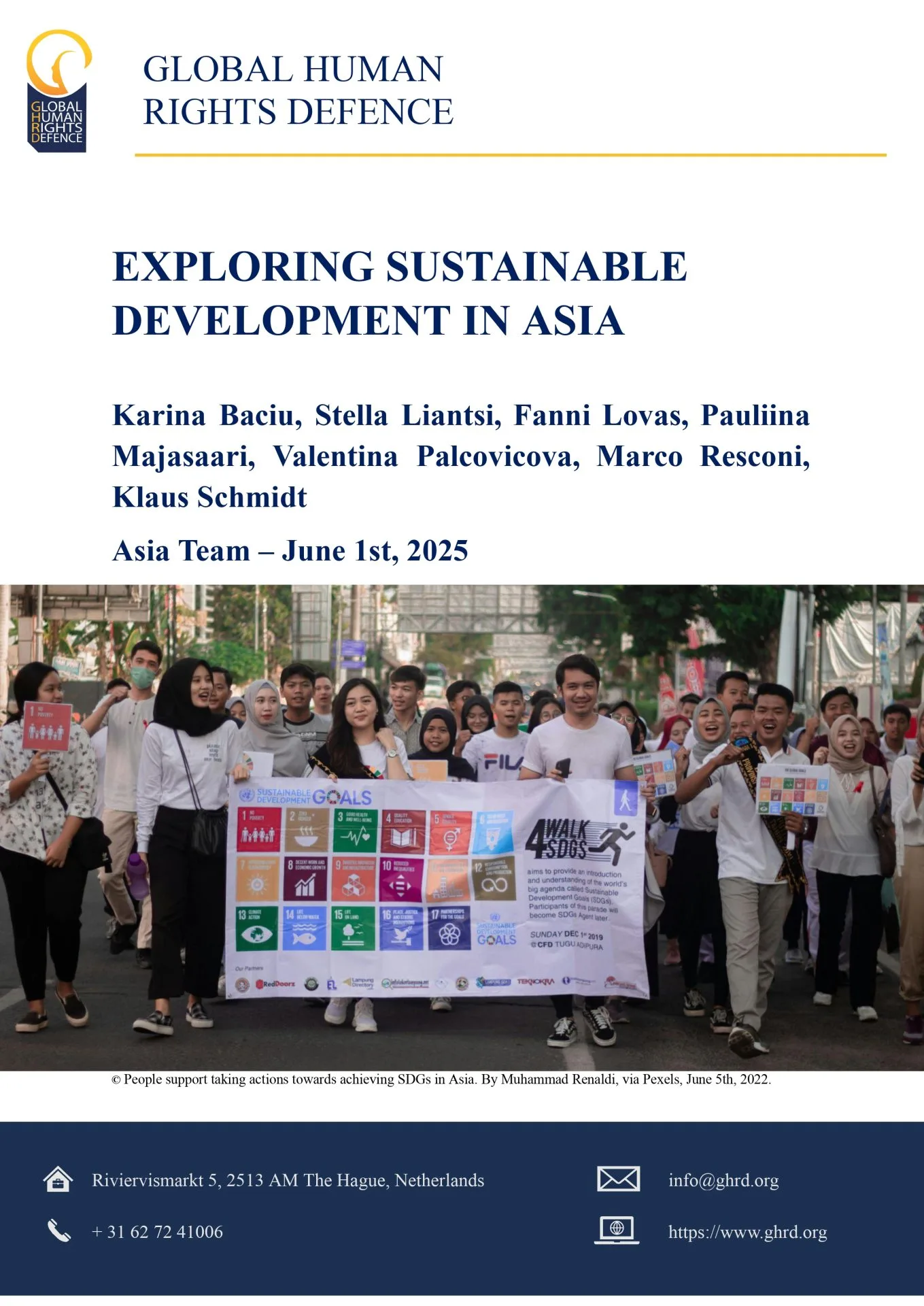
In light of the large population residing in Asia, many people still suffer from the effects of poverty, which itself gravely affects the realisation of SDGs within Asia. Policy changes would be called for on various levels, such as national, sub-regional, and regional, as well as the utilisation and reform of resources, financial and technological advancements in order to maximise sub-regional and regional cooperation, to effectively work towards achieving SDGs of the 2030 Agenda.
The East Asia region is a rapidly developing and innovative sub-region, and it has made remarkable efforts over the past few decades towards sustainable development, and its Gross Domestic Product (GDP) has increased faster annually than within the Asia-Pacific region. However, many are still living in poverty, the income levels are vastly disparate amongst countries, and environmental challenges remain. The issues that persist mostly deal with poverty reduction due to the vast amount of people still living in poverty as well as securing basic needs of people, in addition to working towards the sustainability of the ecosystem, through addressing climate change, and thereby increasing disaster resilience, while working towards creating resource efficiency leading to resource security.
The South and Southeast Asia regions have shown uneven progress towards the realisation of sustainable development. Progress has been alarmingly slow, and critical areas such as climate change, hunger eradication, and renewable energy have not seen major advancements. It is estimated that South Asia will miss the 2030 Agenda goals by nearly 30 years, and matters such as the COVID-19 pandemic’s economic downfall, political instability, and effects of climate change have slowed down possible progress. However, progress has been made in key areas such as economic inclusivity, education, healthcare, and human development.
The national policies have a great effect on the achievements made, such as climate action being gravely under-prioritised within national agendas, showing slow progression within climate matters. However, taking into account the fact that many countries within the Asia region are developing countries, progress is slower and cannot be achieved within all sectors at once.
The East Asia region is a rapidly developing and innovative sub-region, and it has made remarkable efforts over the past few decades towards sustainable development, and its Gross Domestic Product (GDP) has increased faster annually than within the Asia-Pacific region. However, many are still living in poverty, the income levels are vastly disparate amongst countries, and environmental challenges remain. The issues that persist mostly deal with poverty reduction due to the vast amount of people still living in poverty as well as securing basic needs of people, in addition to working towards the sustainability of the ecosystem, through addressing climate change, and thereby increasing disaster resilience, while working towards creating resource efficiency leading to resource security.
The South and Southeast Asia regions have shown uneven progress towards the realisation of sustainable development. Progress has been alarmingly slow, and critical areas such as climate change, hunger eradication, and renewable energy have not seen major advancements. It is estimated that South Asia will miss the 2030 Agenda goals by nearly 30 years, and matters such as the COVID-19 pandemic’s economic downfall, political instability, and effects of climate change have slowed down possible progress. However, progress has been made in key areas such as economic inclusivity, education, healthcare, and human development.
The national policies have a great effect on the achievements made, such as climate action being gravely under-prioritised within national agendas, showing slow progression within climate matters. However, taking into account the fact that many countries within the Asia region are developing countries, progress is slower and cannot be achieved within all sectors at once.
✨ AI summary
Many individuals in Asia continue to endure poverty, significantly hindering the achievement of the Sustainable Development Goals (SDGs). Policy changes at national, sub-regional, and regional levels, along with improved resource utilization and financial and technological advancements, are essential for enhanced cooperation towards the 2030 Agenda. While East Asia shows rapid development and GDP growth, disparities in income and persistent poverty, as well as environmental challenges, remain pressing issues. In South and Southeast Asia, progress is uneven, with critical areas like climate change and hunger eradication lagging. The region risks missing the 2030 Agenda goals by nearly 30 years, hindered by the COVID-19 pandemic, political instability, and climate change effects, despite some advancements in economic inclusivity and human development. National policies play a crucial role, particularly as climate action remains under-prioritized in many developing nations, slowing overall progress.
Share this report
Facebook
X
LinkedIn
WhatsApp