
Reports
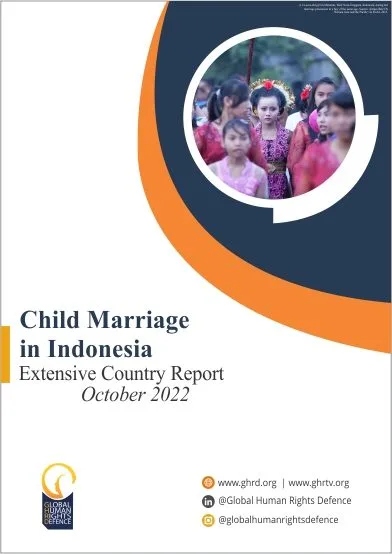
Extensive Country Report on Child Marriage in Indonesia October 2022
- GHRD Team
- 7 October 2022
Indonesia is among the top ten countries with the highest rates of child marriage under the age of 18
years. Indeed, one out of nine girls in the country gets married before their 18th birthday (UNICEF,
2020). It’s concerning since studies have shown that girls who get married before the age of 18 are four
times less likely to graduate from secondary education (UNICEF, 2020). As mentioned by Nadiem
Makarim, Minister of Education and Culture, in the National Seminar in 2021, “child marriage can
deprive the rights of and opportunities for children to access quality education and get decent work
to build a prosperous life” (Dewi & Katriana, 2021). Additionally, it can be seen that girls who marry
before the age of 18, tend to have fewer decision-making powers in the household as well as are more
exposed to experiencing domestic violence. On top of that, there are many physical and mental health
issues that arise from child marriage. For example, pregnancy and the fact that childbirth is the leading
cause of death for girls between the ages of 15 and 19 (UNICEF, 2020).
years. Indeed, one out of nine girls in the country gets married before their 18th birthday (UNICEF,
2020). It’s concerning since studies have shown that girls who get married before the age of 18 are four
times less likely to graduate from secondary education (UNICEF, 2020). As mentioned by Nadiem
Makarim, Minister of Education and Culture, in the National Seminar in 2021, “child marriage can
deprive the rights of and opportunities for children to access quality education and get decent work
to build a prosperous life” (Dewi & Katriana, 2021). Additionally, it can be seen that girls who marry
before the age of 18, tend to have fewer decision-making powers in the household as well as are more
exposed to experiencing domestic violence. On top of that, there are many physical and mental health
issues that arise from child marriage. For example, pregnancy and the fact that childbirth is the leading
cause of death for girls between the ages of 15 and 19 (UNICEF, 2020).
✨ AI summary
Indonesia is among the top ten countries with the highest rates of child marriage under the age of 18
years. Indeed, one out of nine girls in the country gets married before their 18th birthday (UNICEF,
2020). It’s concerning since studies have shown that girls who get married before the age of 18 are four
times less likely to graduate from secondary education (UNICEF, 2020). As mentioned by Nadiem
Makarim, Minister of Education and Culture, in the National Seminar in 2021, “child marriage can
deprive the rights of and opportunities for children to access quality education and get decent work
to build a prosperous life” (Dewi & Katriana, 2021). Additionally, it can be seen that girls who marry
before the age of 18, tend to have fewer decision-making powers in the household as well as are more
exposed to experiencing domestic violence. On top of that, there are many physical and mental health
issues that arise from child marriage. For example, pregnancy and the fact that childbirth is the leading
cause of death for girls between the ages of 15 and 19 (UNICEF, 2020).
Child marriage has been a common tradition throughout Asia, however with much effort from charities
and international organisations, the numbers started to reduce slowly (Fardah, 2021). The Indonesian
government itself has said it wants to combat and reduce the rates of child marriage to at least 8.7 by
2024 from the previous 11.21 in 2018 and to further reduce it to 6.9 by 2030 to meet the Sustainable
Development Goals that were set by the UN (Fardah, 2021). In accordance with this commitment, the
Ministry of National Development Planning of Indonesia and the Ministry of Woman Empowerment and Child Protection set up a national strategy for child marriage prevention in 2021 (Fardah, 2021).
The process was brought to an abrupt halt with the appearance of the COVID-19 pandemic in early
2020. This was also confirmed by the Indonesian Child Protection Commission (KPAI) which stated
that the pandemic triggered the increase of numbers in child marriage as it forced children to stay at
home which led to them dropping out, getting work, or getting married (Fardah, 2021). This is largely
due to the fact that even after the legal age for marriage was raised to 19 for girls, there are still loop-
holes in place such as getting approval from a local religious court.
This extensive country report intends to showcase the devastating situation that is happening to girls
and boys in Indonesia. The report will discuss about the historical and cultural background of child
marriage in Indonesia and the past legal framework covering child marriage. Another part of this re-
port will be focused on the existing legal framework in Indonesia as well as the international standards
that Indonesia is required to meet. The last section of the report will explain the reason why families
are pushed towards marrying their child too early, the consequences that child marriage have and last-
ly, how the government, public institutions and domestic human rights organisations are responding to this issue.
years. Indeed, one out of nine girls in the country gets married before their 18th birthday (UNICEF,
2020). It’s concerning since studies have shown that girls who get married before the age of 18 are four
times less likely to graduate from secondary education (UNICEF, 2020). As mentioned by Nadiem
Makarim, Minister of Education and Culture, in the National Seminar in 2021, “child marriage can
deprive the rights of and opportunities for children to access quality education and get decent work
to build a prosperous life” (Dewi & Katriana, 2021). Additionally, it can be seen that girls who marry
before the age of 18, tend to have fewer decision-making powers in the household as well as are more
exposed to experiencing domestic violence. On top of that, there are many physical and mental health
issues that arise from child marriage. For example, pregnancy and the fact that childbirth is the leading
cause of death for girls between the ages of 15 and 19 (UNICEF, 2020).
Child marriage has been a common tradition throughout Asia, however with much effort from charities
and international organisations, the numbers started to reduce slowly (Fardah, 2021). The Indonesian
government itself has said it wants to combat and reduce the rates of child marriage to at least 8.7 by
2024 from the previous 11.21 in 2018 and to further reduce it to 6.9 by 2030 to meet the Sustainable
Development Goals that were set by the UN (Fardah, 2021). In accordance with this commitment, the
Ministry of National Development Planning of Indonesia and the Ministry of Woman Empowerment and Child Protection set up a national strategy for child marriage prevention in 2021 (Fardah, 2021).
The process was brought to an abrupt halt with the appearance of the COVID-19 pandemic in early
2020. This was also confirmed by the Indonesian Child Protection Commission (KPAI) which stated
that the pandemic triggered the increase of numbers in child marriage as it forced children to stay at
home which led to them dropping out, getting work, or getting married (Fardah, 2021). This is largely
due to the fact that even after the legal age for marriage was raised to 19 for girls, there are still loop-
holes in place such as getting approval from a local religious court.
This extensive country report intends to showcase the devastating situation that is happening to girls
and boys in Indonesia. The report will discuss about the historical and cultural background of child
marriage in Indonesia and the past legal framework covering child marriage. Another part of this re-
port will be focused on the existing legal framework in Indonesia as well as the international standards
that Indonesia is required to meet. The last section of the report will explain the reason why families
are pushed towards marrying their child too early, the consequences that child marriage have and last-
ly, how the government, public institutions and domestic human rights organisations are responding to this issue.
Share this report
Facebook
X
LinkedIn
WhatsApp