Reports
Forced Labour in Asia
- GHRD Team
- 10 April 2024
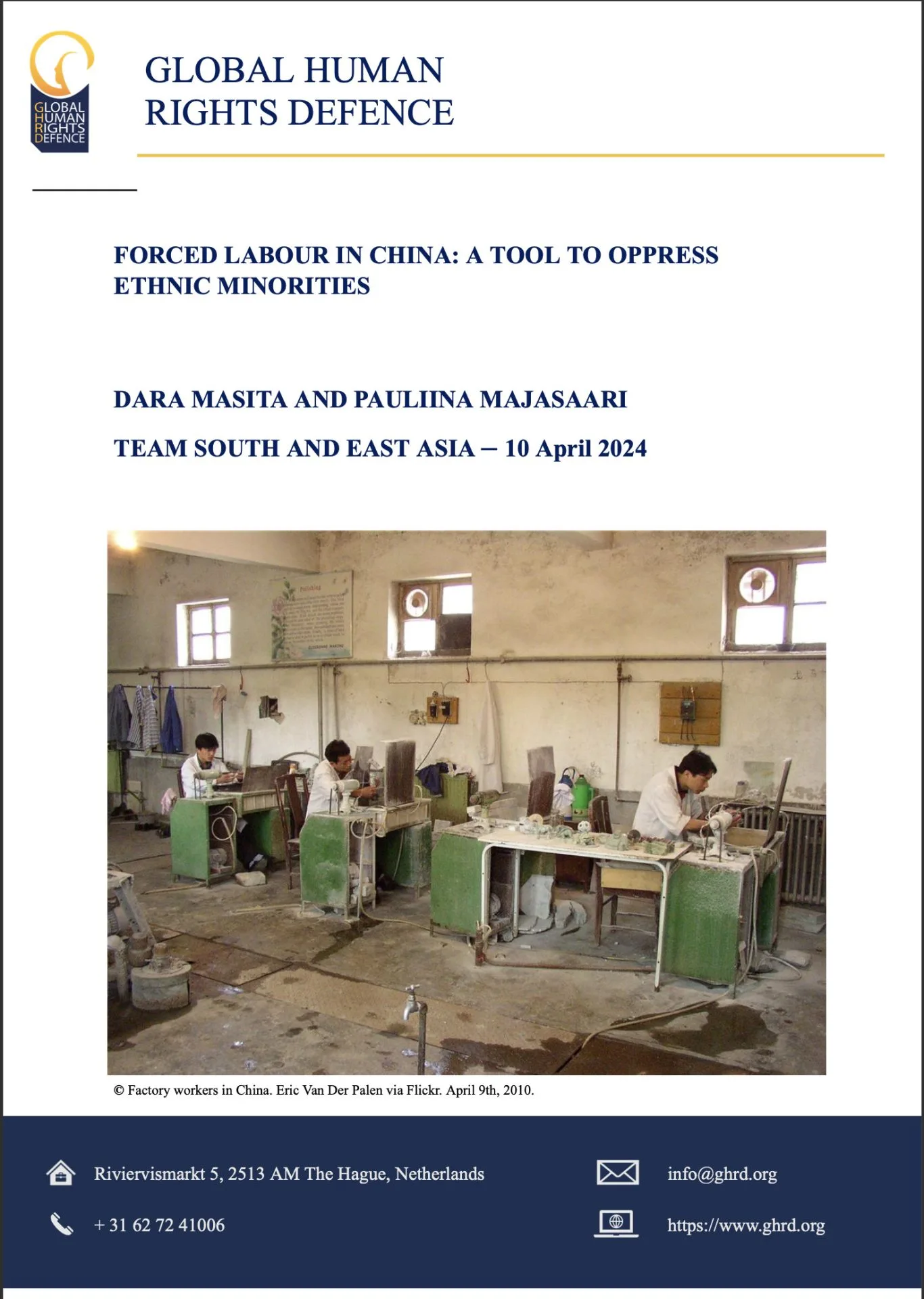
In today’s world, where the right to be free from slavery has been deemed a non-derogable
human right, all forms of slavery are expected to be abolished. Unfortunately, modern slavery
still exists, and there are around 50 million people today still stuck in slavery. 1 There are
several types of modern slavery, such as forced labour and human trafficking. 2 This report
will focus on state-imposed forced labour, highlighting China's utilisation of forced labour as
a tool to oppress ethnic minorities.
Forced labour is a type of work performed involuntarily. Workers subjected to forced labour
are under the threat of a penalty such as heavy fines, torture, or even death which drives them
to work in unbearable conditions. According to the International Labour Organisation (ILO),
three elements need to be met for labour to be considered forced labour: (i) work or service,
(ii) menace of any penalty, and (iii) involuntariness. 3 The first element pertains to any type of
work in any activity, industry, or sector. The second element refers to a broad range of
penalties to prompt them to work. The third element refers to the lack of free and informed
consent from a worker to take his or her job, as well as the freedom to leave at any time.
Forced labour persists because the perpetrators prey on poverty and discrimination. In this
case, perpetrators can be private or governmental bodies. State-imposed forced labour
happens in several countries for reasons, such as to mobilise labour for economic
development, to punish political dissents, and to discriminate based on religion and/or
ethnicity. 4 In 2022, there were still about four million people worldwide trapped in state-
imposed forced labour. 5
In China, the poverty alleviation program allows producers to utilise forced labour. Around
23 manufacturing sites indicated that the use of state-imposed forced labour might be more
widespread and include vulnerable groups such as political and ethnic minorities. 6 Politically
repressed minorities are considered to be at a high risk of exploitation because they are
specifically targeted in the program to establish more political control and reeducation. 7
Meanwhile, ethnic minorities such as the Uyghurs, other Turkic minorities, and Tibetans are
at very high risk as they are already facing systematic political repression and coercive
behaviour from the nation. Furthermore, the Uyghur minority as well as other ethnic
minorities in China represent and practise Islam and/or other minority religions (such as folk
and various other banned religions), which are different from the mainstream ideology of the
CCP of being an atheist and thereby ethnic minorities will be subjected to re-education to
remove their religious traditions and beliefs. 8
Forced labour in manufacturing sites is in the guise of any internment terminology, such as
“Education Training Centers” or “Legal Education Centers”. 9 Manufacturing sites find it
attractive to take advantage of forced labour because the government helps to fund their
operations through the poverty alleviation program. This makes China susceptible to the
international spotlight for forced labour.
human right, all forms of slavery are expected to be abolished. Unfortunately, modern slavery
still exists, and there are around 50 million people today still stuck in slavery. 1 There are
several types of modern slavery, such as forced labour and human trafficking. 2 This report
will focus on state-imposed forced labour, highlighting China's utilisation of forced labour as
a tool to oppress ethnic minorities.
Forced labour is a type of work performed involuntarily. Workers subjected to forced labour
are under the threat of a penalty such as heavy fines, torture, or even death which drives them
to work in unbearable conditions. According to the International Labour Organisation (ILO),
three elements need to be met for labour to be considered forced labour: (i) work or service,
(ii) menace of any penalty, and (iii) involuntariness. 3 The first element pertains to any type of
work in any activity, industry, or sector. The second element refers to a broad range of
penalties to prompt them to work. The third element refers to the lack of free and informed
consent from a worker to take his or her job, as well as the freedom to leave at any time.
Forced labour persists because the perpetrators prey on poverty and discrimination. In this
case, perpetrators can be private or governmental bodies. State-imposed forced labour
happens in several countries for reasons, such as to mobilise labour for economic
development, to punish political dissents, and to discriminate based on religion and/or
ethnicity. 4 In 2022, there were still about four million people worldwide trapped in state-
imposed forced labour. 5
In China, the poverty alleviation program allows producers to utilise forced labour. Around
23 manufacturing sites indicated that the use of state-imposed forced labour might be more
widespread and include vulnerable groups such as political and ethnic minorities. 6 Politically
repressed minorities are considered to be at a high risk of exploitation because they are
specifically targeted in the program to establish more political control and reeducation. 7
Meanwhile, ethnic minorities such as the Uyghurs, other Turkic minorities, and Tibetans are
at very high risk as they are already facing systematic political repression and coercive
behaviour from the nation. Furthermore, the Uyghur minority as well as other ethnic
minorities in China represent and practise Islam and/or other minority religions (such as folk
and various other banned religions), which are different from the mainstream ideology of the
CCP of being an atheist and thereby ethnic minorities will be subjected to re-education to
remove their religious traditions and beliefs. 8
Forced labour in manufacturing sites is in the guise of any internment terminology, such as
“Education Training Centers” or “Legal Education Centers”. 9 Manufacturing sites find it
attractive to take advantage of forced labour because the government helps to fund their
operations through the poverty alleviation program. This makes China susceptible to the
international spotlight for forced labour.
✨ AI summary
In today’s world, where the right to be free from slavery has been deemed a non-derogable
human right, all forms of slavery are expected to be abolished. Unfortunately, modern slavery
still exists, and there are around 50 million people today still stuck in slavery. 1 There are
several types of modern slavery, such as forced labour and human trafficking. 2 This report
will focus on state-imposed forced labour, highlighting China's utilisation of forced labour as
a tool to oppress ethnic minorities.
Forced labour is a type of work performed involuntarily. Workers subjected to forced labour
are under the threat of a penalty such as heavy fines, torture, or even death which drives them
to work in unbearable conditions. According to the International Labour Organisation (ILO),
three elements need to be met for labour to be considered forced labour: (i) work or service,
(ii) menace of any penalty, and (iii) involuntariness. 3 The first element pertains to any type of
work in any activity, industry, or sector. The second element refers to a broad range of
penalties to prompt them to work. The third element refers to the lack of free and informed
consent from a worker to take his or her job, as well as the freedom to leave at any time.
Forced labour persists because the perpetrators prey on poverty and discrimination. In this
case, perpetrators can be private or governmental bodies. State-imposed forced labour
happens in several countries for reasons, such as to mobilise labour for economic
development, to punish political dissents, and to discriminate based on religion and/or
ethnicity. 4 In 2022, there were still about four million people worldwide trapped in state-
imposed forced labour. 5
In China, the poverty alleviation program allows producers to utilise forced labour. Around
23 manufacturing sites indicated that the use of state-imposed forced labour might be more
widespread and include vulnerable groups such as political and ethnic minorities. 6 Politically
repressed minorities are considered to be at a high risk of exploitation because they are
specifically targeted in the program to establish more political control and reeducation. 7
Meanwhile, ethnic minorities such as the Uyghurs, other Turkic minorities, and Tibetans are
at very high risk as they are already facing systematic political repression and coercive
behaviour from the nation. Furthermore, the Uyghur minority as well as other ethnic
minorities in China represent and practise Islam and/or other minority religions (such as folk
and various other banned religions), which are different from the mainstream ideology of the
CCP of being an atheist and thereby ethnic minorities will be subjected to re-education to
remove their religious traditions and beliefs. 8
Forced labour in manufacturing sites is in the guise of any internment terminology, such as
“Education Training Centers” or “Legal Education Centers”. 9 Manufacturing sites find it
attractive to take advantage of forced labour because the government helps to fund their
operations through the poverty alleviation program. This makes China susceptible to the
international spotlight for forced labour.
human right, all forms of slavery are expected to be abolished. Unfortunately, modern slavery
still exists, and there are around 50 million people today still stuck in slavery. 1 There are
several types of modern slavery, such as forced labour and human trafficking. 2 This report
will focus on state-imposed forced labour, highlighting China's utilisation of forced labour as
a tool to oppress ethnic minorities.
Forced labour is a type of work performed involuntarily. Workers subjected to forced labour
are under the threat of a penalty such as heavy fines, torture, or even death which drives them
to work in unbearable conditions. According to the International Labour Organisation (ILO),
three elements need to be met for labour to be considered forced labour: (i) work or service,
(ii) menace of any penalty, and (iii) involuntariness. 3 The first element pertains to any type of
work in any activity, industry, or sector. The second element refers to a broad range of
penalties to prompt them to work. The third element refers to the lack of free and informed
consent from a worker to take his or her job, as well as the freedom to leave at any time.
Forced labour persists because the perpetrators prey on poverty and discrimination. In this
case, perpetrators can be private or governmental bodies. State-imposed forced labour
happens in several countries for reasons, such as to mobilise labour for economic
development, to punish political dissents, and to discriminate based on religion and/or
ethnicity. 4 In 2022, there were still about four million people worldwide trapped in state-
imposed forced labour. 5
In China, the poverty alleviation program allows producers to utilise forced labour. Around
23 manufacturing sites indicated that the use of state-imposed forced labour might be more
widespread and include vulnerable groups such as political and ethnic minorities. 6 Politically
repressed minorities are considered to be at a high risk of exploitation because they are
specifically targeted in the program to establish more political control and reeducation. 7
Meanwhile, ethnic minorities such as the Uyghurs, other Turkic minorities, and Tibetans are
at very high risk as they are already facing systematic political repression and coercive
behaviour from the nation. Furthermore, the Uyghur minority as well as other ethnic
minorities in China represent and practise Islam and/or other minority religions (such as folk
and various other banned religions), which are different from the mainstream ideology of the
CCP of being an atheist and thereby ethnic minorities will be subjected to re-education to
remove their religious traditions and beliefs. 8
Forced labour in manufacturing sites is in the guise of any internment terminology, such as
“Education Training Centers” or “Legal Education Centers”. 9 Manufacturing sites find it
attractive to take advantage of forced labour because the government helps to fund their
operations through the poverty alleviation program. This makes China susceptible to the
international spotlight for forced labour.
Share this report
Facebook
X
LinkedIn
WhatsApp