Reports
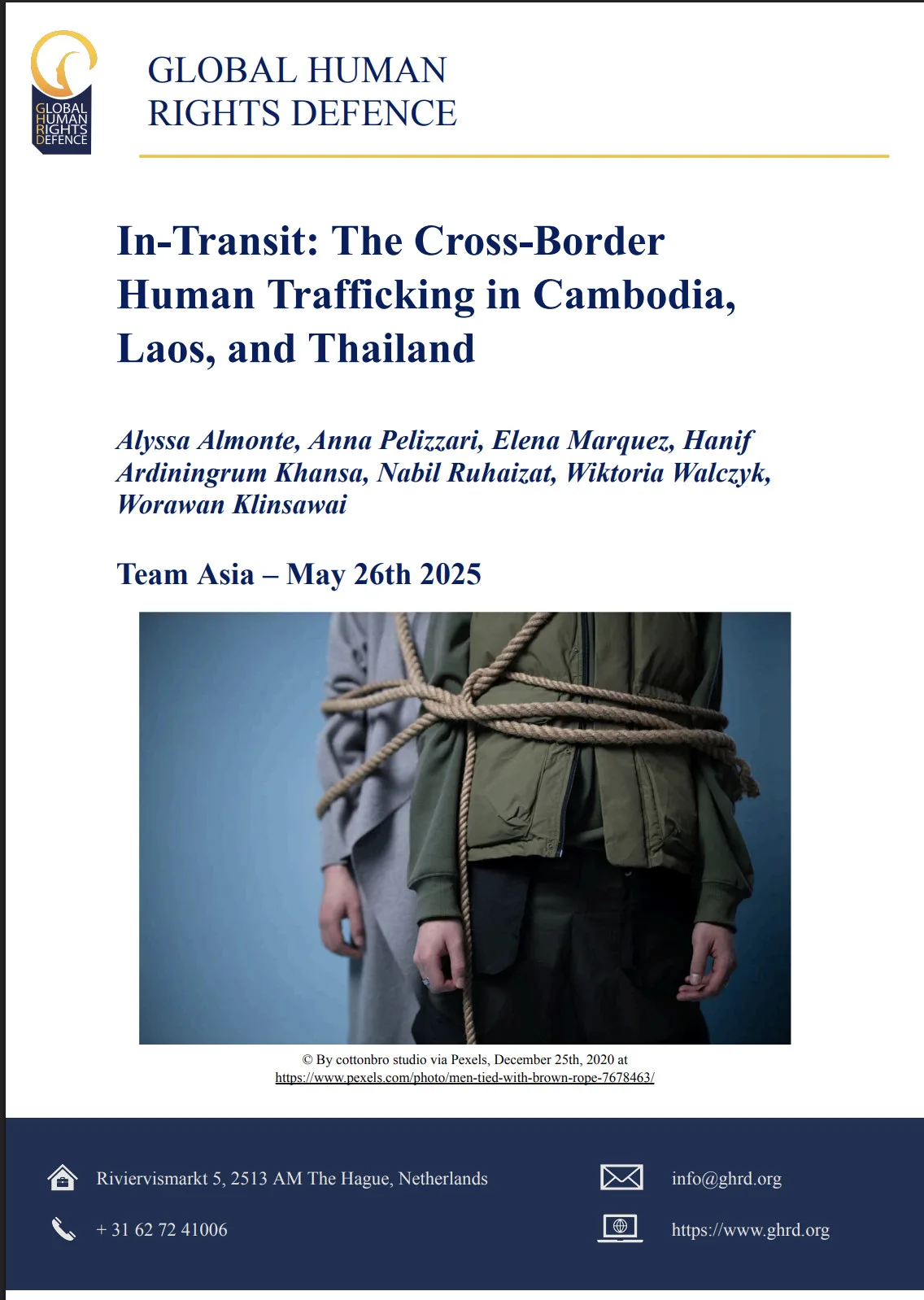
In-Transit: The Cross-Border Human Trafficking in Cambodia, Laos, and Thailand
- Asia Team
- 26 May 2025
In-Transit: The Cross-Border Human Trafficking in Cambodia, Laos, and Thailand provides an in-depth analysis of human trafficking within the Greater Mekong Subregion, focusing on Cambodia, Laos, and Thailand. The report examines the socio-economic factors, legislative frameworks, and enforcement challenges that contribute to the persistence of trafficking in persons across these countries. It also considers the regional and international dynamics that influence trafficking flows and demand.
The report identifies key vulnerabilities, including poverty, statelessness, and gender and age disparities, which increase the risk of exploitation. It evaluates gaps in legal protections and operational enforcement that allow traffickers to operate with relative impunity. Additionally, it highlights notable cases that illustrate the complex nature of trafficking networks and the challenges faced by governments and civil society in addressing these issues.
Recent developments in capacity building, victim-sensitive approaches, and survivor engagement are reviewed, alongside the impact of reductions in foreign development aid on anti-trafficking efforts. By providing a comprehensive overview of existing challenges and progress, the report aims to inform policymakers, practitioners, and stakeholders engaged in combating human trafficking in the region.
The report identifies key vulnerabilities, including poverty, statelessness, and gender and age disparities, which increase the risk of exploitation. It evaluates gaps in legal protections and operational enforcement that allow traffickers to operate with relative impunity. Additionally, it highlights notable cases that illustrate the complex nature of trafficking networks and the challenges faced by governments and civil society in addressing these issues.
Recent developments in capacity building, victim-sensitive approaches, and survivor engagement are reviewed, alongside the impact of reductions in foreign development aid on anti-trafficking efforts. By providing a comprehensive overview of existing challenges and progress, the report aims to inform policymakers, practitioners, and stakeholders engaged in combating human trafficking in the region.
✨ AI summary
In-Transit: The Cross-Border Human Trafficking in Cambodia, Laos, and Thailand provides an in-depth analysis of human trafficking within the Greater Mekong Subregion, focusing on Cambodia, Laos, and Thailand. The report examines the socio-economic factors, legislative frameworks, and enforcement challenges that contribute to the persistence of trafficking in persons across these countries. It also considers the regional and international dynamics that influence trafficking flows and demand.
The report identifies key vulnerabilities, including poverty, statelessness, and gender and age disparities, which increase the risk of exploitation. It evaluates gaps in legal protections and operational enforcement that allow traffickers to operate with relative impunity. Additionally, it highlights notable cases that illustrate the complex nature of trafficking networks and the challenges faced by governments and civil society in addressing these issues.
Recent developments in capacity building, victim-sensitive approaches, and survivor engagement are reviewed, alongside the impact of reductions in foreign development aid on anti-trafficking efforts. By providing a comprehensive overview of existing challenges and progress, the report aims to inform policymakers, practitioners, and stakeholders engaged in combating human trafficking in the region.
The report identifies key vulnerabilities, including poverty, statelessness, and gender and age disparities, which increase the risk of exploitation. It evaluates gaps in legal protections and operational enforcement that allow traffickers to operate with relative impunity. Additionally, it highlights notable cases that illustrate the complex nature of trafficking networks and the challenges faced by governments and civil society in addressing these issues.
Recent developments in capacity building, victim-sensitive approaches, and survivor engagement are reviewed, alongside the impact of reductions in foreign development aid on anti-trafficking efforts. By providing a comprehensive overview of existing challenges and progress, the report aims to inform policymakers, practitioners, and stakeholders engaged in combating human trafficking in the region.
Share this report
Facebook
X
LinkedIn
WhatsApp