Reports
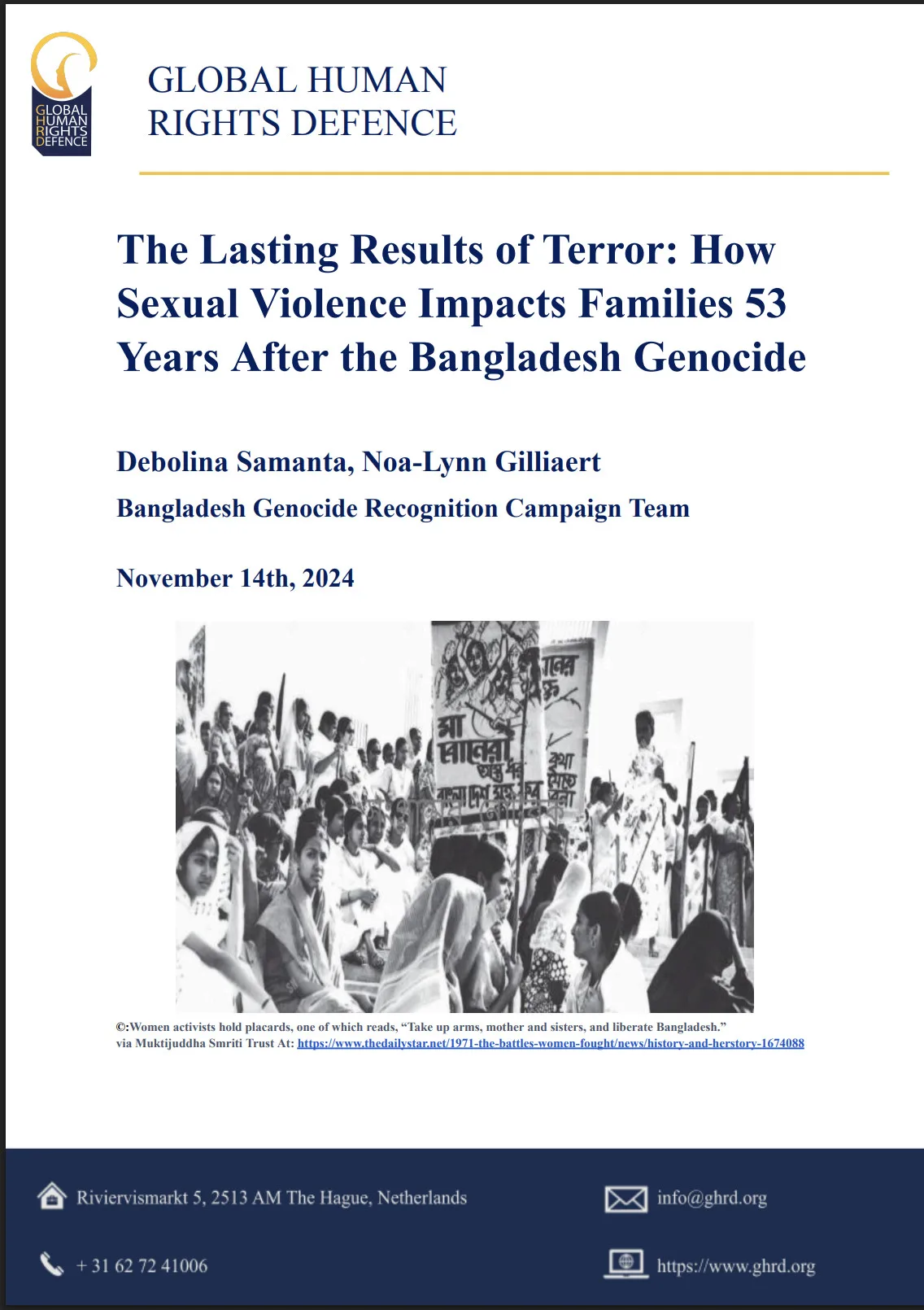
The Lasting Results of Terror: How Sexual Violence Impacts Families 53 Years After the Bangladesh Genocide
- Bangladesh Campaign
- 14 November 2024
The 1971 Bangladesh Genocide, which remains unrecognised internationally, stands as a deeply tragic event, marked by the widespread use of rape as a strategic weapon of war, with an estimated 200,000 to 400,000 women enduring systematic sexual violence perpetrated by the Pakistani military and its allies (Rafiq, 2020). The scale and nature of these assaults—targeted, deliberate, and militаrised—constitute what scholars and international law refer to as genocidal rape. Sexual violence was used as a tool aimed at changing the core of Bengali identity by instilling fear, eroding morale, and disintegrating the population demographics. The violence was beyond religious barriers, it concentrated on changing the national and ethnic identity of the Bengali people (Jahan, 2012). The post-independence nation acknowledged rape victims as Birangonas (war heroines), even though many were abandoned by their families and lived in silence due to societal stigma (Mookherjee, 2021). Decades later, survivors still face social stigmas, emphasising the growing need for recognition, reparations, and trauma-informed interventions by the present Bangladeshi government. This report will address the historical context, and long-term consequences of the wartime crimes that have impacted Bangladesh’s family dynamics, social norms, and gender relations. Furthermore, it will examine the international legal framework, particularly human rights laws, and how it has evolved to recognise rape as a war crime, including remedies and support systems for sexual violence survivors in Bangladesh (EFSAS, 2021).
✨ AI summary
The 1971 Bangladesh Genocide, which remains unrecognised internationally, stands as a deeply tragic event, marked by the widespread use of rape as a strategic weapon of war, with an estimated 200,000 to 400,000 women enduring systematic sexual violence perpetrated by the Pakistani military and its allies (Rafiq, 2020). The scale and nature of these assaults—targeted, deliberate, and militаrised—constitute what scholars and international law refer to as genocidal rape. Sexual violence was used as a tool aimed at changing the core of Bengali identity by instilling fear, eroding morale, and disintegrating the population demographics. The violence was beyond religious barriers, it concentrated on changing the national and ethnic identity of the Bengali people (Jahan, 2012). The post-independence nation acknowledged rape victims as Birangonas (war heroines), even though many were abandoned by their families and lived in silence due to societal stigma (Mookherjee, 2021). Decades later, survivors still face social stigmas, emphasising the growing need for recognition, reparations, and trauma-informed interventions by the present Bangladeshi government. This report will address the historical context, and long-term consequences of the wartime crimes that have impacted Bangladesh’s family dynamics, social norms, and gender relations. Furthermore, it will examine the international legal framework, particularly human rights laws, and how it has evolved to recognise rape as a war crime, including remedies and support systems for sexual violence survivors in Bangladesh (EFSAS, 2021).
Share this report
Facebook
X
LinkedIn
WhatsApp