
Reports
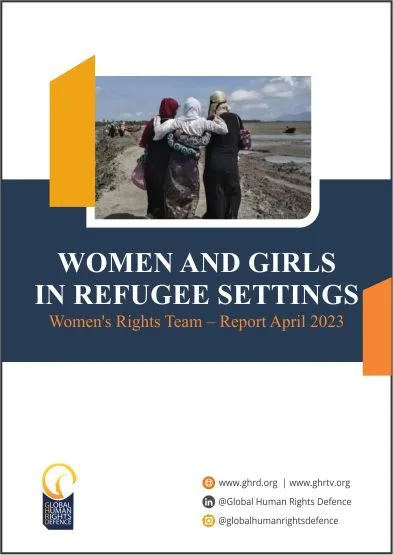
Women and Girls in Refugee Settings
- GHRD Team
- 7 April 2023
The 1951 UN Refugee Convention, the first international legal document relating to asylum and
migration, provides for a definition of what a refugee ought to be. Interestingly enough, this definition
is defined in the masculine as a person who, “owing to well-founded fear of being persecuted for
reasons of race, religion, nationality, membership of a particular social group or political opinion, is
outside the country of his nationality and is unable or, owing to such fear, is unwilling to avail himself
of the protection of that country; or who, not having a nationality and being outside the country of
his former habitual residence as a result of such events, is unable or, owing to such fear, is unwilling
to return to it.”1
While the inclusion of the term ‘sex’ was discussed in the list of grounds for non-
discrimination in Article 3 of the Convention, the delegates decided against it as, like pointed out by
the British delegate at the time, “the equality of the sexes was a matter for national legislation”2
and the
inclusion of gender might not coincide with national legislations.3 This was further underlined by the
UN High Commissioner for Refugee at the time, Van Heuven Goedhart, who pointed that the inclusion
of sex/gender in the discriminatory grounds was not necessarily as he “doubted strongly whether there
would be any cases of persecution on account of sex”.4
This absence of gender approach in the asylum framework was a large miscalculation on the part of the
delegates as it has been largely shown since that women and girls face disproportionate struggles
in seeking asylum. However, the mention of the specific struggle faced by women and girls in refugee
settings was only brought up decades later thanks to the work of NGOs and academics in the late
1980s, early 1990s.5
They pointed out that, although no one argued that women could be refugees, the
definition was applied in a way that ignored some of the persecution faced by women. Spijkerboer
notes for instance the common rejection of sexual violence as a ground for persecution as it was
defined as a private act. Similarly, issues of gender discrimination, even if brought up a level of harm
severe enough to amount to persecution in the sense of the Convention, were often just sent back as an
issue of national sovereignty.6
This grassroot work allowed for a change of perspective at the UN level,
focusing the 1995 UNHCR’s calendar on refugee women which led to the organization of multiple
conferences on the topic as well as the publication of conclusions7
and guidelines8
. The European
Asylum system, in copying the UN’s asylum policies down the line added the mention of gender and
gender sensitive language to its documents, particularly the Qualification Directive which define the
grounds receivable for asylum to be granted. Through the work of UN Women and CEDAW9
, the UN
has also now caught up on the inclusion of women and girls as a particular social group and of gender
as a ground for persecution.10 However, there is still immense work to be done in reporting, defining
and effectively responding to the harm faced by refugee women and girls around the globe.
It is in this context that this report will dwell into the gender specific harm suffered by women and girls
in refugee settings. To do so, it will follow the chronological journey of asylum seekers, highlighting at
every step of this process the gender specific hardships. In this sense, it will first look at (1) the causes
of flight and displacement , before looking at (2) the experience of the refugee journey for women and
girls, (3) the reception conditions and the life of women and girls in refugee camps. Finally, it will
highlight (4) the particular obstacles that LGBTQIA+ women have to overcome in the qualification
process.
migration, provides for a definition of what a refugee ought to be. Interestingly enough, this definition
is defined in the masculine as a person who, “owing to well-founded fear of being persecuted for
reasons of race, religion, nationality, membership of a particular social group or political opinion, is
outside the country of his nationality and is unable or, owing to such fear, is unwilling to avail himself
of the protection of that country; or who, not having a nationality and being outside the country of
his former habitual residence as a result of such events, is unable or, owing to such fear, is unwilling
to return to it.”1
While the inclusion of the term ‘sex’ was discussed in the list of grounds for non-
discrimination in Article 3 of the Convention, the delegates decided against it as, like pointed out by
the British delegate at the time, “the equality of the sexes was a matter for national legislation”2
and the
inclusion of gender might not coincide with national legislations.3 This was further underlined by the
UN High Commissioner for Refugee at the time, Van Heuven Goedhart, who pointed that the inclusion
of sex/gender in the discriminatory grounds was not necessarily as he “doubted strongly whether there
would be any cases of persecution on account of sex”.4
This absence of gender approach in the asylum framework was a large miscalculation on the part of the
delegates as it has been largely shown since that women and girls face disproportionate struggles
in seeking asylum. However, the mention of the specific struggle faced by women and girls in refugee
settings was only brought up decades later thanks to the work of NGOs and academics in the late
1980s, early 1990s.5
They pointed out that, although no one argued that women could be refugees, the
definition was applied in a way that ignored some of the persecution faced by women. Spijkerboer
notes for instance the common rejection of sexual violence as a ground for persecution as it was
defined as a private act. Similarly, issues of gender discrimination, even if brought up a level of harm
severe enough to amount to persecution in the sense of the Convention, were often just sent back as an
issue of national sovereignty.6
This grassroot work allowed for a change of perspective at the UN level,
focusing the 1995 UNHCR’s calendar on refugee women which led to the organization of multiple
conferences on the topic as well as the publication of conclusions7
and guidelines8
. The European
Asylum system, in copying the UN’s asylum policies down the line added the mention of gender and
gender sensitive language to its documents, particularly the Qualification Directive which define the
grounds receivable for asylum to be granted. Through the work of UN Women and CEDAW9
, the UN
has also now caught up on the inclusion of women and girls as a particular social group and of gender
as a ground for persecution.10 However, there is still immense work to be done in reporting, defining
and effectively responding to the harm faced by refugee women and girls around the globe.
It is in this context that this report will dwell into the gender specific harm suffered by women and girls
in refugee settings. To do so, it will follow the chronological journey of asylum seekers, highlighting at
every step of this process the gender specific hardships. In this sense, it will first look at (1) the causes
of flight and displacement , before looking at (2) the experience of the refugee journey for women and
girls, (3) the reception conditions and the life of women and girls in refugee camps. Finally, it will
highlight (4) the particular obstacles that LGBTQIA+ women have to overcome in the qualification
process.
✨ AI summary
The 1951 UN Refugee Convention, the first international legal document relating to asylum and
migration, provides for a definition of what a refugee ought to be. Interestingly enough, this definition
is defined in the masculine as a person who, “owing to well-founded fear of being persecuted for
reasons of race, religion, nationality, membership of a particular social group or political opinion, is
outside the country of his nationality and is unable or, owing to such fear, is unwilling to avail himself
of the protection of that country; or who, not having a nationality and being outside the country of
his former habitual residence as a result of such events, is unable or, owing to such fear, is unwilling
to return to it.”1
While the inclusion of the term ‘sex’ was discussed in the list of grounds for non-
discrimination in Article 3 of the Convention, the delegates decided against it as, like pointed out by
the British delegate at the time, “the equality of the sexes was a matter for national legislation”2
and the
inclusion of gender might not coincide with national legislations.3 This was further underlined by the
UN High Commissioner for Refugee at the time, Van Heuven Goedhart, who pointed that the inclusion
of sex/gender in the discriminatory grounds was not necessarily as he “doubted strongly whether there
would be any cases of persecution on account of sex”.4
This absence of gender approach in the asylum framework was a large miscalculation on the part of the
delegates as it has been largely shown since that women and girls face disproportionate struggles
in seeking asylum. However, the mention of the specific struggle faced by women and girls in refugee
settings was only brought up decades later thanks to the work of NGOs and academics in the late
1980s, early 1990s.5
They pointed out that, although no one argued that women could be refugees, the
definition was applied in a way that ignored some of the persecution faced by women. Spijkerboer
notes for instance the common rejection of sexual violence as a ground for persecution as it was
defined as a private act. Similarly, issues of gender discrimination, even if brought up a level of harm
severe enough to amount to persecution in the sense of the Convention, were often just sent back as an
issue of national sovereignty.6
This grassroot work allowed for a change of perspective at the UN level,
focusing the 1995 UNHCR’s calendar on refugee women which led to the organization of multiple
conferences on the topic as well as the publication of conclusions7
and guidelines8
. The European
Asylum system, in copying the UN’s asylum policies down the line added the mention of gender and
gender sensitive language to its documents, particularly the Qualification Directive which define the
grounds receivable for asylum to be granted. Through the work of UN Women and CEDAW9
, the UN
has also now caught up on the inclusion of women and girls as a particular social group and of gender
as a ground for persecution.10 However, there is still immense work to be done in reporting, defining
and effectively responding to the harm faced by refugee women and girls around the globe.
It is in this context that this report will dwell into the gender specific harm suffered by women and girls
in refugee settings. To do so, it will follow the chronological journey of asylum seekers, highlighting at
every step of this process the gender specific hardships. In this sense, it will first look at (1) the causes
of flight and displacement , before looking at (2) the experience of the refugee journey for women and
girls, (3) the reception conditions and the life of women and girls in refugee camps. Finally, it will
highlight (4) the particular obstacles that LGBTQIA+ women have to overcome in the qualification
process.
migration, provides for a definition of what a refugee ought to be. Interestingly enough, this definition
is defined in the masculine as a person who, “owing to well-founded fear of being persecuted for
reasons of race, religion, nationality, membership of a particular social group or political opinion, is
outside the country of his nationality and is unable or, owing to such fear, is unwilling to avail himself
of the protection of that country; or who, not having a nationality and being outside the country of
his former habitual residence as a result of such events, is unable or, owing to such fear, is unwilling
to return to it.”1
While the inclusion of the term ‘sex’ was discussed in the list of grounds for non-
discrimination in Article 3 of the Convention, the delegates decided against it as, like pointed out by
the British delegate at the time, “the equality of the sexes was a matter for national legislation”2
and the
inclusion of gender might not coincide with national legislations.3 This was further underlined by the
UN High Commissioner for Refugee at the time, Van Heuven Goedhart, who pointed that the inclusion
of sex/gender in the discriminatory grounds was not necessarily as he “doubted strongly whether there
would be any cases of persecution on account of sex”.4
This absence of gender approach in the asylum framework was a large miscalculation on the part of the
delegates as it has been largely shown since that women and girls face disproportionate struggles
in seeking asylum. However, the mention of the specific struggle faced by women and girls in refugee
settings was only brought up decades later thanks to the work of NGOs and academics in the late
1980s, early 1990s.5
They pointed out that, although no one argued that women could be refugees, the
definition was applied in a way that ignored some of the persecution faced by women. Spijkerboer
notes for instance the common rejection of sexual violence as a ground for persecution as it was
defined as a private act. Similarly, issues of gender discrimination, even if brought up a level of harm
severe enough to amount to persecution in the sense of the Convention, were often just sent back as an
issue of national sovereignty.6
This grassroot work allowed for a change of perspective at the UN level,
focusing the 1995 UNHCR’s calendar on refugee women which led to the organization of multiple
conferences on the topic as well as the publication of conclusions7
and guidelines8
. The European
Asylum system, in copying the UN’s asylum policies down the line added the mention of gender and
gender sensitive language to its documents, particularly the Qualification Directive which define the
grounds receivable for asylum to be granted. Through the work of UN Women and CEDAW9
, the UN
has also now caught up on the inclusion of women and girls as a particular social group and of gender
as a ground for persecution.10 However, there is still immense work to be done in reporting, defining
and effectively responding to the harm faced by refugee women and girls around the globe.
It is in this context that this report will dwell into the gender specific harm suffered by women and girls
in refugee settings. To do so, it will follow the chronological journey of asylum seekers, highlighting at
every step of this process the gender specific hardships. In this sense, it will first look at (1) the causes
of flight and displacement , before looking at (2) the experience of the refugee journey for women and
girls, (3) the reception conditions and the life of women and girls in refugee camps. Finally, it will
highlight (4) the particular obstacles that LGBTQIA+ women have to overcome in the qualification
process.
Share this report
Facebook
X
LinkedIn
WhatsApp