
Reports
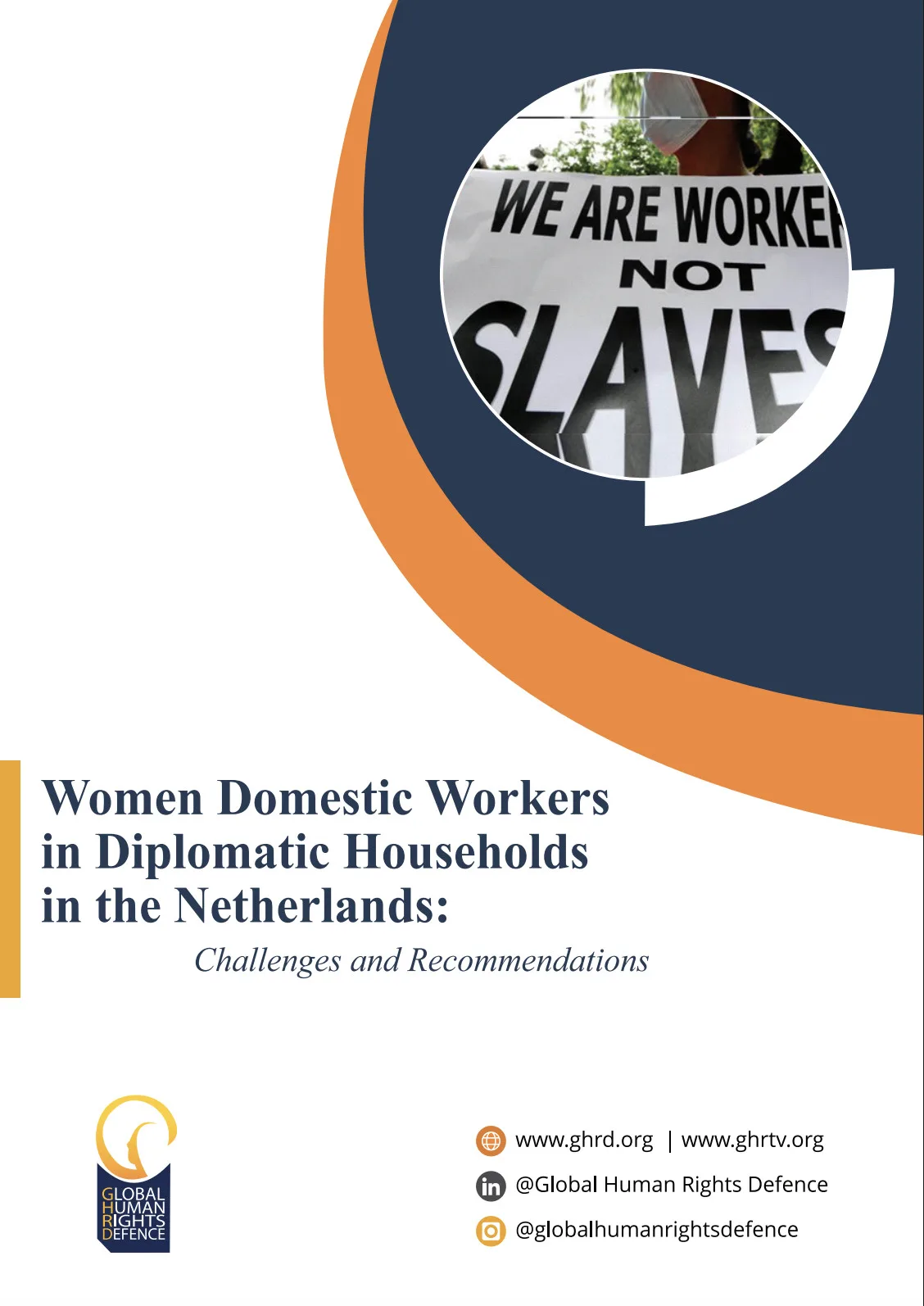
Women Domestic Workes in Diplomatic Households in The Netherlands: Challenges and Recommendations
- GHRD Team
- 7 November 2023
Migrant domestic workers face significant vulnerability as they are highly susceptible to abuse and exploitation, often enduring these injustices behind closed doors. This hidden nature of their plight makes it challenging for them to seek assistance and for outsiders to detect the abuse. In diplomatic households, which serve as residences for international diplomats and embassy staff, women domestic workers are commonly hired to carry out diverse household responsibilities. Tackling this issue poses a serious and complex challenge for host governments (Human Rights Watch, March 21, 2014).
According to documents obtained by the Volkskrant, the Dutch Ministry of Foreign Affairs has received 26 complaints in the past five years from domestic workers employed by diplomats in embassies in the Netherlands. These complaints involve issues such as underpayment, poor working conditions, and “inappropriate behaviour” (NL TIMES July 14, 2016).
FairWork, a non-profit organisation dedicated to addressing worker exploitation in the Netherlands, has stated that these complaints originate from approximately 14 different embassies, including those of Saudi Arabia, Kuwait, the United Arab Emirates, Qatar, India, Somalia, Bolivia, Ghana, the International Criminal Court, and the European Patent Office. The affected workers come from countries such as Asia, Africa and South America (NL TIMES July 14, 2016) & (Fair work Foundation).
This research investigates the legal framework pertaining to domestic workers employed by diplomats, evaluates the challenges they face, and offers recommendations to tackle these issues. It examines the extent and significance of the problem, identifies the obstacles encountered, identifies gaps in the legal framework and considers international standards and recommendations in order to propose effective measures.
According to documents obtained by the Volkskrant, the Dutch Ministry of Foreign Affairs has received 26 complaints in the past five years from domestic workers employed by diplomats in embassies in the Netherlands. These complaints involve issues such as underpayment, poor working conditions, and “inappropriate behaviour” (NL TIMES July 14, 2016).
FairWork, a non-profit organisation dedicated to addressing worker exploitation in the Netherlands, has stated that these complaints originate from approximately 14 different embassies, including those of Saudi Arabia, Kuwait, the United Arab Emirates, Qatar, India, Somalia, Bolivia, Ghana, the International Criminal Court, and the European Patent Office. The affected workers come from countries such as Asia, Africa and South America (NL TIMES July 14, 2016) & (Fair work Foundation).
This research investigates the legal framework pertaining to domestic workers employed by diplomats, evaluates the challenges they face, and offers recommendations to tackle these issues. It examines the extent and significance of the problem, identifies the obstacles encountered, identifies gaps in the legal framework and considers international standards and recommendations in order to propose effective measures.
✨ AI summary
Migrant domestic workers face significant vulnerability as they are highly susceptible to abuse and exploitation, often enduring these injustices behind closed doors. This hidden nature of their plight makes it challenging for them to seek assistance and for outsiders to detect the abuse. In diplomatic households, which serve as residences for international diplomats and embassy staff, women domestic workers are commonly hired to carry out diverse household responsibilities. Tackling this issue poses a serious and complex challenge for host governments (Human Rights Watch, March 21, 2014).
According to documents obtained by the Volkskrant, the Dutch Ministry of Foreign Affairs has received 26 complaints in the past five years from domestic workers employed by diplomats in embassies in the Netherlands. These complaints involve issues such as underpayment, poor working conditions, and “inappropriate behaviour” (NL TIMES July 14, 2016).
FairWork, a non-profit organisation dedicated to addressing worker exploitation in the Netherlands, has stated that these complaints originate from approximately 14 different embassies, including those of Saudi Arabia, Kuwait, the United Arab Emirates, Qatar, India, Somalia, Bolivia, Ghana, the International Criminal Court, and the European Patent Office. The affected workers come from countries such as Asia, Africa and South America (NL TIMES July 14, 2016) & (Fair work Foundation).
This research investigates the legal framework pertaining to domestic workers employed by diplomats, evaluates the challenges they face, and offers recommendations to tackle these issues. It examines the extent and significance of the problem, identifies the obstacles encountered, identifies gaps in the legal framework and considers international standards and recommendations in order to propose effective measures.
According to documents obtained by the Volkskrant, the Dutch Ministry of Foreign Affairs has received 26 complaints in the past five years from domestic workers employed by diplomats in embassies in the Netherlands. These complaints involve issues such as underpayment, poor working conditions, and “inappropriate behaviour” (NL TIMES July 14, 2016).
FairWork, a non-profit organisation dedicated to addressing worker exploitation in the Netherlands, has stated that these complaints originate from approximately 14 different embassies, including those of Saudi Arabia, Kuwait, the United Arab Emirates, Qatar, India, Somalia, Bolivia, Ghana, the International Criminal Court, and the European Patent Office. The affected workers come from countries such as Asia, Africa and South America (NL TIMES July 14, 2016) & (Fair work Foundation).
This research investigates the legal framework pertaining to domestic workers employed by diplomats, evaluates the challenges they face, and offers recommendations to tackle these issues. It examines the extent and significance of the problem, identifies the obstacles encountered, identifies gaps in the legal framework and considers international standards and recommendations in order to propose effective measures.
Share this report
Facebook
X
LinkedIn
WhatsApp