Reports
Women’s Rights and Activism in Post-July 2024 Bangladesh
- Bangladesh Campaign
- 5 April 2025
Bangladesh is currently undergoing a political and societal transformation. The country was formed in 1971 after a brutal genocide launched by the Pakistani military. The genocide that began on March 25th, 1971, resulted in the deaths of between 300,000 and three million people (Zakaria, 2019). Women and girls were also victims of violence and sexual assault with some experts estimating that between 200,000 and 400,000 were raped during the genocide (Begum, 2023). Similar to the partition of India, sexual violence was used as a military tactic. The stories of these women and girls remain largely unknown due to the stigma regarding sexual violence. Furthermore, the lack of recognition of the genocide allows for impunity of these crimes to continue. The effects of the genocide are still felt today in Bangladesh, made evident by the recent protests that gripped the country.
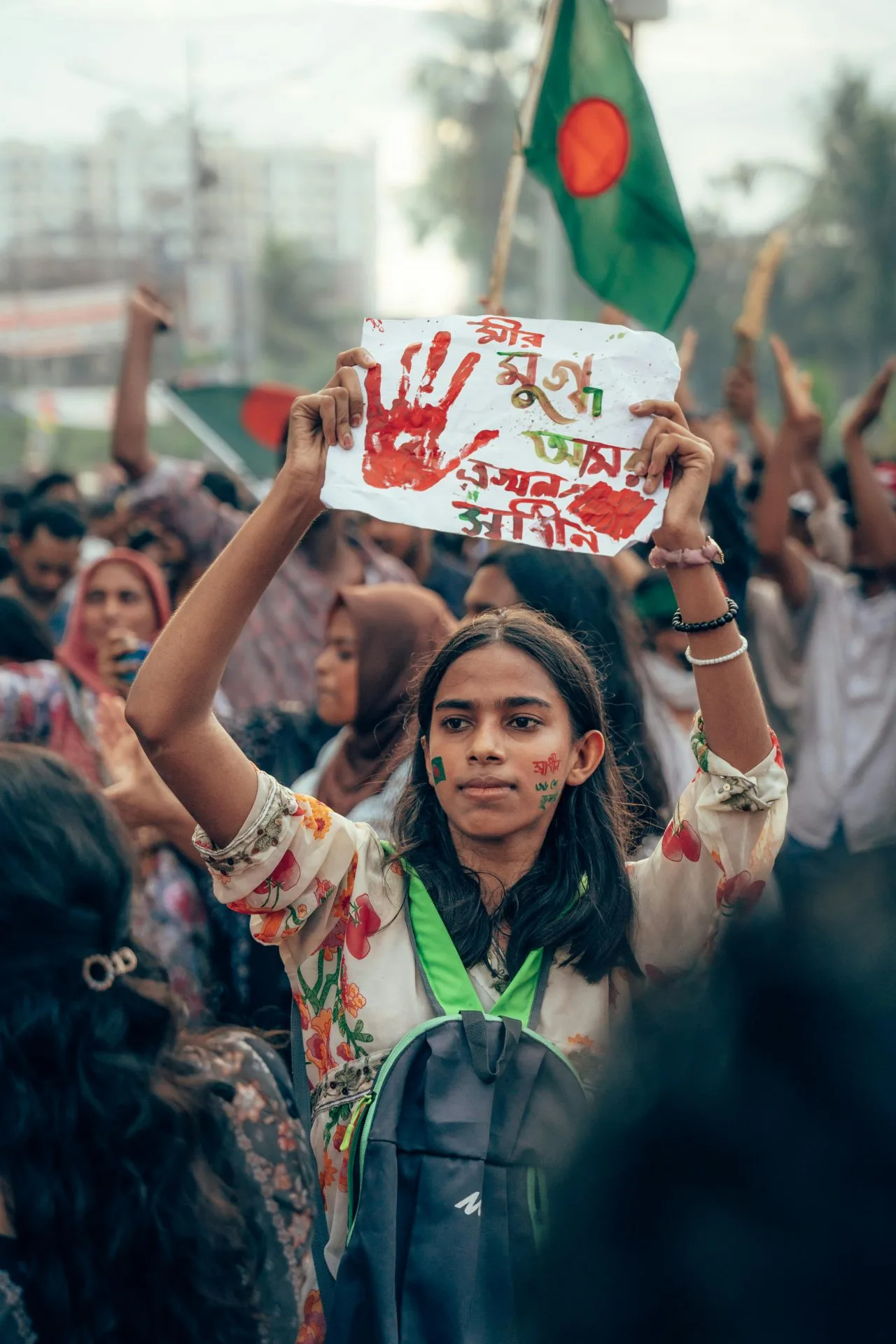
In July 2024, university students participated in peaceful demonstrations with women at the forefront, organising events. The protests were in response to the reinstatement of a job quota that reserved government positions for the descendants of freedom fighters who fought in the 1971 War of Independence. The protests quickly became violent, resulting in the deaths of thousands of people after the government used excessive and lethal force. The protests resulted in the toppling of Sheikh Hasina, who served as Prime Minister in Bangladesh for over a decade. What started as protests against the reinstatement of the job quota system soon turned into calls for the current government to step down from their positions.
This report explores women’s rights and activism in Bangladesh after the student protests in July 2024. However, to understand the current fight for women’s rights and equality, we need to look at events of the past. These events provide insight as to where Bangladesh currently stands on the topics of gender equality, women in leadership roles, and the economic empowerment of women. This report discusses the femicide and violence against women during the 1971 genocide, gender inequality in Bangladesh, the role of women during the protests in July 2024, the aftermath of the protests, and the future of women’s rights and activism in Bangladesh. Despite women and girls being at the forefront of the protests in July, they have been sidelined since the new interim government took power.
The resignation of Hasina, who was the longest-serving female prime minister, puts women’s rights and women’s roles in leadership in a precarious position. However, with the toppling of the previous government, now is the time for women in Bangladesh to demand that women have a seat at the table, ensuring that they have the same rights as men and that there is accountability for crimes of sexual violence. A new government offers an opportunity to improve Bangladesh’s women’s rights record and address its high rates of gender based violence (GBV), which affects almost three-quarters of women in the country.
In July 2024, university students participated in peaceful demonstrations with women at the forefront, organising events. The protests were in response to the reinstatement of a job quota that reserved government positions for the descendants of freedom fighters who fought in the 1971 War of Independence. The protests quickly became violent, resulting in the deaths of thousands of people after the government used excessive and lethal force. The protests resulted in the toppling of Sheikh Hasina, who served as Prime Minister in Bangladesh for over a decade. What started as protests against the reinstatement of the job quota system soon turned into calls for the current government to step down from their positions.
This report explores women’s rights and activism in Bangladesh after the student protests in July 2024. However, to understand the current fight for women’s rights and equality, we need to look at events of the past. These events provide insight as to where Bangladesh currently stands on the topics of gender equality, women in leadership roles, and the economic empowerment of women. This report discusses the femicide and violence against women during the 1971 genocide, gender inequality in Bangladesh, the role of women during the protests in July 2024, the aftermath of the protests, and the future of women’s rights and activism in Bangladesh. Despite women and girls being at the forefront of the protests in July, they have been sidelined since the new interim government took power.
The resignation of Hasina, who was the longest-serving female prime minister, puts women’s rights and women’s roles in leadership in a precarious position. However, with the toppling of the previous government, now is the time for women in Bangladesh to demand that women have a seat at the table, ensuring that they have the same rights as men and that there is accountability for crimes of sexual violence. A new government offers an opportunity to improve Bangladesh’s women’s rights record and address its high rates of gender based violence (GBV), which affects almost three-quarters of women in the country.
✨ AI summary
Bangladesh is currently undergoing a political and societal transformation. The country was formed in 1971 after a brutal genocide launched by the Pakistani military. The genocide that began on March 25th, 1971, resulted in the deaths of between 300,000 and three million people (Zakaria, 2019). Women and girls were also victims of violence and sexual assault with some experts estimating that between 200,000 and 400,000 were raped during the genocide (Begum, 2023). Similar to the partition of India, sexual violence was used as a military tactic. The stories of these women and girls remain largely unknown due to the stigma regarding sexual violence. Furthermore, the lack of recognition of the genocide allows for impunity of these crimes to continue. The effects of the genocide are still felt today in Bangladesh, made evident by the recent protests that gripped the country.
In July 2024, university students participated in peaceful demonstrations with women at the forefront, organising events. The protests were in response to the reinstatement of a job quota that reserved government positions for the descendants of freedom fighters who fought in the 1971 War of Independence. The protests quickly became violent, resulting in the deaths of thousands of people after the government used excessive and lethal force. The protests resulted in the toppling of Sheikh Hasina, who served as Prime Minister in Bangladesh for over a decade. What started as protests against the reinstatement of the job quota system soon turned into calls for the current government to step down from their positions.
This report explores women’s rights and activism in Bangladesh after the student protests in July 2024. However, to understand the current fight for women’s rights and equality, we need to look at events of the past. These events provide insight as to where Bangladesh currently stands on the topics of gender equality, women in leadership roles, and the economic empowerment of women. This report discusses the femicide and violence against women during the 1971 genocide, gender inequality in Bangladesh, the role of women during the protests in July 2024, the aftermath of the protests, and the future of women’s rights and activism in Bangladesh. Despite women and girls being at the forefront of the protests in July, they have been sidelined since the new interim government took power.
The resignation of Hasina, who was the longest-serving female prime minister, puts women’s rights and women’s roles in leadership in a precarious position. However, with the toppling of the previous government, now is the time for women in Bangladesh to demand that women have a seat at the table, ensuring that they have the same rights as men and that there is accountability for crimes of sexual violence. A new government offers an opportunity to improve Bangladesh’s women’s rights record and address its high rates of gender based violence (GBV), which affects almost three-quarters of women in the country.
In July 2024, university students participated in peaceful demonstrations with women at the forefront, organising events. The protests were in response to the reinstatement of a job quota that reserved government positions for the descendants of freedom fighters who fought in the 1971 War of Independence. The protests quickly became violent, resulting in the deaths of thousands of people after the government used excessive and lethal force. The protests resulted in the toppling of Sheikh Hasina, who served as Prime Minister in Bangladesh for over a decade. What started as protests against the reinstatement of the job quota system soon turned into calls for the current government to step down from their positions.
This report explores women’s rights and activism in Bangladesh after the student protests in July 2024. However, to understand the current fight for women’s rights and equality, we need to look at events of the past. These events provide insight as to where Bangladesh currently stands on the topics of gender equality, women in leadership roles, and the economic empowerment of women. This report discusses the femicide and violence against women during the 1971 genocide, gender inequality in Bangladesh, the role of women during the protests in July 2024, the aftermath of the protests, and the future of women’s rights and activism in Bangladesh. Despite women and girls being at the forefront of the protests in July, they have been sidelined since the new interim government took power.
The resignation of Hasina, who was the longest-serving female prime minister, puts women’s rights and women’s roles in leadership in a precarious position. However, with the toppling of the previous government, now is the time for women in Bangladesh to demand that women have a seat at the table, ensuring that they have the same rights as men and that there is accountability for crimes of sexual violence. A new government offers an opportunity to improve Bangladesh’s women’s rights record and address its high rates of gender based violence (GBV), which affects almost three-quarters of women in the country.
Share this report
Facebook
X
LinkedIn
WhatsApp