
Reports
Women’s Rights in Afghanistan : A Periodic Review
- GHRD Team
- 8 June 2024
Afghanistan, a nation deeply marked by decades of conflict and complex social
dynamics, finds itself at a crucial juncture in the context of women’s rights. The progress
made in recent years is under threat as the country faces the harsh realities of the Taliban’s
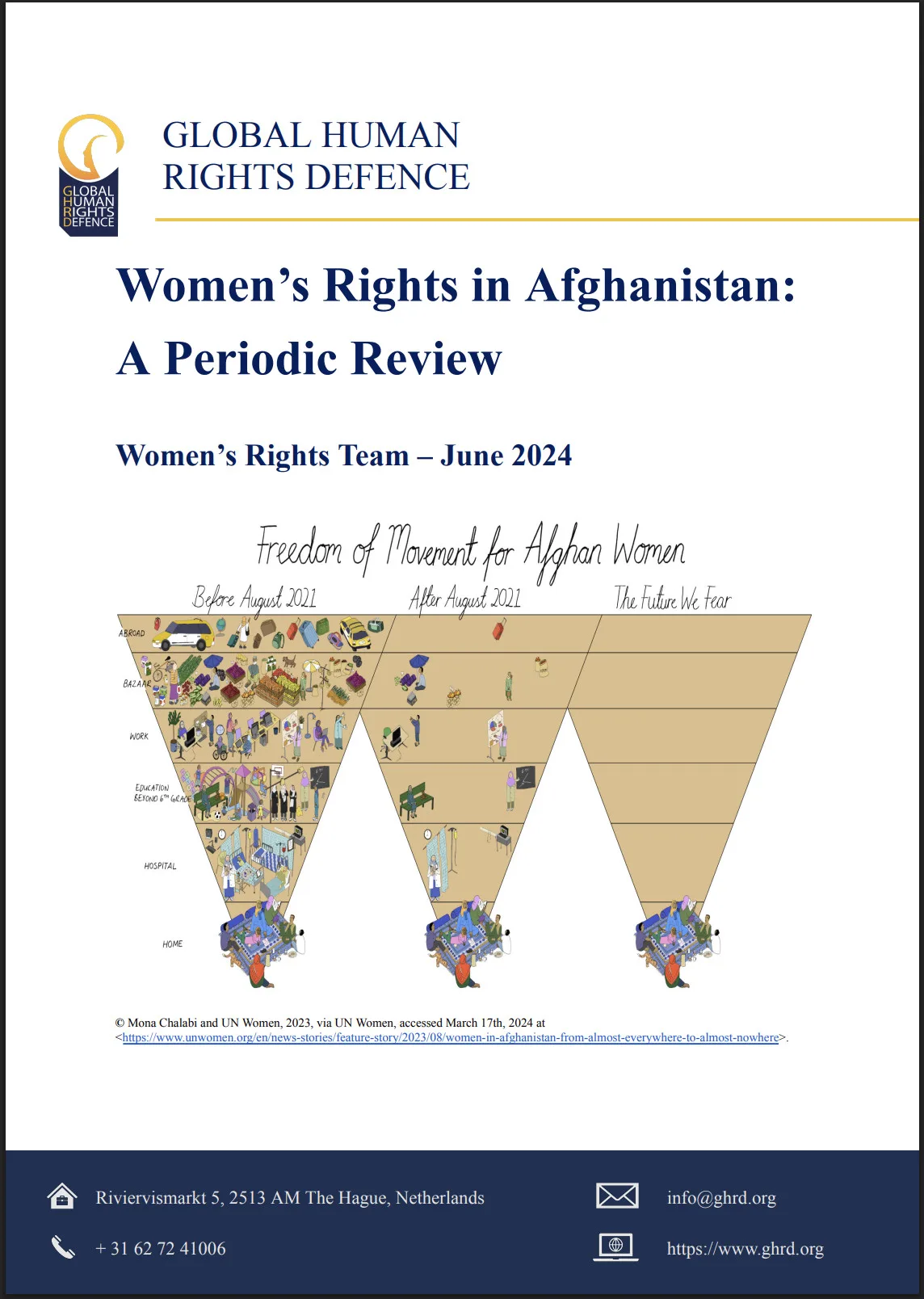
return to power which has imposed significant restrictions on Afghan women’s education,
freedom of movement, and overall well-being. This report explores the intricate history and
current state of women’s rights in Afghanistan, a narrative that weaves through Afghan
culture, politics, and society, presenting a rich tapestry of resilience, struggle, and change.
From the multifaceted roles women played in traditional Afghan society to the
devastating consequences of the Taliban’s policies, the journey of Afghan women
encapsulates a broader story of human rights, gender equality, and the relentless pursuit of
dignity and justice. Despite confronting unprecedented challenges, the courage and resilience
of Afghan women shine through, highlighting their fight for a more just future. The recent
resurgence of the Taliban and its dire implications for women’s rights have reignited global
concern, emphasising the precarious nature of progress and the critical need for international
solidarity and support.
Emerged in the 1990s, the Taliban is a Sunni Islamist nationalist and pro-Pashtun
movement which controlled the majority of Afghanistan between 1996 until October 2001.
Its members formed a group together under the goal to transform Afghanistan into an Islamic
state. The Taliban is mostly known for its violations to human rights especially towards
women and girls. After the US-Taliban peace agreement (2020) followed by the withdrawal
of American troops, on August 15th, 2021, the Taliban took over Kabul without substantial
resistance from the Afghanistan government and military. Since Taliban administration seized
over the nation around mid-August 2021, Afghanistan has undoubtedly had one of the the
worst records in the world for women’s rights.
As we delve into this complex narrative, the enduring spirit of Afghan women
continues to inspire action towards safeguarding their fundamental rights and empowering
them for a more equitable and just future. This exploration sets the stage for a deeper
understanding of the historical context, challenges, and prospects for women’s rights in
Afghanistan, reflecting on the past to inform and inspire actions towards a more equitable and
just future.
Kindly note that the actual name of one the interviewees referenced in this report has
been hidden due to security issues and she will therefore be addressed as Ms. A.
dynamics, finds itself at a crucial juncture in the context of women’s rights. The progress
made in recent years is under threat as the country faces the harsh realities of the Taliban’s
return to power which has imposed significant restrictions on Afghan women’s education,
freedom of movement, and overall well-being. This report explores the intricate history and
current state of women’s rights in Afghanistan, a narrative that weaves through Afghan
culture, politics, and society, presenting a rich tapestry of resilience, struggle, and change.
From the multifaceted roles women played in traditional Afghan society to the
devastating consequences of the Taliban’s policies, the journey of Afghan women
encapsulates a broader story of human rights, gender equality, and the relentless pursuit of
dignity and justice. Despite confronting unprecedented challenges, the courage and resilience
of Afghan women shine through, highlighting their fight for a more just future. The recent
resurgence of the Taliban and its dire implications for women’s rights have reignited global
concern, emphasising the precarious nature of progress and the critical need for international
solidarity and support.
Emerged in the 1990s, the Taliban is a Sunni Islamist nationalist and pro-Pashtun
movement which controlled the majority of Afghanistan between 1996 until October 2001.
Its members formed a group together under the goal to transform Afghanistan into an Islamic
state. The Taliban is mostly known for its violations to human rights especially towards
women and girls. After the US-Taliban peace agreement (2020) followed by the withdrawal
of American troops, on August 15th, 2021, the Taliban took over Kabul without substantial
resistance from the Afghanistan government and military. Since Taliban administration seized
over the nation around mid-August 2021, Afghanistan has undoubtedly had one of the the
worst records in the world for women’s rights.
As we delve into this complex narrative, the enduring spirit of Afghan women
continues to inspire action towards safeguarding their fundamental rights and empowering
them for a more equitable and just future. This exploration sets the stage for a deeper
understanding of the historical context, challenges, and prospects for women’s rights in
Afghanistan, reflecting on the past to inform and inspire actions towards a more equitable and
just future.
Kindly note that the actual name of one the interviewees referenced in this report has
been hidden due to security issues and she will therefore be addressed as Ms. A.
✨ AI summary
Afghanistan, a nation deeply marked by decades of conflict and complex social
dynamics, finds itself at a crucial juncture in the context of women’s rights. The progress
made in recent years is under threat as the country faces the harsh realities of the Taliban’s
return to power which has imposed significant restrictions on Afghan women’s education,
freedom of movement, and overall well-being. This report explores the intricate history and
current state of women’s rights in Afghanistan, a narrative that weaves through Afghan
culture, politics, and society, presenting a rich tapestry of resilience, struggle, and change.
From the multifaceted roles women played in traditional Afghan society to the
devastating consequences of the Taliban’s policies, the journey of Afghan women
encapsulates a broader story of human rights, gender equality, and the relentless pursuit of
dignity and justice. Despite confronting unprecedented challenges, the courage and resilience
of Afghan women shine through, highlighting their fight for a more just future. The recent
resurgence of the Taliban and its dire implications for women’s rights have reignited global
concern, emphasising the precarious nature of progress and the critical need for international
solidarity and support.
Emerged in the 1990s, the Taliban is a Sunni Islamist nationalist and pro-Pashtun
movement which controlled the majority of Afghanistan between 1996 until October 2001.
Its members formed a group together under the goal to transform Afghanistan into an Islamic
state. The Taliban is mostly known for its violations to human rights especially towards
women and girls. After the US-Taliban peace agreement (2020) followed by the withdrawal
of American troops, on August 15th, 2021, the Taliban took over Kabul without substantial
resistance from the Afghanistan government and military. Since Taliban administration seized
over the nation around mid-August 2021, Afghanistan has undoubtedly had one of the the
worst records in the world for women’s rights.
As we delve into this complex narrative, the enduring spirit of Afghan women
continues to inspire action towards safeguarding their fundamental rights and empowering
them for a more equitable and just future. This exploration sets the stage for a deeper
understanding of the historical context, challenges, and prospects for women’s rights in
Afghanistan, reflecting on the past to inform and inspire actions towards a more equitable and
just future.
Kindly note that the actual name of one the interviewees referenced in this report has
been hidden due to security issues and she will therefore be addressed as Ms. A.
dynamics, finds itself at a crucial juncture in the context of women’s rights. The progress
made in recent years is under threat as the country faces the harsh realities of the Taliban’s
return to power which has imposed significant restrictions on Afghan women’s education,
freedom of movement, and overall well-being. This report explores the intricate history and
current state of women’s rights in Afghanistan, a narrative that weaves through Afghan
culture, politics, and society, presenting a rich tapestry of resilience, struggle, and change.
From the multifaceted roles women played in traditional Afghan society to the
devastating consequences of the Taliban’s policies, the journey of Afghan women
encapsulates a broader story of human rights, gender equality, and the relentless pursuit of
dignity and justice. Despite confronting unprecedented challenges, the courage and resilience
of Afghan women shine through, highlighting their fight for a more just future. The recent
resurgence of the Taliban and its dire implications for women’s rights have reignited global
concern, emphasising the precarious nature of progress and the critical need for international
solidarity and support.
Emerged in the 1990s, the Taliban is a Sunni Islamist nationalist and pro-Pashtun
movement which controlled the majority of Afghanistan between 1996 until October 2001.
Its members formed a group together under the goal to transform Afghanistan into an Islamic
state. The Taliban is mostly known for its violations to human rights especially towards
women and girls. After the US-Taliban peace agreement (2020) followed by the withdrawal
of American troops, on August 15th, 2021, the Taliban took over Kabul without substantial
resistance from the Afghanistan government and military. Since Taliban administration seized
over the nation around mid-August 2021, Afghanistan has undoubtedly had one of the the
worst records in the world for women’s rights.
As we delve into this complex narrative, the enduring spirit of Afghan women
continues to inspire action towards safeguarding their fundamental rights and empowering
them for a more equitable and just future. This exploration sets the stage for a deeper
understanding of the historical context, challenges, and prospects for women’s rights in
Afghanistan, reflecting on the past to inform and inspire actions towards a more equitable and
just future.
Kindly note that the actual name of one the interviewees referenced in this report has
been hidden due to security issues and she will therefore be addressed as Ms. A.
Share this report
Facebook
X
LinkedIn
WhatsApp