
Introduction
Fiji, an archipelagic state in the Pacific, has been increasingly recognised as being at the forefront of a global climate crisis (Mirzazada, 2025). Fiji faces rising sea levels and coastal erosion that threaten low-lying communities, such as the villages of Vunidogoloa, Narikoso, and Nabavatu.. These environmental changes are making traditional villages uninhabitable, resulting in the displacement of communities.
This climate-induced displacement raises important human rights concerns, such as the right to adequate housing, the right to health, and the right to self-determination. Athough Fiji has adaptation measures to address this crisis, there are still tensions regarding climate justice and the protection of vulnerable populations. This article examines Fiji’s exposure to sea level rise, the policy frameworks guiding adaptation, and the human rights implications of community displacement.
The Nature of the Environmental Threat
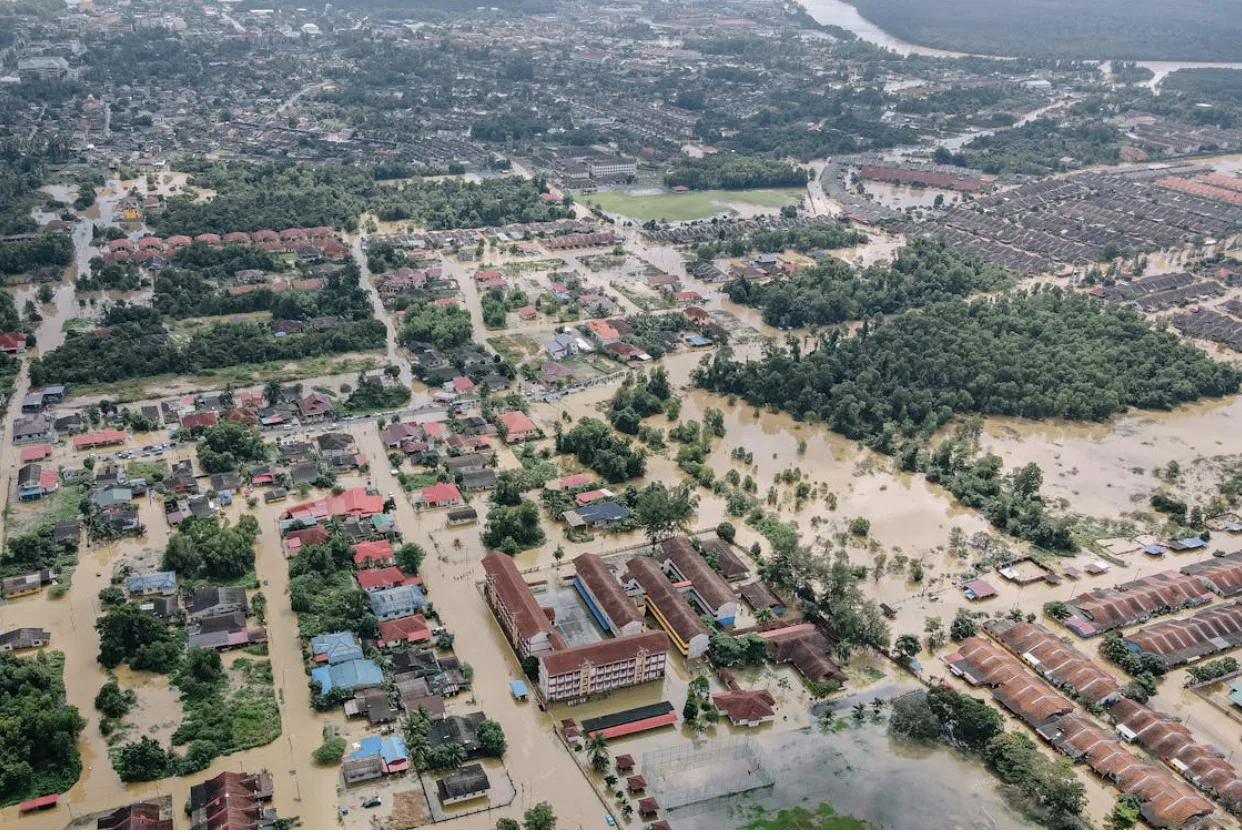
Over the past decade, Fiji has experienced 33 major climate displacement events, including tropical cyclones, floods, and coastal erosion. Between 2008 and 2015, 58,800 reported displacements were attributed to such events, and this number rose to 154,440 between 2016 and 2023 (Othering and Belonging Institute, 2024). According to the Fijian government, the costs of the impact of the tropical cyclones amounted to almost 900 million U.S. dollars, which included economic losses and physical damages (Othering and Belonging Institute, 2024).
For instance, in 2014, in the abandoned settlement of Vunidugoloa in Fiji, many residents were relocated because of climate change and rising sea levels, turning the once-inhabitable village into a lagoon (Mirzazada, 2025). Another village, the village of Narikoso,has experienced a shift in its coastline by 15 metres over the past decades, forcing the Fijian government to relocate the community (Rosmiati, 2025). While new relocation sites required building additional infrastructure and providing residents with livelihood and adaptation practices, planning the relocations required comprehensive planning and disaster risk management initiatives from the government. This ensures that the community can adapt to the new sites and has access to adequate support and services (Rosmiati, 2025).
Such examples reflect a larger issue. Rising sea levels remain a pressing threat and Fiji estimates that around 240 coastal communities would be displaced if this problem continues (Mirzazada, 2025). Moreover, according to the International Organisation for Migration, around one billion people worldwide could be affected by internal displacement by 2050 (Koop, 2024).
This ongoing climate crisis worsens the existing socioeconomic risks for Fijian community members. A study conducted in the Nabavatu village in Fiji revealed that many of the houses were at high risk of landslides, since 2020, particularly due to tropical cyclones, and the village has been deemed unsafe for habitation due to the risk of geo-hazard events (Yee, McNamara & McMichael, 2025). Approximately 37 households were relocated to tents two kilometres from the village. However, living conditions faced by the community are dire, given the inadequate shelter and unstable ground (Yee, McNamara & McMichael, 2025). For example, a resident shared that heavy rain flooded their tents, causing overcrowding and discomfort as many families were forced to share limited shelter. Access to basic necessities was also impacted, such as water, sanitation, and electricity (Yee, McNamara & McMichael, 2025). These conditions reveal how climate impacts are not only environmental, but also directly challenge the basic human right to housing, health, and dignity.
Fiji’s Policy Framework
Fiji has implemented adaptation efforts, such as the Climate Change Act 2021, the National Plan of Action Relocation Guideline, and the 2019 Climate and Refugee Relocation Trust Fund, which are designed to ensure the sustainable relocation of the displaced communities (Rosmiati, 2025). The Relocation Guidelines aim to implement pre-emptive action with a human rights approach and take into account the importance of Indigenous values in understanding the process of relocation and how new settlements will be established (Baleinakorodawa & Boege, 2024).
Relocating communities can be challenging, especially with regards to how the new settlements will be constructed. For indigenous Fijian communities, the burial sites of their ancestors represent a cultural and spiritual importance, hence, they are unwilling to abandon their village where the burial sites are located. In other cases, determining the size of houses to fit a Fijian family or determining how the new site will be governed by the community have also contributed to delays in planned relocations. To resolve these, Fiji has also implemented Standard Operating Procedures for Planned Relocation, which aim to overcome the challenges faced by previous relocations and tries to address the problems faced by communities when relocating (Baleinakorodawa & Boege, 2024).
Aside from legislation, the Fijian government has also committed to strengthening its nature-based solutions to mitigate the impact of climate change. For one, the government has turned to building healthy mangrove forests to prevent the erosion of beaches and to act as a buffer against waves in order to reduce the impacts of sea level rise (Mirzazada, 2025). Fiji has also made ongoing efforts to safeguard its coral reefs and coral reef ecosystems, which act as critical natural breakwaters. Moreover, the country is turning into a blue economy initiative and aims to expand the protection of its Marine Protected Areas (Mirzazada, 2025).
Conclusion and Recommendations
Overall, the impact of climate change in areas that are severely affected by rising sea levels and extreme weather events challenges the lives and livelihoods of Fijian communities. Relocating entire communities is a complex process that involves ensuring sustainable livelihoods, environmental security, and suitable housing and infrastructure at the new site.
Thus, to overcome these challenges, the processes must be responsive to community needs and grounded in local priorities. Several organisations have suggested that community relocation must engage all stakeholders across multiple sectors, such as civil society organisations, donors, and state actors. They must also take into account the needs of men and women, as well as young and old members of the community (Baleinakorodawa & Boege, 2024).
Another recommendation is to enhance the disaster preparedness of communities, to ensure that the whole community is involved in the decision-making process of moving to new locations. This participatory approach would ensure that affected communities have agency in determining how their new settlement will be built and governed, taking into account their cultural and religious practices. Moreover, building trust between the local government, civil society organisations and the affected communities would encourage community participation and help families transition into their new homes. For instance, in the relocation of the Vunidogoloa community, the housing design took into account local customs and kinship ties of the community members (Baleinakorodawa & Boege, 2024). Future policies must therefore strengthen participatory mechanisms to ensure that climate adaptation safeguards justice, dignity, and the rights of the displaced communities.
Bibliography
Baleinakorodawa, P., & Boege, V. (2024, June 4). Climate Change-Induced Community Relocation in Fiji: Challenges and Ways Forward. Toda Peace Institute. Retrieved September 23, 2025, from https://toda.org/policy-briefs-and-resources/policy-briefs/report-192-full-text.html/.
Mirzazada, E. (2025, March 3). Rising seas, Resilient communities: Climate adaptation in Fiji’s vanishing villages. AnewZ. Retrieved September 23, 2025, from https://anewz.tv/world/world-news/7797/rising-seas-resilient-communities-climate-adaptation-in-fi/news.
Koop, F. (2024, November 25). Fiji is already relocating villages because of climate change. ZME Science. Retrieved September 23, 2025, from https://www.zmescience.com/science/fiji-climate-migration-relocation/.
Othering and Belonging Institute. (2024). Fiji Case Study. Othering and Belonging Institute. Retrieved September 23, 2025, from https://belonging.berkeley.edu/climatedisplacement/case-studies/fiji#footnote11_don1sw0.
Rosmiati, N. (2025, February 26). Adapting to Climate Change: Planned Migration in the Pacific Islands. Modern Diplomacy. Retrieved September 23, 2025, from https://moderndiplomacy.eu/2025/02/26/adapting-to-climate-change-planned-migration-in-the-pacific-islands/.
Yee, M., McNamara, K., & McMichael, C. (2025, March 27). “Where my heart belongs”: Disaster-induced displacement in Nabavatu village, Fiji. Researching Internal Displacement Short Pieces; Researching Internal Displacement. Retrieved September 23, 2025, from https://researchinginternaldisplacement.org/short_pieces/where-my-heart-belongs-disaster-induced-displacement-in-nabavatu-village-fiji/.