
Introduction
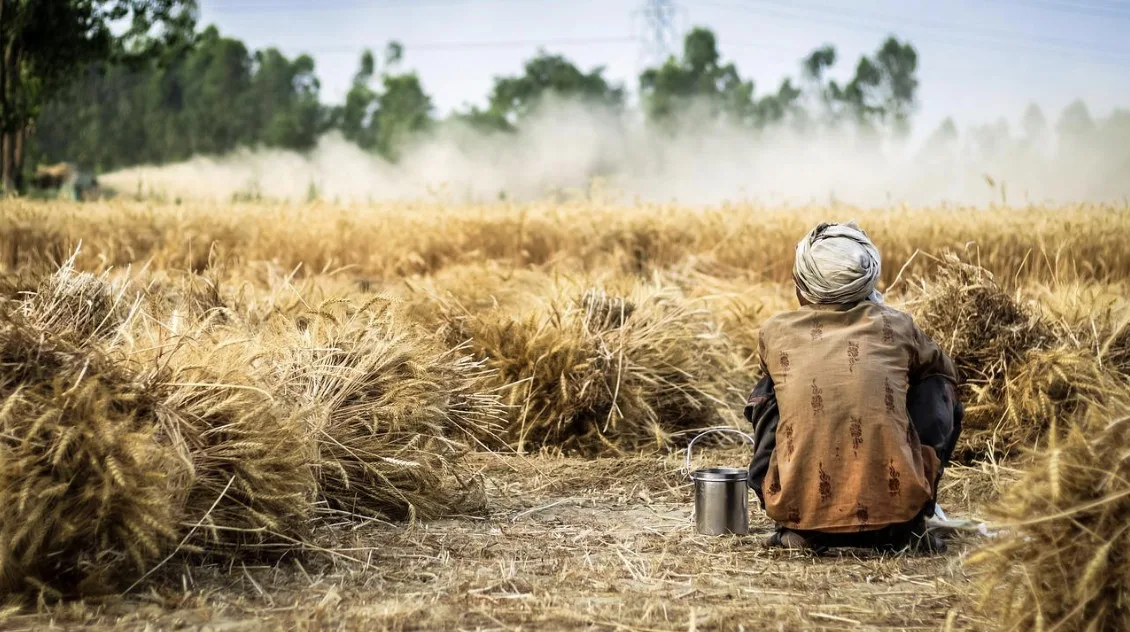
Agriculture has become more technological with the passing of time, currently relying on big machines to do the work of several men when it comes to harvesting, planting, weeding and even fertilising the soil. Because of this, employment in this domain has been declining over the last 15 years in Europe, shifting from stable long-term workers to seasonal ones, employed to meet the punctual demands of the crops.
The seasonal work is usually carried out by immigrants, especially those newly arrived on the continent. European Union (EU) Member States manage their own seasonal workers schemes depending on the needs of the domestic labour market, their ties with the third countries and their broader immigration system. Countries such as France, Germany, Italy, Poland, and Spain employ high numbers of migrant seasonal farm workers to face the high demands during summer production.
According to a study from the European Economic and Social Committee the estimated presence of EU domestic and intra-EU seasonal workers across the member states is of almost two million workers in the agriculture sectors, whereas the presence of non-EU workers is of more than 0.4 million, meaning one in four workers (EESC, 2023; Oxfam, 2024). From those 0.4 million, 71 percent were not employed under the Seasonal Workers Directive, meaning that they were not protected by it.
Although seasonal workers are entitled to fully equal treatment as nationals of the host country where they work, they often lack access to essential social protections, including healthcare, unemployment benefits, and retirement pensions. Additionally, their migratory status, particularly if they are undocumented, excludes them from any governmental protection, leading to financial insecurity and social exclusion.
Agriculture and the reality of seasonal workers in Europe
In a report produced by Oxfam (2024), in eight out of the nine countries examined, migrant workers are paid below the minimum wage, with women typically receiving lower salaries. In Spain, half of the women interviewed reported earning less than their male counterparts, whereas in Italy this percentage was at thirty. Furthermore, accidents and injuries are frequent due to the employer’s failure in providing adequate training and protective equipment, particularly in Spain and Italy.
The Covid-19 pandemic accentuated the necessity for seasonal workers and exposed how over-reliant the agricultural sector is on sustenance. The limited movement of goods and persons within the EU caused by the virus and quarantine requirements affected food supply chains and the availability of workers for labour-intensive activities in the agricultural sector.
This goes to show that the economy and food production industry are highly dependent on these workers, while not offering entitled protections, let alone guaranteeing access to basic working rights and living conditions, exposing them to violence, work accidents, and resultant health issues.
Vulnerable to heat stress due to the strenuous nature of their work, performed mainly outdoors under poor working conditions, the rising of temperature caused by climate change increases the health dangers against people who are already subjected to inequality and low revenue.
Additionally, migrants working in agriculture usually do not have access to healthcare or labour rights and cannot denounce the abuse suffered while working for fear of being deported or imprisoned, especially if they are undocumented. Several workers, particularly women, reported instances of abuse, including sexual abuse, intimidation
The Seasonal Workers Directive sets is a legal framework that sets the conditions of entry and stay of non-EU nationals for the purpose of employment as seasonal workers, to ensure fair and transparent rules for admission of these people; ensure decent working and living conditions and equal rights for them, and make it easier for those workers to come back for seasonal work in the following years (2014, EUR-Lex).
techniques and violence, with examples of Thai workers in wild berry farms working up to 19 hours a day in Sweden (Oxfam, 2024).
Dalvir Singh, a 54-year-old Punjabi flower picker working in central Italy, died last year after working under extreme heat and a heavy workload. It is reported that these types of workers are subjected to as much as 14 to 16 hours a day in the heat without proper breaks or rehydration, as the employers do not have occupational health and safety regulations or because the workers’ salary is tied to the amount of produce that they can harvest, which pushes them to overwork.
The International Labor Organization (ILO) already considers heat stress as the “invisible killer” and called for stronger heat stress prevention strategies to be integrated into occupational safety and health procedures (ILO, 2024). It is a problem that is already affecting humanity and must be properly addressed.
Climate change
The world has been warming up quickly over the past centuries. According to the European Copernicus Climate Service (ECCS), the temperatures registered between 2015 and 2024 were, on average, about 1.28 degrees Celsius higher than those registered in the late 1800s, the pre-industrial levels, with each decade being warmer than the previous one.
The year of 2024 was the world’s hottest on record to date. It was also the first time that the average temperature surpassed 1.5 degrees, an alarming sign of the velocity at which the earth is warming up.
Greenhouse gases, the most important being carbon dioxide (CO2), are the crucial link between temperature rise and human activities. Present abundantly in the atmosphere, those gases trap the sun’s heat, creating a greenhouse effect that warms the planet. Those gases are mainly produced by burning fossil fuels and deforestation, activities conducted by people. Since the Industrial Revolution, the amount of CO2 in the atmosphere has risen by more than 50 percent.
The heat levels are causing significant change to the planet by melting ice sheets rapidly, including big icy lands such as Greenland and the Arctic; increasing the number of weather-related disasters; rising sea levels and acidification of the waters, affecting marine life and the ecosystems. In 2022, parts of East Africa suffered their worst drought for 40 years, putting millions of people at risk of severe hunger.
Other factors to be considered are the vulnerabilities of individuals and communities across the globe, meaning that even though all human beings are ultimately affected by climate change, vulnerable communities are affected faster and harder, and have fewer means of rebuilding. Migrants, poor communities, riverside communities, women, and Indigenous peoples are often the first to be affected by it but are usually not considered as necessary actors when discussing methods of fighting it.
A striking example of this happened in 2021, when Tuvalu’s Minister Simon Kofe addressed the COP26 in the middle of seawater to demonstrate the reality of sea levels rising for coastal countries (The Guardian, 2021). He stated:
The statement juxtaposes the Cop26 setting with the real-life situations faced in Tuvalu due to the impacts of climate change and sea level rise and highlights the bold action Tuvalu is taking to address the very pressing issues of human mobility under climate change.
One-third of the Pacific’s small island states and territories were not able to send any representatives to the climate summit due to Covid-19 travel restrictions at the time, meaning that there was a lack of high-level representation of Pacific nations at the meeting to discuss the climate crisis.
The drama of seasonal workers
With the Earth’s temperature increasing rapidly, the biodiversity disappearing, sea levels rising and other immediate effects caused by global warming, it is more than urgent that politicians, leaders, and companies alike take it into consideration when discussing political strategies for dealing with natural disasters, public health, work safety and so on.
The ILO reported that more than 80,000 people suffered injuries related to heat exposure at work in 2020 alone, and 67 died due to working in extreme heat conditions. Since 2000, the EU has seen a 42 percent increase in heat-related deaths, with seasonal workers, the ones that work outdoors, being the most affected ones.
Extreme weather conditions, labour exploitation, trafficking, work permit or visa issues, xenophobia, and language barriers add to the difficulties of negotiating workplace safety or asking for help. The fear of deportation stops many from denouncing the bad conditions in which they are forced to work under.
Not only are these people being exploited as an unpaid or low-paid work force, being subjected to violence and abuse, but they are also directly suffer the effects of global warming and heat stress.
Furthermore, wildfires are more frequent, and their smoke is also a source of illness, such as lung cancer, asthma, and throat burns, and affects the particularly vulnerable population most, such as elders, children, and those with previous health issues, but also those that work outside, exposed to smoke and dangerous chemical smells. Research shows that agricultural workers are 35 times more likely to die from heat-related stress than workers in other industries (Becerra, 2023).
Farmworkers are on the frontlines of climate-related emergencies, and hot, humid conditions can strain the respiratory system, making it harder to breathe, especially for individuals at higher risk, as mentioned before. Efraim Lopes, an advocate and manager of the American Lung Association (ALA), mentioned that:
I remember harvesting almonds early in the morning before the sun came up. In the headlights of the machines and tractors it seemed as if it were snowing, but we all knew it was the falling of ash from nearby wildfires. It was so close, in fact, that we could see the orange glow just over the hill of the neighbouring orchard.
This goes to show that it is more than urgent that governments adapt their policies to properly face climate change but also consider the protection of all workers, particularly seasonal agricultural workers, who are an important part of the food supply chain but often are not protected by labour laws and work under bad conditions.
Conclusion
Climate change is a phenomenon caused by human activity, where the exacerbated production of greenhouse gases creates a greenhouse effect on the atmosphere that blocks the sunrays from leaving the Earth’s stratosphere and, therefore, traps them inside the ozone layer, increasing the planet’s temperature. This has various implications, including but not limited to the melting of ice sheets, rise of sea levels, increased frequency of natural disasters, and spreading of wildfires to the point of unbearable heat. With temperatures increasing regularly, outdoor workers such as farmers and fruit pickers become exposed to a heat that causes diseases, affects health and can lead to death.
With the number of farmers decreasing but the demand for production increasing, farm owners usually employ seasonal workers to aid with seasonal plantation, cultivation, picking and selecting; intense labour done for strenuous hours under the sun. Furthermore, it is a job that is generally fulfilled by vulnerable migrant workers from all over the world, including undocumented ones.
As vulnerable workers, farmers are exposed to abuse, low-paid wages, absence of individual protection equipment, and, more commonly for women workers, even sexual abuse. However, language barriers and fear of expulsion or imprisonment, as well as the need to finance themselves and their family, tend to stop them from reporting the violence to the police.
It is urgent that countries in Europe and across the world properly address this issue to protect the ones that carry the food chain, which is important to keeping society well-nourished and supplied with products at a reasonable price, protecting those that work hard to keep it going.
Bibliography
Agejas, M. J. and Tenwick, J. (2024, June 4). Millions of migrant farm workers exploited in Europe’s fields, says Oxfam. Oxfam International. Retrieved August 14, 2025 from https://www.oxfam.org/en/press-releases/millions-migrant-farm-workers-exploited-europes-fields-says-oxfam.
A Really Simple Guide to Climate Change. BBC (2025, July 30). Retrieved August 17, 2025 from https://www.bbc.com/news/articles/c9w15nggj58o.
Augère-Granier, M.- L. (2021, February). Migrant Seasonal Workers in the European Agricultural Sector. European Parliament. Retrieved August 18, 2025 from https://www.infomigrants.net/fr/post/59785/too-hot-to-work-how-global-warming-is-affecting-agricultural-workers-in-europe.
Azzi, M. et al. (2025, July 25). Heat at Work: Implication for Safety and Health. International Labour Organization. Retrieved August 17, 2025 from https://www.ilo.org/publications/heat-work-implications-safety-and-health.
Becerra, N. R. (2023, October 13). Impacts of the Climate Crisis on Farmworkers. Retrieved August 18, 2025 from https://www.lung.org/blog/climate-change-impacts-farmworkers.
Climate Change: How Do We Know it is Happening and Caused by Humans? BBC (2021, October 25). Retrieved August 17, 2025 from https://www.bbc.com/news/science-environment-58954530.
Harvesting hope: The Realities of Seasonal and Migrant Workers in Agrifood Value Chain (2024, April 12). European Union. Retrieved August 14, 2025 from https://www.eesc.europa.eu/en/news-media/news/harvesting-hope-realities-seasonal-and-migrant-workers-agri-food-value-chain.
Rowlatt, J. and Poynting, M. (2025, January 17). Planet-Warming Gas Levels Rose More Than Ever in 2024. BBC. Retrieved August 17, 2025 from https://www.bbc.com/news/articles/c30dn5dn53jo.
Soldi, R. and Cavallini, S. (2023, April 22). Study: Collecting Data on the Situation of Social Protection of Seasonal Workers in the Agriculture and Food Sectors in EU Member States After COVID-19. European Economic and Social Committee. Retrieved August 14, 2025 from https://www.eesc.europa.eu/en/our-work/publications-other-work/publications/collecting-data-situation-social-protection-seasonal-workers-agriculture-and-food-sectors-eu-member-states-after-covid.
Simpson, C. et al. (2021, November 15) Regional Disparities and Seasonal Differences in Climate Risk to Rice Labour. National Library of Medicine. Retrieved August 18, 2025 from https://pmc.ncbi.nlm.nih.gov/articles/PMC8592055/.
Tuvalu Minister to Address Cop26 Knee Deep in Water to Highlight Climate Crisis and Sea Level Rise. The Guardian (2021, November 8). Retrieved August 17, 2025 from https://www.theguardian.com/environment/2021/nov/08/tuvalu-minister-to-address-cop26-knee-deep-in-seawater-to-highlight-climate-crisis.