
Introduction
In the fertile valleys and arid hills of the occupied West Bank, a pattern of violence is systematically dismantling Palestinian communities, with “at least 9 additional communities (…) displaced before 7 October 2023” (B’Tselem, 2026; Hareuveni, 2021). Settler violence, which include physical beatings, stone-throwing, live fire, the torching of fields, and the destruction of homes and property, has become an ingrained feature of daily life under occupation (Hareuveni, 2021). Since its occupation in 1967, Israel has misappropriated over two million dunams of land to build and expand settlements, which now house hundreds of thousands of Israeli citizens in violation of international law (Hareuveni, 2021).
Amidst the war on Gaza since October 7, 2023, and the subsequent regional escalation, international attention has largely shifted away from the West Bank. Yet, a slow and methodical process of dispossession continues there, facilitated by a mutually reinforcing relationship between the Israeli state and violent settlers who operate with varying degrees of support, tolerance, or protection from state authorities (Heinrich Böll Stiftung Palestine and Jordan, 2025). Violence has further escalated during the recent regional confrontation between Israel, the United States, and Iran. According to the Israeli human rights organisation Yesh Din, 109 incidents of settler violence affecting 62 Palestinian communities were recorded within the first ten days of the conflict (Gritten, 2026). During the same period, Israeli forces closed numerous West Bank roads with iron gates, restricting movement and emergency access to communities facing settler attacks (Magid and Sawafta, 2026).
Recent data illustrates the scale of displacement that accompanies these dynamics. The Israeli human rights organisation B’Tselem reports that since October 7, 2023, and as of March 10, 2026, Israel has “forcibly displaced 57 Palestinian communities, home to more than 3,921 people, in Areas C and B”, while an additional 532 residents were forced from their homes in partially displaced communities (B’Tselem, 2026). In addition, large-scale Israeli military operations in refugee camps in the northern West Bank displaced at least 32,000 people in early 2025, many of whom have not been permitted to return to homes that were subsequently destroyed (B’Tselem, 2026).
Despite the Israeli military’s official claim that it maintains “zero tolerance for civilians taking the law into their own hands”, accountability for settler violence remains extremely rare, as documented by Yesh Din (Bronner, 2026; Gritten, 2026). The cumulative effect of this violence is clear: Palestinian farming and shepherding communities are exposed to repeated attacks and systemic insecurity that make everyday life increasingly untenable, forcing many to abandon their homes, land, and livelihoods.
This article argues that settler violence functions not merely as sporadic criminal activity but as an informal governance mechanism that facilitates the coercive displacement of Palestinians and the consolidation of Israeli control over land in the West Bank. By examining patterns of attacks, the role of Israeli security forces, and the structural lack of accountability for perpetrators, the article demonstrates how violence operates as a tool of territorial expansion. To do so, the article first examines the systematic patterns of settler violence and their escalation since October 2023. It then analyses the relationship between settlers, the Israeli military, and state institutions, highlighting how protection failures and permissive enforcement enable continued attacks. Finally, it explores how these dynamics produce coercive displacement, pushing Palestinian communities to abandon their land and thereby facilitating the gradual territorial consolidation of Israeli settlements in the West Bank.
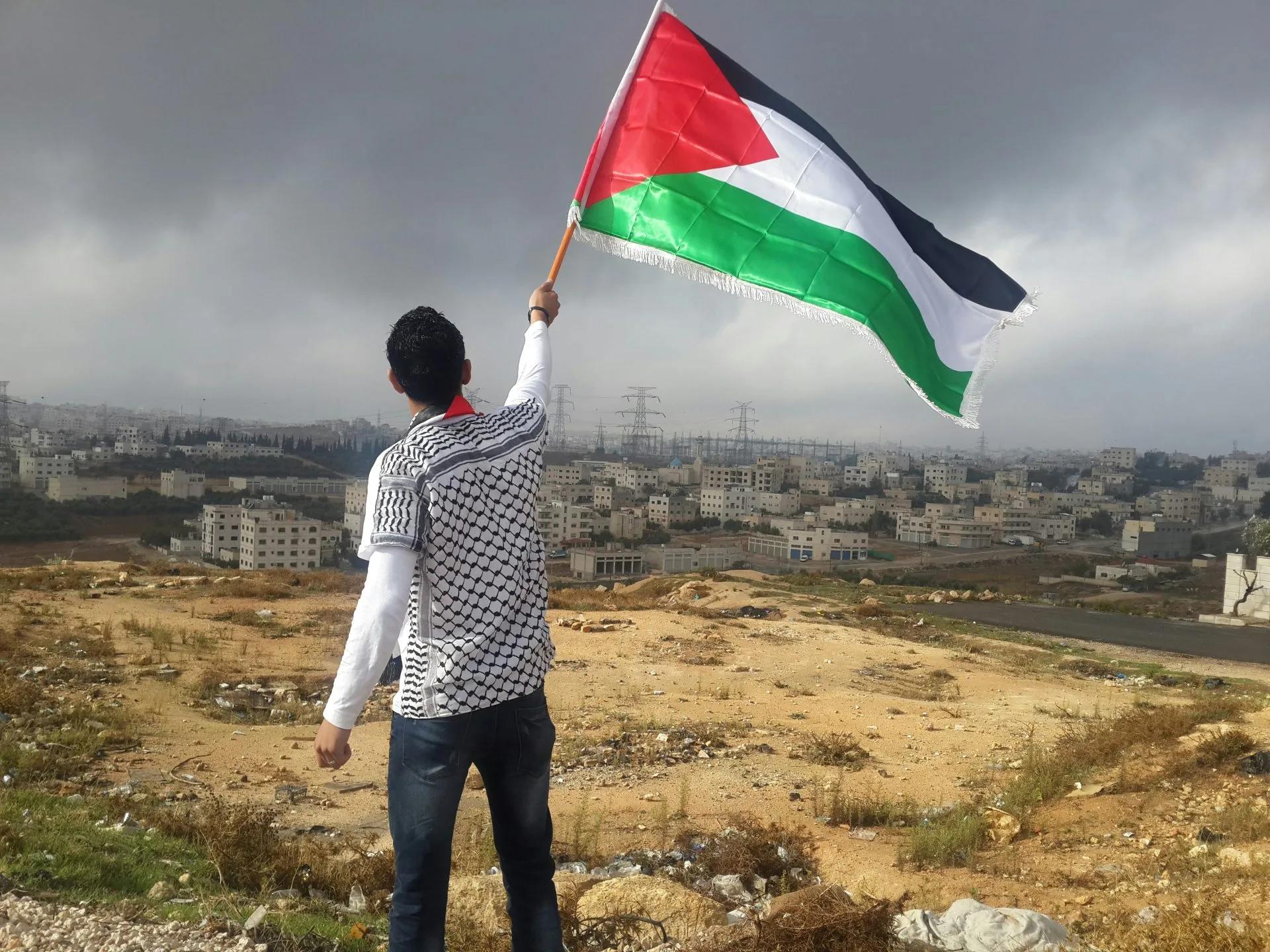
Since the Hamas-led attacks of October 7th, 2023 and the subsequent war in Gaza, settler violence in the occupied West Bank has intensified significantly, both in frequency and severity. Human rights organisations and international monitoring bodies have documented a sustained pattern of attacks targeting Palestinian civilians, farmland, homes, and livestock across multiple regions of the West Bank. These incidents are not isolated events but form part of a systematic pattern that disproportionately affects rural Palestinian communities, particularly shepherding and farming villages located in Area C.
The European Union’s (EU) 2024 settlement report, which draws on United Nations (UN) monitoring. States that the UN Office for the Coordination of Humanitarian Affairs registered 1,189 settler-violence incidents in 2023 and 1,420 incidents in 2024, indicatinga continuous rise after October 7, 2023, rather than a temporary sharp increase (EEAS, 2025). The same EU report documents that settlement expansion and rising violence corresponded with large-scale infrastructure budgets, including 7 billion NIS allocated for settlement roads in the 2024 reporting period (EEAS, 2025). Further data compiled by the United Nations Office for Coordination of Humanitarian Affairs (OCHA) through its monthly West Bank Snapshot for December 2025 reports 1,828 “attacks by Israeli settlers against Palestinians that resulted in casualties and/or property damage” in 2025, which again shows a rise in comparison to 2024 (OCHA, 2026a). OCHA’s West Bank update #337 states that October 2025 recorded the highest monthly number since 2006, with 264 attacks resulting in casualties and/or property damage, about eight per day, and that olive-harvest-related settler violence included around 150 documented attacks, injuring approximately 140 Palestinians and vandalising over 4,200 trees across 77 villages (OCHA, 2025). OCHA’s reporting also repeatedly documents cases where violence “outside the home” (i.e., harassment in grazing areas, assaulting farmers during harvest, vandalizing water networks, arson, school raids) produces an environment in which daily life and economic survival become precarious (OCHA, 2025). This pattern matches the findings in Human Rights Watch’s documentation of October-November 2023 expulsions, i.e. in Wadi al-Seeq or Khirbet Zanuta, as coercive outcomes emerging from repeated attacks, threats, and in some cases armed accompaniment by Israeli forces (Human Rights Watch, 2025). Especially recent settler violence in Khirbet Abu Falah on March 8th, 2026, where between 80 to 100 settlers armed with M16 rifles carried out assaults, illustrates how escalation continues “in real time” (Bronner, 2026).
These developments illustrate a broader pattern, where settler violence tends to escalate during moments of regional instability when international attention is diverted elsewhere. Under such conditions, attacks against Palestinian communities can occur with reduced scrutiny, allowing settlers to consolidate control over land while Palestinian residents face growing pressure to abandon their homes.
The Relationship Between Settlers, Israeli Military, and State Institutions
A critical factor enabling the persistence of settler violence is the relationship between settlers, the Israeli military, and state institutions operating in the West Bank. While Israeli authorities officially condemn attacks by settlers, human rights organisations have repeatedly documented patterns of protection failures, permissive enforcement, and, in some cases, active collaboration between soldiers and settlers during violent incidents.
In its 2021 report State Business, B’Tselem states that there is “only one track”, in which settler violence “serves as a major informal tool at the hands of the state to take over more and more West Bank land”, and that “the state fully supports and assists these acts of violence, and its agents sometimes participate in them directly” (Hareuveni, 2021). The United Nations Human Rights Office of the High Commissioner (OHCHR) on Palestine further stated in January 2026 that settler violence drives forced displacement and describes a recurring pattern, in which the establishment of an illegal outpost near a herding community, followed by restrictions on water/grazing and repeated attacks lead to displacement, often “with the support and participation” of Israeli security forces (OHCHR, 2026). This suggests that violence is part of a governance environment that produces displacement outcomes, not merely isolated “inter-communal” clashes (OHCHR, 2026). Additionally, Yesh Din reported that Israel equipped thousands of settlers with military firearms and uniforms and granted them lethal powers without adequate oversight, enabling offenses by civilians “behind the shield” of military-issued gear (Yesh Din, 2026a). Reuters similarly reports that in multiple March 2026 shootings, perpetrators were reported to be wearing Israeli army uniforms, with investigations announced (Magid and Sawafta, 2026).
Furthermore, the willingness of authorities to effectively prevent settler violence against Palestinians appears limited when examining concrete incidents on the ground. In November 2025, violence took place in the village of Beit Lid during the Palestinian olive-harvesting season, where “a light industrial park was ransacked and 10 vehicles were torched” (Burke, 2025). The incident prompted Israeli President Isaac Herzog to condemn what he described as a “shocking and serious” attack that “crosses a red line”. Prime Minister Benjamin Netanyahu, however, characterised the perpetrators as a “minority” that “does not represent the large settler public, who are law-abiding and loyal to the state”, adding that the violence “will be addressed with full force because we are a state of law and a state of law operates according to the law” (Burke, 2025). Yet developments on the ground suggest a more ambiguous reality. When Israeli activists and volunteers attempted to reach the nearby village of Burin to assist Palestinians with their olive harvest, Israeli authorities repeatedly prevented them from entering the area (Burke, 2025). Such interventions effectively limited outside presence during a period marked by frequent attacks on Palestinian farmers. In practice, this created a situation in which Palestinian harvesters were left exposed to violence from settlers, while potential witnesses or support actors were kept away.
The discrepancy between official condemnation and enforcement outcomes becomes even clearer when examining long-term law enforcement data. Although the Israeli military states that it is committed to investigating violence against Palestinians, Yesh Din’s law-enforcement data sheet, covering the years 2005-2025, indicates that 93.6 per cent of police investigation files into ideologically motivated offences (“settler violence”) were closed without indictment, and that police investigative failures occurred in 82 per cent of these cases (Yesh Din, 2026b). This persistent pattern of case closures without prosecution demonstrates that accountability for such violence remains extremely rare. Together, these findings illustrate a gap between the state’s formal policy of “zero tolerance” toward settler violence and the empirical outcomes on the ground, where most cases fail to result in indictments.
The cumulative effect of sustained settler violence, movement restrictions, and protection failures is the gradual displacement of Palestinian communities from strategic areas of the West Bank. This process rarely occurs through direct expulsions. Instead, it unfolds through what human rights organisations describe as a “coercive environment” in which repeated attacks and insecurity make continued residence increasingly undefendable.
The United Nations Office for the Coordination of Humanitarian Affairs (OCHA) documents repeated settler attacks targeting infrastructure essential for Palestinian livelihoods. In its February 2026 update, OCHA reports ten attacks in 2025 and six additionalattacks in early 2026 in the Ein Samiya water-system area, including sabotage of well sites and assaults on water workers (OCHA, 2026b). The Ein Samiya system is particularly significant because it supplies water to an estimated 100,000 Palestinians, meaning disruptions to the infrastructure have far-reaching consequences for surrounding communities (OCHA, 2026b). Similar tactics have been documented in Masafer Yatta, where settlers cut pipelines supplying multiple villages, forcing residents to rely on stored waterand further constraining already precarious living conditions (OCHA, 2026b). These incidents demonstrate how attacks on essential infrastructure can operate as a form of livelihood pressure, gradually pushing communities toward displacement.
The consolidation of territorial control becomes even clearer when examining settlement infrastructure development. A May 2025 report by Peace Now documents the construction of approximately 139 unauthorised roads, totalling 116.4 kilometres between mid-2023 and mid-2024, with roughly 65 per cent of these roads passing through privately owned Palestinian land (Peace Now, 2025a). Although many of these roads lack formal permits, the report indicates that the Israeli state has nevertheless invested millions of shekels in their construction and that the projects have involved close coordination with the Israel Defense Forces (IDF) and the Central Command under the justification of “operational requirements” (Peace Now, 2025b). According to the organisation, these roads effectively expand settler access and control while creating de facto territorial boundaries that Palestinians are unable to cross, thereby facilitating the exclusion of Palestinian farmers and shepherds from surrounding land (Peace Now, 2025b). In this sense, infrastructure development functions not only as logistical support for settlements but also as a spatial mechanism through which violence, access restrictions, and land control are integrated.
Monitoring by Peace Now and Kerem Navot further indicates that shepherding outposts have enabled settlers to seize at least 786,000 dunams of land, approximately 14 per cent of the West Bank (Peace Now, 2025b). A recurring sequence of actions can be identified, in which settlers first establish an outpost, then exert pressure on nearby Palestinian farmers and shepherds, often through harassment or violence, leading to displacement, after which settlers assume control of the deserted land and establish additional outposts (Peace Now, 2025b). This process demonstrates a clear causal chain in which outpost establishment, coercion, displacement, and territorial expansion become mutually reinforcing components of settlement governance. Recent legal and administrative measures further deepen this process of territorial consolidation. In February 2026, Israel’s cabinet approved a land-registration initiative, the first such process in the West Bank since 1967, which Israeli officials described as a major step in expanding settlement governance. Finance Minister Bezalel Smotrich characterised the policy as a “revolution of settlement”, while Palestinian officials warned that the measure could amount to de facto annexation (Scheer, 2026).
Peace Now similarly cautioned that the registration process could ultimately result in the dispossession of Palestinians from up to half of the West Bank (Scheer, 2026). Although such legal-administrative initiatives do not constitute settler violence in themselves, they reinforce the territorial outcomes produced by displacement pressures on the ground.
Conclusion
The evidence presented in this article demonstrates that settler violence in the West Bank cannot be understood merely as sporadic criminal acts or isolated clashes between civilians. Rather, documentation by human rights organisations, international monitoring bodies, and investigative reporting points to a structured dynamic in which violence, governance practices, and territorial policy intersect. Since October 2023, attacks ranging from assaults on farmers and the destruction of property to the sabotage of essential infrastructure have created a coercive environment for Palestinian communities, particularly in rural areas of Area C. Repeated incidents make everyday life increasingly untenable, pushing residents to abandon their homes, land, and livelihoods.
At the same time, the relationship between settlers, Israeli security forces, and state institutions plays a critical enabling role. Although Israeli authorities formally condemn settler violence, the consistently high closure rate of police investigations into ideologically motivated offences against Palestinians illustrates a persistent gap between official rhetoric and enforcement outcomes. This absence of accountability contributes to a permissive environment in which attacks can continue with limited consequences. Together with settlement infrastructure expansion, grazing outposts, and administrative measures such as land-registration initiatives, these dynamics form a mutually reinforcing system that facilitates displacement while consolidating settler control over land in the West Bank.
Bibliography
Bronner, L. (2026). Jewish settlers escalate West Bank terrorist attacks under the guise of war with Iran. Le Monde. https://www.lemonde.fr/en/international/article/2026/03/10/jewish-settlers-escalate-west-bank-terrorist-attacks-under-the-guise-of-war-with-iran_6751307_4.html.
B’Tselem. (2026). Settler Violence = State Violence (Last updated: 10 March 2026). https://www.btselem.org/settler_violence_updates_list?importance=1.
Burke, J. (2025). ‘They have total impunity’: West Bank settler violence surges after Gaza ceasefire. The Guardian. https://www.theguardian.com/world/2025/nov/18/west-bank-surge-settler-violence-israel-palestine.
European Union Office of the European Union Representative (West Bank and Gaza Strip, UNRWA). (2025, August 14). Report on Israeli Settlements in the occupied West Bank, including East Jerusalem (Reporting period January-December 2024). https://www.eeas.europa.eu/delegations/palestine-occupied-palestinian-territory-west-bank-and-gaza-strip/report-israeli-settlements-occupied-west-bank-including-east-jerusalem-reporting-period-january_en.
Gritten, D. (2026). EU and UK demand Israel stop surge in West Bank settler violence since Iran war. BBC. https://www.bbc.com/news/articles/c620vwl97vyo.
Hareuveni, E. (2021). State Business: Israel’s misappropriation of land in the West Bank through settler violence. B’Tselem. https://www.btselem.org/publications/202111_state_business.
Heinrich Böll Stiftung Palestine and Jordan. (2025). Escalating settler violence and aggression in the occupied West Bank: New report & short movie. https://ps.boell.org/en/2025/02/10/escalating-settler-violence-and-aggression-occupied-west-bank-new-report-short-movie.
Human Rights Watch. (2025). “All My Dreams Have Been Erased” Israel’s Forced Displacement of Palestinians in the West Bank. https://www.hrw.org/report/2025/11/20/all-my-dreams-have-been-erased/israels-forced-displacement-of-palestinians-in-the.
Magid, P. and Sawafta, A. (2026). Israeli settler violence rises in West Bank under Iran war curbs. Reuters. https://www.reuters.com/world/middle-east/israeli-settler-violence-rises-west-bank-under-iran-war-curbs-2026-03-11/.
OCHA. (2026a). West Bank Monthly Snapshot – Casualties, Property Damage and Displacement | December 2025. United Nations Office for the Coordination of Humanitarian Affairs-oPt. https://www.ochaopt.org/content/west-bank-monthly-snapshot-casualties-property-damage-and-displacement-december-2025.
OCHA. (2025a). Humanitarian Situation Update #337 | West Bank. United Nations Office for the Coordination of Humanitarian Affairs-oPt. https://www.ochaopt.org/content/humanitarian-situation-update-337-west-bank.
OCHA. (2025b). Humanitarian Situation Update #358 | West Bank. United Nations Office for the Coordination of Humanitarian Affairs-oPt. https://www.ochaopt.org/content/humanitarian-situation-update-358-west-bank.
OCHCR. (2026). OHCHR: Settler violence drives forced displacement in the West Bank. https://palestine.un.org/en/309094-ohchr-settler-violence-drives-forced-displacement-west-bank.
Peace Now. (2025a). All paths lead to annexation. https://peacenow.org.il/en/all-paths-lead-to-annexation.
Peace Now. (2025b). The Bad Samaritan: Land Grabbing by Settlers Through Grazing. https://peacenow.org.il/en/the-bad-samaritan-land-grabbing-by-settlers-through-grazing.
Scheer, S. (2026). Israeli cabinet approves West Bank land registration, Palestinians condemn ‘de-facto annexation’. Reuters. https://www.reuters.com/world/middle-east/israeli-cabinet-approves-west-bank-land-registration-palestinians-condemn-de-2026-02-15/.
Yesh Din. (2026a). Settlers in Uniform: Violence Against Palestinians by Israelis in Military Uniforms. https://www.yesh-din.org/en/settlers-in-uniform-violence-against-palestinians-by-israelis-in-military-uniforms/.
Yesh Din. (2026b). Data Sheet: Law Enforcement on Israeli Civilians in the West Bank (Settler violence) 2005-2025. https://www.yesh-din.org/en/data-sheet-law-enforcement-on-israeli-civilians-in-the-west-bank-settler-violence-2005-2025/.