
After attending the congress on “Impact of Armed Conflict on Human Rights in Africa,” GHRD interviewed Mariam Shaw, a Sudanese activist, President of TYFA and part of the Women From The Far West Organization UK. A woman who has lived through war, displacement, and loss since childhood, Shaw has turned her personal experience into advocacy for those who remain trapped inside Sudan, especially women and children silenced by conflict. In this conversation, she reflects on what it means to be Sudanese today and offers a deeply human perspective on the ongoing crisis in her country.
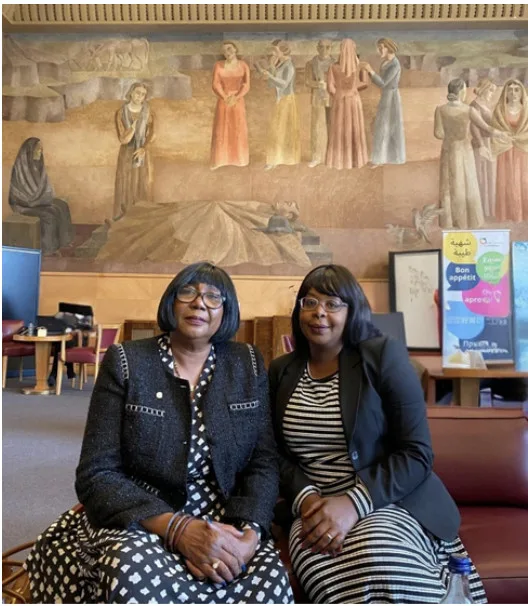
Could you tell us about TYFA and what Motivated you to Create it?
TYFA represents the voices of Sudanese women. I was a child who witnessed war from the age of three. I saw suffering, the lack of education, stability, and a normal life. I experienced displacement myself. Since Sudan’s independence in 1956, wars have repeatedly returned, generation after generation. I have once again been displaced and now live in the diaspora, but I continue to stand for my people, especially women, children, and civilians who remain trapped inside the country, without a voice and without protection.
How would you Describe the Current Situation in Sudan and its Impact on Ordinary people?
On 16 April, the army split. One faction continues to oppress civilians and control resources, human rights, and even freedom of speech. The other claims to side with the people and defend civilians, insisting the war should never have started and calling for peace negotiations.
As a civilian, I have witnessed atrocities against families, women, and children. There is massive displacement: around 12 million people have been uprooted, 7 million of whom are outside Sudan. Children face trauma, anxiety, and fear. Mothers have no milk to feed their babies, and families have lost all sources of income. Many were once professionals, such as teachers, workers and lawyers, but now they receive no salaries and live in extreme hardship.
Those of us in the diaspora take responsibility for supporting our families back home. Many people survive on one meal a day, sometimes none. Moving from one village to another brings enormous distress, and for those without money, even escaping danger is impossible.
Despite this, civilians have shown remarkable solidarity. They have organized themselves, collecting and cooking food daily to support one another. Yet, when attacks occur, they lose everything and must flee again. Internet and electricity cuts isolate entire regions. Hidden atrocities are taking place, and people cannot even send a message to say they are alive.
I personally spent months trying to trace relatives to learn if they had survived. Fact-finding missions were prohibited, and the government only collected testimonies that favored its own narrative. Independent NGOs have tried to gather information, but access is extremely limited.
Humanitarian aid has also been blocked. We call on the United Nations to urgently restore humanitarian support. The Sudanese government has been attacking aid convoys and bombing food sources, worsening the crisis.
What are the main challenges that women and children are facing right now?
Women are facing sexual harassment and violence, particularly in areas controlled by the army. Many are trapped and must choose between hunger and abuse. In some cases, women are forced to exchange sexual favors just to obtain food for themselves and their children.
Do you think the international community is doing enough to respond to the crisis?
Not enough is being done. The response is slow and insufficient compared to the scale of human suffering.
What message would you like to share with the world about Sudan’s future?
We want peace. We urge human rights defenders and the international community to recognize our humanity, to take responsibility, and to bring those who committed atrocities to justice. The longer they escape accountability, the more crimes they will continue to commit. Justice must be pursued through mechanisms such as the International Criminal Court.
We call on everyone who believes in human rights to stand with us, for the right to live, and for the protection of civilians. We are here to speak out for those who cannot.
To donate: https://theyfa.com/donate