
Geneva, 25 March 2026
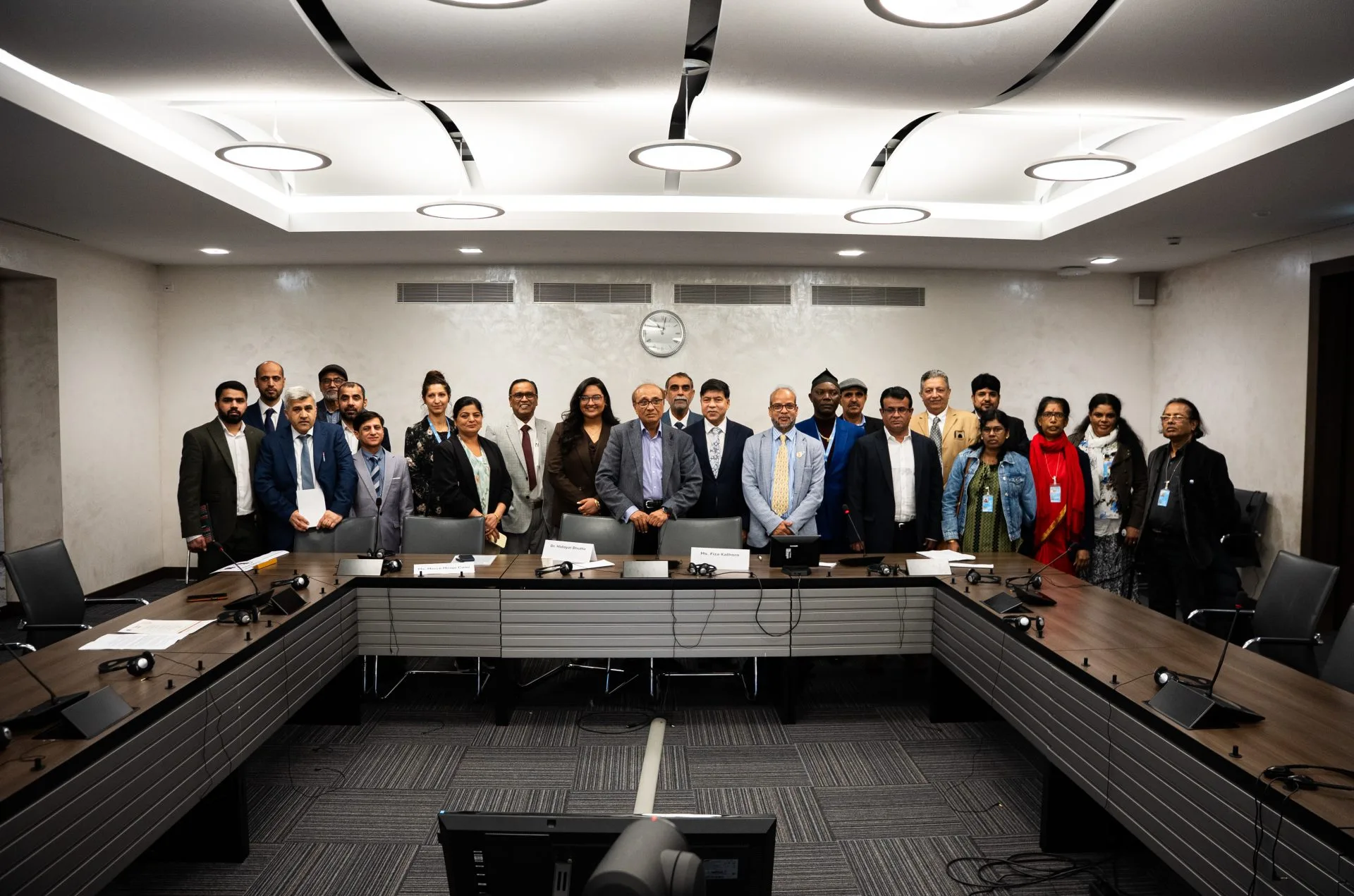
At a side event during the UN Human Rights Council 61st session, Professor Nicolas Levrat, UN Special Rapporteur on Minority Issues, alongside representatives from the World Sindhi Congress and the Unrepresented Nations and Peoples Organization (UNPO), sounded an urgent alarm regarding the escalating “structural exclusion” and systematic persecution of indigenous and religious minorities in Pakistan.
A regional crisis of religious discrimination
Professor Levrat opened the session by identifying a “de facto discrimination” prevalent across Asia, where national regulations frequently prevent minority groups from self-organizing. He noted a “mirror situation” across borders: where Group A is a protected majority in one country, they are often a persecuted minority in the next. Levrat emphasized that the lack of government interest in regional solutions has left minorities in an “unfair position,” unable to practice their faith without interference, as guaranteed by the 1992 Declaration on Minorities.
“Behind every report, there are families living with uncertainty and loss,” stated Ms. Mercè Monje Cano. “The state is not just excluding these communities; it is actively targeting them.”
The systematic targeting of sindhi hindu girls
Ms. Fiza Kalhoro presented harrowing statistics regarding the 2% Hindu minority in Pakistan. She reported that between 700 and 1,000 Hindu and Christian girls are subjected to forced conversion and marriage annually. In addition, 70% to 80% of these victims are Sindhi Hindus, and are often minors, some as young as 12 years old. The process involves “scripted statements” and a total denial of legal representation, creating an environment of such fear that families are increasingly choosing forced migration as a means of survival.
Economic exploitation and land occupation
Dr. Lakhu Bhuwanani, Chairman of the World Sindhi Congress, and Dr. Hidayat Bhutto detailed the stark contrast between Sindh’s resource wealth and the poverty of its people. They highlighted that while Sindh generates approximately 70% of Pakistan’s total revenue and provides the bulk of its energy, including 72% of its gas and 54% of its oil, an overwhelming 70% of the local population continues to suffer from multi-dimensional poverty.
The humanitarian situation is equally critical, as 80% of the water in Sindh is considered unfit for human consumption and 8 million children are currently deprived of an education. Furthermore, the speakers drew attention to a massive military footprint, noting that in Karachi alone, military-linked housing and cantonments occupy a land area three times the size of Geneva, symbolizing what they describe as a structural occupation of indigenous resources.
Enforced disappearances and political repression
Naseem Baloch and Dr. Bhutto highlighted the shared struggle of the Baloch and Sindhi people against a “state structure of control.” They reported that hundreds of activists, including Ayub Ghandro and Saifullah Zardari, remain missing. Even peaceful commemorations, such as the birthday of Sindhi leader Sain G.M. Syed, have been met with mass arrests and roadblocks.
The delegation called upon the international community and the United Nations to pressurize Pakistan to repeal the 26th and 27th Constitutional Amendments which undermine judicial independence. In addition, they asked for accountability for the abduction and forced conversion of minority women and children, and for the need to recognize the right to self-determination for the Sindhi and Baloch people as a foundational requirement for regional peace.