United Nations (UN)

Press release

Human Rights Council: Interactive Dialogue under Item 2

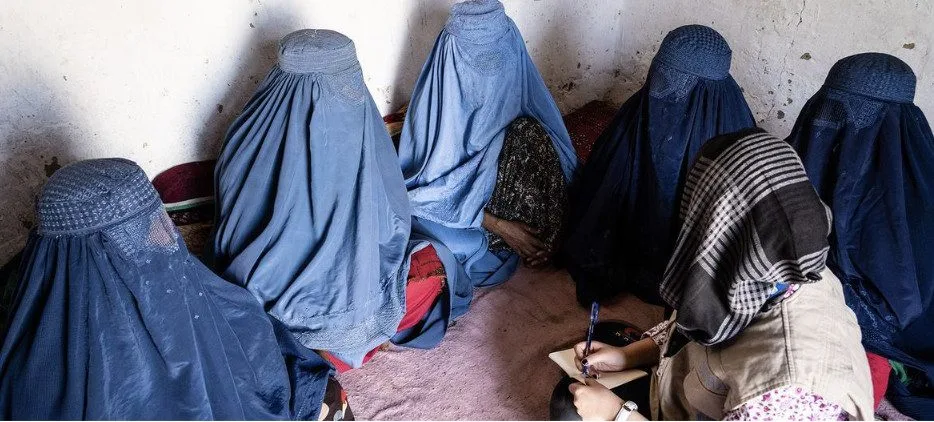
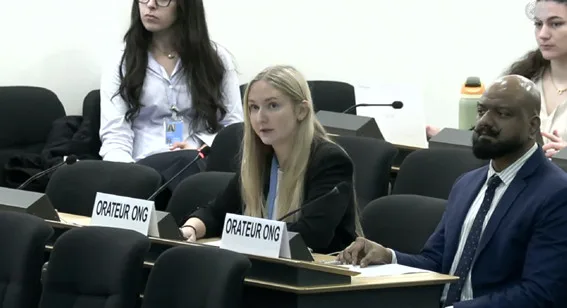
GHRD addressed the human rights crisis in Afghanistan, highlighting institutionalized discrimination against women and girls, which has led to their exclusion from public life and essential services. The statement emphasized the compounded discrimination faced by women from ethnic and religious minorities and those in rural areas, along with severe justice barriers and a lack of judicial independence. GHRD urged the Human Rights Council to support accountability measures and enhance evidence-collection for gender-based persecution, reaffirming its commitment to advocate for Afghan women’s rights in international forums.

Press release

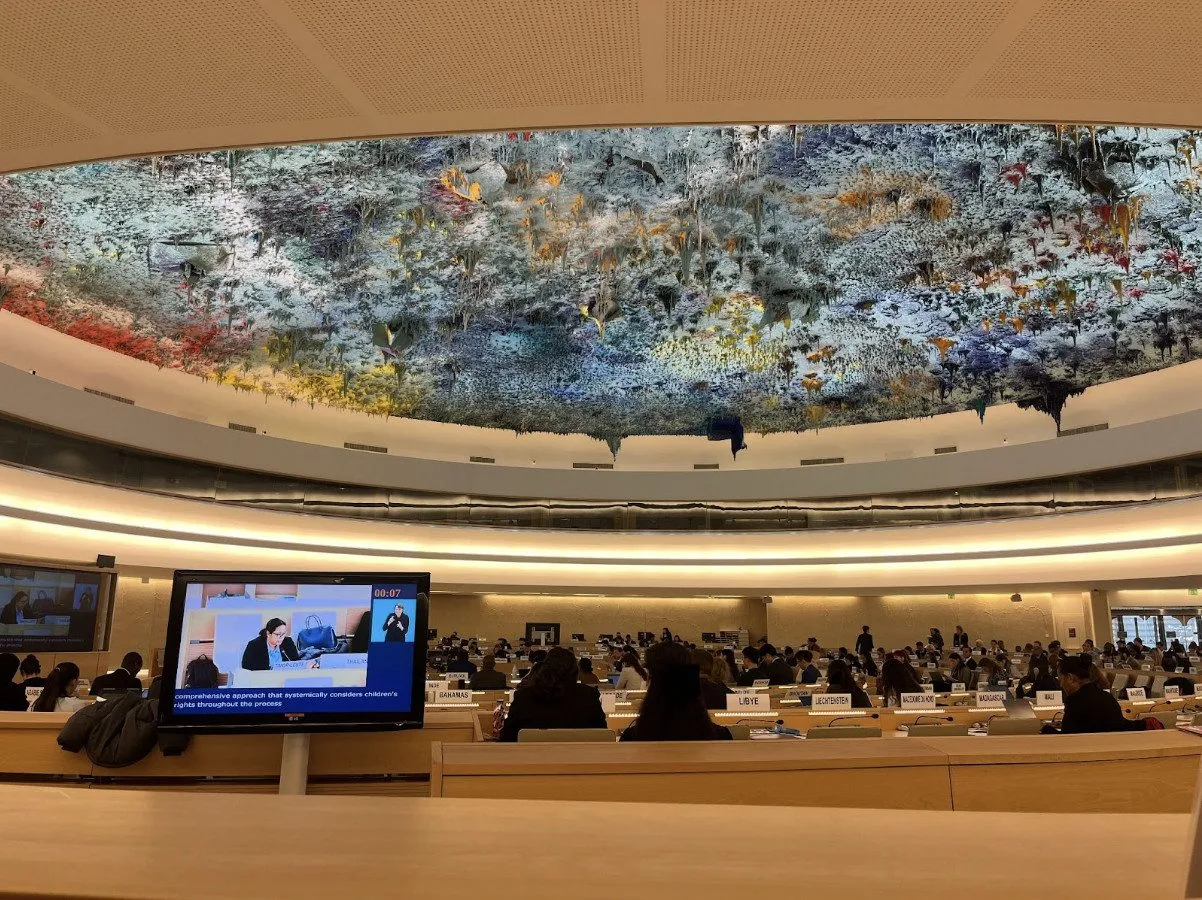
United Nations Human Rights Council Opens its 61st Session in Geneva

Opening the 61st session of the Human Rights Council in Geneva, UN Secretary-General António Guterres warned that human rights are “under attack” worldwide, as High Commissioner Volker Türk cautioned against the erosion of international norms and called for renewed commitment to accountability, justice and the rule of law.

Article

The Sahrawi Question and Spain’s Recognition of Morocco’s Sovereignty

The conflict over Western Sahara, often labeled as Africa’s last unresolved colonial issue, began with Spain’s withdrawal in 1975 from its former territory, known as Spanish Sahara. The International Court of Justice ruled that while Morocco and Mauritania had historical connections to the region, these did not constitute sovereignty; it supported the Sahrawi people’s right to self-determination. Spain’s signing of the Madrid Accords transferred control to Morocco and Mauritania without organizing a promised referendum. The Polisario Front emerged, declaring the Sahrawi Arab Democratic Republic and declaring war. Although a ceasefire was established in 1991 with a UN mission to organize a referendum, it has yet to take place. Morocco proposes broad autonomy while the Polisario demands a referendum. Spain has maintained a complex relationship with Morocco, which escalated in 2022 when Prime Minister Pedro Sánchez endorsed Morocco’s autonomy plan, marking a shift from neutrality and drawing criticism from within Spain and Algeria. The Sahrawis, many in refugee camps for decades, view Spain’s realignment as a betrayal. The UN still recognizes Western Sahara as non-self-governing, with the Sahrawi right to self-determination intact legally, although Morocco’s administration and geopolitical support complicate the path to independence.

Press release

UN Side Event: Enforced Disappearances in Pakistan

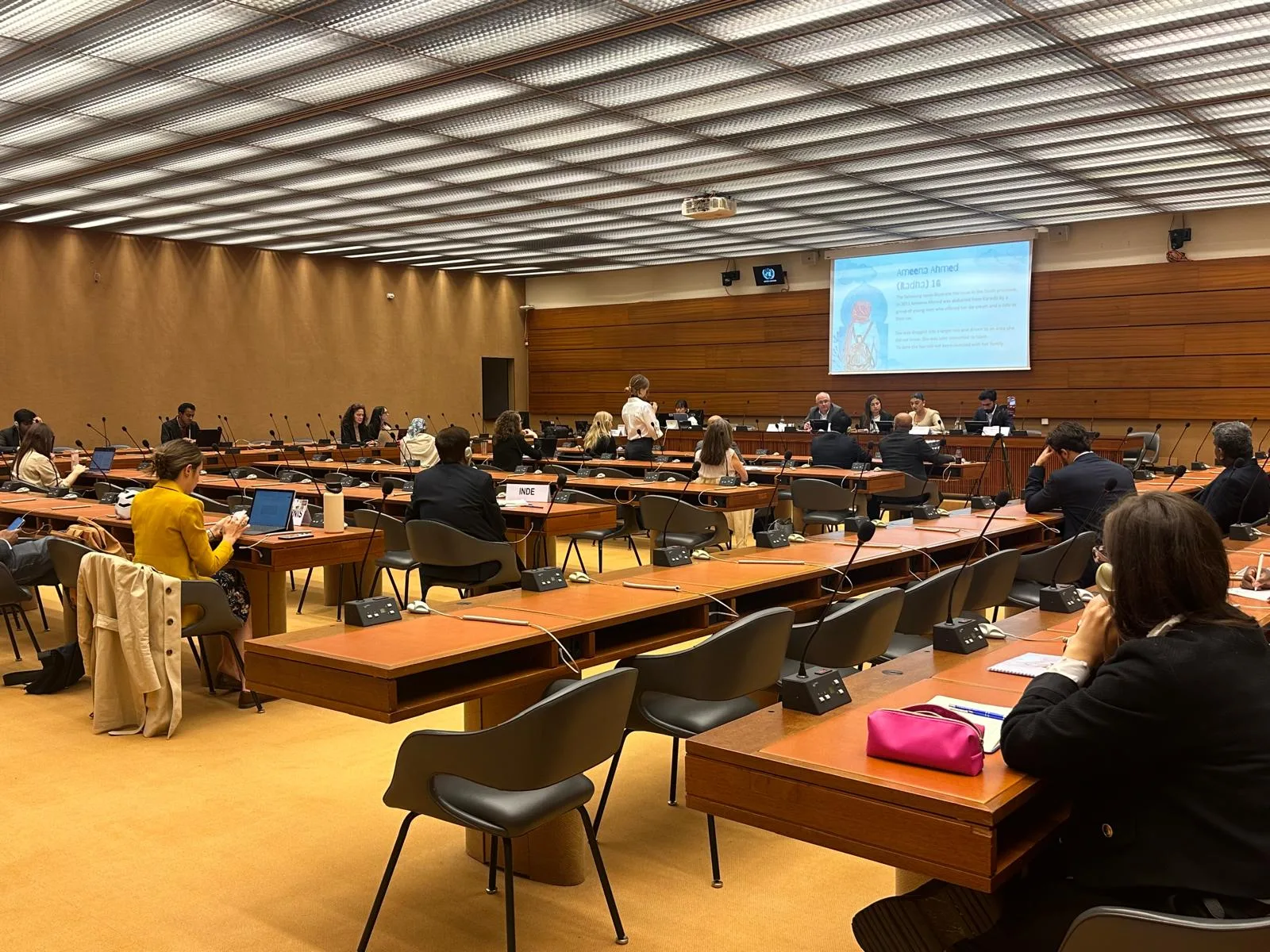
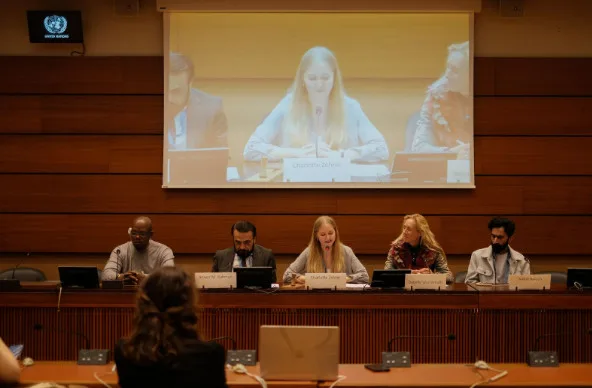
On April 1st, 2025, Global Human Rights Defence (GHRD) held a side event at the 58th Human Rights Council session in Geneva, moderated by Charlotte Zehrer. The event highlighted a GHRD report on enforced disappearances in Pakistan, particularly affecting ethnic and religious minorities, and called for urgent reforms and accountability. Panelists included Isabelle Wachsmuth from WHO, who discussed the traumatic impacts of enforced disappearances; Jamal Baloch, who described the systematic oppression of Baloch people, labeling it as genocide; Ammarah Balouch, who focused on the forced conversion of Sindhi girls; and Anwar Mehmood Rehman, who addressed the persecution of Ahmadiyya Muslims. All panelists united in demanding an end to enforced disappearances and called on the UN and international community to act decisively against these human rights violations.

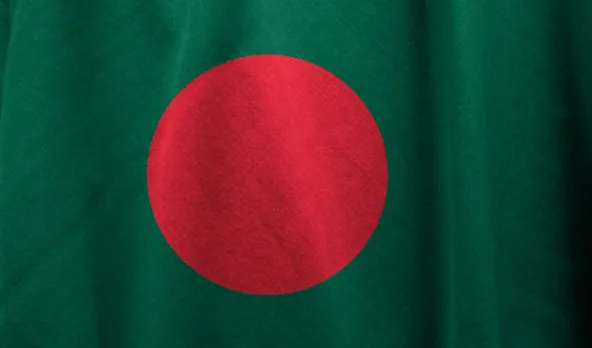
Bangladesh flag
Press release

Side event: Human Rights Violations in Bangladesh

At the 58th Human Rights Council Session in Geneva, the Tumuku Development and Cultural Union and the International Forum for Secular Bangladesh hosted a side event focusing on human rights violations and the rise of Islamic extremism in Bangladesh. Moderated by Kevin Lawrence, the event highlighted ongoing arbitrary arrests, violence against minorities, and severe restrictions on freedom of speech. Experts Fazal-ur Rehman Afridi and Dr. Rayhan Rashid raised concerns about religious persecution, extrajudicial killings, and significant suppression of dissent against marginalized groups such as Hindus and Christians. They discussed the militarization of state institutions and the unchecked rise of extremist groups undermining pluralism. The panel also addressed the repression of local media and the harassment of journalists, with reports of a climate of fear and intimidation. Investigative journalist Sahar Zand shared troubling accounts of violence against religious minorities. Former British MP Paul Bistrow acknowledged progress in specific areas in Bangladesh but warned of the potential loss of these gains amidst worsening human rights conditions. The panelists called for stronger international action to protect democratic principles and hold violators accountable, stressing the need for continued attention to the human rights situation in Bangladesh.

Press release

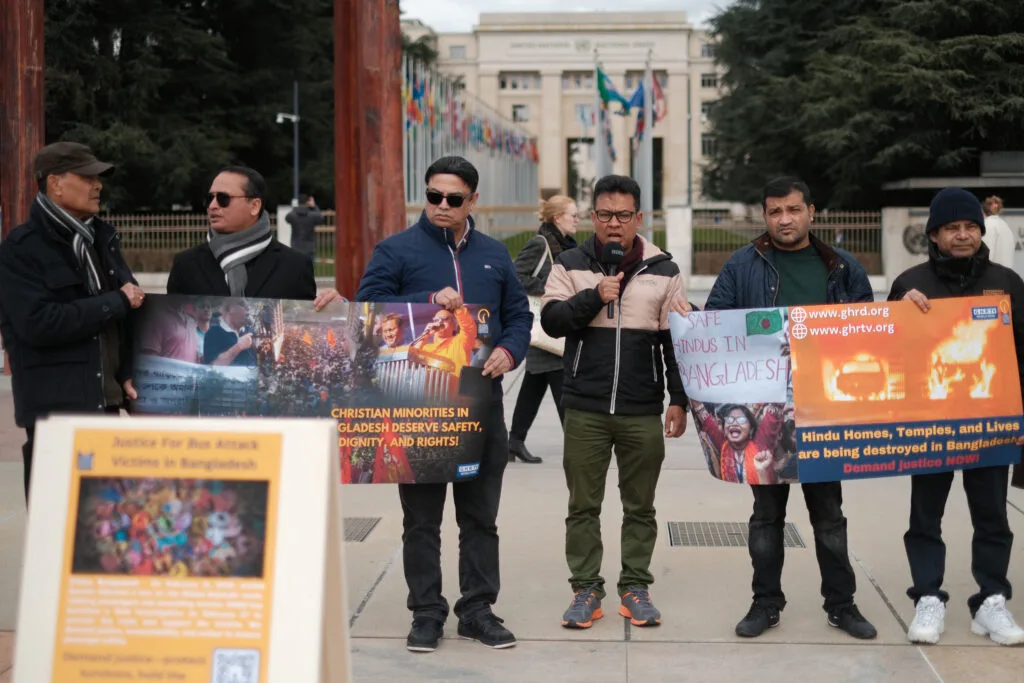
Protest and Exhibition About the Human Rights Violations of Minorities in Bangladesh at the Broken Chair in Front of the United Nations

On March 13, 2025, GHRD organized a protest in front of the United Nations in Geneva to highlight ongoing human rights violations in Bangladesh, particularly against religious and ethnic minorities. Participants, including Bangladeshi civil society actors, called for an end to systemic repression and urged accountability for perpetrators. The protest drew attention to escalating violence under the interim government, emphasizing the need for judicial reforms and international intervention, including a referral to the International Criminal Court. GHRD later submitted a memorandum to the UN, requesting the release of Chinmoy Prabhu Das from detention and the establishment of a permanent UN office in Bangladesh.

Press release

GHRD’s UN Side Event: Human Rights in Pakistan

On October 2, 2024, GHRD hosted an event at the 57th session of the Human Rights Council in Geneva, chaired by Mariana Mayor Lima, featuring speakers including Professor Nicolas Levrat, Ammarah Balouch, and Jamal Baloch. Professor Levrat discussed the unequal enjoyment of human rights globally, emphasizing state obligations under human rights treaties and the role of NGOs in raising awareness. Ammarah Balouch highlighted the forced conversions and marriages of Sindhi girls in Pakistan, noting significant obstacles to justice for victims. Jamal Baloch shared his testimony on enforced disappearances in Balochistan, affecting young activists and their families. The panel called for urgent cooperation among minorities, adherence to human rights treaty obligations, and accountability for perpetrators, suggesting the establishment of an independent UN fact-finding mission.

6th GHRD International Film Festival: Human Trafficking Edition
Submission Deadline: 9th August 2026