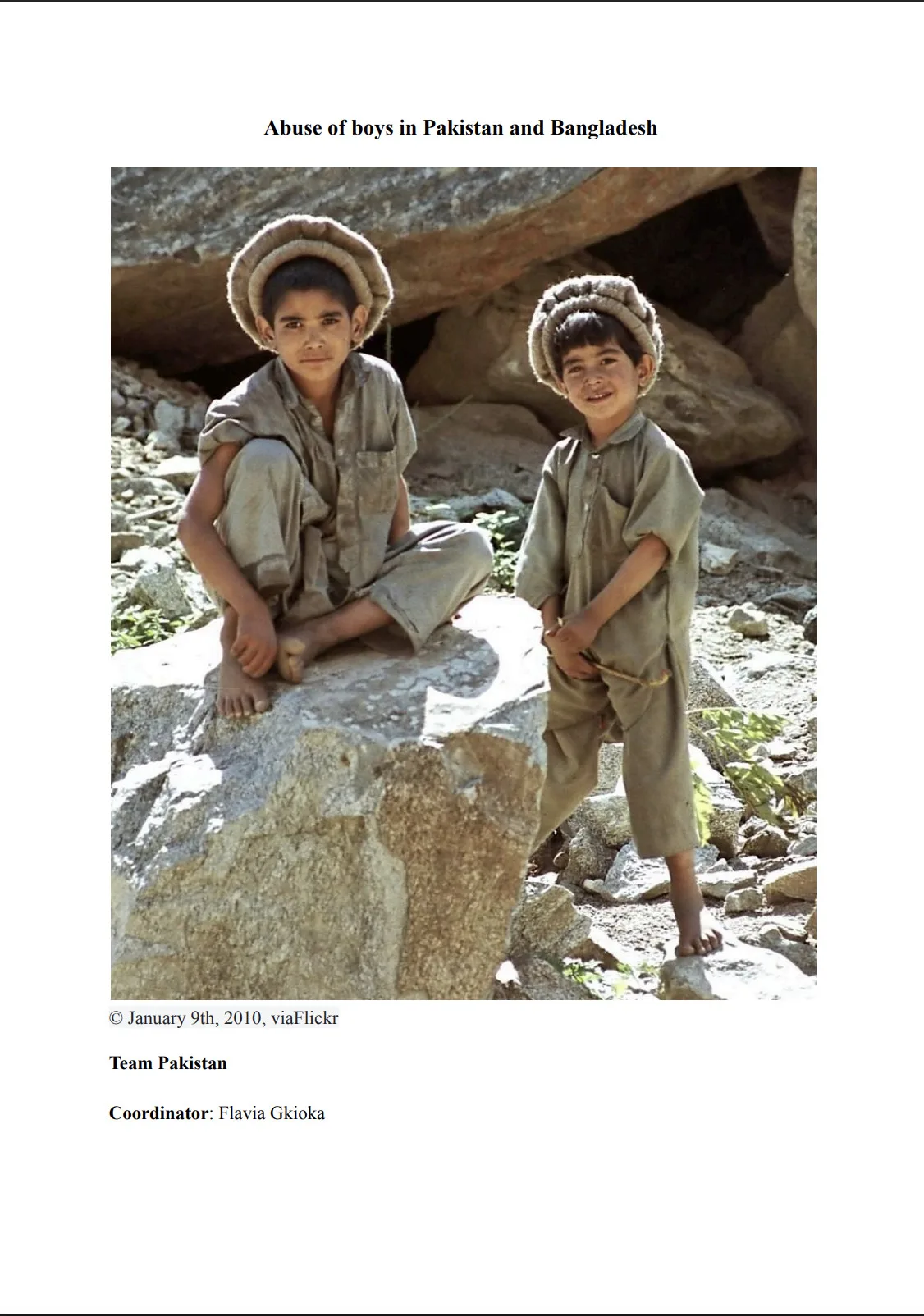
The abuse of boys in Bangladesh and Pakistan is deeply rooted in the historical and cultural frameworks of these societies. Both countries share common cultural elements stemming from their shared history under British colonial rule and, before that, the Mughal Empire, which shaped their societal structures, gender roles, and traditional practices.
In both Bangladesh and Pakistan, traditional gender roles have been heavily influenced by patriarchal systems. These roles dictate a rigid hierarchy where men are dominant figures in both public and private spheres, while women and children, including boys, are often subordinated. This patriarchal structure tends to normalise the subjugation and control of those perceived as weaker, including children, and boys are expected to conform to certain behavioural norms that align with traditional masculinity. Boys in these societies are often socialised from a young age to adopt traits such as toughness, emotional restraint, and obedience to authority figures. Deviation from these expectations can result in various forms of abuse as punishment or a method of enforcing conformity. The pressure to conform to these rigid gender norms not only perpetuates cycles of abuse but also silences boys who may otherwise seek help, as doing so could be perceived as a sign of weakness.
Moreover, societal norms in Bangladesh and Pakistan often dictate that boys are the bearers of family honour. Any perceived threat to this honour can lead to severe repercussions, whether through non-conformity or victimisation. This cultural emphasis on honour can result in families covering up abuse to avoid social stigma, further entrenching the cycle of violence and making it difficult for boys to seek help or receive justice.
Certain traditional practices and beliefs also contribute to the abuse of boys in these regions. For example, the practice of “bacha bazi” in Afghanistan, which borders Pakistan, is a known form of sexual exploitation of young boys by older men and has been reported in parts of Pakistan as well. Although it is officially illegal, the practice persists due to weak law enforcement, corruption, and deep-seated cultural attitudes that view boys as objects rather than individuals with rights. In Bangladesh, while not as publicly reported as in Pakistan, similar issues exist, often exacerbated by poverty and social inequalities. Boys from poorer families are particularly vulnerable to being exploited in the workforce, where they may face physical abuse and neglect or be trafficked for sexual exploitation. Traditional views that see boys as workers or economic assets rather than as children needing protection further perpetuate these abuses.