
Introduction
The principle of equality was enshrined in the Charter of the United Nations in 1945 in Article 1. The terms of reference of the United Nations Commission on the Status of Women, formulated at its first session in 1947, emphasized that its task was to “prepare recommendations and reports for the advancement of women’s rights in the political, economic, social and educational fields.” One of the first results of the Commission’s work was the 1952 Convention on the Political Rights of Women, which explicitly states that women “shall be admitted, on equal terms with men and without discrimination of any kind, to all public elections established by national law” (Article 2) and “shall have the right to hold public office and to exercise all public functions established by national law” (Article 3). Women today have the right to vote and hold office in almost every country in the world. However, relatively few women have been elected to national parliaments through the democratic process, and even fewer have reached top positions (Gierycz, 1999), although various analysis have shown the positive impact of women’s participation in decision making processes regarding conflict prevention and resolution.
Statistical analysis of the largest dataset on the status of women in the world shows that countries where women have more power in several areas of life are less likely to go to war with their neighbors (Elsesser, 2022). Gender equality is generally a better indicator of a state’s peacefulness than other factors such as democracy, religion, or GDP. Similarly, gender inequality has been shown to be a predictor of armed conflict in several empirical studies. Another analysis of data from countries around the world for the period 1977-1996 found that the higher the percentage of women in parliament, the less likely the state is to commit human rights violations (O’Reilly, 2015).
More specifically, women’s participation in peace processes and peace building attempts has proved to be crucial. Statistical data analysis showed that an agreement is 35 percent more likely to last at least 15 years if women participate in its establishment which means that women can foster long-lasting peace through their specific characteristics, lenses and experiences (15, 9, 8).
Despite the evidence that proves women’s crucial role in peacebuilding processes, it is still a long way to equality. Between 1992 and 2018, only 13 percent of negotiators and 3 percent of mediators were women. When they are invited to the table, the media is not commenting enough on their contributions. The more popular and persistent image of women is that of victims, which ignores their impact in conflict recovery (UN Women, 2019).
The driving question is not only how we can ensure that more women are represented in political decision-making, but also what needs to be considered in representation policy to enable women’s participation more meaningful and effective. When thinking about this issue, we need to pay attention to the impact of the expectations and stereotypes placed on women and the depoliticisation of women that can arise when a few women are expected to represent the experiences and positions of all women.
Stereotypes and expectations
Women play a variety of roles in conflict, from peacemakers and political advocates to victims and perpetrators. Yet, on average, women experience conflict differently than men. For example, women are less likely to take up arms, but more likely to die from the indirect effects of war, such as human rights violations, the spread of infectious diseases, and economic destruction . This is likely why women prioritize differently in peace negotiations, expanding the conversation beyond military action, power, and territory to include social and humanitarian needs. They bring up political and legal reforms, priorities for social and economic reconstruction, and transitional justice concerns (CFR, n.d.). This contributes to strengthening the representativeness and legitimacy of the new political order that follows (O’Reilly, 2015). Women also often advocate for other marginalized groups by organising across cultural and demographic or other divides because they also have more access to community networks and critical information due to their different social role as a trustworthy person (CFR, n.d.). Such an approach incorporates the concerns of different demographical, religious or cultural groups in a society affected by conflict (CFR, n.d.). They address development and human rights issues related to the root causes of conflict, which helps societies reconcile and ultimately create a more stable peace. Studies have also shown that strengthening women’s political and social participation diminishes the chances of conflict relapse after war has ended and that women in politics are perceived as more trustworthy and less corrupt. This perception has been crucial in creating legitimacy and acceptance towards new political institutions in the fragile post-conflict situation. Furthermore, women are often perceived by the parties to the conflict as honest mediators in peace processes. Conflict parties may see women as less threatening because they typically operate outside of formal power structures and are not generally thought to mobilize fighting forces. This gives women access to conflict parties that is denied to male leaders (O’Reilly, 2015). Women’s experience of exclusion from control and power also give them the reputation of being politically impartial in peace negotiations (CFR, n.d.).
However, this perception requires critical examination and questioning. Does this perception imply that women must remain excluded from positions of power to be included in peace talks? And if women take positions of responsibility in warfare, can they automatically no longer participate in peace talks? It is important to make sure that stereotyping women’s role in peace processes doesn’t lead to further excluding them from meaningful decision-making positions.
Due to the many stereotypes, some warring parties expect from them to transform harmful societal structures almost immediately. This puts a lot of pressure on women although the expectations are too high to achieve for anyone and may not be applied to men. Additionally, women may only be elected as head of government in peaceful times because they are perceived as unqualified to lead in wartime (Gilsinan, 2016). Consequently, women may feel pressured to prove their ability to handle tough situations to overcome the stereotype of being militarily weak. Therefore, many women try to overcome feminine stereotypes of collaboration and empathy in order to be appointed to lead a country in the first place (Elsesser, 2022).
Taken together, the stereotypes of women’s role in leadership positions can have complex effects which can in turn distort the expected outcome. Women’s role and possibilities to prevent war and tackle conflict situations, is a combination of domestic pressures, geopolitics and economics and should not only be interpreted solely as women’s foreign policy (Gilsinan, 2016).
The representational dilemma
Women play a crucial role in peacebuilding talks and processes. But the notion that women can only speak on behalf of women undermines women’s ability to participate in broader political discussions. Gender equality, for example, is consistently referred to as a “women’s issue.” However, women remain underrepresented in discussions about the technical aspects of peace negotiations, such as ceasefires and demobilization. As a result, women are excluded from the reservoir of preeminent experts, their skills and expertise are underestimated or overlooked, and they are thus not appointed to lead and support peace processes (). Meanwhile, the need to balance the degree of professionalization with an appreciation of local knowledge and capacity is something that especially women peacemakers must consider. Women being part of an “elite” of eminent peacemakers can jeopardise their relationship with people in other sectors of society on grassroot levels thus diminishing their representativeness (UN Women, 2021). Unfortunately, decisions about who is included in formal peace processes and who sets the agenda continue to highlight the power dynamics that exist in society and the accompanying resistance to including the knowledge and experience of women peacemakers from local communities (UN Women, 2021).
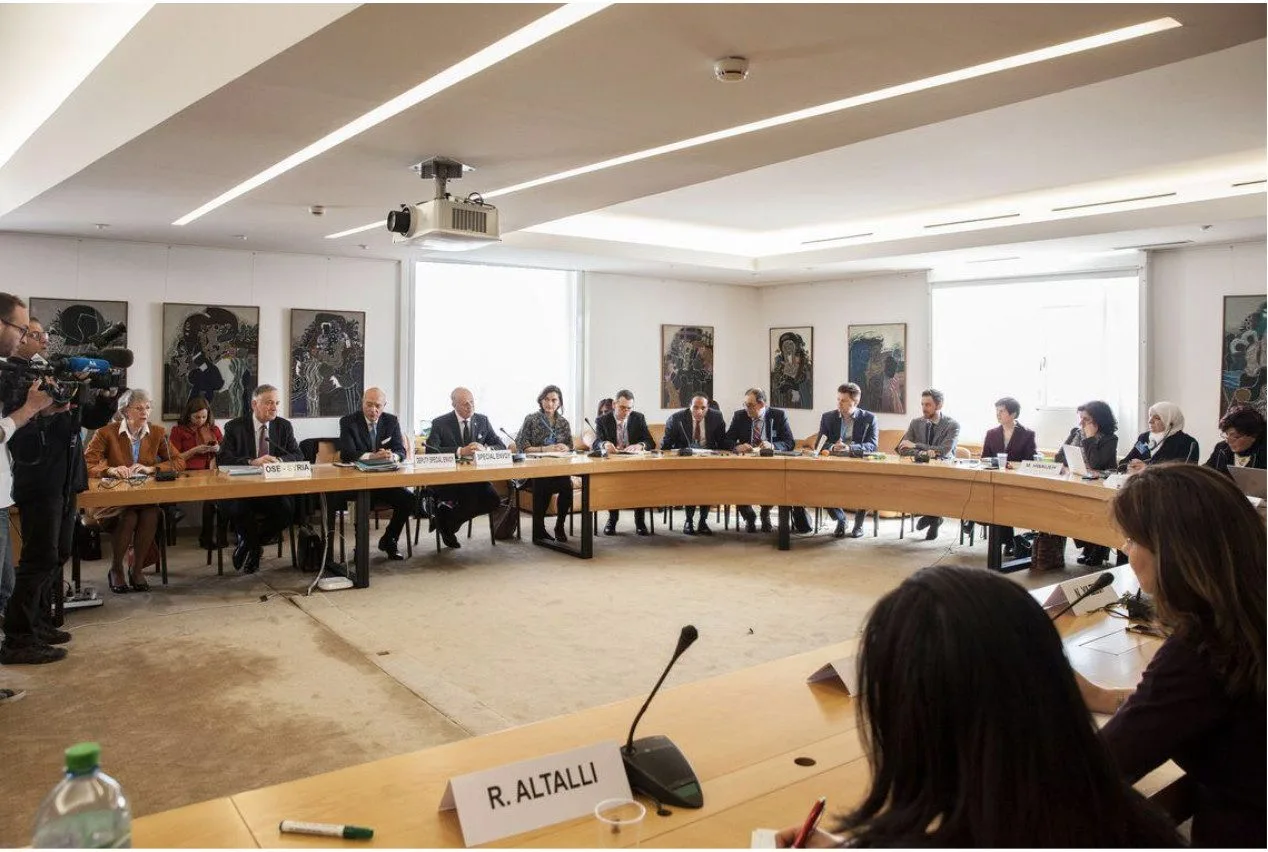
The Syrian Women’s Advisory Board (WAB) is often mentioned as a model example for women’s participation in negotiating efforts. WAB was established by the Special Envoy for Syria in 2016 with the idea to ensure that diverse women’s perspectives are integrated into the political process and peace talks in Geneva (OSES, n.d.). The women come from diverse backgrounds and advise the current Secretary General for Syria, Geir O. Pederson, on the Syrian political process to lasting and inclusive peace (UN Women Arab States, 2022). During their consultations, the Board raises issues that are still missing in the agenda such as gender responsive perspectives and they make recommendations to help advance the peace talks. Dr. Nada Aswad, the WAB Chair says “we provide realistic advice to the UN Special Envoy from the perspectives of women who are connected to the ground and who struggle to pursue a political solution and achieve women’s rights, the rule of law and justice. As such, the WAB has a multi-level mediation role” (UN Women Arab States, 2022).
Women always played a crucial role during the civil war in Syria by leading political and peace movements, coordinating humanitarian and relief initiatives, ensuring access to education, participating in local governance, and providing livelihood opportunities for those in need. Hence, Syrian women have skillfully managed social norms, political sensitivities, and security risks, brokered ceasefires, mediated the release of prisoners, and ensured access to humanitarian aid (UN Women Arab States, 2022). The creation of the WAB was therefore a reaction to years of efforts and advocacy by Syrian women’s rights activists for a direct and meaningful role in the peace talks (OSES, n.d.).
This board was meant to be in line with the gender equality agenda and Security Council resolutions. For example, resolution 2254 encourages the “meaningful resolution participation of women in the UN-facilitated political process for Syria” (OSES, n.d.). However, the question of rightful representation was raised by many activists. They questioned the ability of WAB’s members to be representative of all Syrian women.
For example, the demand to immediately relieve economic sanctions on the government to ensure the arrival of vital products to Syrian people has been highly criticized. It was perceived as a call to ease sanctions on President Bashar al-Assad that would have strengthened him. Critics argued that sanctions cannot be made solely responsible for the lack of food and aid in many parts of Syria. The inability of humanitarian aid to reach besieged towns is a result of the Syrian military’s deliberate policy of starving and suppressing opposition-controlled towns (Syria Justice and Accountability Center, 2016). Oppositional women’s groups consequently formed an alliance behind the Hashtag ‘#WABdoesNotRepresentMe’ (Asad, 2022).
Rula Asad has analysed the WAB in a report, stating that the establishment of the Women’s Advisory Board reduced the struggles of Syrian women’s groups to a traditional, quasi-political body, and the WAB became the main and final reference for all issues related to the Syrian women’s movement. However, Syrian women’s movements on the ground did not agree with how the WAB was established, the role it was assigned, and how it was presented as an “achievement” by its creators. Asad argues that only did the United Nations fail to persuade the negotiating parties to reach reconciliation, but it was also unable to impose women’s representation at the negotiating table. Instead, a peripheral body was formed whose functions were limited to providing advice to the office of the UN Special Representative and to controlling and silencing women’s voices through this secondary channel. She finally asks how we can prevent politics of representation from tipping over into essentialism? (Asad, 2022).
Many activists understood WAB’s first press statement to mean that the board wanted to represent all Syrian women. However, it quickly became clear that there was no connection between the WAB and Syrian women on the ground, which manifested itself not only in the issue of representation, but also in the depoliticization of women’s work.
Depoliticisation
UN Women who supported the creation of WAB insisted that Syrian women put aside their political differences and come together to build peace. This demand of neutrality fosters depoliticization which in turn fails to recognize the important political role women have been playing in the Syrian revolution but instead marginalise women’s ongoing contribution by portraying them as peacemakers only. These women were asked to disregard their political affiliations and to remain silent on controversial topics such as the governments’ use of barrel bombs. Consequently, the WAB remained peripheral and only functioned as a counsel entity with no further competencies. Christina Shaheen, who is part of the UN envoy’s team also remarks that many Syrian women were confused to see a woman associated with the Assad regime standing side by side with a woman from the opposition (Asad, 2022).
Mouna Ghanem stated in a comment for the Independent that Syrian women have continuously been excluded from peace processes, which made finding a solution to Syria’s conflict impossible. She joined the peace talks in Geneva although “we had not been invited to the talks, we were not official participants. Like nearly all Syrian women, we were just bystanders at an event intended to map out our destiny. Instead of taking our place at the negotiating table, we had to make do with the lobby” (Ghanem, 2019). She was surprised by the fact that radicals and armed groups were invited, but women and many more democratic movements have been excluded.
After the new Special Envoy for Syria Staffan de Mistura came into office, the WAB was established. Ghanem was one of 12 women appointed to the Board and according to her, she was almost the only one with an overtly political background. She says their role was to make up for the lack of women in the regime and to provide a missing gender perspective for the peace process without having a serious political voice. Ghanem adds that this aim was unrealistic from the beginning because among the board were women who rejected the international conventions on women’s rights and equality making it impossible to find an agreement among the board itself. In her view, the decision to rotate the panel’s members further fragmented the already battered women’s movement by fostering a sense of competition and rivalry. All the while, Western governments funded the panel’s activities with generous donations, perhaps because they were happy to cross women’s participation off the list of things to do, she thinks. After she met with diplomats, she was asked to resign from the board. In Ghanem’s words: “For having the temerity to involve myself in the peace process, they expected me to leave the peace process” (Ghanem, 2019).
To meaningfully participate in a political process, you must be able to represent a constituency, but the Women’s Advisory Board never had the opportunity to work with its own constituency. They couldn’t unite the grassroots women who would have been able to form a critical mass and influence the political process. Ghanem stresses that “by failing to politically empower its members, the women’s advisory board was hamstrung from the start, providing women’s participation that was little more than cosmetic.” She concludes that plans for similar boards should not “mistake being at the talks for being at the (negotiating) table.” (Ghanem, 2019).
Recommendations:
Because women are repeatedly the victims of arrests, home raids, and massive evictions and experience socio economic stresses of the disappearance or death of their husbands, fathers, and brothers, they have a distinct interest in the outcome of those talks. Additionally, to ensure that gender-based violence is addressed and the voices of all Syrian women are heard, especially survivors of violence should participate in any negotiated settlement (Syria Justice and Accountability Center, 2016). This is the only way to ensure that every woman can feel secure.
The establishment of an advisory board should include a clear review and selection process, should aim to formulate principles rather than policy statements, and will only be effective if the advisory board can meaningfully participate in the development of a final framework agreement (Syria Justice and Accountability Center, 2016).
Finally, women peacemakers must be recognized and included as an independent delegation to peace talks, to ensure that their views are taken into account and can influence peace negotiations (UN Women, 2021).
Conclusion
The role of women in peacebuilding processes and negotiations is crucial and has been increasingly recognized in recent years. Women bring unique perspectives, priorities, and skills to the table, expanding the conversation beyond traditional notions of power and territory to encompass social and humanitarian needs. Studies have also shown that women’s participation in peace processes leads to more sustainable agreements and contributes to long-lasting peace.
However, there are significant challenges and barriers that women face in their efforts to participate meaningfully and effectively in peacebuilding. Stereotypes and expectations placed on women can undermine their contributions and fail to recognize the complexity of the politics of conflict. Women are sometimes expected to transform societal structures single-handedly, leading to the potential exclusion from decision-making positions when they fail to perform according to these expectations and stereotypes. Moreover, the representational dilemma arises when women’s participation is reduced to being seen as representatives solely of women’s issues, rather than being recognized as experts in broader political discussions.
The case of the Syrian Women’s Advisory Board (WAB) illustrates some of these challenges. While the establishment of the WAB aimed to integrate diverse women’s perspectives into the peace process, questions were raised regarding the board’s rightful representation and its ability to connect with Syrian women on the ground. The demand for neutrality and depoliticisation marginalizes the political role that women have played in conflicts, reducing their contributions to being mere peacemakers. This depoliticisation fails to recognize the complexity of women’s experiences and their ongoing efforts in challenging societal norms.
To address these issues, several recommendations can be made. Firstly, women’s participation in peace processes should go beyond token representation and include a diverse range of women, including those who have been affected by violence and conflict. Advisory boards should be established through a clear and inclusive selection process, empowering women to actively contribute to the development of frameworks and policies. Additionally, recognizing and supporting independent women-led delegations in peace talks can ensure that women’s voices are heard, and their perspectives are taken into account.
Ultimately, achieving gender equality and meaningful women’s participation in peacebuilding requires a shift in societal attitudes, the dismantling of stereotypes, and the creation of inclusive spaces for women’s voices to be heard and valued. Women’s active involvement in decision-making processes is not only essential for lasting peace but also for building more just, inclusive, and sustainable societies.
Sources
Asad, R. (January 26, 2022). The Syrian Women’s Advisory Board – lessons to be learned. Retrieved on May 26, 2023, from https://www.boell.de/en/2022/01/25/der-syrische-frauenrat-aus-fehlern-lernen
Council of Foreign Relations (CFR) (n.d.). Women’s Participation in Peace Processes. Why It Matters. Retrieved on May 11, 2023, from https://www.cfr.org/womens-participation-in-peace-processes/why-it-matters
Elsesser, K. (March 22, 2022). Sheryl Sandberg says female leaders don’t go to war. Here’s what research says. Retrieved on May 11, 2023, from https://www.forbes.com/sites/kimelsesser/2022/03/08/sheryl-sandberg-says-female-leaders-dont-go-to-war-heres-what-research-says/?sh=4c076f611fa7
Ghanem, M. (February, 22, 2019). If governments want to achieve peace in Syria, they need to stop excluding women from their negotiations. Retrieved on June 22,.2023, from https://www.independent.co.uk/voices/syria-conflict-resolution-women-sexism-war-a8792271.html
Gierycz, D. (1999). Women in decision-making: can we change the status quo? In: Towards a women’s agenda for a culture of peace, p. 19-32. Available here https://unesdoc.unesco.org/ark:/48223/pf0000118579
Gilsinan, K. (August 25, 2016). The Myth of the ‘Female’ Foreign Policy – As more women become heads of state, will the world actually change? Retrieved on May 25, 2023, from https://www.theatlantic.com/international/archive/2016/08/-foreign-policy-clinton-may-thatcher-women-leadership/497288/
Office of the special envoy of the secretary-general for Syria (OSES) (n.d.). Women’s Advisory Board. Retrieved on May 11, 2023, from https://specialenvoysyria.unmissions.org/women%E2%80%99s-advisory-board
O’Reilly, M. (October, 2015). Why women? – inclusive security and peaceful societies. Brief from Inclusive Security. Retrieved on May 26, 2023, from https://www.inclusivesecurity.org/publication/why-women-inclusive-security-and-peaceful-societies/
Syria Justice and Accountability Center (April 7, 2016). The Controversy over the Syrian Women’s Advisory Board. Retrieved on May 26, 2023, from https://syriaaccountability.org/the-controversy-over-the-syrian-womens-advisory-board/#
UN Women (October 28, 2019). The power of women peacebuilders. Retrieved on May 11, 2023, from https://www.unwomen.org/en/news/stories/2019/10/compilation-the-power-of-women-peacebuilders
UN Women Arab States (November 1st, 2022). A group of women has bridged differences towards peace in Syria. Retrieved on May 11, 2023, from https://arabstates.unwomen.org/en/stories/feature-story/2022/11/a-group-of-women-has-bridged-differences-towards-peace-in-syria
UN Women (2021). Strengthening women’s participation in peace processes: what roles and responsibilities for States? High level seminar from UN Women. Available here https://www.unwomen.org/en/digital-library/publications/2021/08/strengthening-womens-participation-in-peace-processes