
Introduction
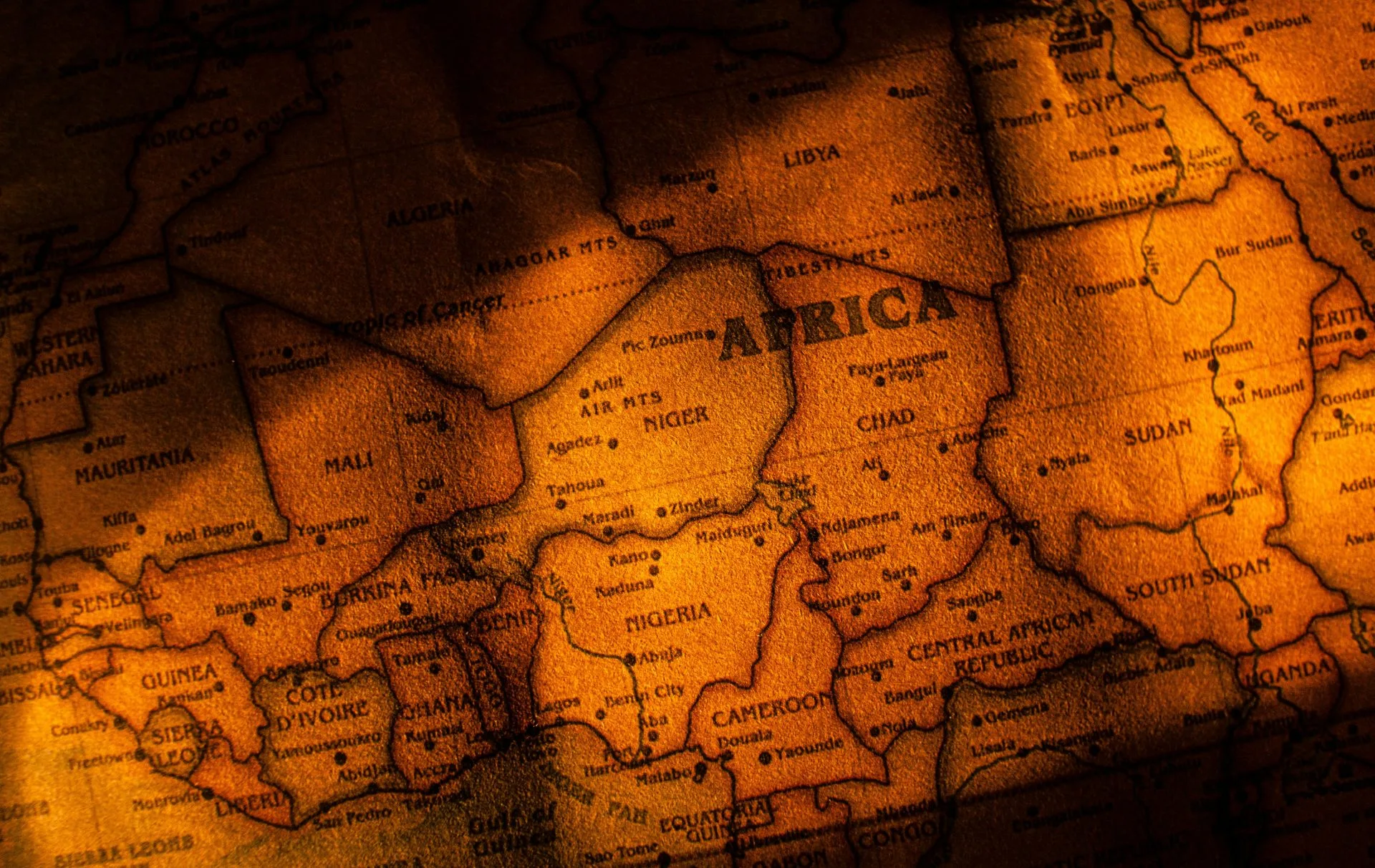
The Sahel is a transitional region stretching across Africa and includes countries such as Mali, Niger, Burkina Faso, and Chad. Driven by challenges such as climate change, land degradation, and rapid population growth, the humanitarian crisis continues to deepen. In recent years, the Sahel has also become home to numerous terrorist groups and non-state actors (NSA). International attention has widely focused on violence and political instability, but behind geopolitical developments and the wider humanitarian crisis, millions of children are severely affected every day.
Amid military clashes, children in the Sahel are increasingly caught in the crossfire, while the attention should also be focused on the hidden impact behind the frontlines (UNICEF, 2023). As violence and instability continue to spread across rural communities, children are increasingly displaced to escape the fighting, often resulting in separation from their families. Being displaced impacts their health, their access to resources, and their education. Many are recruited by armed groups and forced into child labour, leaving them with prolonged physical and psychological scars.
The impact on children in the Sahel results from the cumulative effects of violence and other structural pressures. With worsening conditions and deepening insecurities, the Sahel crisis does not just present itself through war. This article focuses on children in Burkina Faso, Mali, and Niger. By examining the impact of the crisis on children, the article concludes that it constitutes a generational emergency for the Sahel region.
Understanding the Sahel Crisis
The Sahel crisis is deeply seated in complex regional history and greater structural issues. Since gaining independence in the 1960s, many countries in the region have experienced a combination of slow economic growth, worsening effects of climate change, and persistent violence (Centre for Preventive Action, 2026). As young, independent, postcolonial states, governments have failed to stabilise and provide effective structural adjustments (Yabi, 2024). Accordingly, the fragile democratisation process and constitutional capacity failed to materialise and often gave way to illegitimate governance.
This situation is further exacerbated by the rise of global temperatures in the region. The devastating loss of production yield, droughts, and reduction of cultivable land represents a threat to livelihoods of local communities. In return, this has increased conflictbetween pastoralists and nomadic communities, mainly consisting of disputes over access and control over water and land resources (Bøås, 2019).
The humanitarian crisis caused by weak statehood and the impact of climate change have opened the door to violent insurgencies, as states and the international community fail to address this effectively. Widespread political and social resistance, albeit often peaceful, has also triggered a reaction to participate in crime and violence for survival (Bøås, 2019).
The Sahel region has a predominantly young population due to its high fertility rates (Fasanotti, 2026). As governments cannot offer meaningful employment opportunities and social progress, armed actors become the providers for communities. The desire for social legitimacy thus creates space for armed groups to gain influence through the promise of protection, income, and purpose (Fasonotti, 2026). Consequently, military coups in Mali, Burkina Faso, and Niger gained ground and led to the governments’ progressive loss of effective control over territory (UNICEF, 2025).
For examples, following the collapse of the Libyan state in 2011, the proliferation of weapons in the region reignited different armed groups. Violent extremist organisations, such as the Islamic State in the West African province (ISWAP), Jama’at Nusrat al-Islam wal-Muslimin (JNIM), and Islamic State in the Greater Sahara (ISGS), transformed the region into an attractable space for terrorist. The Tuareg rebellion in Mali aligned itself with Al-Qaida in the Islamic Maghreb (AQIM) and other Islamist groups, seeking the creation of an autonomous state. The consequent collapse of the government then enabled the National Movement for the Liberation of Asawad (MNLA) to declare an independent state in the North (Centre for Preventive Action, 2026).
After a relatively calm period and a transition back to a civilian government following the peace agreement, a coalition between MNLA and other Tuareg independence groups took control over territory spreading into Burkina Faso and Niger. This essentially led to the resurgence of the ISGS in Burkina Faso and the formation of JNIM. At the same time, Boko Haram’s re-emergence signaled aggressive attacks and the succession of ISWAP, gaining control in Niger.
The lasting impact of French colonialism also adversely affects the three states. French military presence has largely been criticised by local populations due to its failure to eradicate terrorism and the root causes for instability (Zoubir, 2022). Despite decades-long interventions targeting violent extremists in support of the three governments, the withdrawal of troops by France and European allies allowed other external actors like the Wagner Group to expand their influence (Centre for Preventive Action, 2026).
Ethnic grievances also exacerbate the conflict. The Fulani community has long been perceived to be allies of jihadists and Islamic groups. In Burkina Faso, the Volunteers for the Defence of the Homeland (VDP) increasingly operates against civilian populations, especially targeting Fulani ethnic groups (Human Rights Watch, 2026).
Since 2020, the three countries have seen a combined total of five military coups, supposedly as responses for governmental failure. Yet, these regimes concentrate powers and deteriorate human rights conditions. Overall, the Sahel presents itself as a multidimensional crisis. Mali, Burkina Faso, and Niger are not merely victims of the natural resource curse, but also struggle against its fertile ground for violent extremists who take advantage of their weak socio-political environment. Economic hardship and worsening social and political tensions have made children even more vulnerable.
A Security Crisis
With over eight million children in dire need of humanitarian assistance, the three countries in the Sahel represent one of the worst humanitarian crises in the world due to internal displacement and deteriorating security issues (NRC, 2026). Despite the level ofemergency, there seems to be limited attention from the international community. Since 2019, a five-fold increase in people internally displaced by violence has occurred in Mali, Burkina Faso, and Niger (UNICEF, 2020). Similarly, three times more children have been killed in Burkina Faso in 2022 than the year before, either from direct gunshot wounds or explosives (UNICEF, 2023).
A United Nations report of the situation in Burkina Faso in 2023 concludes that most violations against children are attributable to armed groups. With the increase of indiscriminate attacks against civilians, the killing and maiming of children becomes more frequent (UN, 2025). The denial of humanitarian access and the withdrawal of foreign aid also further weaken child protection.
Children flee their homes for numerous reasons. While displaced children statistically stay within national borders, the severity of violence in Mali and Burkina Faso has led to a twelve-fold increase in children seeking refuge in Côte d’Ivoire (Save the Children, 2024). As armed groups attack villages and public institutions, families flee to survive. Consequently, it creates a wider humanitarian emergency and puts additional pressure on neighbouring countries and communities. The pre-existing scarcity of resources and water in the region thus adds another layer to the troubles of displacement.
Moreover, displacement often results in the separation of families, granting armed groups easier targets to exploit and attack. Essentially, children become easy targets to recruit, perform forced labour, or become victims of sexual violence. Girls, especially, are alsoincreasingly at risk of gender-based violence within refugee camps or in host communities (Marshall and Tiendrebeogo, 2025).
The widespread practice of child soldier recruitment is prohibited not only under international law, but also under the national laws of Burkina Faso, Mali, and Niger. The vulnerability of displaced children allows extremist groups to kidnap children, but the economic pressure often results in children joining voluntarily (Linnyk, 2025). The promise of protection and survival of their families and the lack of legitimate employment opportunities therefore attract children to join armies. Additionally, Qur’anic school teachers, marabouts, have also been found to recruit their students for specific armed groups (Save the Children, 2021).
Another consequence of the situation in the Sahel is early child marriages. Violence and climate crisis are disrupting the lives of girls in Burkina Faso, Mali, and Niger, forcing them to support families and lessen the economic strain. In order to secure a future where employment and education are unlikely, early marriage thus becomes their only option (Plan International, 2025). In other circumstances, girls may be also sold by their families in exchange for food and substances (Plan International, 2025).
The crisis in the Sahel for children therefore constitutes a lack of protection due to violence and other structural challenges. Not only are attacks against children and civilians a grave violation under international humanitarian law, but the inscription of children also outright violates international human rights standards. Children should be especially protected during crisis to ensure safety and a future where their rights are upheld.
An Education Crisis
The right to education is a fundamental right protected under the International Covenant on Economic, Social and Cultural Rights (ICESCR) and the Convention on the Rights of the Child (CRC). Under international humanitarian law, schools, students, and teachers must be protected and cannot be targets of attacks (ICRC, 2023).
The Sahel crisis is reflected in the continuous attacks on education. Attacks on schools in the region are either considered collateral damage from conflicts, or as reprisals against Western-style education. However, attacks on schools have only been used as a deliberate strategy to make children vulnerable and prevent knowledge and functioning abilities (Save the Children, 2021). Schools have also increasingly been used by the military, indirectly making them justifiable targets to attack (Geneva Global Hub for Education in Emergencies, 2026).
In 2021, qualified teachers in Mali were reduced to 15 percent of their original number, significantly reducing education capacities in the country (Save the Children, 2021). Similarly, large amounts of school closures due to insecurity are happening in Burkina Faso, leaving over two million children without education (UNICEF, 2025). UNICEF found over eight thousand schools forced shut by armed groups in the three countries (UNICEF, 2023). The incapacity to access education further deprives children of foundational skills and knowledge, leaving a long-term negative impact on stability and their prospects of employment.
The climate crisis in the Sahel adds another layer that disrupts children’s learning opportunities. With droughts and extreme weather, millions are displaced, forcing schools to serve as shelters instead (Geneva Global Hub for Education in Emergencies, 2026). As such, forced displacement does not just result in school closure at times, but also disrupts school continuity. According to data gathered, over 20 percent of schools in Burkina Faso were closed by 2024 (Burkina Faso Government, 2024). In Mali, millions of children cannot get an education due to insecurity and climate events (UNICEF, 2025). In Niger, over a thousand schools do not function to this date.
The lack of education creates the vicious cycle of involvement in crime, child recruitment and early marriages (Yabi, 2024). Children are forced to leave school because of economic pressure and conflicts. The education crisis not only leaves children vulnerablebut also strips them of other essential services offered in schools, including food, water, and sanitation (Save the Children, 2021). It also results in future states with a severely under educated generation.
A Health Crisis
The availability of substances and resources due to climate and structural reasons has already been problematic, but the continuance of instability and violence worsens the spread of malnutrition and diseases among children in the Sahel. The crisis in the Sahel threatens the survival of children as they face severe wasting (UNICEF, 2024).
Compounded by the disruption of health systems due to conflicts, active blockades of villages and water networks by armed groups, and the suspension of foreign aid, the pre-existing food insecurity has been further exacerbated (UNICEF, 2023). Additionally, malnutrition acts as a multiplier, making children more vulnerable to respiratory disease (Marshall and Tiendrebeogo, 2026). The conflict torn countries also struggling with the administration of vaccines against measles and polio, as well as early childhood and maternal deaths (World Bank, 2026).
Furthermore, the crises in Mali, Burkina Faso, and Niger have unintendedly spilled over into Ghana, Togo, and Benin. As displaced people find refuge across borders, water and basic health services in remote communities of neighboring countries are especially burdened (UNICEF, 2023). In Western Sahel alone, over seven million people currently suffer from food and water insecurity. As health facilities close down systematically, there is a heavy reliance of foreign intervention and NGO assistance.
Conclusion
As a result of conflicts, major displacements, climate change, and severe humanitarian challenges, children are perpetually deprived of their fundamental rights and protection. While the three countries clearly seek stability and development, the reforms must underscore that violence erodes the foundations of future generations. The impact of state fragility, violence, and instability affects children in the long term, enforcing cycles of poverty and harm.
As policies protecting children become more common in Niger, Mali, and Burkina Faso, it must also focus on empowering children and reinforcing local education and health systems. Equally important is supporting families and communities with the reintegration of child soldiers and children displaced, ensuring they can grow up in a protected environment. Ultimately, protecting children is not merely a moral and legal obligation of states, but an essential element in achieving sustainable peace.
Bibliography
Allegrozzi, I. (2026). A Controversial Military Reserve Project in Burkina Faso. Human Rights Watch. https://www.hrw.org/fr/news/2026/04/29/un-projet-controverse-de-reserve-militaire-au-burkina-faso. Accessed April 30, 2026.
Bøås, M. (2019). The Sahel Crisis and the Need For International Support. The Nordic Africa Institution. https://nai.diva-portal.org/smash/get/diva2:1367463/FULLTEXT01.pdf. Accessed April 30, 2026.
Centre for Preventive Action. (2026). Violent Extremism in the Sahel. CFR. https://www.cfr.org/global-conflict-tracker/conflict/violent-extremism-sahel. Accessed April 30, 2026.
Fasanotti, F. (2026). Uncovering the Roots of Crisis in the Sahel. Stimson. https://www.stimson.org/2026/uncovering-the-roots-of-crisis-in-the-sahel/. Accessed April 30, 2026.
Geneva Global Hub for Education in Emergencies. (2026). Country Brief: Central Sahel’s Education Crisis. https://eiehub.org/country-briefs/country-brief-the-central-sahels-education-crisis. Accessed May 4, 2026.
Government of Burkina Faso. (2024). Rapport statistique mensuel de données de l’Éducation en Situation d’Urgence du 31 mars 2024. https://reliefweb.int/report/burkina-faso/burkina-faso-rapport-statistique-mensuel-de-donnees-de-leducation-en-situation-durgence-du-31-mars-2024. Accessed May 4, 2026.
ICRC. (2023). Students, Teachers and Schools Should Always be Protected in Armed Conflicts. https://www.icrc.org/en/document/students-teachers-and-schools-should-always-be-protected-armed-conflict. Accessed May 2, 2026.
International Crisis Group. (2025). Defining a New Appraoch to the Sahel’s Military-led States. https://www.crisisgroup.org/cmt/africa/sahel/burkina-faso-mali-niger/defining-new-approach-sahels-military-led-states. Accessed April 29, 2026.
Linnyk, L. (2025). Child Soldiers in Burkina Faso: Why Child Recruitment is a Crisis. The Borgen Project. https://borgenproject.org/child-soldiers-in-burkina-faso/. Accessed May 2, 2026.
Marshall, K. and Tiendrebeogo, J. (2025). The Forgotten Crisis: Children in the Sahel Bear the Brunt of Conflict. Berkley Center for Religion, Peace and World Affairs. https://berkleycenter.georgetown.edu/posts/the-forgotten-crisis-children-in-the-sahel-bear-the-brunt-of-conflict. Accessed April 30, 2026.
Norwegian Refugee Council. (2026). Central Sahel: Children Supported to Process Trauma, but Scale-up Needed. https://www.nrc.no/news/2026/central-sahel-children-supported-to-process-trauma-scale-up-needed. Accessed April 29, 2026.
Plan International. (2025). How Climate Crisis is Disrupting Girls’ Lives in the Sahel. https://plan-international.org/west-central-africa/news/2025/02/26/how-climate-crisis-is-disrupting-girls-lives-in-the-sahel/. Accessed May 2, 2026.
Save the Children. (2021). The Abandoned Children of the Sahelian Conflicts: The Story Behind the Unlawful Recruitment of Children by Armed Groups in the Sahel. https://resourcecentre.savethechildren.net/document/the-abandoned-children-of-the-sahalian-conflicts-the-story-behind-the-unlawful-recruitment-of-children-by-armed-groups-in-the-sahel. Accessed April 29, 2026.
UNICEF. (2020). The Crisis in Central Sahel. https://www.unicef.org/wca/reports/central-sahel-crisis. Accessed April 30, 2026.
UNICEF. (2023). 10 Million Children in Extreme Jeopardy in Central Sahel as Insecurity Seeps into Neighbouring Countries. https://www.unicef.org/press-releases/10-million-children-extreme-jeopardy-central-sahel-insecurity-seeps-neighbouring. Accessed April 29, 2026.
UNICEF. (2023). 10 Million Children in Extreme Jeopardy in Central Sahel as Security Seeps into Neighboring Countries. https://www.unicef.org/press-releases/10-million-children-extreme-jeopardy-central-sahel-insecurity-seeps-neighbouring. Accessed April 30, 2026.
UNICEF. (2024). Escalating Crisis in the Central Sahel: Advocating for Children’s Rights. https://www.unicef.org/media/161621/file/Sahel_Advocacy_Brief.pdf.pdf. Accessed may 4, 2026.
UNICEF. (2025). Burkina Faso. https://www.unicef.org/media/169131/file/2025-HAC-Burkina-Faso.pdf. Accessed May 3, 2026.
UNICEF. (2025). Rentrée scolaire 2025 – L’UNICEF réaffirme son engagement à soutenir le Gouvernement du Mali pour promouvoir un accès équitable et inclusif à l’éducation pour chaque enfant. https://www.unicef.org/mali/communiqu%C3%A9s-de-presse/rentr%C3%A9e-scolaire-2025-lunicef-r%C3%A9affirme-son-engagement-%C3%A0-soutenir-le. Accessed May 4, 2026.
UNICEF. (2025). Sahel Child Rights and Humanitarian Dashboard. https://reliefweb.int/report/mali/unicef-sahel-child-rights-and-humanitarian-dashboard-january-june-2025. Accessed April 29, 2026.
World Bank. (2026). Strengthening Health Systems in Sahel’s Fragile Communities. https://www.worldbank.org/en/results/2026/01/23/strengthening-health-systems-in-sahel-fragile-communities. Accessed May 4, 2026.
Yabi, G. (2024). The Sahel’s Intertwined Challenges. International Monetary Fund. https://www.imf.org/en/publications/fandd/issues/2024/09/the-sahels-intertwined-challenges-yabi. Accessed April 29, 2026.
Zoubir, Y. (2022). Crisis in the Sahel: Causes, Consequences, and the Path Forward. Middle East Council on Global Affairs. https://mecouncil.org/wp-content/uploads/2022/06/MECGA_Issue-Brief_Zoubir_Final.pdf. Accessed April 30, 2026.