
Introduction
Following the gradual collapse of President Petro’s Total Peace policy and the recent offensives by FARC dissident factions, Colombia finds itself in a situation of severe humanitarian vulnerability. The reconfiguration of the armed conflict and the expansion of illegal armed groups have significantly increased insecurity and instability across the country, while the proximity of the presidential elections on May 31st continues to heighten political and social tensions.
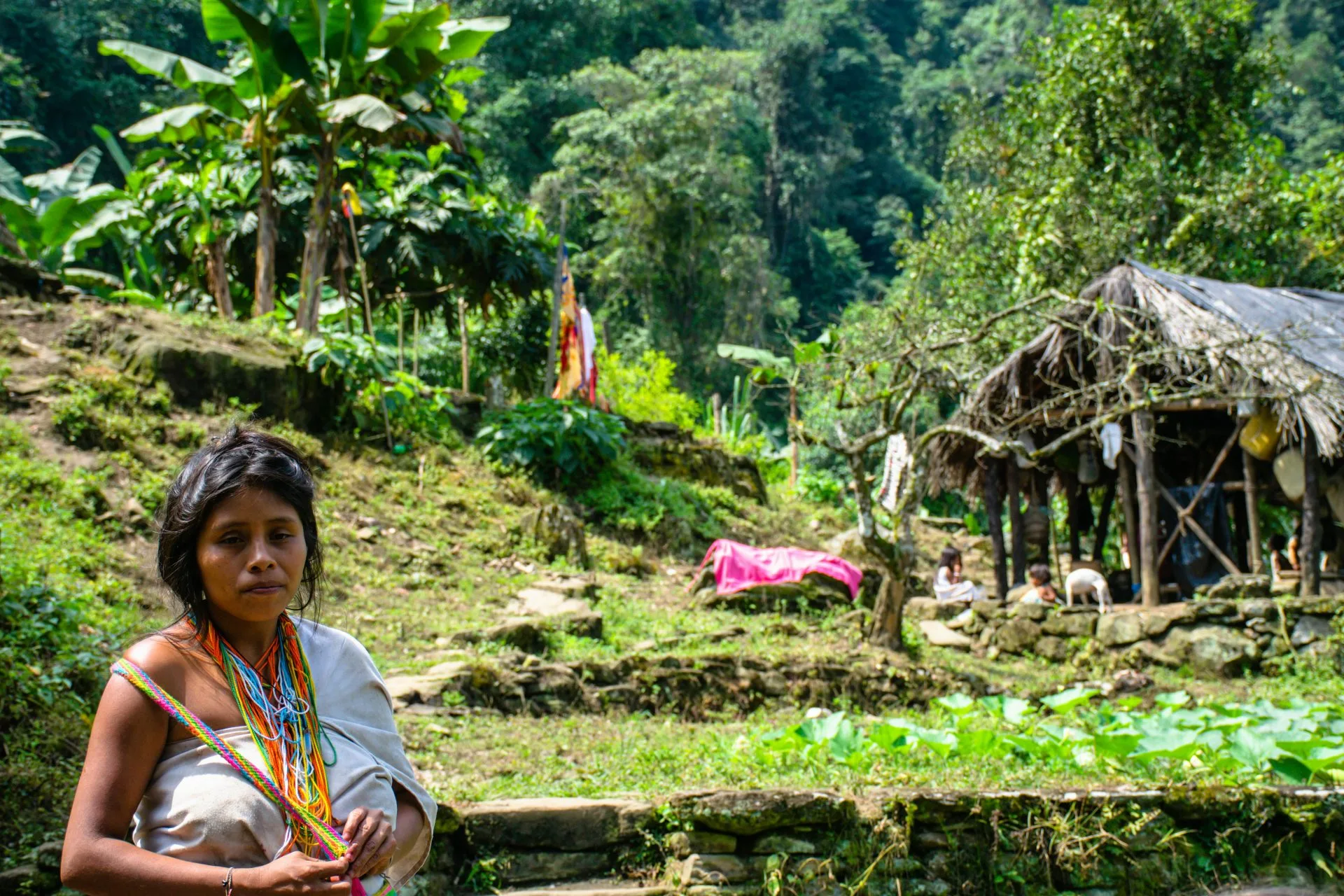
While violence reaches nearly all segments of the population, indigenous groups are among those most harshly impacted, facing everything from massacres by armed groups to the targeted killings of indigenous activists and politicians.
Forced Displacement and Confinement
Between January and June 2025, 71,336 people were internally displaced, which corresponds to over 17,800 families. Rural communities in the departments of North of Santander, Antioquia, Cauca, Bolívar, Nariño, and Chocó were the most affected in the first semester of the year. In comparison to the past year’s same period, a 103% increase in the number of people displaced was found. Catatumbo suffered the worst fate, having the humanitarian emergency with the greatest impact this year, displacing 84% of the total number of victims reported by UNHCR in 2025.
In terms of ethnicity, a large majority (74%) of the affected population belongs to ethnic groups. The Black, Afro-Colombian, Raizal, and Palenquero populations represent the most affected group, accounting for 60% of victims of displacement, while 14% correspond to indigenous peoples (UNHCR, 2025). This shows how these communities are particularly vulnerable to armed conflicts. Building upon this, the consequences of mass displacement include not only the loss of territories and the disruption of their livelihoods, but also the erosion of their cultural practices and collective identity (ICRC, 2025).
Regarding confinement, according to the ICRC Comprehensive Victim Support and Reparation Unit, 88,874 people were confined in 12 departments of the country over 2025. In other terms, confinement events increased by 102 per cent, representing an 89% rise in the affected population compared to the previous year. The reasons: direct threats from armed groups, restrictions on movement imposed as protective measures, and the risk of confrontations or explosive hazards in affected areas (ICRC, 2025).
These confinements prevented civilians from accessing basic necessities such as food and healthcare, severely affecting both physical and mental health, while also reducing access to safe water and sanitation. Critically, 53% of those confined belonged to indigenous and Afro-descendant communities, this reality threatening their autonomy, their relationship with their territory, the damage of the social fabric and, in some cases, the very survival of their cultures.
Violence and Murder of Indigenous Community Leaders
Indigenous, black, and small-farmer community leaders who oppose corporate abuse and the environmental harm caused by mining, energy, agribusiness, and infrastructure projects are routinely exposed to violence, death threats, and criminalisation by corporate actors, paramilitary groups, and other armed organizations (Forest Peoples Programme, n. d.).
According to the most recent OHCHR report, nearly a quarter of the 410 human rights defenders killed between 2022 and 2026 were indigenous peoples. Considering that the indigenous population represents only 4.7 percent of the country’s total population, this one is an appalling percentage (OHCHR, 2026).
The Colombian armed forces, ultra-right paramilitary groups, and leftist guerrillas including FARC and ELN have all have been involved or directly committed crimes against indigenous peoples, including “violent incursions into their lands, forced internal displacement, kidnappings, targeting killings of Indigenous leaders, sexual violence against women and girls, and forced recruitment of children and youth by armed groups”, Colombian Deputy Justice Federico Guzmán says (Alison Mintoff, 2014).
Federico identified four distinct ways in which the armed conflict produces disproportionate impacts on indigenous communities. Their territories, often remote and difficult to access, become strategic locations for military operations. Indigenous peoples are directly incorporated into the violence through forced recruitment, targeted killings, and their use as human shields. The extractive industries operating in resource-rich ancestral lands fuel further dispossession. Finally, the conflict deepens the pre-existing socioeconomic disadvantages these communities already face, including poverty, poor health, and malnutrition.
Of these four dynamics, the extractive dimension carries particular international relevance. Armed groups have been documented providing security to mining operations, effectively intertwining corporate activity with conflict. Duque argued that foreign companies bear responsibility not only through direct association, but through the broader act of economically benefiting from a context of forced displacement and violence.
Humanitarian Crisis
International Committee of the Red Cross’ newest report finds that Colombia’s humanitarian situation in 2025 reached its most critical point in a decade, driven primarily by escalating hostilities and widespread disregard for international humanitarian law.
Children have been particularly affected. Both state and non-state armed actors continued to recruit and involve minors in hostilities, exploiting structural vulnerabilities such as limited access to education, scarce life opportunities, weakened community protection networks, and the physical proximity of armed groups to residential areas. Armed groups used deception and manipulation to recruit children, including coercing them into sexual exploitation. Those who were recruited or otherwise drawn into the conflict suffered severe and lasting consequences: separation from their families, psychological trauma, sexual violence, physical mutilation, and death in combat. Of the registered cases, 23 involved children under the age of 15, and at least 22 belonged to indigenous communities. The department of Cauca alone accounted for 53% of all recorded cases (ICRC, 2025).
Conclusion
Despite being one of the most dangerous countries in the world for indigenous communities, Colombia has yet to respond to their situation with the urgency it demands. The evidence is overwhelming, yet the structural conditions driving violence, displacement, and dispossession remain largely unaddressed.
Progress is needed on multiple fronts, particularly in the development of public policies and national legislation that genuinely protect indigenous rights. This includes, most critically, a law regulating consultation processes that ensures the full and effective participation of indigenous authorities and representatives. Any such policies and laws must align with international standards, including the United Nations Declaration on the Rights of Indigenous Peoples and ILO Convention No. 169.
Some steps forward have been taken. The Inter-American Court of Human Rights’ 2023 ruling recognising the right to defend rights, the Law on Women Searchers approved in 2024, and the Policy on the Dismantling of Armed Structures adopted in 2025 are all meaningful developments. Yet meaningful progress on paper has not translated into meaningful change on the ground, as implementation remains slow, and without adequate security guarantees for those it is meant to protect.
Bibliography
Alison Mintoff (2014). Indigenous Peoples in Colombia: The Threat of Armed Conflict and the Role of Canadian Mining Companies. News, University of Toronto. https://ihrp.law.utoronto.ca/indigenous-peoples-colombia-threat-armed-conflict-and-role-canadian-mining-companies
Forest Peoples Programme. (n.d.). Colombia: Forest Peoples programme. https://www.forestpeoples.org/partners-countries/countries/country/colombia/
ICRC (2025) Humanitarian Challenges 2025.Colombia. ICRC Report. https://www.icrc.org/sites/default/files/media_file/2025-04/Humanitarian%20Report.pdf
International Committee of the Red Cross. (2026). Colombia 2025: A humanitarian crisis beyond numbers. In ReliefWeb. https://reliefweb.int/report/colombia/colombia-2025-humanitarian-crisis-beyond-numbers
OHCHR (March 2026). Colombia: Urgent action needed to end widespread violence against human rights defenders – UN report. https://www.ohchr.org/en/press-releases/2026/03/colombia-urgent-action-needed-end-widespread-violence-against-human-rights
Peace Brigades International (February 2026). HRC61: PBI at the Human Rights Council. https://peacebrigades.org/en/news/hrc61-pbi-human-rights-council#colombia
UNHCR (November 2025) Colombia | Monitoring of humanitarian emergencies January to June 2025. UNHCR Operational Data Portal (ODP). https://data.unhcr.org/en/documents/details/119704