
China Reject the accusation of Human Rights Violations Perpetrated against the Uyghur and other Muslim Communities reported by the UN
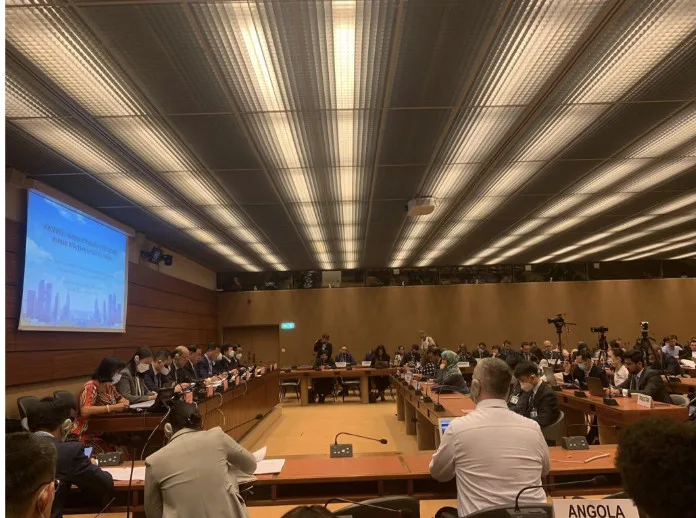
The People’s Republic of China hosted a Side Event to raise awareness on the progress made by the government in advancing and protecting human rights in Xinjiang, China. This event was plannend less than a month from the release of the UN Report Assessing Human Rights Violations Perpetrated against the Uyghur and other Muslim Communities, on September 22nd, at the UN Headquarters in Geneva.
According to the Report published by the Office of the UN High Commissioner for Human Rights (OHCHR), the counter-terrorism and counter-violent extremism laws have been used as the legal framework to deprive minorities of their fundamental rights and detain thousands in so-called “Vocational Education and Training Centre.” However, China expressed deep regret for Western countries, which are, merely for political reasons, fabricating evidence and rumours to cover the historic human rights progress China has made while interfering in the country’s internal affairs and undermining stability. On the one hand, condemning and rejecting Western actions, the Chinese government commends those members of the international community who have seen such behaviour and spoken out about injustice. On the other hand, through a people-centred approach, China announced unprecedented progress and well-being for each population segment, including the 56 ethnic minority groups.
Xinjiang According to the Peoples’ Republic of China
Located in the hinterland of the Eurasia continent, Xinjiang is a strategic point of the Silk Road, the Economic Belt that connects the west and the east of the world in terms of the exchange of goods, services, and traditions. The economic and financial developments experienced by the region, with an exponential increase in the GDP, have contributed to improving the population’s livelihood in every sphere, including education, health care, housing, and security. People’s well-being has always been a priority for the Chinese government and is considered the solid foundation of people’s happiness and the country’s prosperity.
In this context, China proudly announced that it had won the battle against absolute poverty and strengthened national unity by involving all ethnic groups in internal and public affairs. Xinjiang is depicted as a region where all ethnic groups coexist in harmony, with individuals enjoying their fundamental rights of freedom of religion, expression, and association. Protection of religious beliefs, traditions, and cultures is a priority that the government aims to achieve through a long-term policy. Indeed, the social harmony and stability in Xinjiang are thanks to a legal framework providing safeguards and guarantee for all to foster peace while fighting terrorism, separatism, and extremist groups, which exacerbate internal tensions. Following international law and standards, China’s national legislation, through its antiterrorism law of 2016, provides clear definitions of what activities constitute extremism and terrorism and punish them accordingly; every enforcement and judicial body strictly adheres to the law and Constitution. While the principle of innocence until proven guilty is implemented, each individual is treated equally before the law. According to data reported during the event hosted at the UN, no violence or extremist episodes took place over the last five years, fundamental human rights have been protected, and stability achieved.
The Chinese government completely rejects the accusations regarding the alleged human rights violations, possibly amounting to war crimes and crimes against humanity, perpetrated in the Vocational Education and Training Centre. Representatives loudly affirmed that “forced labour does not exist” and that people placed in VETC see their rights fully respected, having access to family visits, medical assistance, and legal safeguards. A former camp resident in Xinjiang described the condition of the VETC as “even better than my own home,” with the possibility of taking part in education courses and recreational activities, such as dancing classes. She described her experience as crucial to putting aside ‘extremist thoughts’ to make her discover happiness once again and reunify her family, “now I am one of the happiest,” she stated.
Conclusion
The People’s Republic of China entirely rejects the accusation made by the West in the Side Event hosted at the UN Headquarters in Geneva on September 22nd, 2022. The West is accused of turning a blind eye to the human rights progress made by China over the past years as a move to jeopardise the stability within the country and undermine China’s prosperity. However, considerable evidence sustains China’s violations of human rights in Xinjiang. Indeed, the reeducation strategy started by the government in 2014 underwent a massive expansion in 2017, with the construction of new facilities and the development of existing centres. According to data, around $2.96 billion was invested only in 2017. (Maizland, 2022)
The UN expressed deep concerns over the past years’ systematic human rights violations allegedly committed by China in Xinjiang. According to the report, persons belonging to ethnic communities have seen their cultural, linguistic, and religious identity and expression restricted, as well as their rights to privacy and movement, reproductive rights, and employment and labour rights. Legit and lawful expression of identity has been labeled as “extremist” under the Chinese “anti-terrorism law system” in breach of the protection accorded by international law. (OHCHR Assessment, 2022) Despite China’s refusal to recognize the ongoing atrocities in Xinjiang, the UN report officially recognized the crime and urged the international community to take a clear and firm stand in condemning the crimes.
Sources and Further Readings:
- Maizland (September 22, 2022), China’s Repression of Uyghurs in Xinjiang, Council on Foreign Relations, retrieved on September 22nd, 2022, from https://www.cfr.org/backgrounder/china-xinjiang-uyghurs-muslims-repression-genocide-human-rights.
United Nations Human Rights Office of the High Commissioner, OHCHR Assessment of human rights concerns in the Xinjiang Uyghur Autonomous Region, People’s Republic of China, August 31st, 2022, https://www.ohchr.org/sites/default/files/documents/countries/2022-08-31/22-08-31-final-assesment.pdf.