
24 September 2026 | Strasbourg, France
Eva Talma, Networking, Lobbying and Collaboration Team, Global Human Rights Defence.
On September 17th and 18th, 2026, Global Human Rights Defence (GHRD) attended the Western Europe Business and Human Rights Forum at the Council of Europe in Strasbourg. The Forum brought together representatives from governments, businesses, financial institutions, civil society, and academia to discuss current challenges and developments in the field of business and human rights.
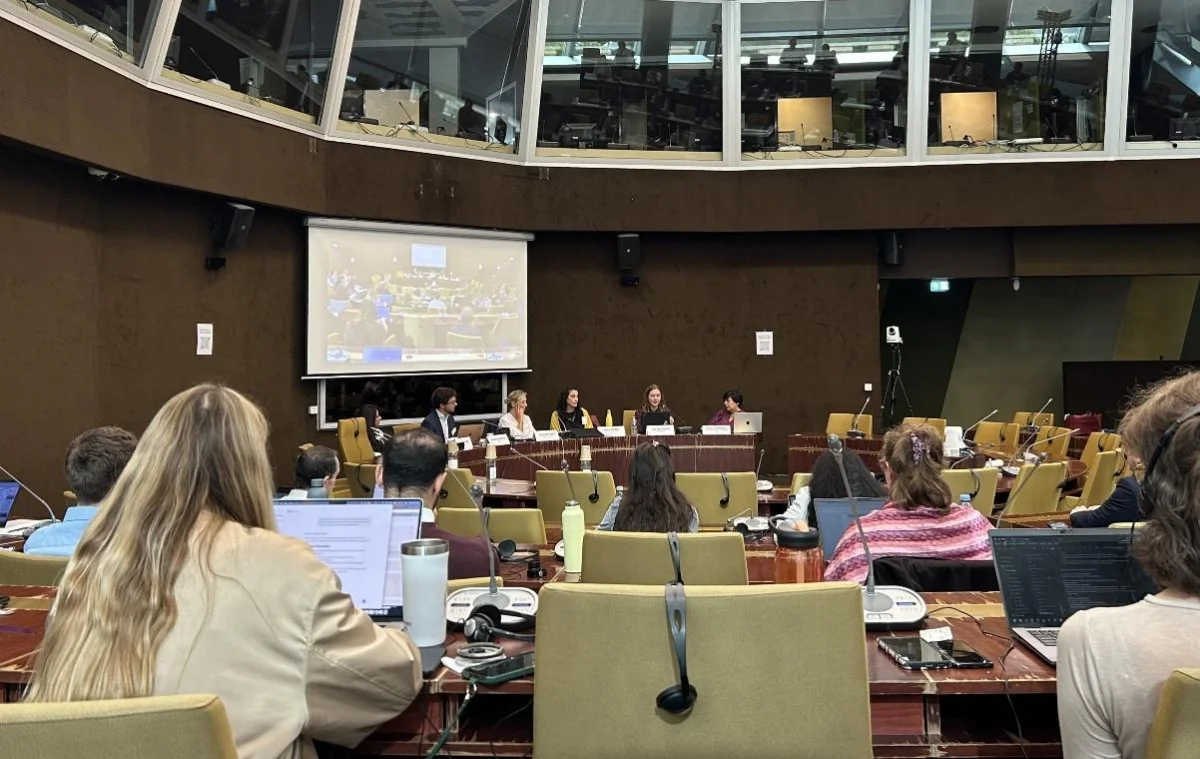
GHRD attended Session 5, “Integrating Climate Action and Human Rights: What is the Role for Business in a Changing World?” The discussion brought together Professor Maria Gavouneli from the Greek National Commission for Human Rights, Lea Juliussen from Danske Bank, Joana Pedro from the United Nations Environment Programme Finance Initiative (UNEP FI), Sébastien Duyck from the Center for International Environmental Law (CIEL), and Meeta Mahajan from DP World.
Prevention and Responsibility
Professor Maria Gavouneli brought the perspective of a national human rights institution to the discussion. She emphasised that climate-related issues require a new approach, as action from the public sector alone is not sufficient. She also highlighted the importance of prevention. While business compliance remains important, the discussion stressed the need to focus on preventing harm before it occurs.
The session also highlighted the increasing requirements placed on businesses in the field of human rights, as well as the broader effects these requirements can have beyond individual companies.
Bringing Climate Action and Human Rights Together
Joana Pedro stressed that meaningful change requires businesses to integrate climate and human rights priorities into their decision-making from an early stage. She also highlighted that change does not always have to begin with large-scale measures. Smaller changes introduced early in business processes can have a significant impact.
A central message of the discussion was that climate action and human rights cannot be considered separately. Climate action requires the involvement of people, while human rights protection is closely connected to climate justice.
Conclusion
The session made one thing clear: human rights and climate action cannot be treated separately. Business as usual is no longer enough. Real change means rethinking the way decisions are made and recognising the responsibility businesses have in this process. Climate strategies should not only focus on environmental targets. They also need to consider the people behind them: those whose lives, livelihoods, and rights are directly affected.