
Introduction
North Korea (DPRK) presents a complex and often contradictory landscape regarding women’s rights and gender equality. The government has long proclaimed its commitment to gender equality through laws and state policies, presenting itself as a society where men and women have equal rights in education, employment, and political participation. However, the lived experiences of North Korean women tell a different story. This report examines the impact of state policies and social norms on women’s rights in North Korea, highlighting the challenges women face despite formal legal guarantees.
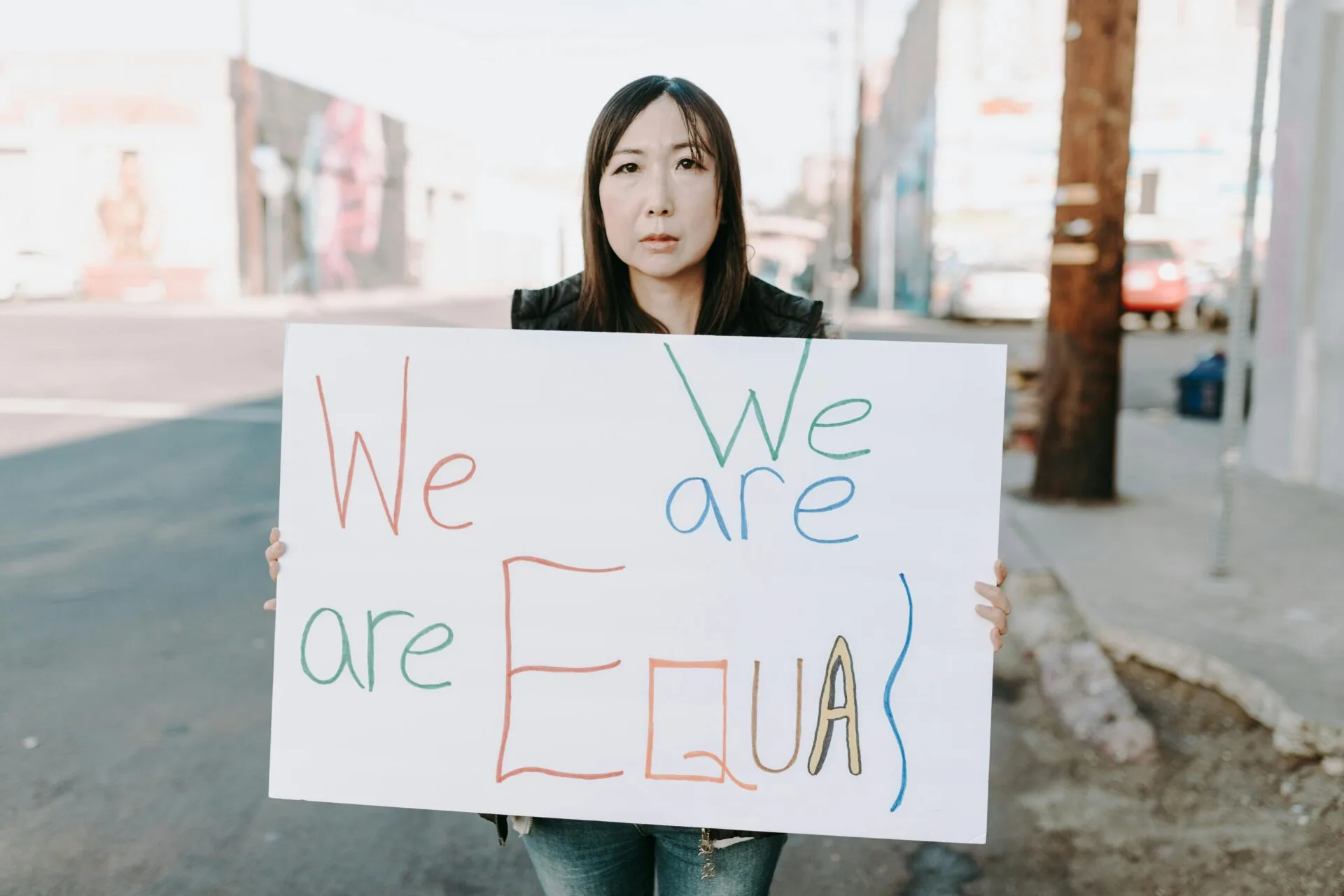
Legal Framework and Official Policies
The North Korean legal system formally supports gender equality. The Law on Sex Equality, enacted in 1946, abolished arranged marriages and concubinage while guaranteeing women equal rights in employment and education. The Socialist Constitution of 1972 further asserted that “women hold equal social status and rights with men”, reinforcing the state’s ideological commitment to gender equality. In 2010, North Korea introduced the Law on the Protection and Promotion of the Rights of Women, aligning its legal framework with international agreements like the Convention on the Elimination of All Forms of Discrimination Against Women (CEDAW).
In theory, North Korean women have equal access to education, healthcare, and employment opportunities. Women are encouraged to pursue careers in various fields, including medicine, engineering, and science. Female representation in the Supreme People’s Assembly (SPA) and the Workers’ Party of Korea (WPK) gives the appearance of gender inclusivity. However, despite these legal provisions, women’s rights remain severely restricted due to government control, social expectations, and economic hardships.
Despite these legal provisions, implementation remains inconsistent. Women are under-represented in leadership positions within the Workers’ Party of Korea (WPK) and other state institutions. For instance, as of 2016, women comprised only ten percent of divisional directors in government bodies and 4.9 percent of diplomats. This disparity suggests that, while policies exist, they often serve more as symbolic gestures than instruments of genuine empowerment.
Employment and Economic Participation
Women constitute a significant portion of North Korea’s workforce, particularly in agriculture, textiles, and other labour-intensive industries. The government encourages women to participate in labour mobilisation programs, often emphasising their contributions to the country’s socialist development. However, despite this emphasis, economic realities dictate that women remain disproportionately relegated to low-status, low-paying jobs. The gender wage gap persists, and opportunities for career advancement are largely limited by gender-based discrimination.
The collapse of North Korea’s state-run economy in the 1990s led to a rise in informal markets, known as jangmadang, where many women engaged in small-scale trade to support their families. Although these markets provide a measure of financial independence, they also expose women to state surveillance, arbitrary crackdowns, and exploitation. Economic hardships, compounded by international sanctions, further exacerbate women’s vulnerability to poverty, human trafficking, and forced labour.
Traditional Gender Roles and Family Expectations
Despite legal guarantees of equality, traditional Confucian gender norms persist in North Korean society. Women are expected to prioritise family duties, including childcare, cooking, and household responsibilities, even while participating in the workforce. This dual burden significantly limits their ability to advance in their careers and gain financial independence.
Marriage is highly emphasised in North Korean culture, and women’s social status is often judged based on their role as wives and mothers. Those who deviate from these norms, such as unmarried or childless women, may face stigma and discrimination. The state promotes an idealised image of women as loyal supporters of the family and nation, reinforcing a deeply ingrained patriarchal structure.
Gender-Based Violence and Lack of Legal Protections
Gender-based violence remains a significant yet underreported issue in North Korea. Due to the state’s tight control over information, accurate data on domestic violence, sexual harassment, and human trafficking is scarce. However, reports from defectors and international human rights organisations indicate that:
- Domestic violence is prevalent but rarely prosecuted, as it is considered a private family matter;
- Sexual violence in the workplace and military is widespread, with victims having little to no legal recourse;
- Human trafficking disproportionately affects North Korean women who attempt to flee the country, particularly in China, where they are at risk of forced marriages and exploitation.
The lack of independent institutions or advocacy groups further limits women’s ability to seek justice. The state’s unwillingness to acknowledge or address gender-based violence perpetuates a culture of impunity for perpetrators.
Impact of International Sanctions on Women
International sanctions imposed on North Korea due to its nuclear weapons program and human rights violations have had unintended consequences for women. Economic sanctions have exacerbated food shortages, limited access to healthcare, and increased reliance on informal markets. Women, particularly in rural areas, suffer the most from these hardships. Many are forced to engage in illicit activities, including smuggling and black-market trading, to provide for their families.
Women who attempt to escape North Korea often fall victim to human trafficking and forced labour in neighbouring countries. The Chinese government’s policy of forcibly repatriating North Korean defectors further endangers female escapees, as those returned to North Korea face imprisonment, torture, or execution.
Conclusion
Despite North Korea’s official claims of gender equality, the reality for women in the country remains starkly different. While legal provisions guarantee women’s rights in theory, the state’s policies prioritise labour mobilisation over genuine gender equality. Social norms, reinforced by deeply rooted Confucian traditions, continue to limit women’s autonomy and opportunities. Additionally, the lack of legal protection against gender-based violence leaves women vulnerable to abuse and exploitation.
The intersection of state policies, traditional gender roles, economic hardships, and international sanctions creates an environment where women remain significantly disadvantaged. Meaningful progress in gender equality within North Korea will require not only legal reforms but also fundamental shifts in societal attitudes and state priorities. Without these changes, North Korean women will continue to face systemic discrimination, limited opportunities, and significant barriers to achieving true equality.
Bibliography
Kim, Y. (2024, March 22). Women’s Rights in North Korea: Reputational Defense or Labor Mobilization? E-International Relations. https://www.e-ir.info/2024/03/22/womens-rights-in-north-korea-reputational-defense-or-labor-mobilization/#google_vignette. Retrieved 7th February 2025.
Lee, S. Y. (2024, April 18). The Dire State of Women’s Rights in North Korea.The Diplomat. https://thediplomat.com/2024/04/the-dire-state-of-womens-rights-in-north-korea/. Retrieved 7th February 2025.
Submission on the Rights of Women and Girls in North Korea. (2022, December 21). Human Rights Watch. https://www.hrw.org/news/2022/12/21/submission-rights-women-and-girls-north-korea-special-rapporteurs-report-52nd-human. Retrieved 7th February 2025.