
Introduction
On May 25th, 2022, the Human Rights Watch published an open letter to Permanent Representatives of member and observer States to the UN Human Rights Council. This letter calls for a debate at the 50th Human Rights Council Session to deliberate specifically on the women’s rights crisis occurring in Afghanistan under Taliban rule (UN Human Rights Council, 2022). This letter highlights various human rights concerns committed against women, and draws on the UN Human Rights Council mandate to emphasise the need for this specific debate (UN Human Rights Council, 2022). Furthermore, the Taliban dissolved the Afghanistan Independent Human Rights Commission, diminishing support options for women and girls facing gender-based discrimination and violence by the Taliban (UN Human Rights Council, 2022). The Human Rights Watch, along with various other organisations, state: “This is the most serious women’s rights crisis in the world today, and the most serious women’s rights crisis since the Taliban took over Afghanistan the last time in 1996” (Human Rights Watch, 2022).
This research will focus on identifying the developments of the women’s rights crisis and analysing applicable elements of international law and frameworks to outline the legal implications of the crisis. Firstly, the human rights violations committed against women will be identified, to provide an overview of the crisis. Next, the international legal frameworks will be analysed to identify which rights have been infringed and how the UN Human Rights Council can act. Finally, this research outlines why 25 organisations call for the women’s rights crisis in Afghanistan to be deliberated at the UN Human Rights Council Session, and what may come of this debate in a legal context. Due to the length of this article there are limitations as to the scope of legal frameworks that can be analysed and the extent to which the situation in Afghanistan can be outlined.
Women’s Rights Violations in Afghanistan
Fawiza Amini, who used to be a senior judge on the Afghanistan Supreme Court, stated: “The Taliban have institutionalized discrimination against women; they are denying our fundamental rights” (Amnesty International, 2021). This statement summarizes how deeply discrimination against women has been rooted in Afghanistan after the Taliban took over in late 2021. This was advanced by the closing of the Ministry of Women’s Affairs and the opening of the Ministry for Propagation of Virtue and the Prevention of Vice (Human Rights Watch, 2022). With the closing of this ministry, the Taliban shut down the institution designed to provide help to women facing rights violations.
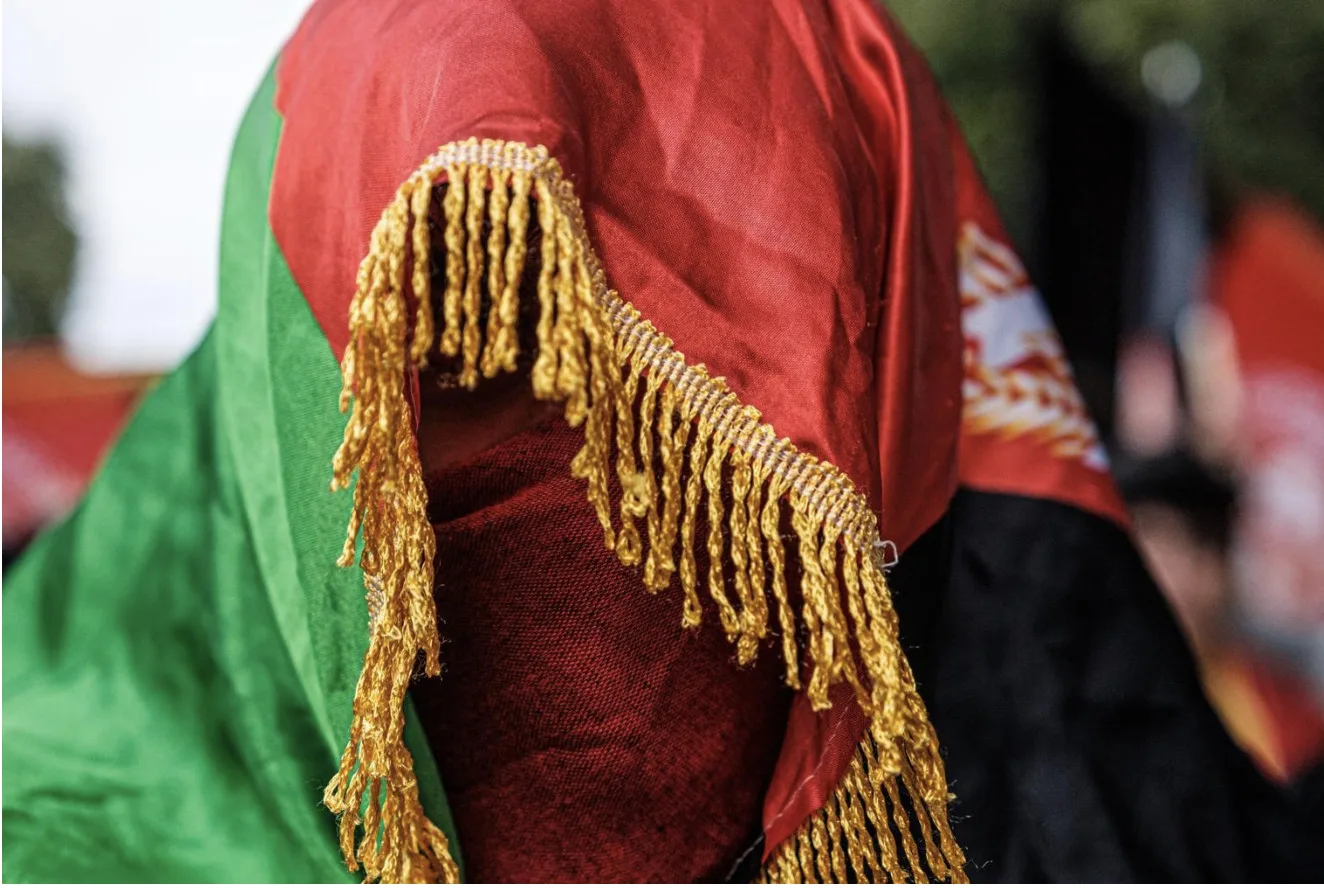
Women have faced several changes to their daily life after the Taliban took over control of Afghanistan. Girls have been banned from secondary or higher education (United Nations Human Rights: Office of the High Commissioner, 2022). There has also been a decree issued requiring women to cover their faces when in public (Human Rights Watch, 2022). Furthermore, women’s choice in vocation has been severely limited to healthcare or teaching, forcing women with other professions to stay inside, losing their jobs (Human Rights Watch, 2022). In addition to these limitations, there are no opportunities for political involvement or a public life, and there are limits to expression and association (United Nations Human Rights: Office of the High Commissioner, 2022). Moreover, women can only move around if they are accompanied by a male chaperone (United Nations Human Rights: Office of the High Commissioner, 2022). This newly appointed Special Rapporteur for the Human Rights Crisis in Afghanistan stated that these measures “fit the pattern of absolute gender segregation and are aimed at making women invisible in society” (United Nations Human Rights: Office of the High Commissioner, 2022).
Legal Implications
There are various international human rights frameworks that define the Taliban’s rules as women’s rights infringements, making them a serious matter of international concern. Both the Universal Declaration of Human Rights (UDHR) and its convenants, as well as the Convention on the Elimination of All Forms of Discrimination against Women (CEDAW) outline the responsibilities a state has towards protecting its members. Both of these are signed by Afghanistan, requiring the state to uphold human rights, especially in relation to women and girls due to the CEDAW signatory (Afghanistan: UN experts condemn Taliban decision to deny girls secondary education, 2022). These frameworks address precisely the decrees issued by the Taliban, stripping women of their human rights.
Several articles of the UDHR apply directly to the women’s rights crisis in Afghanistan. Article 13 (1) states “everyone has the right to freedom of movement and residence within the borders of each state”, however movement for women is limited to chaperoned instances (UN General Assembly, 1948). On freedom of opinion and expression, article 19 proclaims “everyone has the right to freedom of opinion and expression; this right includes freedom to hold opinions without interference and to seek, receive and impart information and ideas through any media and regardless of frontiers” (UN General Assembly, 1948). In addition to this, article 27 outlines the right “to participate in cultural life and community” (UN General Assembly, 1948). The limitations the Taliban enacted regarding vocational choice and having a public life demonstrate a breach of these articles. This is further highlighted by article 23 (1) which proclaims “Everyone has the right to work, to free choice of employment, to just and favourable conditions of work and to protection against unemployment” (UN General Assembly, 1948). While women are being deprived of the opportunity for secondary and higher education, article 26 (1) states: “Everyone has the right to education. Education shall be free, at least in the elementary and fundamental stages. (…) Technical and professional education shall be made generally available and higher education shall be equally accessible to all on the basis of merit.” (UN General Assembly, 1948).
The CEDAW likewise highlights that women’s rights are being breached, despite it often being called the International Bill of Rights for Women (Bogaert, 2022, p. 26/7). While men are still permitted to enroll in higher education, women have been deprived of this despite article 10 proclaiming “States Parties shall take all appropriate measures to eliminate discrimination against women in order to ensure to them equal rights with men in the field of education” (UN General Assembly, 1979). Following this, article 11 concerns itself with the equal right to employment opportunities, emphasising that this is an inalienable right (UN General Assembly, 1979). It must be noted that article 2 of the CEDAW explicitly outlines the obligations a state has regarding the equality and rights of its members. Not only must states adopt measures to prohibit discrimination, but they must themselves refrain from discriminatory activity against women and modify any existing laws or regulations that contribute to discrimination (UN General Assembly, 1979).
These two frameworks outline clearly which women’s rights have been breached, providing a legal basis to hold Afghanistan, under Taliban rule, accountable for its actions. Due the nature of these treaties and Afghanistans obligations to uphold them as they are signatories, the legal implications open avenues for international repercussion.
UN Human Rights Council
With the calls being made to add the Afghanistan women’s rights crisis as its own debate topic to the 50th UN Human Rights Council Session, it is relevant to highlight why this is an applicable forum for the issue. General Assembly resolution 60/251 outlines the mandate for the Human Rights Council. Article 3 states that the Human Rights Council is able to address human rights violations of a “gross and systemic” nature and that it can make recommendations to address these (UN General Assembly, 2006). Furthermore, under article 5 (d), the Human Rights Council can “Promote the full implementation of human rights obligations undertaken by States and follow-up to the goals and commitments related to the promotion and protection of human rights emanating from United Nations conferences and summits” (UN General Assembly, 2006). This outlines the ability and responsibility of the Human Rights Council to address the systemic women’s rights violations occurring in Afghanistan and to promote the state to adhere to its human rights obligations.
Conclusion
The actions of the Taliban have indicated that there are serious women’s rights infringements occurring. The decrees released are in direct opposition of the articles under the UDHR and the CEDAW, showing a breach of Afghanistans obligations under international law. As per their mandate, the Human Rights Council Session is able to discuss this crisis, and promote the fulfilment of Afghanistans obligations towards human rights. While there may be other international solutions to be considered, bringing this as a concrete point into the session can aid in outlining which breaches have occurred, how they relate to international law that is applicable in Afghanistan, and shed light on women’s rights specifically.
Bibliography
Amnesty International. (2021, November 25). Afghanistan: Women call on the international community to support women’s rights amid ongoing Taliban suppression. Retrieved from Amnesty International: https://www.amnesty.org/en/latest/news/2021/11/afghanistan-women-call-on-the-international-community-to-support-womens-rights-amid-ongoing-taliban-suppression/
Bogaert, H. (2022). History Repeating Itself: The Resurgence of the Taliban and the Abandonment of Afghan Women. Immigration and Human Rights Law Review.
Human Rights Watch. (2022, January 18). Afghanistan: Taliban Deprive Women of Livelihoods, Identity. Retrieved from Human Rights Watch: https://www.hrw.org/news/2022/01/18/afghanistan-taliban-deprive-women-livelihoods-identity
Human Rights Watch. (2022, June 1). Call for Urgent Debate on the women’s rights crisis in Afghanistan at the 50th session of the UN Human Rights Council. Retrieved from Human Rights Watch: https://www.hrw.org/news/2022/06/01/call-urgent-debate-womens-rights-crisis-afghanistan-50th-session-un-human-rights
Security Council Report. (2022, May 31). June 2022 Monthly Forecast: Afghanistan. Retrieved from Security Council Report: https://www.securitycouncilreport.org/monthly-forecast/2022-06/afghanistan-17.php
United Nations General Assembly. (1948). Universal Declaration Human Rights. Paris: United Nations General Assembly. Retrieved From https://www.un.org/en/about-us/universal-declaration-of-human-rights.
United Nations General Assembly. (1979). Convention on the Elimination of All Forms of Discriminatioin against Women . New York: United Nations General Assembly.
United Nations General Assembly. (2006). Resolution adopted by the General Assembly: 60/251. Human Rights Council. New York: United Nations General Assembly. Retrieved from https://www2.ohchr.org/english/bodies/hrcouncil/docs/a.res.60.251_en.pdf.
United Nations Human Rights: Office of the High Commissioner. (2022, May 26). Facing critical human rights challenges, Afghanistan at a crossroads, says UN expert in Kabul. Retrieved from United Nations Human Rights: Office of the High Commissioner: https://www.ohchr.org/en/press-releases/2022/05/facing-critical-human-rights-challenges-afghanistan-crossroads-says-un.