
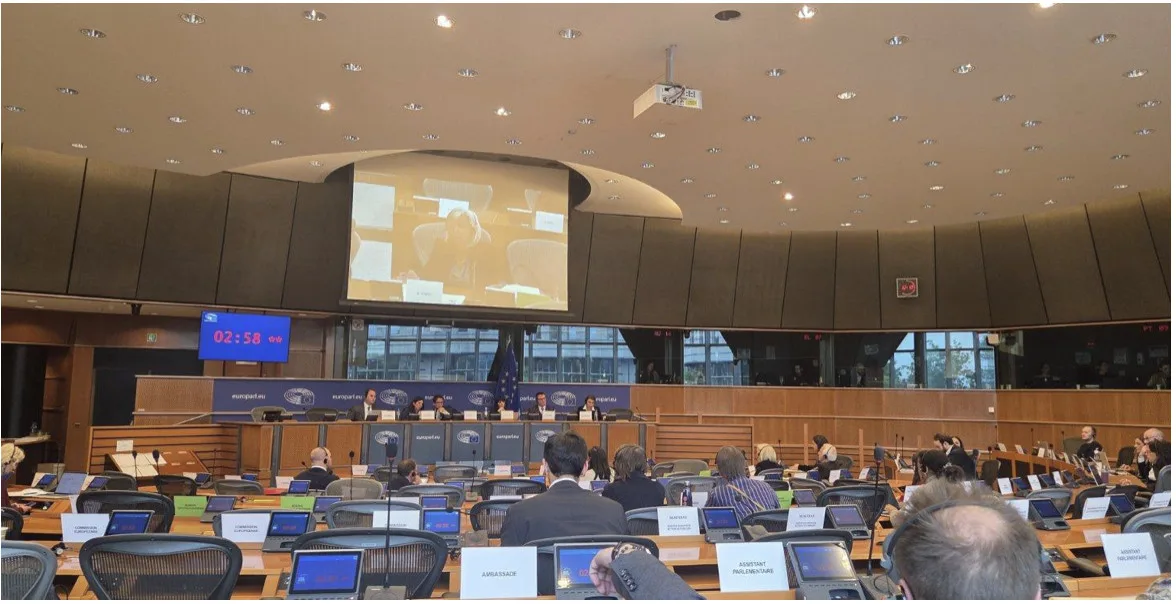
On World Press Freedom Day 2026, the European Parliament hosted a high-level exchange of views centred on the deteriorating state of media freedom globally. Lawmakers, human rights defenders, and media experts gathered to discuss the urgent need for the European Union (EU) to step up its global action in protecting journalists, who serve as the “cornerstone of democracy”. The session highlighted the alarming rise in physician violence, legal harassment, and the emerging threats posed by Artificial Intelligence (AI) to the integrity of information.
Key Highlights
- Global decline: According to the World Press Freedom Index, over half of the world’s countries are now classified as “difficult” or “very serious”.
- Unprecedented casualties: A record number of journalists have been killed in conflict zones, particularly in Gaza, marking 2025/2026 as the deadliest period for the profession.
- Legal weaponisation: The misuse of national security and anti-terrorism laws (SLAPPs) is increasingly used to silence dissent, even within democratic nations.
- AI and Disinformation: Generative AI (GenAI) is identified as an existential threat that obscures truth and undermines the financial survival of traditional journalism.
- EU Accountability: Calls were made for the EU to use its diplomatic and economic leverage, including the suspension of association agreements, where human rights violations are flagrant.
Global Perspectives on Repression
Julie Majerczak (Reporters Without Borders) reported that the World Press Freedom Index has reached its lowest level, citing 16 killings and 473 imprisonments this year alone. She specifically highlighted the “dark holes” of information, like Eritrea, where journalists remain held without trial for decades, and the execution of journalists in Turkey. Majerczak detailed five deteriorating indicators, namely, economic, social, legal, migration, and security. She criticised the “legal arsenal” being built against journalists, specifically citing the misuse of national security laws in the Philippines and Georgia. To counter this, she proposed that the EU support journalists in exile through family reunions and labour market access, and urged the Commission to launch infringement proceedings against Member States failing to implement the European Media Freedom Act.
Terry Anderson (Cartoonists Rights) focused on the specific vulnerabilities of cartoonists. He detailed the horrific case of Muhammed Al-Hazzaa, a Saudi cartoonist who has been imprisoned since 2018. Following a secret and illegal retrial, his sentence has increased to 23 years. Anderson detailed that Al-Hazzaa has been subjected to torture during his imprisonment and has also been denied medical care. Anderson also raised alarms regarding the “digital front” of repression, noting that cartoonists frequently endure censorship, online abuse, and account suspensions through content moderation or shadowbanning because of the political nature of their work. Beyond physical and digital harassment, he warned that Generative AI represents an existential threat to both the financial survival of journalism and the fundamental democratic values of truth and transparency. He urged the European Commission to implement robust monitoring measures and provide meaningful protections for those targeted by state-led criminalisation and harassment.
Helena Boguslawaska (EEAS Deputy for Human Rights) reiterated that democracy cannot exist without a free press and noted that 2025 was the deadliest year on record for journalists. She drew attention to the disproportionate targeting of women through gender-based violence (GBV) and the rise of surveillance. Boguslawaska acknowledged that traditional media is struggling, but also warned of a “void” being filled by propaganda outlets posing as media. In addition, she highlighted the EU’s concrete actions, such as the over €200 million donated to Belarusian civil society and journalists, and promised an upcoming report focused on the dire situation in Eritrea.
Parliamentary Perspectives: Lawmakers Demand Accountability and Action
During the session, several Members of the European Parliament (MEPs) offered critical interventions that shifted the focus from global trends to specific regional crises and the EU’s internal responsibilities. Marta Temido (S&D) opened the discussion by warning that democracies worldwide are “sinking”. She pointedly noted that the European Media Freedom Act is being disrespected by certain Member States that continue to adopt domestic legislation questioning the independence of the media. This sentiment was echoed by Catarina Vieira (Greens), who argued that journalism within the EU remains “extremely problematic”. Vieira emphasised that the EU must do the necessary internal work to ensure its own house is in order, as this is the only way to maintain the credibility required to hold external governments and institutions accountable.
The conversation also addressed the systemic and financial threats posed by the digital age. Isabel Wiseler-Lima (PPE) highlighted a “dual threat” posed by the rapid loss of journalistic credibility due to the spread of incorrect information and a burgeoning financial crisis. She noted that the very survival of the profession is at stake because high-quality journalistic work is frequently “stolen” online without proper compensation. Adding to the call for structural defence, Chloe Ridel (S&D) spoke on the dangers of media concentration and the alarming trend of journalists being deliberately targeted in conflict zones simply for doing their jobs, stressing the need for a unified global defence of pluralism.
Finally, the interventions touched upon the human cost of repression and the effectiveness of EU aid. Marco Tarquinio (S&D) shared the staggering statistic that only 1% of the global population currently lives in a country with a truly free press. Given the high number of unrecorded deaths among media workers, he called for the establishment of global support systems to aid the families of fallen journalists. Regarding direct intervention, Mariusz Kaminski (ECR) drew attention to Belarus, noting that despite EU allocations, many truly independent Belarusian media outlets never receive these funds. He suggested that the EU must develop better distribution mechanisms to ensure that vital financial support reaches those fighting repressive regimes on the front lines.
Moving Forward: A Unified Call for Action
The exchange of views concluded with a clear consensus that the European Union must transition from condemnation to concrete, effective action to halt the global erosion of media freedom. The session underscored the urgency of monitoring the application of the Media Act within the EU, increasing direct financial support for independent outlets, and utilising diplomatic leverage, such as association agreements, to hold violators accountable. Ultimately, the assembly reaffirmed that while the fight for truth is increasingly fraught with legal and technological threats, the EU’s commitment to protecting journalists remains an essential pillar for global stability and human rights.