
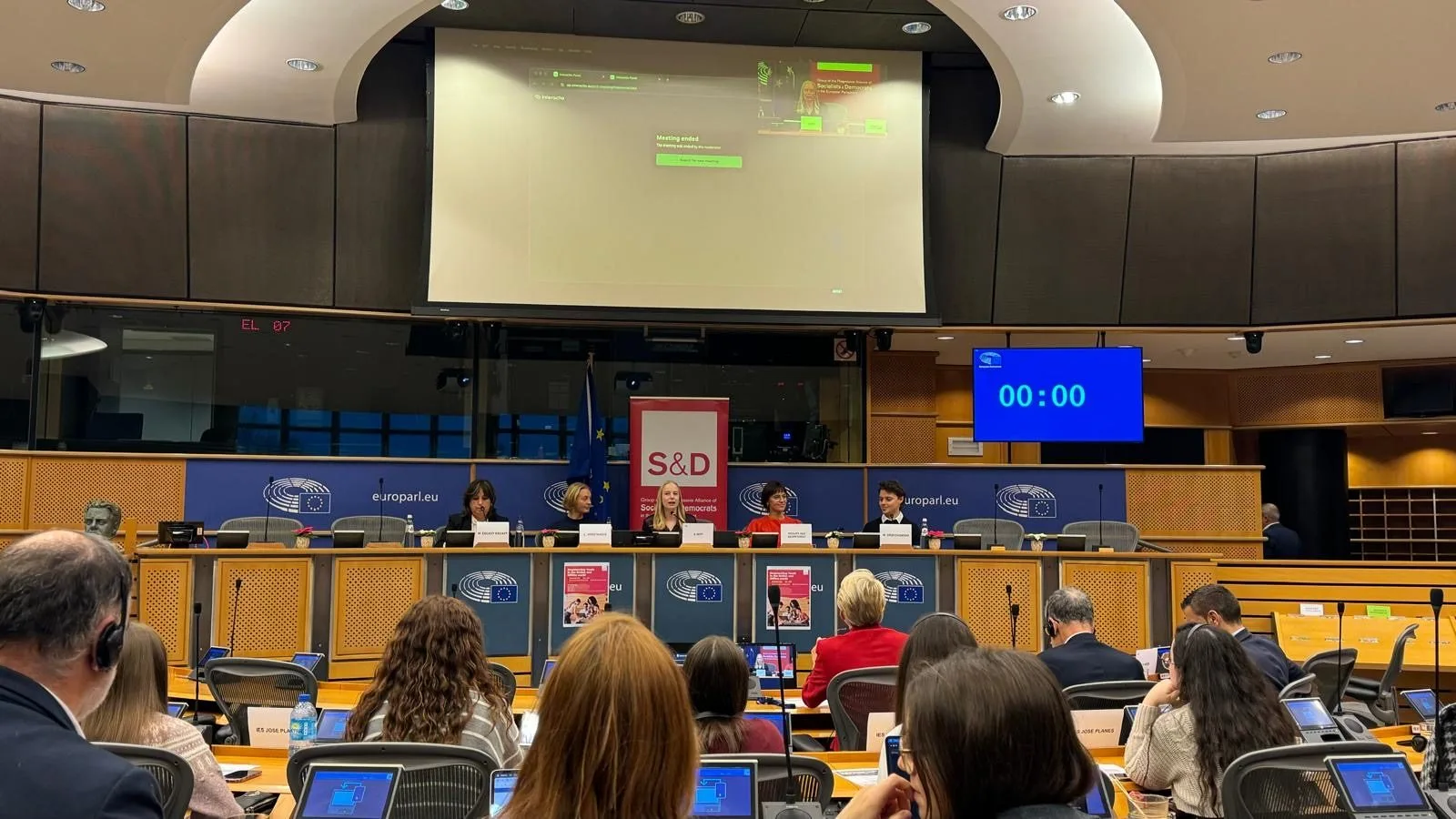
On December 10th, 2025, Global Human Rights Defence (GHRD) attended an event at the European Parliament, organised by the Socialists and Democrats political group, focused on youth empowerment in today’s online and offline world. Throughout the session, European Parliament members, civil society experts, and policy officials came together to address the critical challenges facing young generations across the European Union.
Key Highlights
- Youth as Europe’s Democratic Actor: Ana Catarina Mendes, Vice-President of the S&D Group, opened the discussion by emphasising that youth represent the present of the European Union, not merely its future. Their energy, creativity, and courage are actively shaping Europe today. However, young people face unprecedented challenges—housing crises, labour market instability, the digital revolution, and artificial intelligence reshaping education and daily life.
- Tackling Misinformation and Media Independence: How can we bring young people into political life and commit them to addressing these challenges? Mendes identified critical threats to European democracy, including the prevalence of non-independent media and inadequate implementation of press freedom legislation to protect journalists. Democracy itself faces threats from both internal and external attacks. Several Member States are witnessing the systematic dismantling of democratic institutions and political pluralism, accompanied by the spread of misinformation and hate speech.
- Youth Vulnerability to Algorithms: Sandro Ruotolo, Member of the S&D CULT Committee, emphasised that while the European Parliament lacks legislative initiative, it can influence the European Commission through legislative acts. The issue of misinformation has become increasingly urgent. Young people increasingly turn to social media for information as traditional press outlets decline, yet these platforms remain vulnerable to manipulation and control. The intimidation of journalists, lack of media independence, and the absence of transparent regulatory frameworks are all interconnected problems.
- EU’s Regulatory Framework and Media Literacy: The Digital Services Act, Audiovisual Media Directive, and AI Act represent progress, but the legal framework remains fragmented. Significant gaps persist regarding algorithm transparency, newly emerging AI systems, and the liability of influencers. While financial penalties against platforms like X demonstrate commitment, regulation alone is insufficient. Media literacy is essential—young people must understand how content is shaped and develop critical perspectives on algorithms and what they consume.
Many young people spend extensive time online, exposing them to harmful content, cyberbullying, problematic body image standards, and platform features designed to encourage compulsive use. These factors directly contribute to mental health crises. In this sense, protecting young people means protecting freedom, dignity, and Europe’s future.
Child Protection Crisis: Systemic Harms and Regulatory Gaps
Manon Letouche, Head of EU Affairs at 5Rights Foundation, highlighted how one in five social media users is a minor. Social media shapes every aspect of young people’s interactions and development. Platform designs create systemic harms through addictive mechanisms, necessitating more robust and efficient safeguards. She illustrated the problem with a concrete example: a 15-year-old described receiving a reminder to sleep at 11 p.m., with a convenient “10-minute delay” option readily available. This design choice exemplifies how platforms manipulate young users rather than empower them. Children require agency online regarding what content they see, how their data is used, and transparency about algorithmic decision-making. However, children cannot be empowered while constantly being manipulated into endless scrolling.
- While international legal frameworks exist—including the UN Convention on the Rights of the Child—they remain underutilised. The EU cannot afford to introduce additional regulations, given existing frameworks like GDPR and the AI Act. However, these critical rules are now at risk. The Digital Omnibus proposal actively undermines children’s privacy and delays protections against AI systems.
Franz Werner, Project Manager at Aktion Zivilcourage, addressed the misinformation crisis affecting young people. The proliferation of fake content aims to confuse facts, manipulate public opinion, erode trust in journalism and institutions, and influence decision-making processes. Young people lack the skills to identify manipulative content, placing Generation Z at particular risk of consuming and spreading misinformation.
- He described how increased digital device usage does not translate to increased digital skills. Even for digital natives, navigating digital media remains a significant challenge—representing a systemic failure of our online and offline institutions. Information literacy and critical thinking are foundational qualifications for democracy and responsible political participation.
The formation of political opinions should not occur as an unconscious byproduct of media consumption but rather through awareness of source quality and intentional critical engagement. During the event, three essential actions were proposed:
- Information literacy must be recognised as a key competence within liberal democracies, accessible regardless of social background.
- Civil society actors require secure, long-term funding to implement these initiatives with minimal bureaucratic obstacles.
- To identify and promote best practices, an interdisciplinary and international exchange of experiences is necessary.
The EU’s Response: Youth Inclusion
Glenn Micallef, Commissioner for Intergenerational Fairness, Youth, Culture and Sport, concluded the event by outlining the EU’s approach to youth empowerment. Youth empowerment means inclusion, access to quality education, and genuine participation in decision-making processes. The EU is systematising this approach through several initiatives: Youth Policy Dialogues, the Presidency Advisory Forum, where the Commission President meets with civil society representatives for policy advice, and EU Checks that screen policy proposals for youth impact, with consultations when young generations are substantially affected. Crucially, policy must be made with young people, not merely for them.
Additionally, GHRD posed several questions to Stephanie Quintao, Senior Manager of Public Policy and Government Relations at TikTok, regarding minor safety. Specifically, the EU has labelled infinite scrolling mechanisms as negatively affecting young people’s mental health and increasing digital addiction. Given the documented harmful effects of these addictive design features, particularly on teenagers, GHRD asked about the harmful effects of TikTok interface on younger generations. These questions remained unanswered during the event.
Conclusion
The event proposed by the S&D group underscored a fundamental truth: the empowerment of young people is not peripheral to European democracy—it is central to it. From digital literacy to media independence, from educational investment to platform accountability, the challenges are systemic and urgent. Youth represents both Europe’s greatest vulnerability and its greatest hope for future decision-making. The proposals made today on digital regulation, educational investment, and youth participation will determine whether the next generation can effectively exercise democratic citizenship in an increasingly complex digital landscape.