Bangladesh

Article

Beyond 1971: The Transformation of Bangladesh’s International Crimes Tribunal

Once focused solely on prosecuting atrocities from Bangladesh’s 1971 Liberation War, the International Crimes Tribunal (ICT-BD) now finds itself at the centre of a legal and political transformation. Triggered by mass protests and government repression in mid-2024, sweeping amendments to its founding law have dramatically expanded the tribunal’s mandate. As it begins prosecuting recent acts of political violence, the ICT-BD raises critical questions about justice, legitimacy, and the future of the rule of law in Bangladesh.
Bangladesh flag
Press release

Side event: Human Rights Violations in Bangladesh

At the 58th Human Rights Council Session in Geneva, the Tumuku Development and Cultural Union and the International Forum for Secular Bangladesh hosted a side event focusing on human rights violations and the rise of Islamic extremism in Bangladesh. Moderated by Kevin Lawrence, the event highlighted ongoing arbitrary arrests, violence against minorities, and severe restrictions on freedom of speech. Experts Fazal-ur Rehman Afridi and Dr. Rayhan Rashid raised concerns about religious persecution, extrajudicial killings, and significant suppression of dissent against marginalized groups such as Hindus and Christians. They discussed the militarization of state institutions and the unchecked rise of extremist groups undermining pluralism. The panel also addressed the repression of local media and the harassment of journalists, with reports of a climate of fear and intimidation. Investigative journalist Sahar Zand shared troubling accounts of violence against religious minorities. Former British MP Paul Bistrow acknowledged progress in specific areas in Bangladesh but warned of the potential loss of these gains amidst worsening human rights conditions. The panelists called for stronger international action to protect democratic principles and hold violators accountable, stressing the need for continued attention to the human rights situation in Bangladesh.

Press release

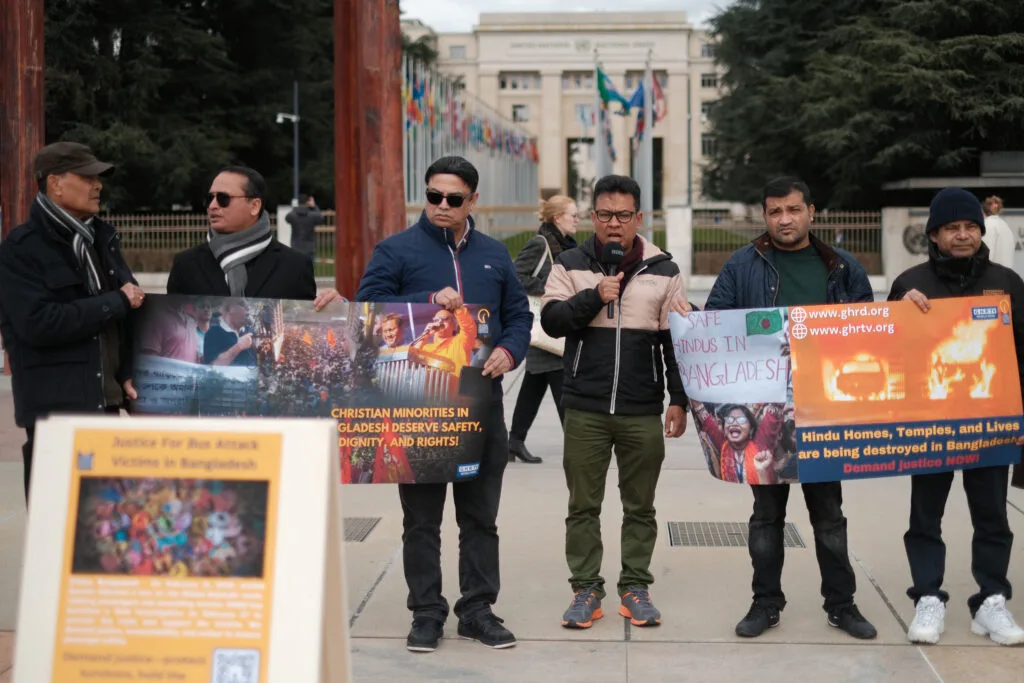
Protest and Exhibition About the Human Rights Violations of Minorities in Bangladesh at the Broken Chair in Front of the United Nations

On March 13, 2025, GHRD organized a protest in front of the United Nations in Geneva to highlight ongoing human rights violations in Bangladesh, particularly against religious and ethnic minorities. Participants, including Bangladeshi civil society actors, called for an end to systemic repression and urged accountability for perpetrators. The protest drew attention to escalating violence under the interim government, emphasizing the need for judicial reforms and international intervention, including a referral to the International Criminal Court. GHRD later submitted a memorandum to the UN, requesting the release of Chinmoy Prabhu Das from detention and the establishment of a permanent UN office in Bangladesh.

Press release

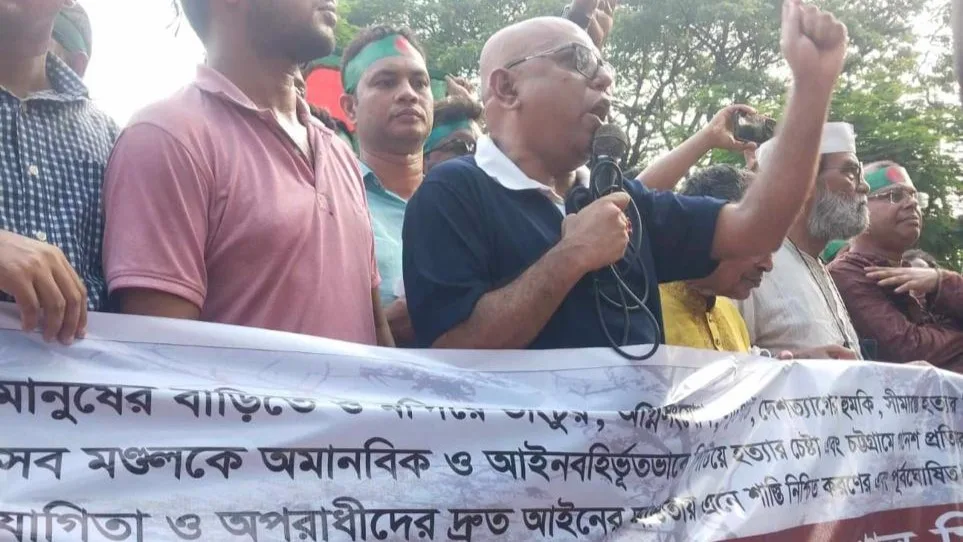
Hindus Victims of Political and Extremist Persecution in Bangladesh

The forced removal of Sheikh Hasina’s government in Bangladesh has led to increased violence against the Hindu minority, characterized by attacks, looting, and murders, highlighting the government’s failure to protect them. In response, Hindus initiated a peaceful protest on August 9, 2024, demanding rights and recognition, yet faced violent repression, including arrests. A significant protest in Rangpur showcased community resilience. The media’s delayed coverage of these issues exacerbates the vulnerability of this minority. A tragic case involving the death of Hridoy Ravidas after alleged torture by authorities emphasizes systemic discrimination and calls for urgent reforms. Global Human Rights Defence (GHRD) advocates for an independent investigation and international pressure for justice and structural changes to protect minority rights in Bangladesh.

Press release

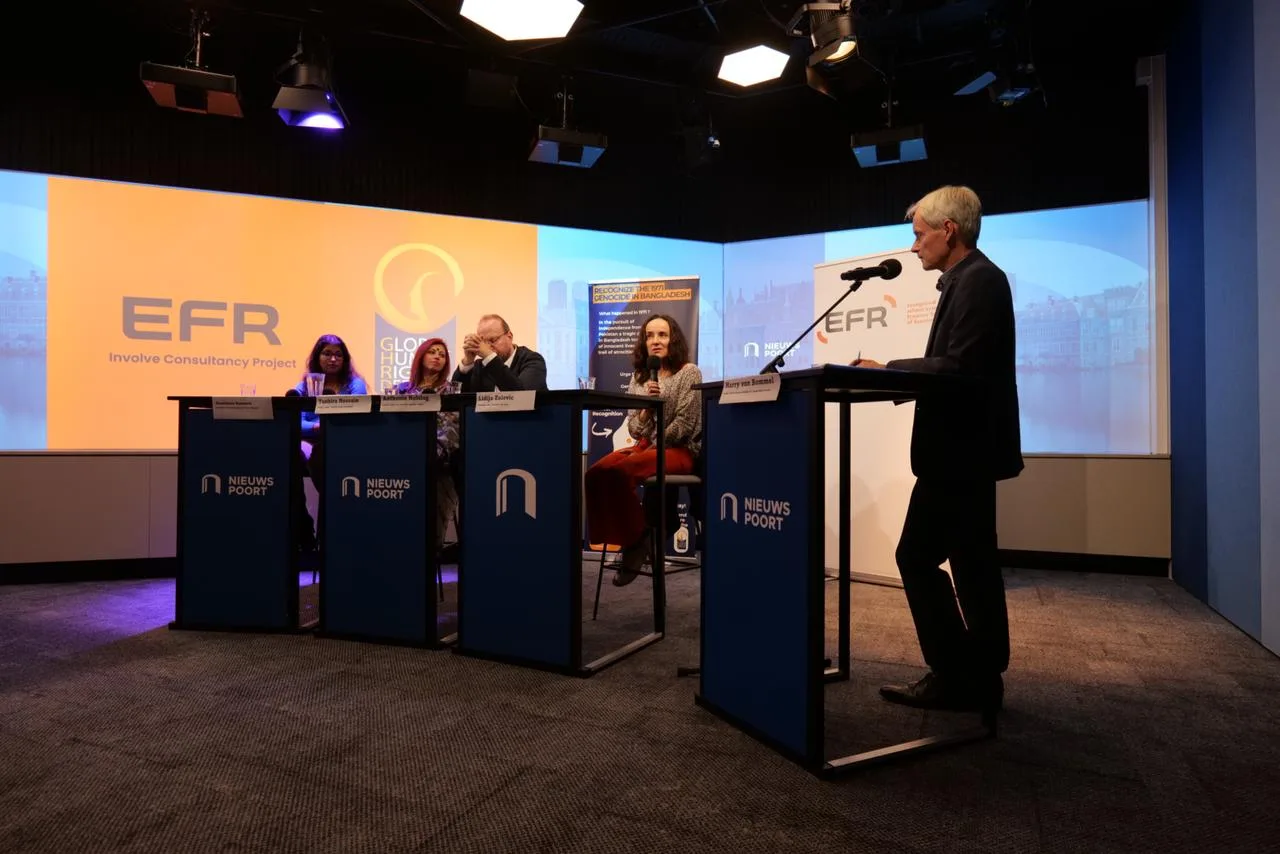
Breaking the Bias: Symposium Explores Western Media’s Impact on Human Rights in Bangladesh

On September 27, 2024, a symposium titled “Breaking the Bias: Western Media & Human Rights in Bangladesh” was held at Nieuwspoort in The Hague, focusing on the relationship between media representation and human rights, particularly concerning the 1971 genocide in Bangladesh. The event attracted 73 participants including students, professionals, and media workers, and was livestreamed by GHRTV to reach a wider audience. Key components included a keynote speech, a presentation of a report by the Involve team, and a panel discussion featuring experts such as Dr. Anthonie Holslag and Tanbira Hossain. Discussions explored the scientific consensus on the genocide, the influence of historical contexts on media portrayals, and the role of the diaspora in shaping public perceptions. The symposium aimed to deepen the understanding of media bias and its implications for human rights and policy.

6th GHRD International Film Festival: Human Trafficking Edition
Submission Deadline: 9th August 2026