
Reports
The Right to Choose: Migration Crisis in Calais and Dukirk
- Europe Team
- 31 August 2025
The migration crisis in Calais and Dunkirk is not something new. Its roots date back to 1999, when the first migrant centre was opened in Sangatte with the support of the Red Cross and the French government. By that time, many people were fleeing wars in Kosovo, Iraq, and Afghanistan, and they were provided with shelters in Sangatte. Later, when the shelter in Sangatte was closed, a new shelter appeared, including the so-called “Jungle”. It was first formed in 2009 and then again in 2014. After each demolition, a new camp would quickly grow again, but one thing that stayed unchanged during these years is the lack of human rights protections for the migrants and refugees who seek asylum. Even when the number of residents reached around ten thousand, the camp was never officially recognised as a refugee camp; therefore, it never received proper humanitarian aid.
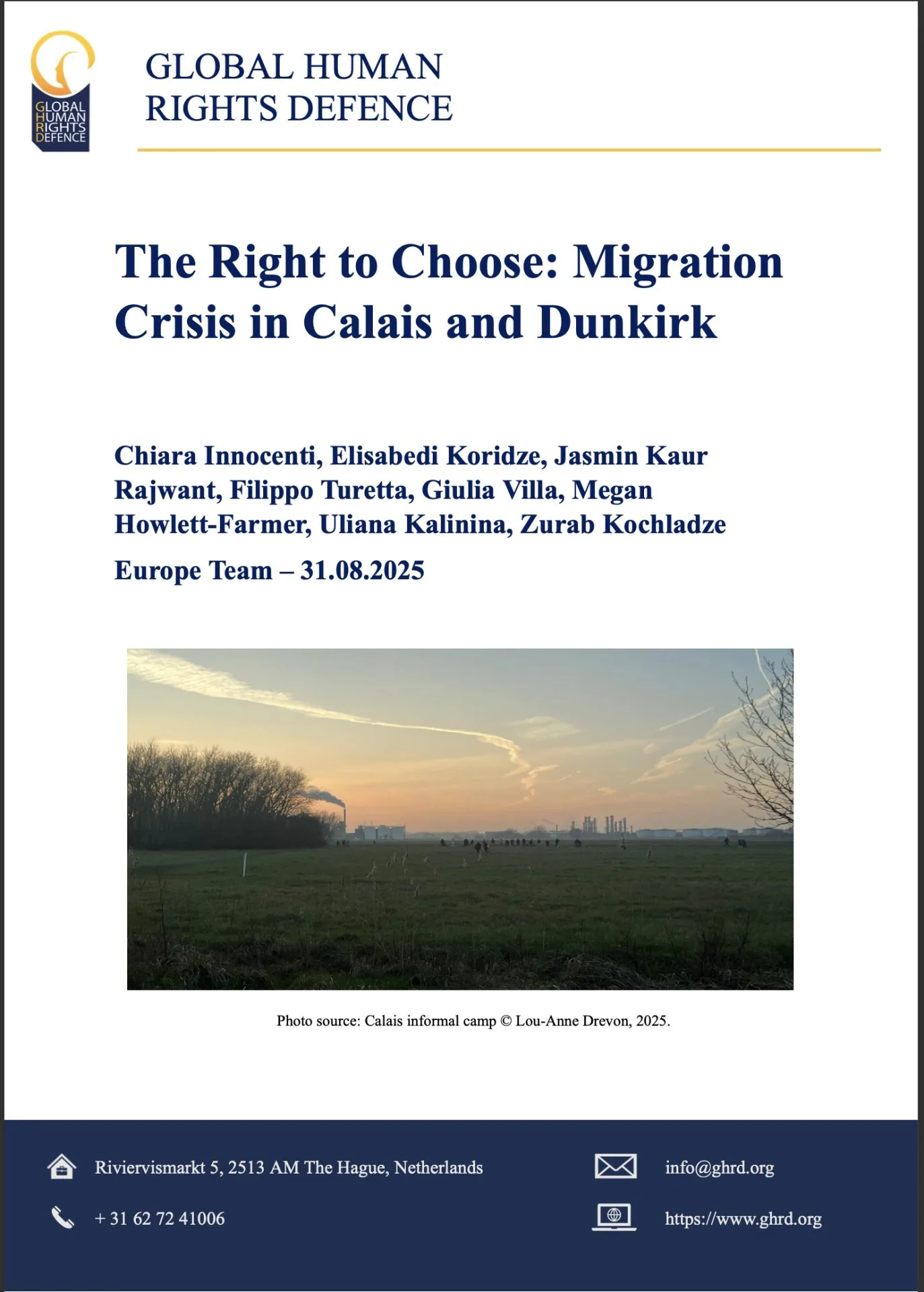
Today, there are hundreds of people living in Calais. They are not allowed to put up tents, and their rights are still not generally respected. This report aims to look closely at the human rights violations and structural failures that have allowed the crisis to continue for more than two decades.
The first chapter of the report discusses the human rights violations in Calais and Dunkirk generally, as well as the living conditions of migrants who are on the move or stay in informal settlements. One subchapter is dedicated to the most vulnerable people in those shelters, including unaccompanied minors, women, girls, and other risk groups who have even more difficulties living in the camps. The second chapter of the report examines the exact human rights violations that have occurred in Calais and Dunkirk, for example, forced evictions, document checks, violence, and obstruction along the northern French coast. Forced transfer is another very serious human rights violation that is discussed in the report. After discussing all the human rights violations happening in Calais and Dunkirk, the report also scrutinises the UK-France relations and provides a critique of the EU migration system that clearly can not deal with the human rights violations of refugees and migrants in Calais and Dunkirk. Lastly, the report provides possible solutions to the migration crisis in Calais and Dunkirk.
Today, there are hundreds of people living in Calais. They are not allowed to put up tents, and their rights are still not generally respected. This report aims to look closely at the human rights violations and structural failures that have allowed the crisis to continue for more than two decades.
The first chapter of the report discusses the human rights violations in Calais and Dunkirk generally, as well as the living conditions of migrants who are on the move or stay in informal settlements. One subchapter is dedicated to the most vulnerable people in those shelters, including unaccompanied minors, women, girls, and other risk groups who have even more difficulties living in the camps. The second chapter of the report examines the exact human rights violations that have occurred in Calais and Dunkirk, for example, forced evictions, document checks, violence, and obstruction along the northern French coast. Forced transfer is another very serious human rights violation that is discussed in the report. After discussing all the human rights violations happening in Calais and Dunkirk, the report also scrutinises the UK-France relations and provides a critique of the EU migration system that clearly can not deal with the human rights violations of refugees and migrants in Calais and Dunkirk. Lastly, the report provides possible solutions to the migration crisis in Calais and Dunkirk.
✨ AI summary
The migration crisis in Calais and Dunkirk is not something new. Its roots date back to 1999, when the first migrant centre was opened in Sangatte with the support of the Red Cross and the French government. By that time, many people were fleeing wars in Kosovo, Iraq, and Afghanistan, and they were provided with shelters in Sangatte. Later, when the shelter in Sangatte was closed, a new shelter appeared, including the so-called “Jungle”. It was first formed in 2009 and then again in 2014. After each demolition, a new camp would quickly grow again, but one thing that stayed unchanged during these years is the lack of human rights protections for the migrants and refugees who seek asylum. Even when the number of residents reached around ten thousand, the camp was never officially recognised as a refugee camp; therefore, it never received proper humanitarian aid.
Today, there are hundreds of people living in Calais. They are not allowed to put up tents, and their rights are still not generally respected. This report aims to look closely at the human rights violations and structural failures that have allowed the crisis to continue for more than two decades.
The first chapter of the report discusses the human rights violations in Calais and Dunkirk generally, as well as the living conditions of migrants who are on the move or stay in informal settlements. One subchapter is dedicated to the most vulnerable people in those shelters, including unaccompanied minors, women, girls, and other risk groups who have even more difficulties living in the camps. The second chapter of the report examines the exact human rights violations that have occurred in Calais and Dunkirk, for example, forced evictions, document checks, violence, and obstruction along the northern French coast. Forced transfer is another very serious human rights violation that is discussed in the report. After discussing all the human rights violations happening in Calais and Dunkirk, the report also scrutinises the UK-France relations and provides a critique of the EU migration system that clearly can not deal with the human rights violations of refugees and migrants in Calais and Dunkirk. Lastly, the report provides possible solutions to the migration crisis in Calais and Dunkirk.
Today, there are hundreds of people living in Calais. They are not allowed to put up tents, and their rights are still not generally respected. This report aims to look closely at the human rights violations and structural failures that have allowed the crisis to continue for more than two decades.
The first chapter of the report discusses the human rights violations in Calais and Dunkirk generally, as well as the living conditions of migrants who are on the move or stay in informal settlements. One subchapter is dedicated to the most vulnerable people in those shelters, including unaccompanied minors, women, girls, and other risk groups who have even more difficulties living in the camps. The second chapter of the report examines the exact human rights violations that have occurred in Calais and Dunkirk, for example, forced evictions, document checks, violence, and obstruction along the northern French coast. Forced transfer is another very serious human rights violation that is discussed in the report. After discussing all the human rights violations happening in Calais and Dunkirk, the report also scrutinises the UK-France relations and provides a critique of the EU migration system that clearly can not deal with the human rights violations of refugees and migrants in Calais and Dunkirk. Lastly, the report provides possible solutions to the migration crisis in Calais and Dunkirk.
Share this report
Facebook
X
LinkedIn
WhatsApp