Monthly Research Reports

Law and technology

This report aims to explore how technology and graphic/legal design can enhance voter awareness and participation in elections. By examining the integration of these tools into the electoral process, the report seeks to highlight their potential to make voting procedures more understandable and accessible to a diverse electorate. The analysis includes various aspects such as voter registration, identification, voting methods, and the publication of election results, all of which are critical components in ensuring an informed and engaged voting populace.

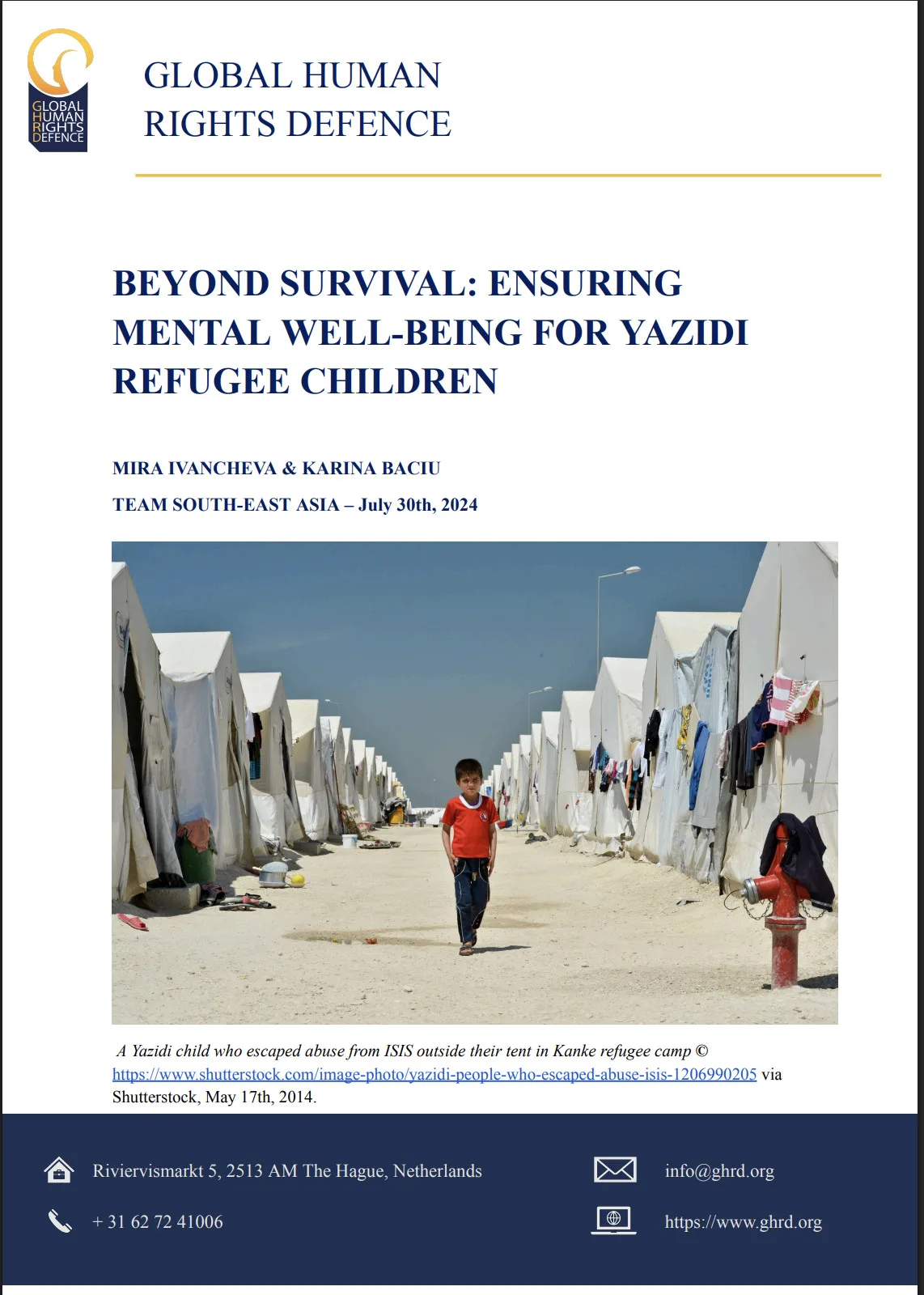
Yazidi Children Report

The Yazidi community, an ethno-religious minority from Iraq’s Sinjar region, has endured horrific atrocities since 2014, when ISIS militants began a campaign of genocide against them. Yazidi children in particular have faced unimaginable horrors, including abduction, enslavement, and witnessing the brutal killing of family members. These experiences have left deep psychological scars, making mental health support an urgent priority for this vulnerable group.

International human rights legislation, such as the United Nations Convention on the Rights of the Child (UNCRC), mandate that children who have experienced severe trauma receive special care to aid their recovery and reintegration. Despite these legal protections, the reality for Yazidi refugee children often falls short of these standards. Many suffer from post-traumatic stress disorder (PTSD), anxiety, depression, and other severe mental health conditions, exhibiting symptoms like nightmares, flashbacks, and social withdrawal​.

Mental health support for Yazidi refugee children is critically lacking. Refugee camps face a shortage of trained mental health professionals and culturally sensitive services. Efforts by the United Nations High Commissioner for Refugees (UNHCR) and NGOs like Médecins Sans Frontières (MSF) and Amnesty International provide trauma counselling and support groups but are often limited by resources and the great scale of need​​​​​. Addressing this crisis requires training healthcare providers in trauma-informed care, integrating mental health services into broader healthcare and education systems, and ensuring refugees’ inclusion in national health systems to provide comprehensive support​.

This report explores the mental health rights and support systems available to Yazidi refugee children from a human rights law perspective, highlighting the gaps in current frameworks and proposing actionable improvements to ensure their psychological well-being.

Children in India

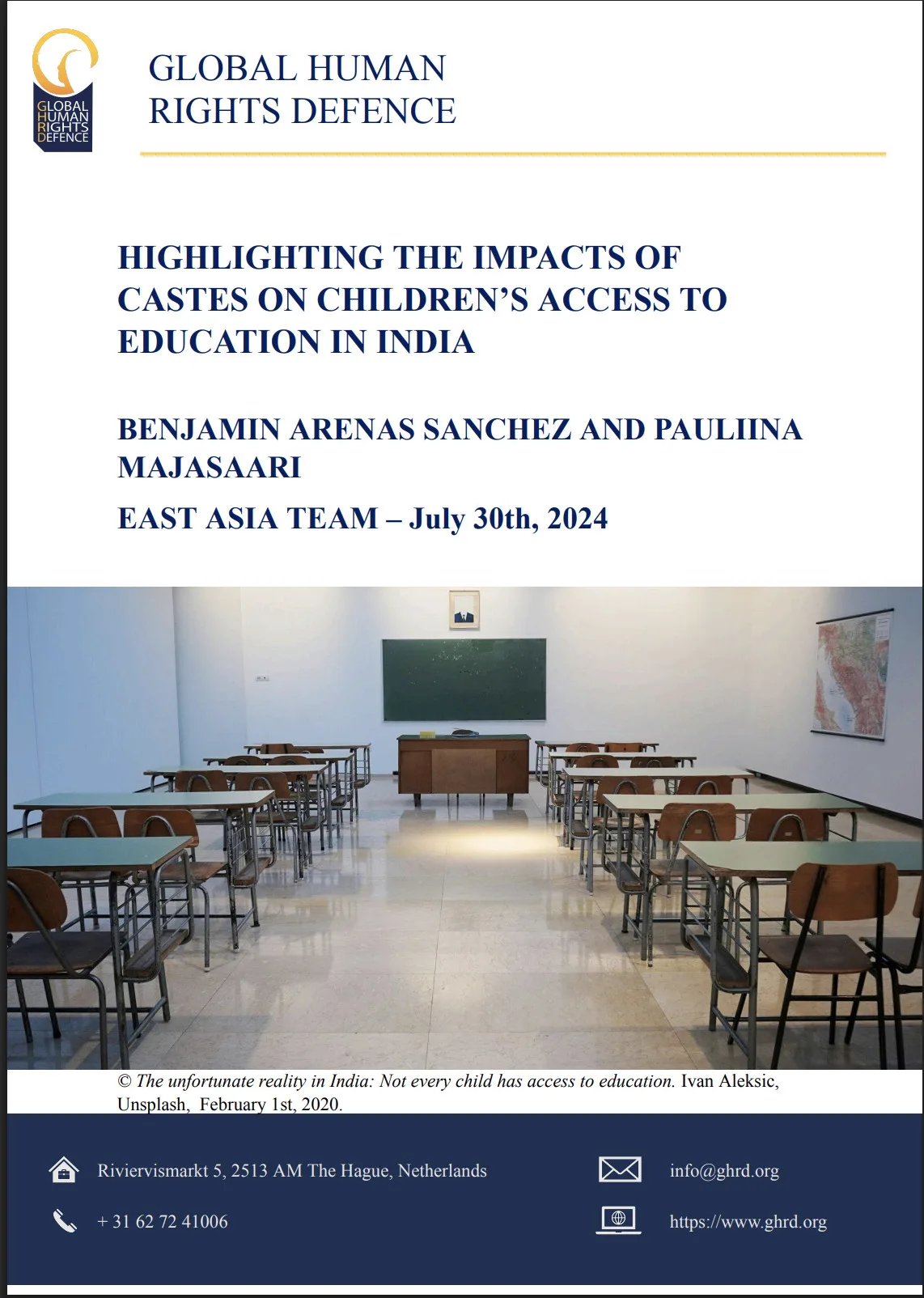
Education is one of the most powerful tools the human race possesses. It is what shapes our future and how we learn from our past. It has long been recognised as a fundamental human right, but there are still around 711 million illiterate people around the globe according to UNESCO. India is the country with the largest illiterate population with more than 287 million illiterate people. Indian literacy rates have been on an upwards trend in these last few years, reaching 77.7 percent of literate people in 2022, yet the Indian Caste system continues to play a large role in the disparity in education between social classes. Although some steps have been taken to better the situation of the lower caste children, there is still a long way to go to ensure an equal footing in education for all of India’s children.

Traditional asian values and human rights

The intersection of traditional Asian values and human rights has long been a pivotal issue in socio-political discourse, particularly in rapidly transforming nations like China. Rooted deeply in Confucian ideals, Chinese society has historically been shaped by values emphasising hierarchical order and familial roles. Recently, China’s demographic crisis, characterised by a declining birth rate and an ageing population, has prompted a dramatic policy shift. The government’s recent emphasis on encouraging women to adopt domestic roles in order to boost population growth marks a significant departure from the progress made in gender equality over recent decades.

This policy reversal highlights a profound conflict between the demographic needs of an ageing nation and the advancements in women’s rights. By prioritising traditional family roles over gender equality, the Chinese government is not only challenging the strides made towards gender equality but also reaffirming the enduring influence of Confucian values on state policy. This re-emergence of conservative family policies, framed as essential for national stability, raises critical concerns about the future trajectory of women’s rights in China.

This report delves into the complex interplay between traditional Asian values and women’s rights in China, examining how recent policy shifts align with or challenge the country’s international human rights obligations. By analysing this policy reversal in the context of international human rights law and considering the international community’s responses, this report aims to shed light on the tension between preserving cultural traditions and advancing gender equality. Through this examination, the study contributes to a broader understanding of how nations with deep-rooted cultural traditions can navigate the balance between demographic needs and gender equality in a globalised world.

Sexual citizenship

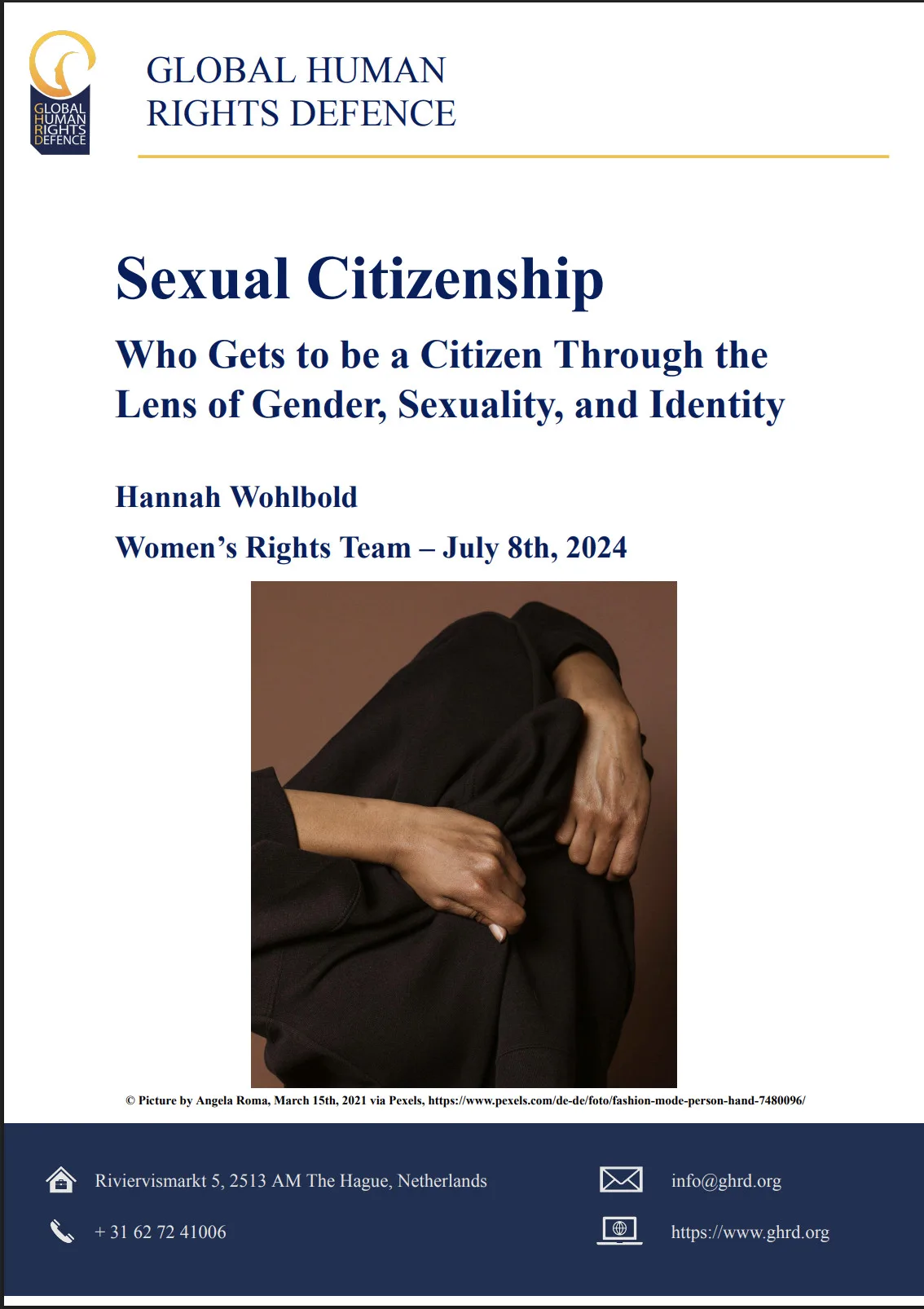
The origin of citizenship can be traced back to Ancient Greece, when “citizens” were those who had a legal right to participate in the affairs of the state. However, by no means was everyone a citizen: slaves, peasants, women or resident foreigners were mere subjects. (Council of Europe, n.d.)

This quote by the Council of Europe (CoE) highlights the underlying structure that, to this day, influences who is considered a citizen of a nation and who is not. Historically, citizenship is closely linked to belonging to a political and legal entity that grants individuals access to certain rights and imposes corresponding duties. The origins of citizenship can be traced back to ancient Greece, where one was only considered a citizen if he was “male aged 20, [from] an Athenian family, […] patriarch of a household [and] a warrior” (Bellamy, 2015, p. 31). Gender, race, and class were fundamental in defining the boundaries of citizenship, thus excluding women, children, immigrants, and slaves. Over time, this understanding changed, and the good citizen was the one who could naturally contribute to the reproduction of the state (Josephson, 2015). He was white, male, and heterosexual. Men were therefore at the centre of citizenship from the very beginning. This definition, according to which all persons within a state who do not meet the above criteria are excluded from the right to citizenship, is no longer valid. Article 15 of the Universal Declaration of Human Rights (UN General Assembly, 1948) recognises everyone’s right to a nationality and the right to change one’s nationality. It stipulates that no citizen shall be stateless because of the denial of their nationality.

Abuse of Boys in Pakistan and Bangladesh

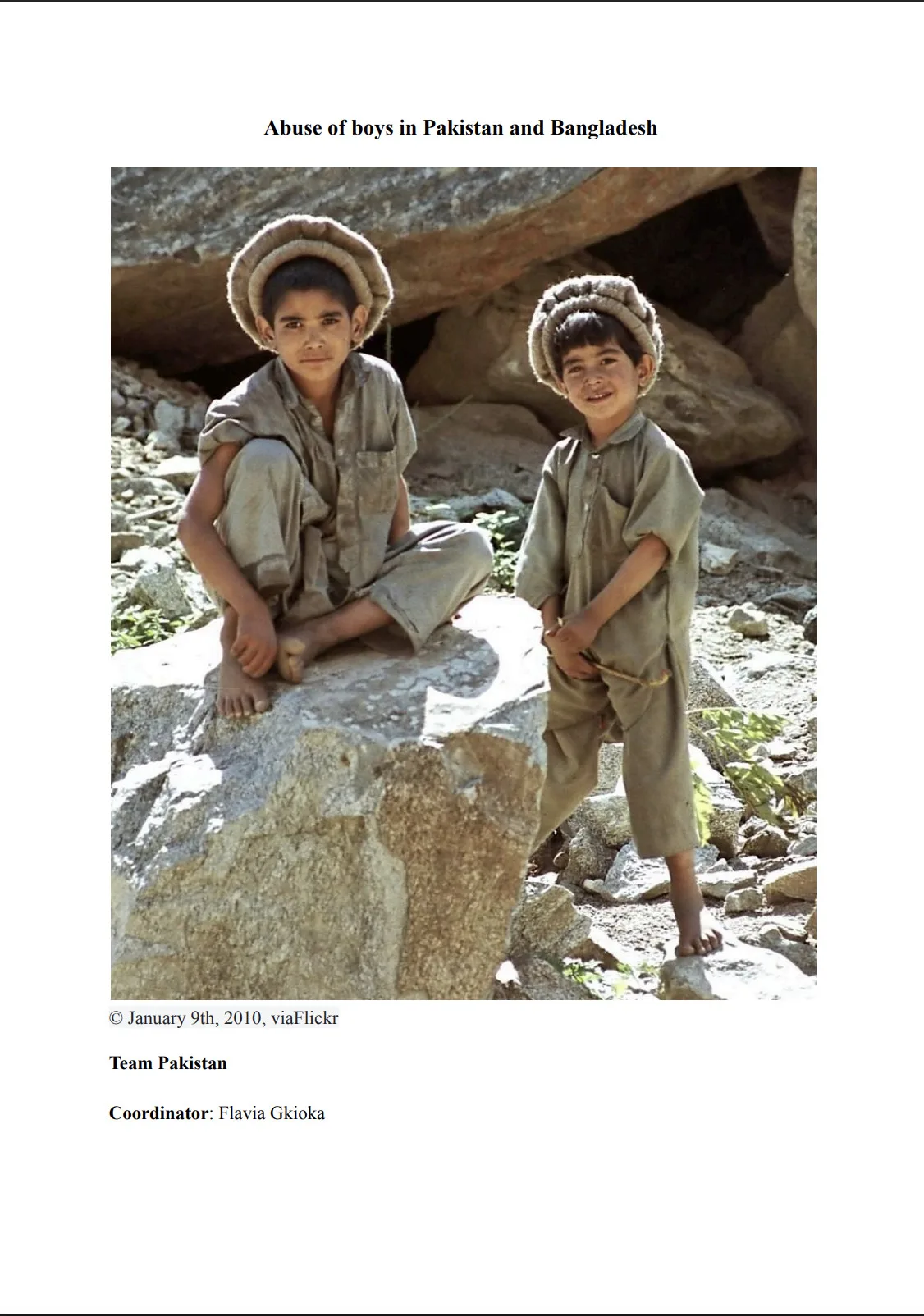
The abuse of boys in Bangladesh and Pakistan is deeply rooted in the historical and cultural frameworks of these societies. Both countries share common cultural elements stemming from their shared history under British colonial rule and, before that, the Mughal Empire, which shaped their societal structures, gender roles, and traditional practices.

In both Bangladesh and Pakistan, traditional gender roles have been heavily influenced by patriarchal systems. These roles dictate a rigid hierarchy where men are dominant figures in both public and private spheres, while women and children, including boys, are often subordinated. This patriarchal structure tends to normalise the subjugation and control of those perceived as weaker, including children, and boys are expected to conform to certain behavioural norms that align with traditional masculinity. Boys in these societies are often socialised from a young age to adopt traits such as toughness, emotional restraint, and obedience to authority figures. Deviation from these expectations can result in various forms of abuse as punishment or a method of enforcing conformity. The pressure to conform to these rigid gender norms not only perpetuates cycles of abuse but also silences boys who may otherwise seek help, as doing so could be perceived as a sign of weakness.
Moreover, societal norms in Bangladesh and Pakistan often dictate that boys are the bearers of family honour. Any perceived threat to this honour can lead to severe repercussions, whether through non-conformity or victimisation. This cultural emphasis on honour can result in families covering up abuse to avoid social stigma, further entrenching the cycle of violence and making it difficult for boys to seek help or receive justice.

Certain traditional practices and beliefs also contribute to the abuse of boys in these regions. For example, the practice of “bacha bazi” in Afghanistan, which borders Pakistan, is a known form of sexual exploitation of young boys by older men and has been reported in parts of Pakistan as well. Although it is officially illegal, the practice persists due to weak law enforcement, corruption, and deep-seated cultural attitudes that view boys as objects rather than individuals with rights. In Bangladesh, while not as publicly reported as in Pakistan, similar issues exist, often exacerbated by poverty and social inequalities. Boys from poorer families are particularly vulnerable to being exploited in the workforce, where they may face physical abuse and neglect or be trafficked for sexual exploitation. Traditional views that see boys as workers or economic assets rather than as children needing protection further perpetuate these abuses.

Censorship in Pakistan

The 21st century has seen a change in the way information is created, transmitted and consumed. Traditional media, namely newspapers, radio and television have been replaced by the internet and digital platforms. Although these are complementary, there are higher participation rates in social media than in conventional platforms (Arif, 2022). The intersection of this change can be the Arab Spring, which served as a lever to facilitate the communication of the protesters and the smooth organisation of the demonstrations. This practice raised public awareness and triggered public discourse (Batool, 2020).

Internally displaced persons

This report begins by contextualising internal displacement within the international legal framework, followed by an analysis of its impact on affected communities. Through case studies from Myanmar, Nepal, and India, the report illustrates the previously mentioned causes of internal displacement, emphasising human rights violations and socio-economic repercussions. Furthermore, the report discusses the roles of key stakeholders, including international organisations, governments, and humanitarian agencies, in responding to and mitigating the effects of displacement.

Women’s Rights and AI : A New Threat?

The rapid advancement in generative Artificial Intelligence (AI) technology is marked by frequent launches of new large-scale models, heralding a transformative era in human work dynamics and communication (Hacker, 2023). However, Generative AI poses numerous risks and challenges. Ethical concerns and potential social exclusion are exemplified by the amplification of societal biases, discrimination, and inequities, notably in fields such as recruitment (Raub, 2018). Another significant risk involves privacy and data protection, encompassing lawful and compliant data collection, processing, and management of sensitive personal information.

NAVIGATING POPULISM : Women’s Struggle for Political Representation

Over the last few decades, there has been an overall increase in the representation of women in political and decision-making positions, although this progress is uneven and uncertain (Fellegi, Hrbková, Dubrow, 2023). Feminists’ demands are increasingly heard and supported by institutions, both international and national. However, this progress in women’s representation and the defence of women’s rights can lead to two phenomena which are detrimental to these causes. Firstly, greater recognition of women’s rights can lead to a “backlash” phenomenon, a violent retreat from women’s rights in response to this advance. Backlash can be defined as “a response to feminist movements that are effectively making changes to create a more egalitarian and just society” (Bojanic, Abadía, Moro, 2021). Thus, when a backlash occurs in a country, it should be analysed as proof that women’s rights initially improved. The backlash phenomenon also highlights the fact that increasing the representation of women in politics does not systematically lead to an improvement in women’s rights.

6th GHRD International Film Festival: Human Trafficking Edition
Submission Deadline: 9th August 2026