Monthly Research Reports

Balancing Freedom of Religion and Right to Education in the Americas

In the field of study and practice of human rights, the interplay between the right to freedom of religion and belief and the right to sexual education presents a compelling narrative, especially within the dynamic and culturally rich backdrop of the Americas. The Inter-American Court of Human Rights (IAtCHR), a pivotal arbiter in this complex dialogue, endeavours to balance these seemingly divergent rights under International Human Rights Law.

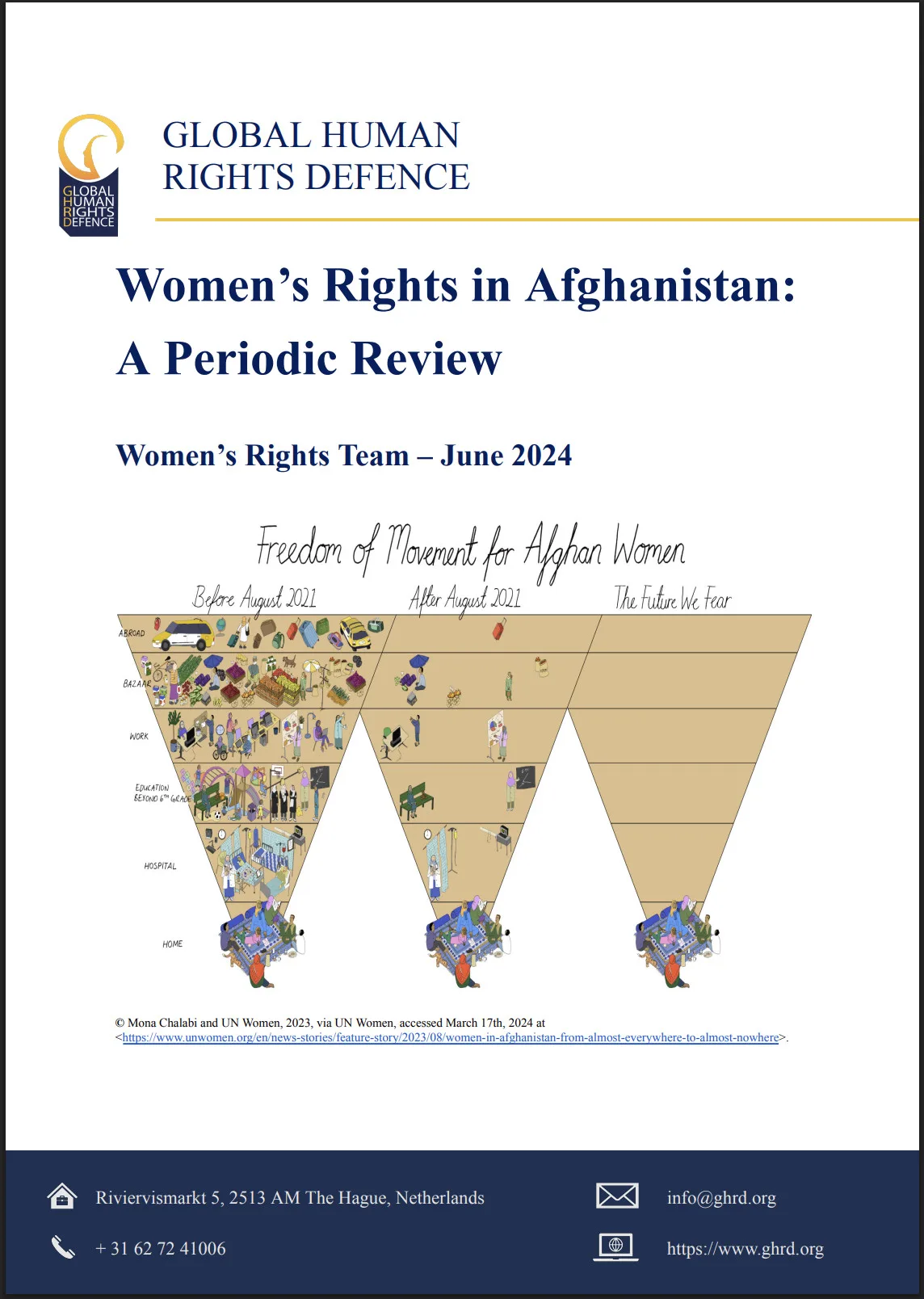
Women’s Rights in Afghanistan : A Periodic Review

Afghanistan, a nation deeply marked by decades of conflict and complex social
dynamics, finds itself at a crucial juncture in the context of women’s rights. The progress
made in recent years is under threat as the country faces the harsh realities of the Taliban’s
return to power which has imposed significant restrictions on Afghan women’s education,
freedom of movement, and overall well-being. This report explores the intricate history and
current state of women’s rights in Afghanistan, a narrative that weaves through Afghan
culture, politics, and society, presenting a rich tapestry of resilience, struggle, and change.
From the multifaceted roles women played in traditional Afghan society to the
devastating consequences of the Taliban’s policies, the journey of Afghan women
encapsulates a broader story of human rights, gender equality, and the relentless pursuit of
dignity and justice. Despite confronting unprecedented challenges, the courage and resilience
of Afghan women shine through, highlighting their fight for a more just future. The recent
resurgence of the Taliban and its dire implications for women’s rights have reignited global
concern, emphasising the precarious nature of progress and the critical need for international
solidarity and support.

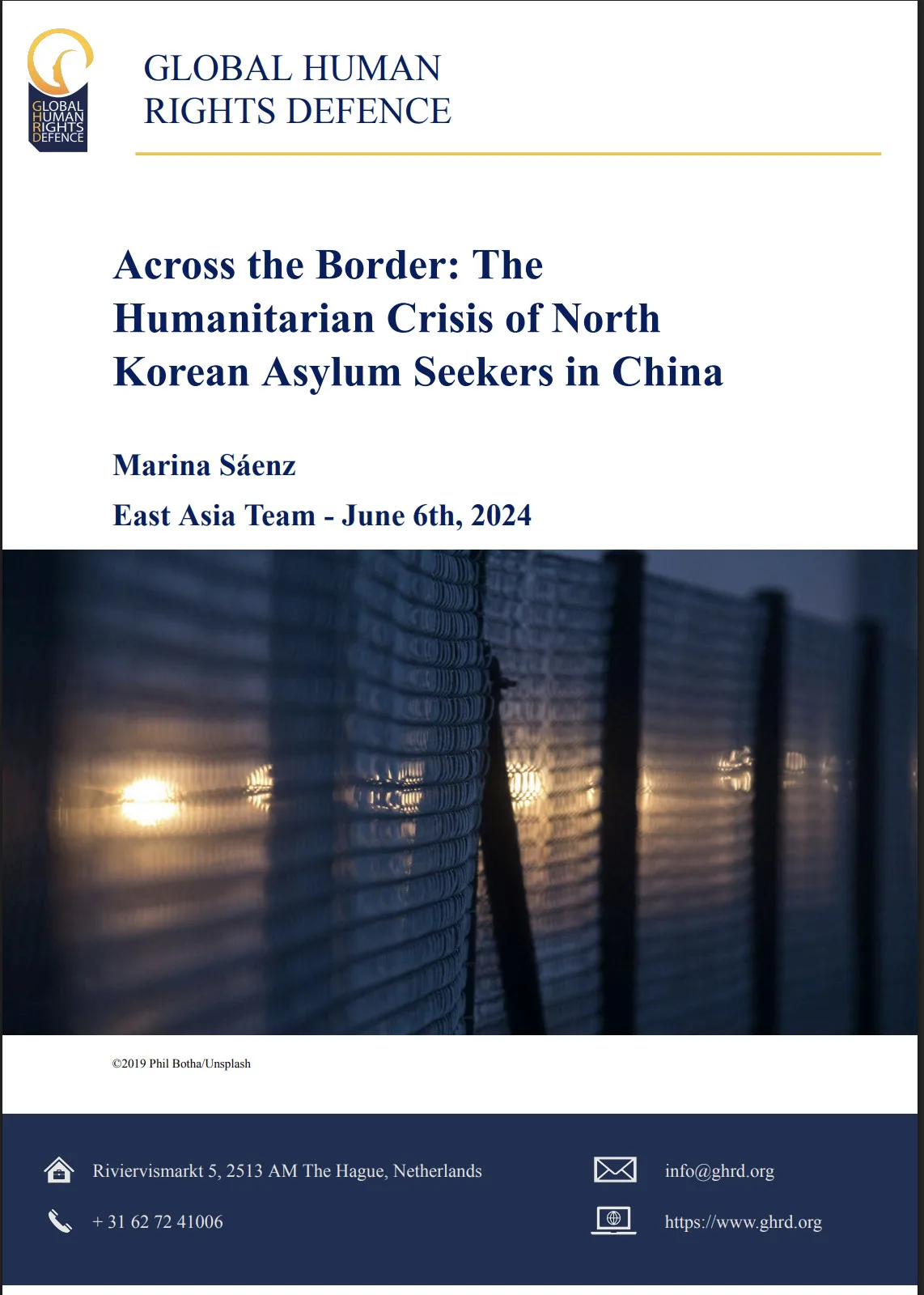
Korean refugees in China

In the complex landscape of international human rights, the plight of North Korean asylum seekers in China presents an urgent and intricate challenge. According to Human Rights Watch, the Chinese government’s forced return of approximately 60 North Korean asylum seekers on April 26th, 2024 has sparked significant international concern. These individuals now face severe risks, including enforced disappearance, torture, sexual violence, wrongful imprisonment, forced labour, and execution upon their return to North Korea. This alarming incident followed a high-level meeting on April 13th, 2024 between North Korean leader Kim Jong Un and Zhao Leji, China’s third-highest official, heightening fears among North Korean exiles and human rights activists that China may accelerate its repatriation efforts.

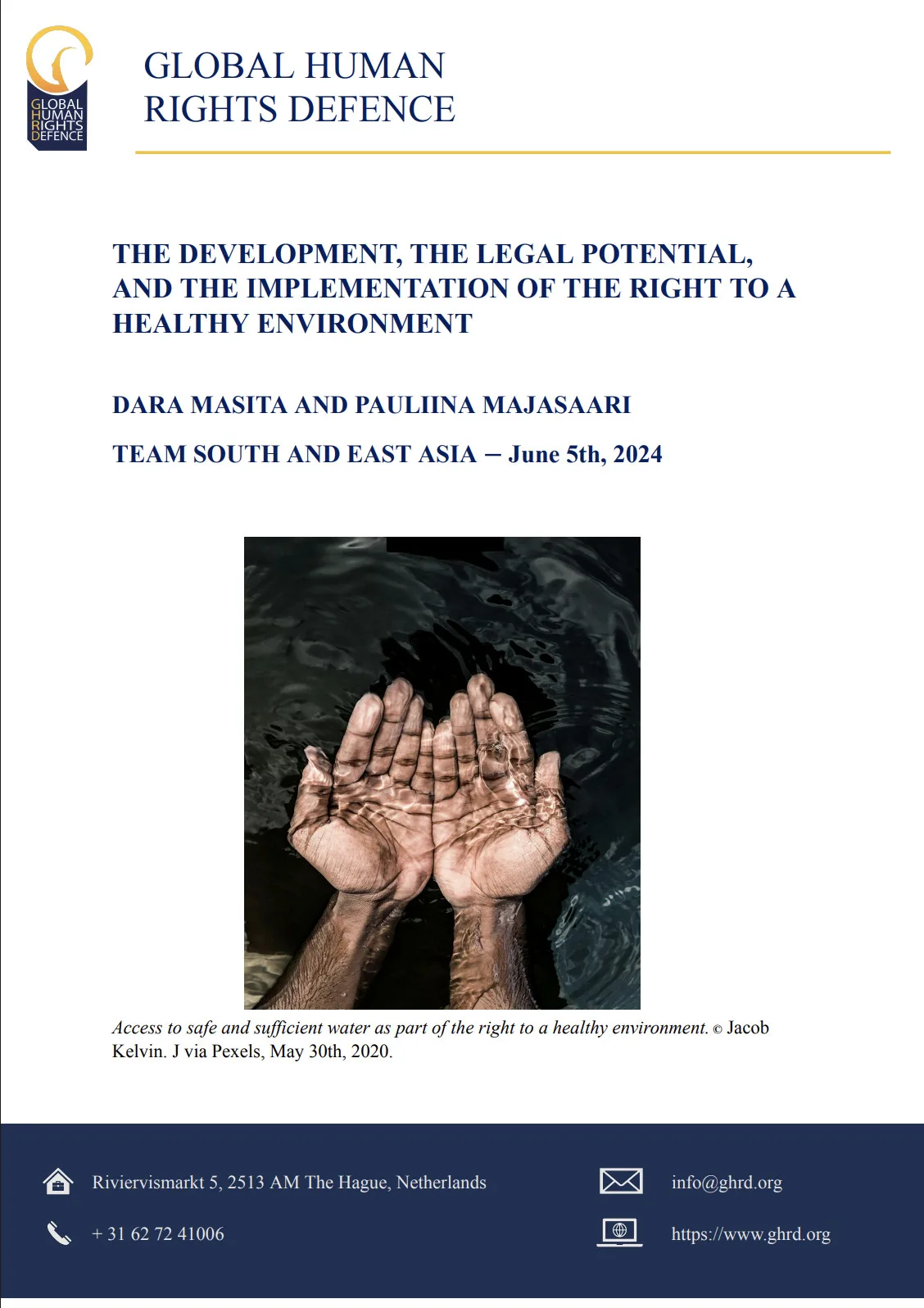
THE DEVELOPMENT, THE LEGAL POTENTIAL, AND THE IMPLEMENTATION OF THE RIGHT TO A HEALTHY ENVIRONMENT

The human right to a clean, healthy, and sustainable environment (in short, the right to a healthy environment), a relatively new human right, is a fascinating development that encapsulates environmental protection from a human rights perspective. Its recent recognition by the UN Human Rights Council (UNHRC) in October 2021 (HRC/RES/48/13) and by the UN General Assembly (UNGA) in July 2022 (A/RES/76/300) has brought it to the forefront of international discourse. This right, now considered an “internationally recognised human right,” demands our attention and engagement.

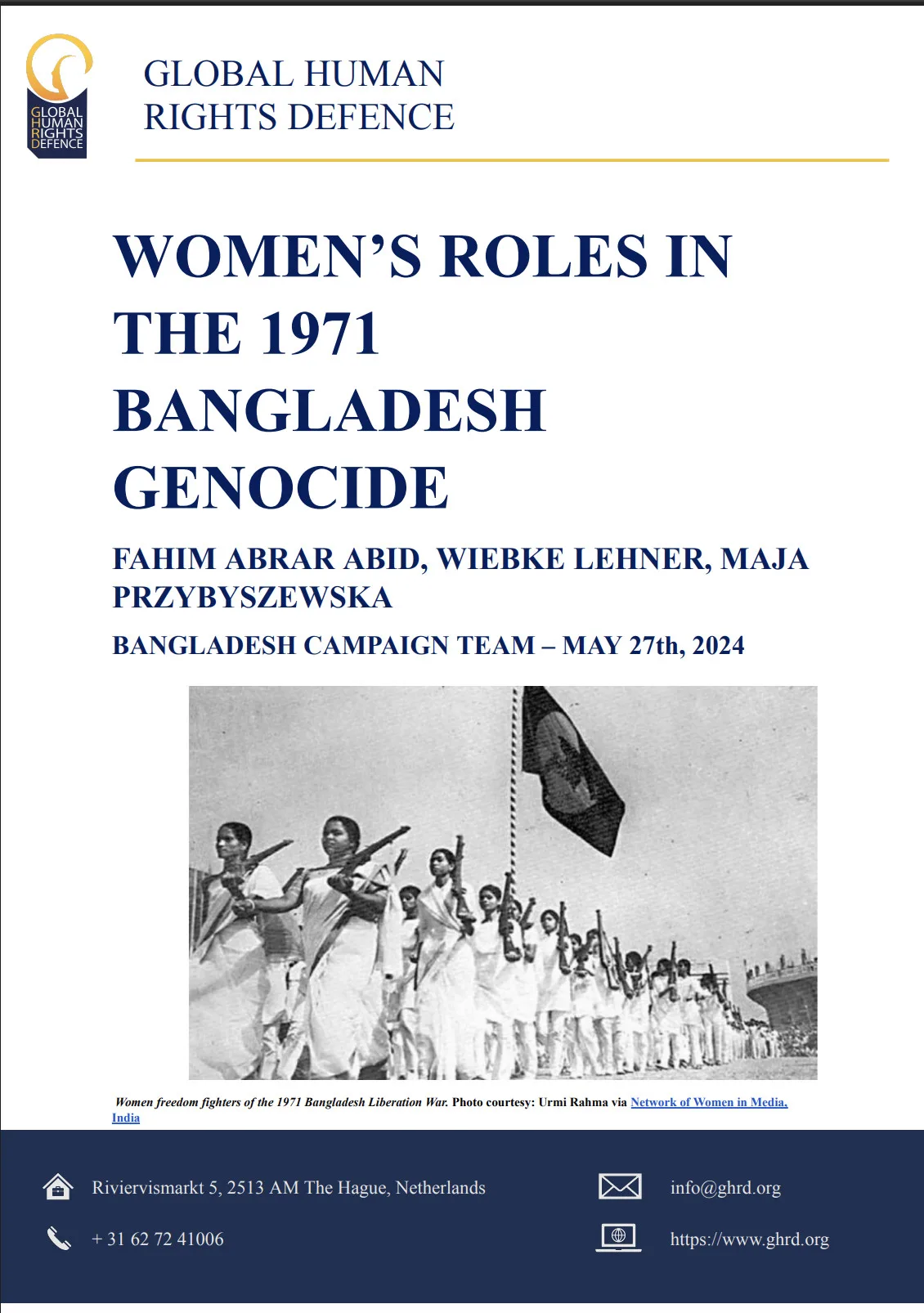
Women´s roles in the 1971 Bangaldesh Genocide

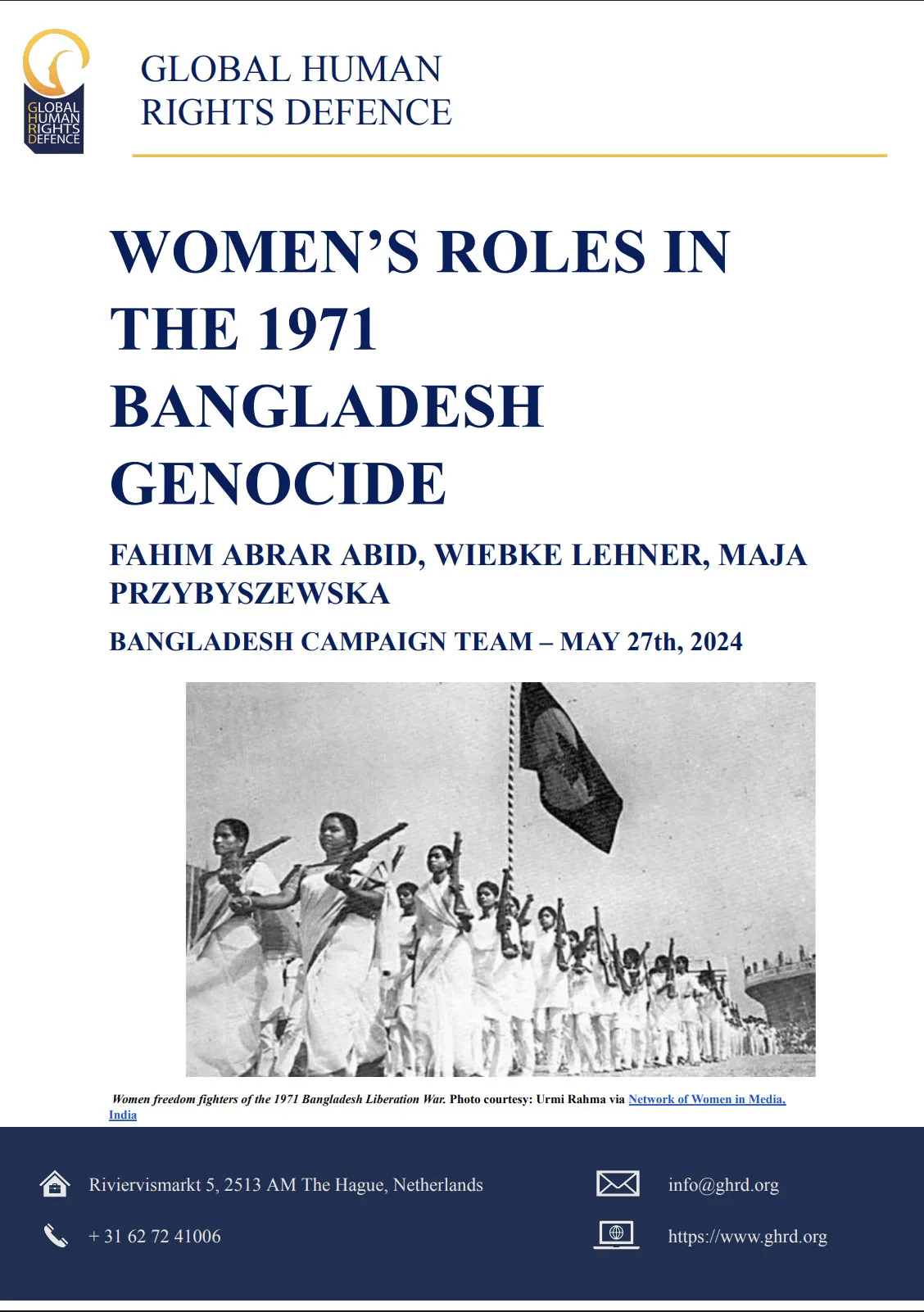
In the context of armed conflict, women fulfil a wide variety of roles. They confront issues of survival, engage in resistance, and build resilience. Yet their experiences and contributions are often erased from collective consciousness in the process of post-conflict societal rebuilding (Mookherjee, 2006). The Bangladesh Liberation War of 1971 is a noteworthy example of how the lack of acknowledgment of women’s experiences and involvement feeds into, and is mutually reinforced by, the failure to recognise atrocities occurring during conflict. Specifically, the survivors of widespread rape and sexual torture are often purposively excluded from public discourse about the conflict experience, since their identity contradicts cultural stigma about sexuality, the role of women in the community, and perceptions of national honour (Sharlach, 2000). The lack of recognition contributes to Bangladesh’s contemporary political contestation as well as the perception of the role of women (Bass, 2016, p. 262). Therefore, this report sheds light on the intricacy of women’s wartime experiences, their subjugation to sexual aggression, and their contribution to the cause of national self-determination through their participation in liberation movements.

Women´s roles in the 1971 Bangaldesh Genocide

In the context of armed conflict, women fulfil a wide variety of roles. They confront issues of survival, engage in resistance, and build resilience. Yet their experiences and contributions are often erased from collective consciousness in the process of post-conflict societal rebuilding (Mookherjee, 2006). The Bangladesh Liberation War of 1971 is a noteworthy example of how the lack of acknowledgment of women’s experiences and involvement feeds into, and is mutually reinforced by, the failure to recognise atrocities occurring during conflict. Specifically, the survivors of widespread rape and sexual torture are often purposively excluded from public discourse about the conflict experience, since their identity contradicts cultural stigma about sexuality, the role of women in the community, and perceptions of national honour (Sharlach, 2000). The lack of recognition contributes to Bangladesh’s contemporary political contestation as well as the perception of the role of women (Bass, 2016, p. 262). Therefore, this report sheds light on the intricacy of women’s wartime experiences, their subjugation to sexual aggression, and their contribution to the cause of national self-determination through their participation in liberation movements.

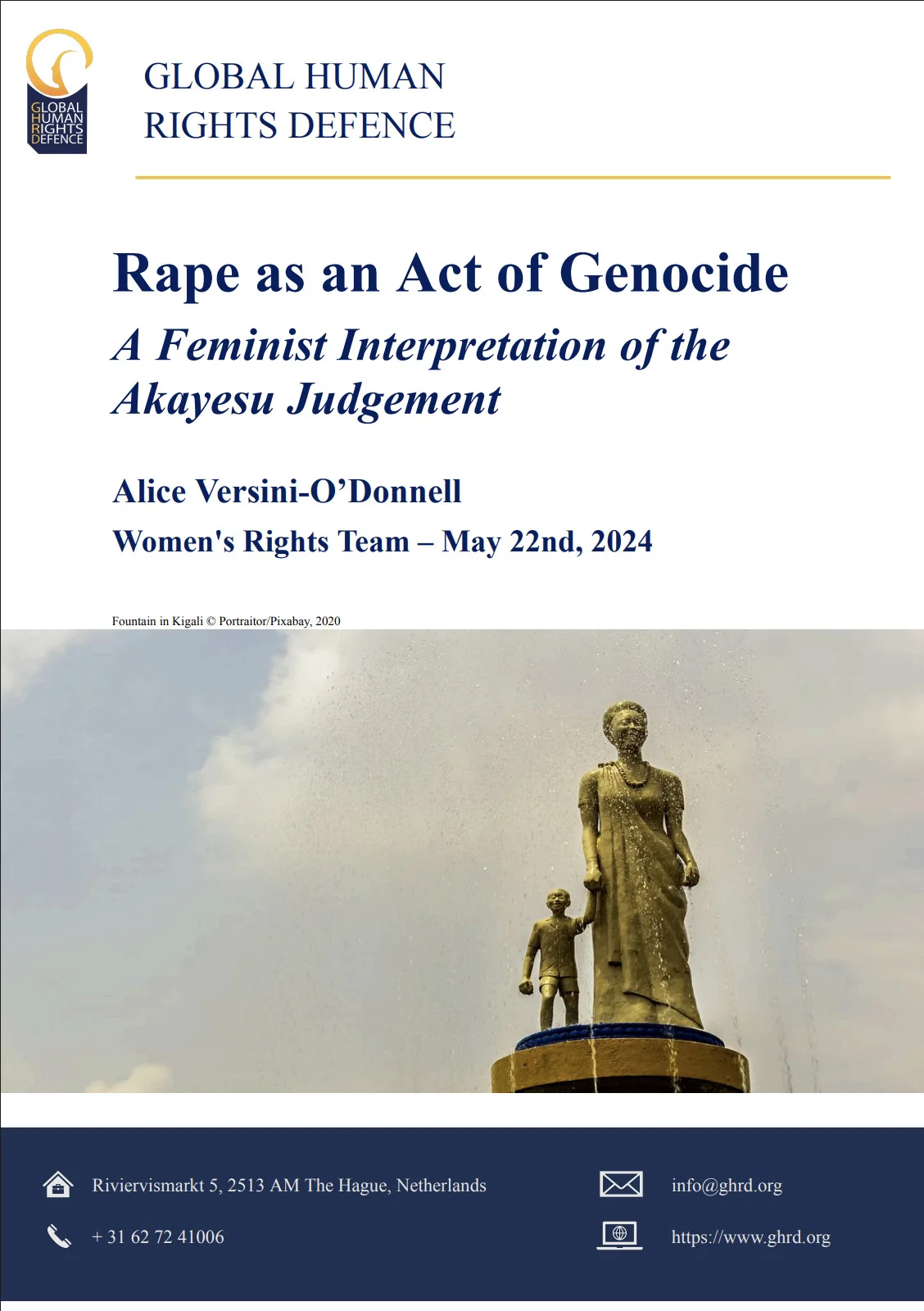
Rape as an Act of Genocide

Jean-Paul Akayesu’s trial was the first time that the crime of genocide had been prosecuted under the Genocide Convention, and its judgement was the first to rule that rape and sexual violence could constitute genocide. The judgement’s analysis of the issue of genocidal rape served as the foundation for many developments in international law, such as the UN Security Council’s Resolutions 1325 and 1820 on women, peace, and security, which recognise the impact of armed conflict on women.
It is of utmost importance to adopt a feminist perspective when considering the issue of genocidal rape, as it is an issue that primarily affects women. Without such an analysis, women could not be afforded full legal protection in wartime. The entire concept of genocidal rape owes its existence to the development of feminist thought, as applied in the Akayesu trial, which recognised the severity of the crime and called for its prosecution.

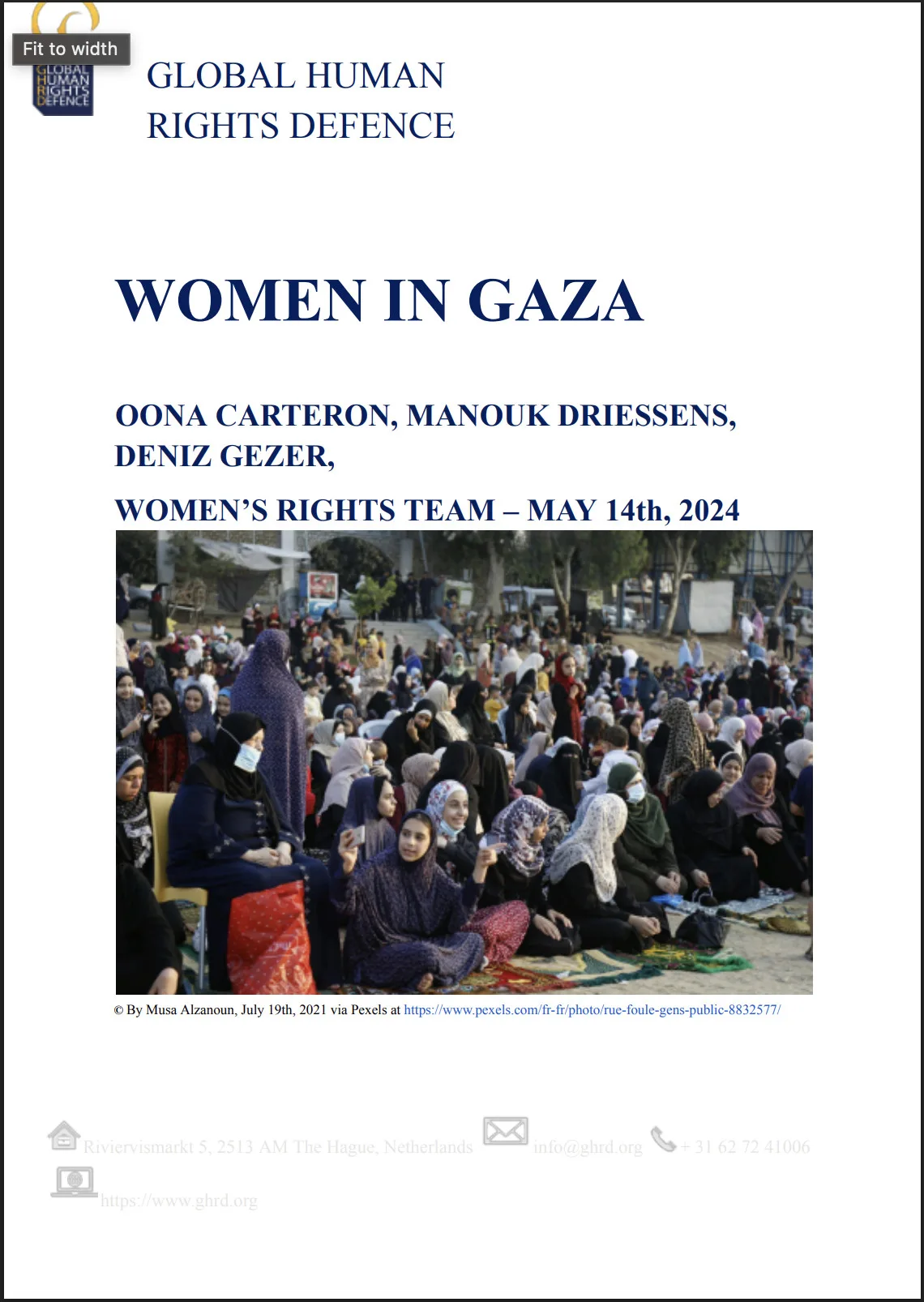
Women in Gaza

“A suffering I wouldn’t wish upon any woman” – these are the words of Nada Abdelsalam, 34, a Palestinian woman describing her situation in Deir el-Balah in the Gaza Strip, as she is interviewed by Al Jazeera (Humaid, 2024). Nada’s words perfectly set the tone of the present report, which aims to shed light on the situation of Palestinian women in Gaza. More specifically, the report covers the different types of gender-based violence (GBV) that the women of Gaza face (Chapter 1), the most pressing challenges related to their health, including their sexual and reproductive health (Chapter 2) and, finally, how all of it fits into the framework of the law of war, or International Humanitarian Law (IHL) (Chapter 3).

The Right to Health: Lack of Physical Well-Being and its Effects on Mental Health with a Specific Focus on Chronic Illnesses

Health is a fundamental human right necessary for the exercise of other human rights, as expressed by the Committee on Economic, Social and Cultural Rights. However, within the fast paced life in our current society, the importance of mental health can be easily overlooked. A balanced mental health is a cornerstone in being able to participate in social life, including work, hobbies, relationships, and education. Mental and physical health are very closely intertwined and it is therefore of utmost importance to take care of both aspects of health, as ill-health can have far reaching implications for the individual and for society as a whole. As a fundamental human right, every individual should be able to enjoy the right to health and thereby live their life to the fullest.

Japan Death Penalty

This report aims to provide a comprehensive analysis of the death penalty in Japan,
focusing on its historical evolution, legal frameworks, and the contentious conditions under
which death row inmates are detained and executed. Central to our exploration is the
environment within Japanese detention centres, where inmates are held in isolation up to the
moment of their execution.

6th GHRD International Film Festival: Human Trafficking Edition
Submission Deadline: 9th August 2026