
Reports
- Europe Team
- 21 April 2022
This report on femicide in Europe, the main mechanism that has the potential to address the serious issue of femicide and violence against women is provided in the Council of Europe Convention on preventing and combating violence against women and domestic violence, known as ‘the Istanbul Convention’. The landmark treaty set the path for creating a legal framework at a pan- European level to protect women against all forms of violence and prevent, prosecute and eliminate violence against women and domestic violence.
- GHRD Team
- 14 April 2022
The United States of America, or the USA, is a federation of 50 states comprising 13 original colonies. It is a federation with a presidential system, meaning that whilst each state has its own legislative powers and representation in Congress, the legislative branch of the United States, the President remains the executive and Head of State.
- GHRD Team
- 14 April 2022
‘Indigenous peoples’ or ‘First Nations’ are the collective names used to describe the original people who inhabited North America (and their descendants) prior to the arrival of European colonizers. In Canada, 4.9% of the population (1.67 million people) self-identify themselves as Indigenous persons, according to the 2016 Census.
- GHRD Team
- 14 April 2022
Despite Canada being a refugee-welcoming country, recent developments related to the detention of individuals seeking refuge in Canada and the deprivation of their liberty for indefinite periods of time have received criticism from relevant human rights organisations and activists.
- GHRD Team
- 14 April 2022
Indigenous human rights defenders in Guatemala have been systematically targeted by Guatemala’s
judicial system. According to the United Nations High Commissioner for Human Rights (OHCHR)
report, published in February 2021, at least 881 arrest warrants had been issued against members of
1
indigenous human rights organisations since October 2020 . Within these arrests, the OHCHR found
that Guatemala has been misusing its criminal law against indigenous human rights defenders,
2
claiming the rights for their lands and communities . The most recent case involved Bernardo Caal Xol,
an indigenous human rights defender and leader of the Maya Q’eqchi indigenous community, who was
3
unlawfully sentenced to imprisonment of seven years and four months .
- GHRD Team
- 14 April 2022
There is a gap between the written laws found in books and the legislations and their enforcement,
meaning how these laws work in practice, practically in all the legal systems around the world. When
law addresses security issues, such as violence against women, a lack of execution can result in slow or
ineffective police responses to domestic violence calls.
- GHRD Team
- 31 March 2022
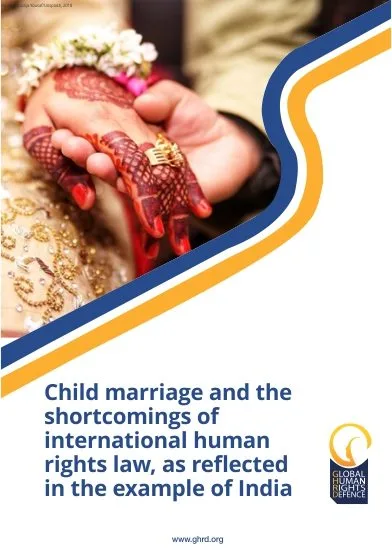
Child marriage continues to be a widespread problem despite international human rights laws designed to prevent it. In India, legal loopholes, weak enforcement, and deep-rooted social practices allow the practice to persist. This report highlights how limitations in international human rights frameworks, combined with domestic challenges, fail to provide effective protection for children, emphasizing the need for stronger implementation and accountability.

- GHRD Team
- 29 March 2022
The 2022 Winter Olympics in Beijing highlighted the tension between China’s efforts to project a positive international image and ongoing concerns over human rights and censorship. While the Games served as a platform for national prestige, they also drew attention to issues such as surveillance, restrictions on free expression, and the repression of minority groups. This report analyses how the Olympics were used as a tool of image-building while exposing the broader challenges facing human rights and freedom of speech in China.
- GHRD Team
- 28 March 2022
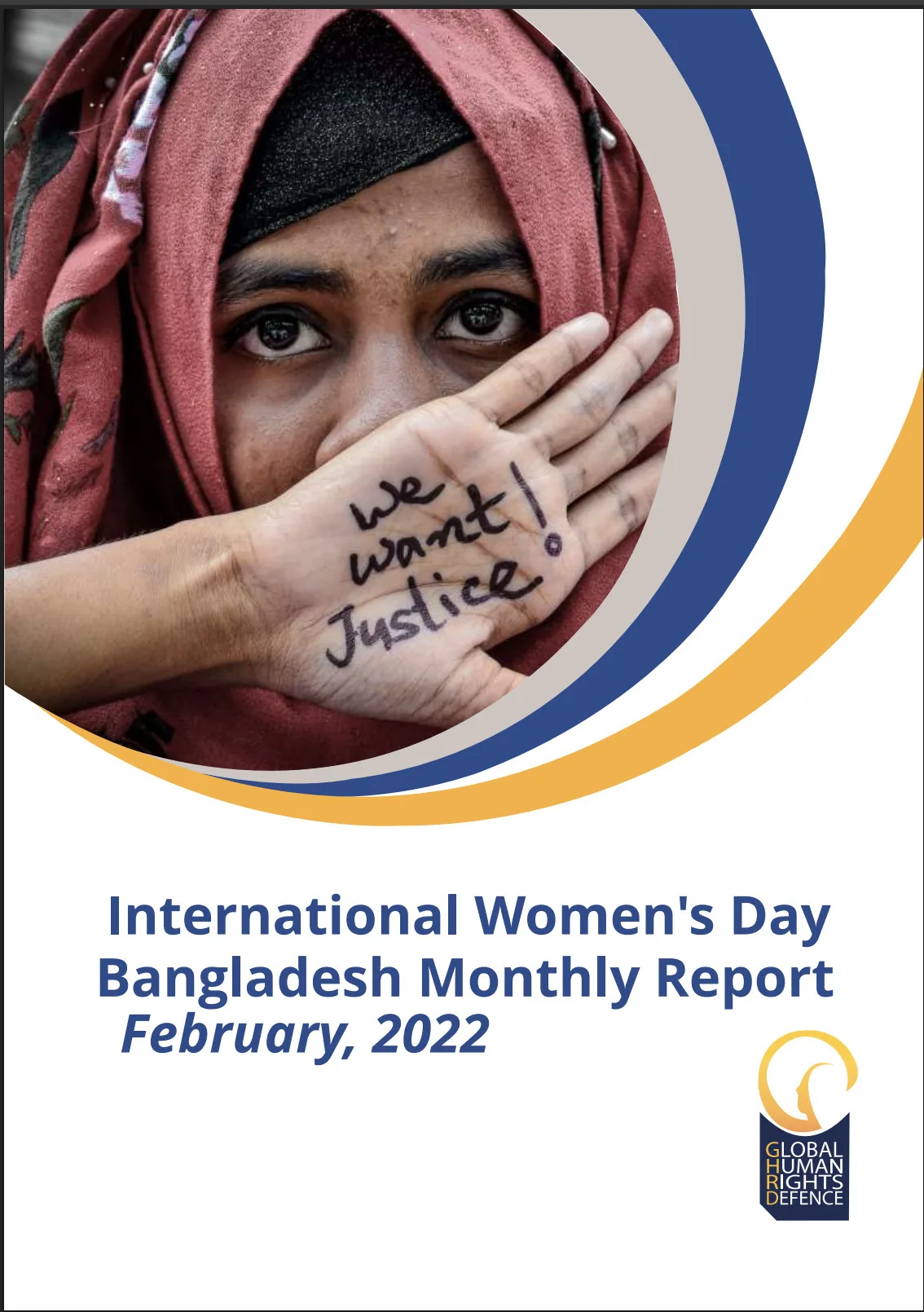
This report analyses a key issue within the existing legal and policy framework, highlighting gaps between formal regulations and their practical implementation. Despite established laws and guidelines, affected individuals continue to face challenges due to weak enforcement, structural limitations, and social factors. The findings underline the need for stronger accountability, effective implementation, and comprehensive reform to address the issue more effectively.
- GHRD Team
- 17 March 2022
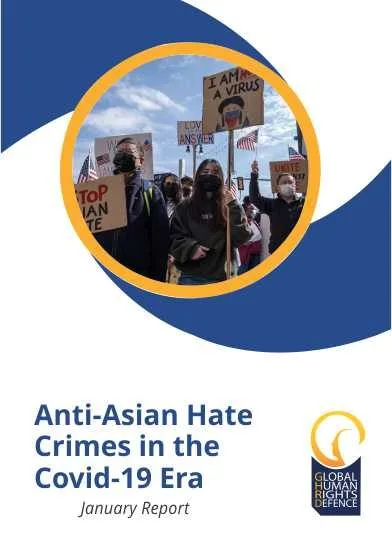
During the COVID-19 pandemic, anti-Asian hate crimes increased significantly across many countries, driven by fear, misinformation, and xenophobic rhetoric. People of Asian descent were subjected to verbal abuse, physical violence, and deadly attacks, often linked to the perceived origin of the virus. This report highlights key cases, examines social and political factors behind the rise in hate crimes, and reviews government responses, emphasizing the urgent need to address racism and protect affected communities.