
Reports
- Europe Team
- 19 September 2025
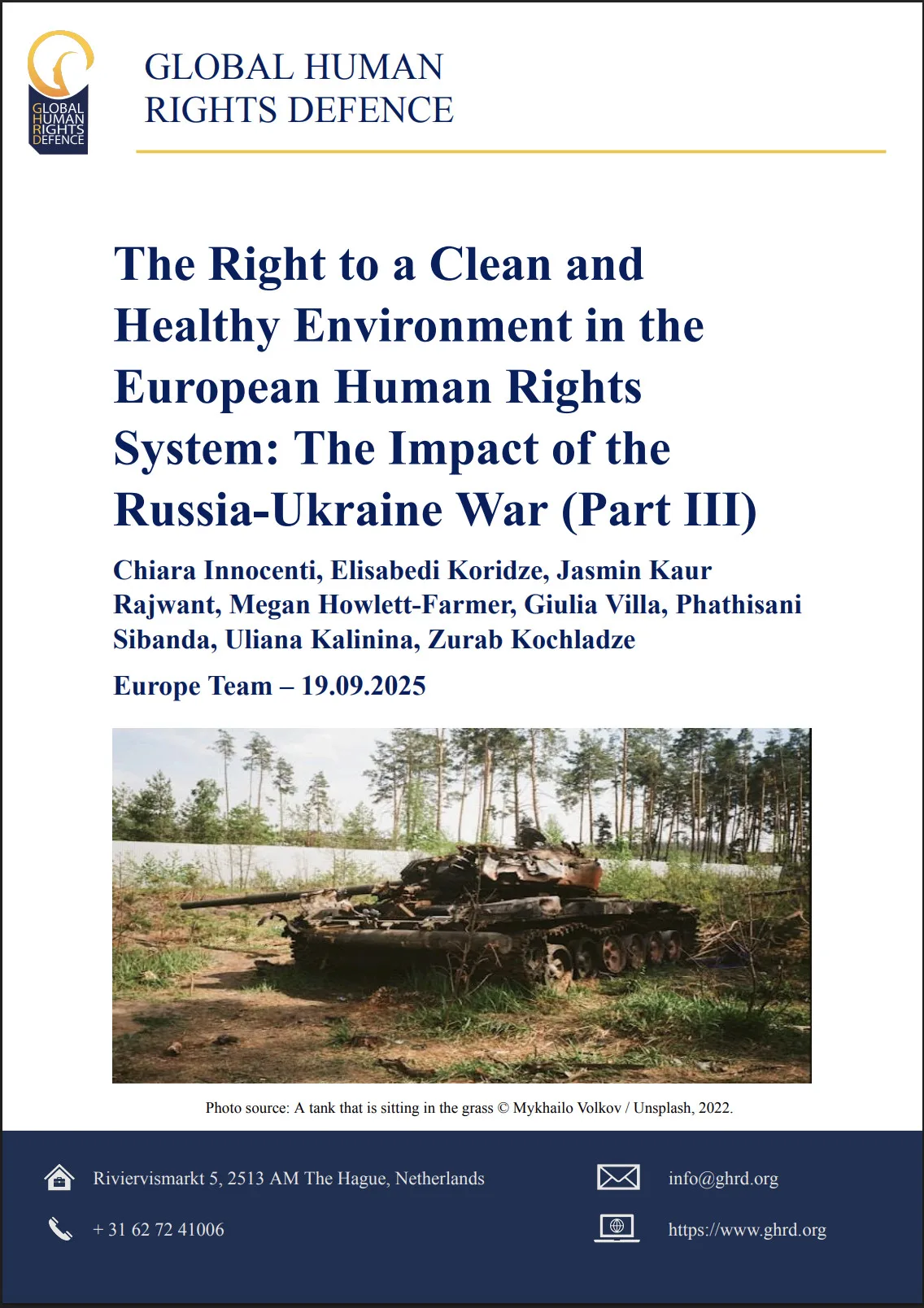
The ongoing war between Russia and Ukraine has shown how damaging contemporary warfare can be, especially to the environment. It has also shown the need to recognise the right to a healthy environment, and the need to strengthen the protection of this right within the International and European human rights systems.
- Europe Team
- 19 September 2025
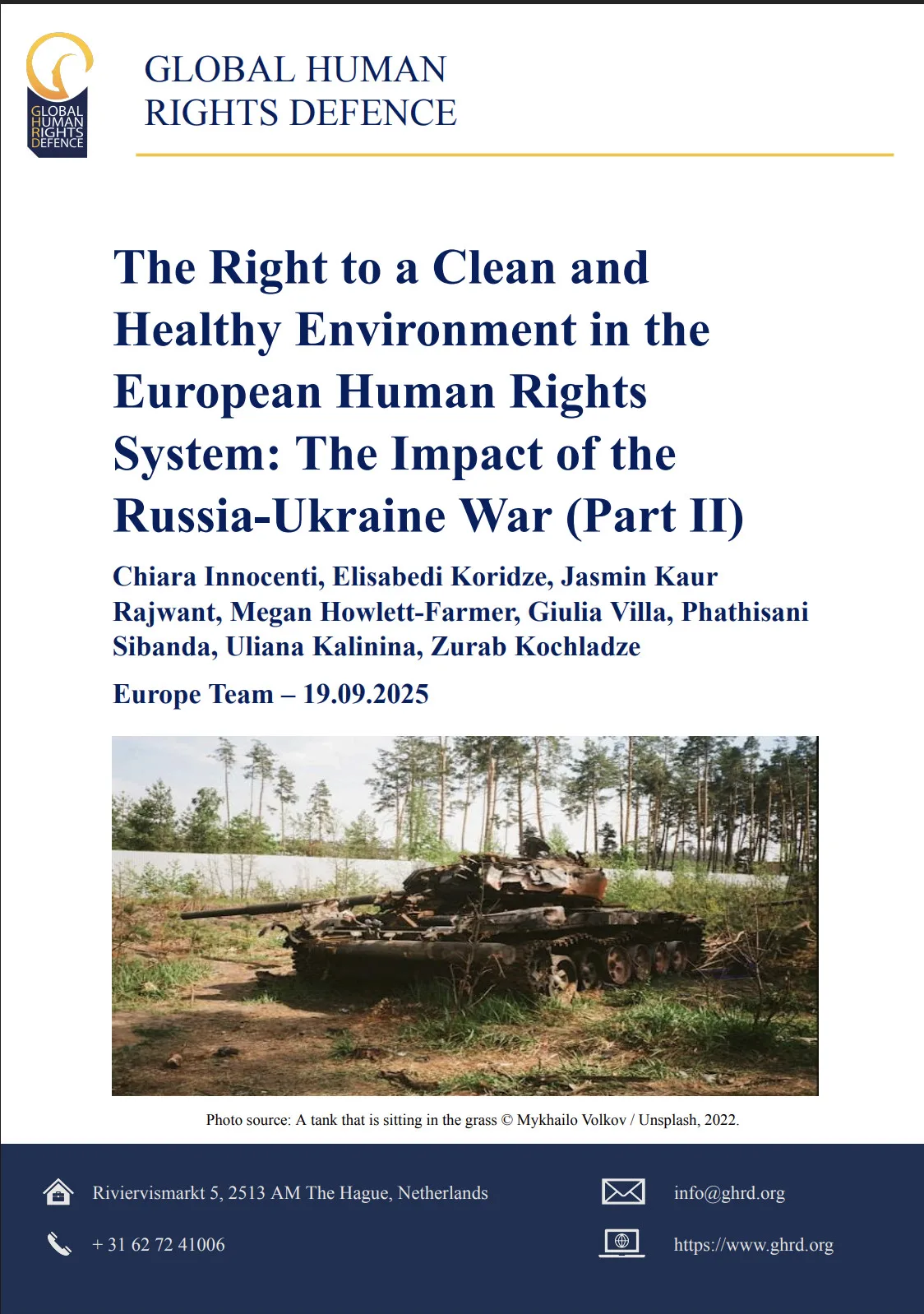
The ongoing international armed conflict between Ukraine and Russia and its effects on the environment and people show how important it is for the international community to recognise the right to a healthy environment. During the armed conflict, whether intentionally or accidentally, the environment gets damaged, and people living in those environments have to either leave their homes or live in an unhealthy and unsafe environment, which also damages their health and well-being.
- Europe Team
- 19 September 2025
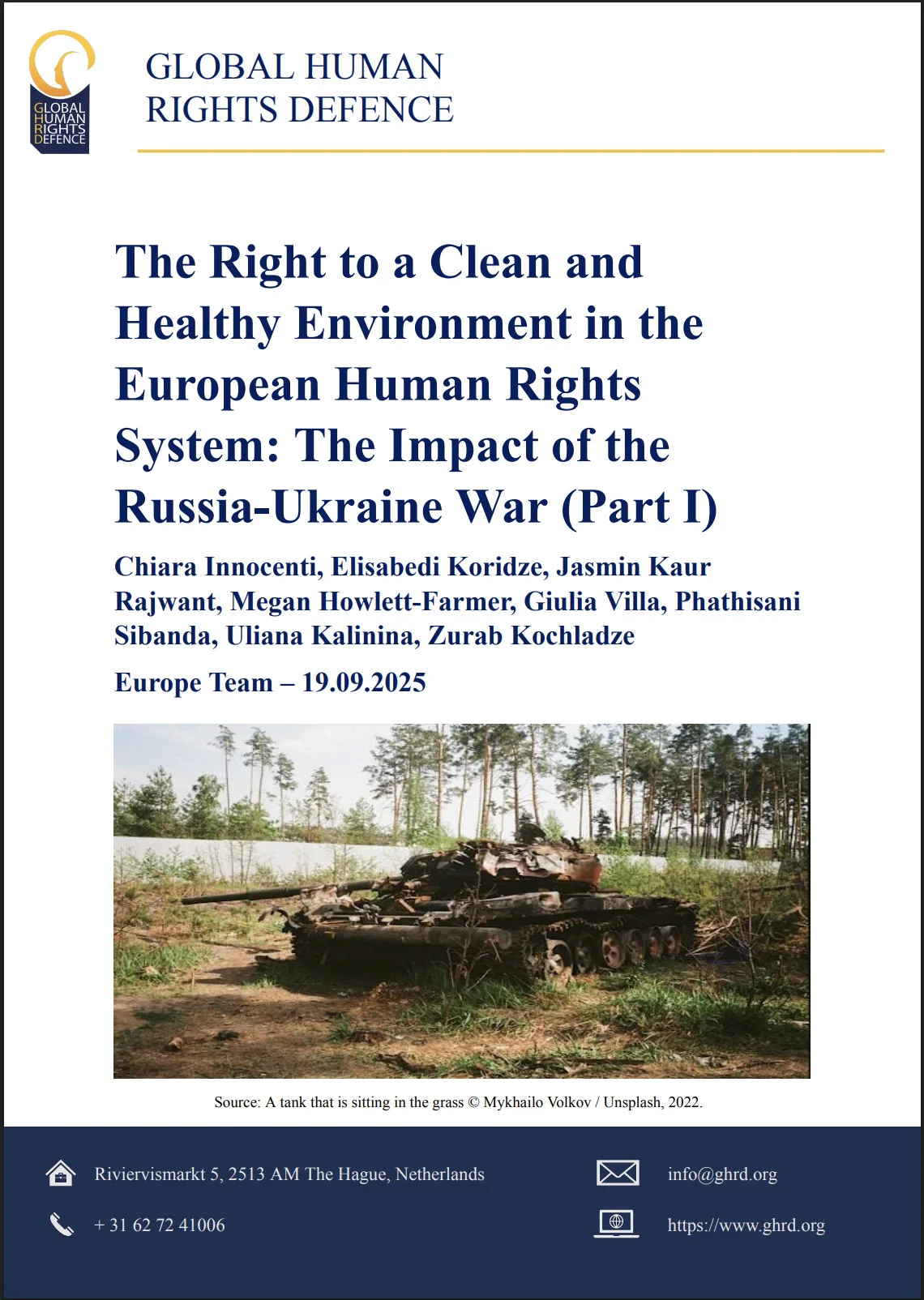
The right to a clean, healthy, and sustainable environment has recently become even more important within the international human rights system. This right is crucial because it is connected to the life, health, safety, and dignity of all people. When the environment is polluted, degraded, or destroyed, it is very hard for people to survive, especially in areas where there is an ongoing armed conflict. Unfortunately, this right is still not fully protected in legal terms, and even less so during armed conflict. Environmental harm that is caused by war is often ignored or seen as less urgent, even when it has a long-lasting and serious impact on civilians.
- GHRD Team
- 7 September 2025
In the 21st century, environmental degradation has become one of the most pressing challenges facing humanity, with multinational corporations frequently positioned at the center of this crisis. Activities such as large-scale deforestation, oil and chemical spills, unsustainable mining, industrial pollution and greenhouse gas emissions have caused widespread and often irreversible damage to ecosystems. Beyond environmental harm, these practices profoundly affect human communities, compromising health, food security, water access and the cultural integrity of populations particularly those in the Global South and indigenous territories. Despite the extensive and measurable harm, corporate accountability remains limited, with legal and regulatory frameworks often failing to deter destructive practices. Financial penalties are frequently treated as operational costs, while criminal liability for corporate environmental harm is rare, leaving victims with limited recourse.
Historically, corporate environmental accountability has been shaped by both domestic and international law, with significant gaps remaining while countries have established environmental protection statutes, enforcement is inconsistent and often influenced by economic interests. Internationally, efforts to regulate corporate conduct through legal instruments and regional measures have sought to impose standards of responsibility. Additionally, there is growing momentum to recognize ecocide the destruction of ecosystems as an international crime under the Rome Statute, which would allow for criminal prosecution of corporate entities and state actors responsible for large-scale environmental damage.
Corporate environmental crimes are not purely legal or technical issues; they are deeply intertwined with human rights, social justice and equity as vulnerable populations, particularly women, children, indigenous peoples and communities in resource-rich but economically marginalised regions, disproportionately bear the costs of environmental destruction. These harms range from displacement due to land degradation, contamination of water supplies and exposure to toxic substances, to the loss of traditional livelihoods and cultural heritage. The ethical imperative to protect these populations necessitates a holistic approach, integrating environmental stewardship with human rights protections, enforcing meaningful corporate due diligence and ensuring remedies that are both restorative and preventative. Many corporations pursue profit maximization with insufficient regard for ecological limits, often exploiting regulatory loopholes or the uneven enforcement of laws across jurisdictions. This dynamic underscores the need for systemic reforms, including stronger legal mechanisms, enhanced civil society oversight and greater corporate transparency and responsibility.
This report seeks to examine the multi-dimensional nature of corporate environmental crimes, considering legal, ethical, economic and social perspectives. By highlighting case studies, emerging international norms and potential pathways for reform, it emphasises the urgent need for transformative measures that hold corporations accountable while protecting both ecosystems and the human communities that depend upon them. Ultimately, effective corporate accountability is not just a matter of legal compliance; it is a moral and societal imperative to ensure environmental sustainability, human rights protection and intergenerational justice.
- Europe Team
- 31 August 2025
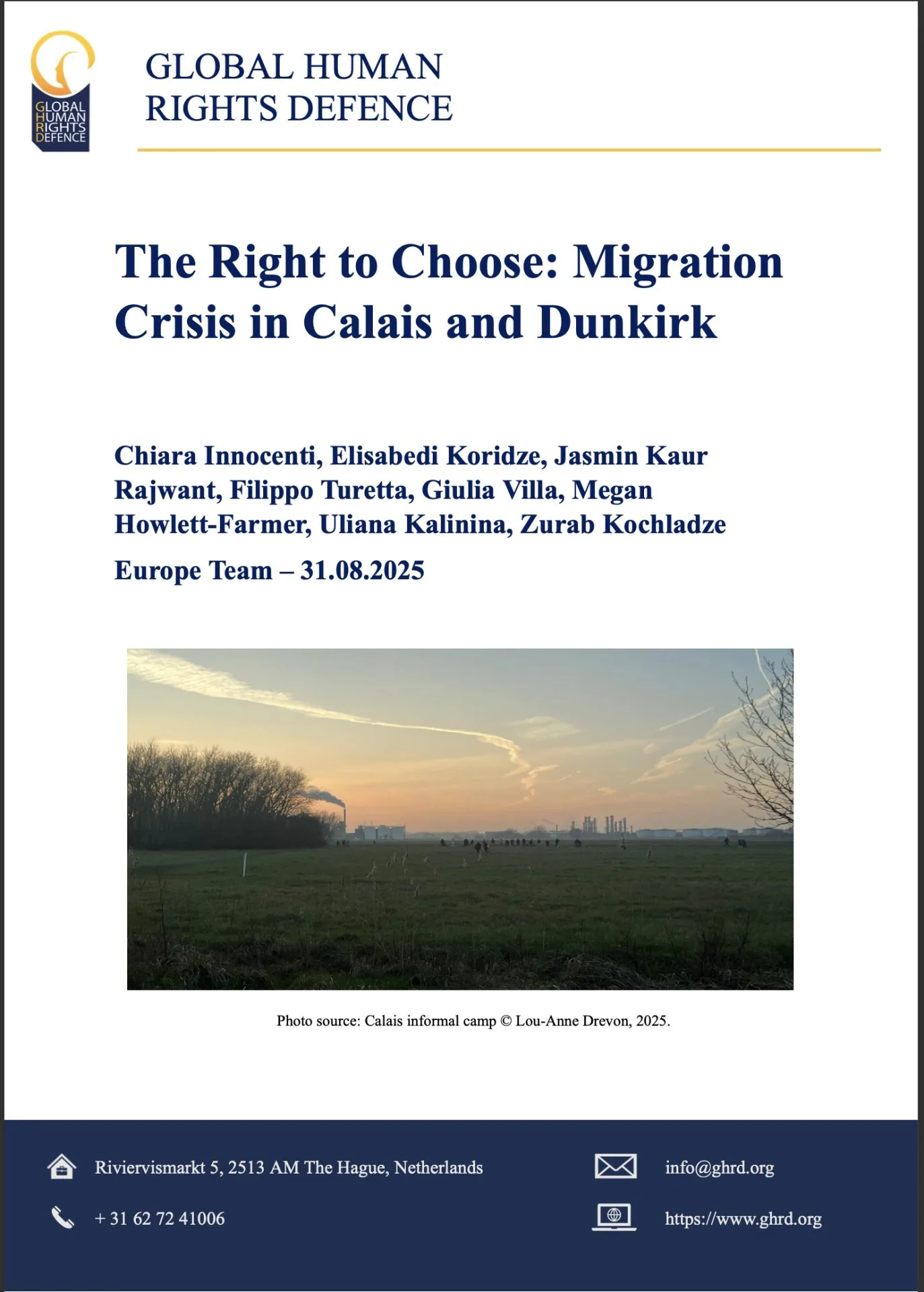
The migration crisis in Calais and Dunkirk is not something new. Its roots date back to 1999, when the first migrant centre was opened in Sangatte with the support of the Red Cross and the French government. By that time, many people were fleeing wars in Kosovo, Iraq, and Afghanistan, and they were provided with shelters in Sangatte. Later, when the shelter in Sangatte was closed, a new shelter appeared, including the so-called “Jungle”. It was first formed in 2009 and then again in 2014. After each demolition, a new camp would quickly grow again, but one thing that stayed unchanged during these years is the lack of human rights protections for the migrants and refugees who seek asylum. Even when the number of residents reached around ten thousand, the camp was never officially recognised as a refugee camp; therefore, it never received proper humanitarian aid.
- Asia Team
- 29 August 2025
- Drugs, Human Rights, International Justice
This report examines the human rights implications surrounding the implementation and consequences of the ‘war on drugs’ of former Philippine President Rodrigo Duterte, the domestic and international response leading to his arrest in the International Criminal Court, and the continuing pursuit of justice and accountability for victims of the extrajudicial killings.
- Asia Team
- 28 July 2025
The United States Agency for International Development (USAID) has been a central driver of humanitarian and development assistance in Southeast Asia, including refugee protection in partnership with the Association of Southeast Asian Nations (ASEAN) Member States (Thailand Business News, 2025). Through initiatives such as the Partnership for Good Governance, Equitable, and Sustainable Development and Security (PROGRESS) and the Partnership for Regional Optimisation within the Political-Security and Socio-Cultural Communities (PROSPECT), USAID has supported anti-trafficking frameworks, capacity-building for legal aid, and direct service delivery in refugee camps (U.S. Mission to ASEAN, 2023). In 2025, however, the United States (U.S.) government altered its foreign aid approach and is poised to ‘close down’ USAID (BBC News, 2025).
- GHRD Team
- 5 July 2025
International humanitarian law (IHL), also known as the law of armed conflict or the guidelines that govern the conduct of war, was established to mitigate suffering and human rights abuses for persons who are not directly involved in the conflict and to regulate the methods of warfare. As part of the wider framework of international law, IHL is binding for states that have ratified the various conventions and treaties in which the regulations are enshrined (ICRC, 2004).
- GHRD Team
- 5 July 2025
International humanitarian law (IHL), also known as the law of armed conflict or the guidelines that govern the conduct of war, was established to mitigate suffering and human rights abuses for persons who are not directly involved in the conflict and to regulate the methods of warfare. As part of the wider framework of international law, IHL is binding for states that have ratified the various conventions and treaties in which the regulations are enshrined (ICRC, 2004).
- GHRD Team
- 2 July 2025
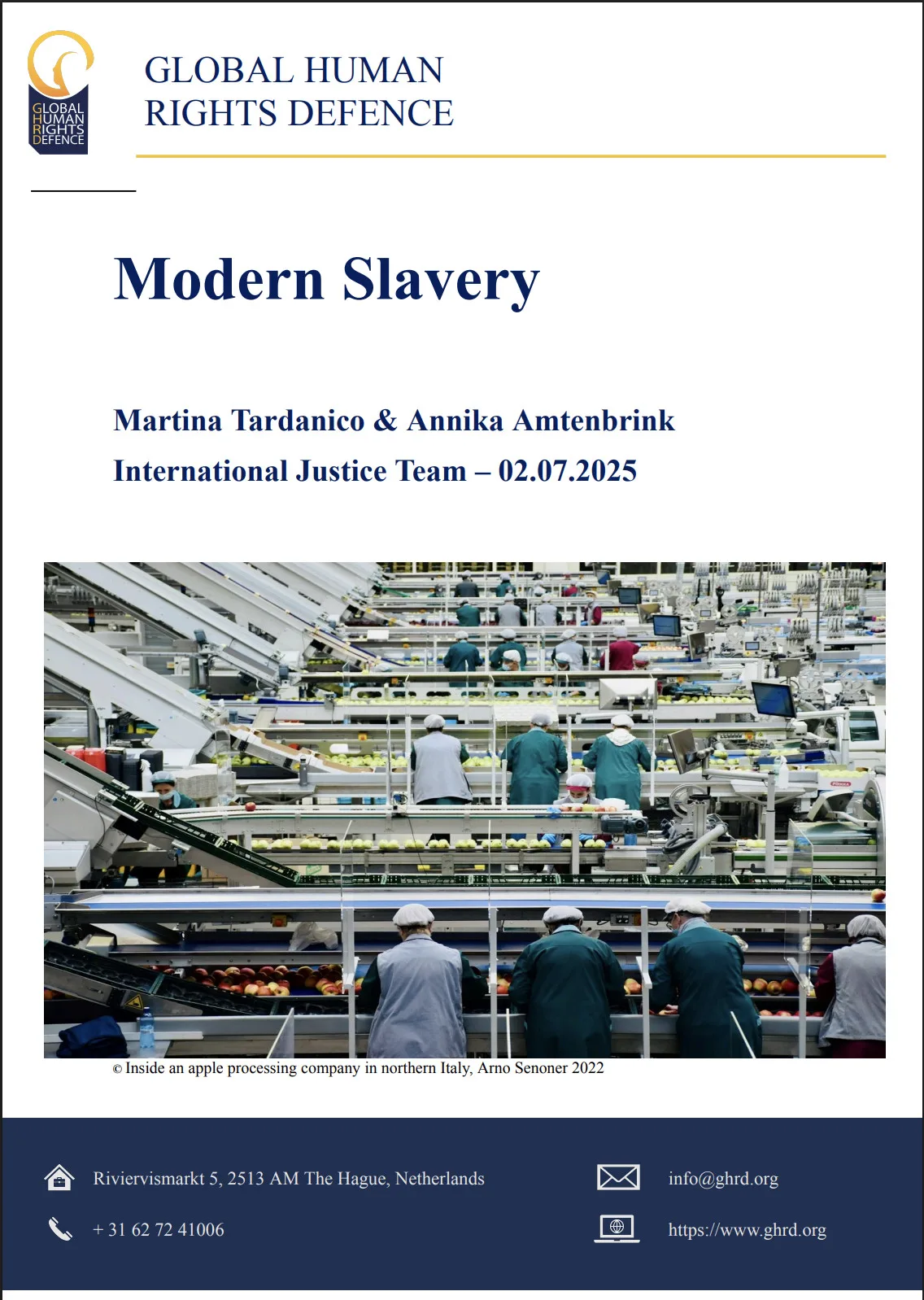
Modern slavery, a term often associated with past times, remains a pervasive and omnipresent prevailing issue in our contemporary world. Despite its often invisible nature in the Western world, modern slavery keeps being an issue for many people worldwide, depriving individuals of their fundamental freedom, human rights, and dignity. This complex issue appears in various forms like forced labor, debt bondage, forced marriage, and human trafficking, sexual slavery and forced prostitution, adapting and evolving with global economic and social shifts.