
Reports
- Asia Team
- 12 May 2025
2025 has, and will be facing, severe implications on human rights globally, from the decline of democracy under authoritarian regimes to suffering caused by conflict, discrimination, migration, and the climate crisis. These issues pose a grave threat to human rights worldwide and require grave efforts on the international front to be improved.

- GHRD Team
- 30 April 2025
International justice refers to a body of legal norms, institutions and processes developed to uphold fundamental human rights, prevent impunity and enforce accountability for gross violations of international law, particularly during armed conflict or periods of systemic repression. Emerging robustly after the horrors of World War II and the Holocaust, international justice found institutional expression in the Nuremberg and Tokyo Trials and more recently, through the establishment of permanent and ad hoc tribunals such as the International Criminal Court (ICC), International Court of Justice (ICJ), the tribunals for the former Yugoslavia (ICTY) and Rwanda (ICTR) and various hybrid courts. These structures are tasked with adjudicating war crimes, crimes against humanity, genocide and other serious breaches of international humanitarian law (Schabas, 2017). At the heart of this legal framework is the commitment to uphold universal human rights irrespective of geography, culture or regime type.
- Asia Team
- 27 April 2025
Voices Unveiled: Tracking Women’s Rights Across Southeast Asia and the Pacific offers an in-depth examination of the evolving status of women’s rights in Cambodia, Fiji, Indonesia, Malaysia, Papua New Guinea, the Philippines, Singapore, Thailand, and Vietnam. This report delves into both enduring and emerging issues shaping gender equality in the region, spanning legal reforms, social movements, cultural barriers, and institutional responses.

- Asia Team
- 21 April 2025
Globalisation and overconsumption have negative effects on millions of people working for clothing manufacturers. Subpar working conditions, low wages, and modern slavery situations are rampant in the factories where our clothes are made.Many people understand slavery as something society has evolved from, a very dark chapter in humanity that we collectively left behind. For around 400 years, the transatlantic slave trade saw 15 million people, of all genders and ages, sold to another person as property. While the practice of slavery, defined as a “condition in which one human being was owned by another”, seems rare nowadays, it is very much present in today’s society under a different label: forced labour. The International Labour Organisation (ILO) estimated in 2022 that 27.6 million people worldwide were in situations of forced labour.
- UN team
- 9 April 2025
On Friday, 4th of April 2025, the 58th Human Rights Council session in Geneva came to its end. The session was marked by many discussions and concerns about the situation of human rights all over the world – and GHRD was right in the middle of it. This Human Rights Council session was adventurous and at times overwhelming in its sheer number of issues and atrocities that continue to be committed, but it was also the most impactful and fruitful in GHRD’s history so far. This report seeks to give an overview over discussions we have participated in, people we have met and events we have organized, all in the name of protecting human rights worldwide.

- GHRD Team
- 8 April 2025
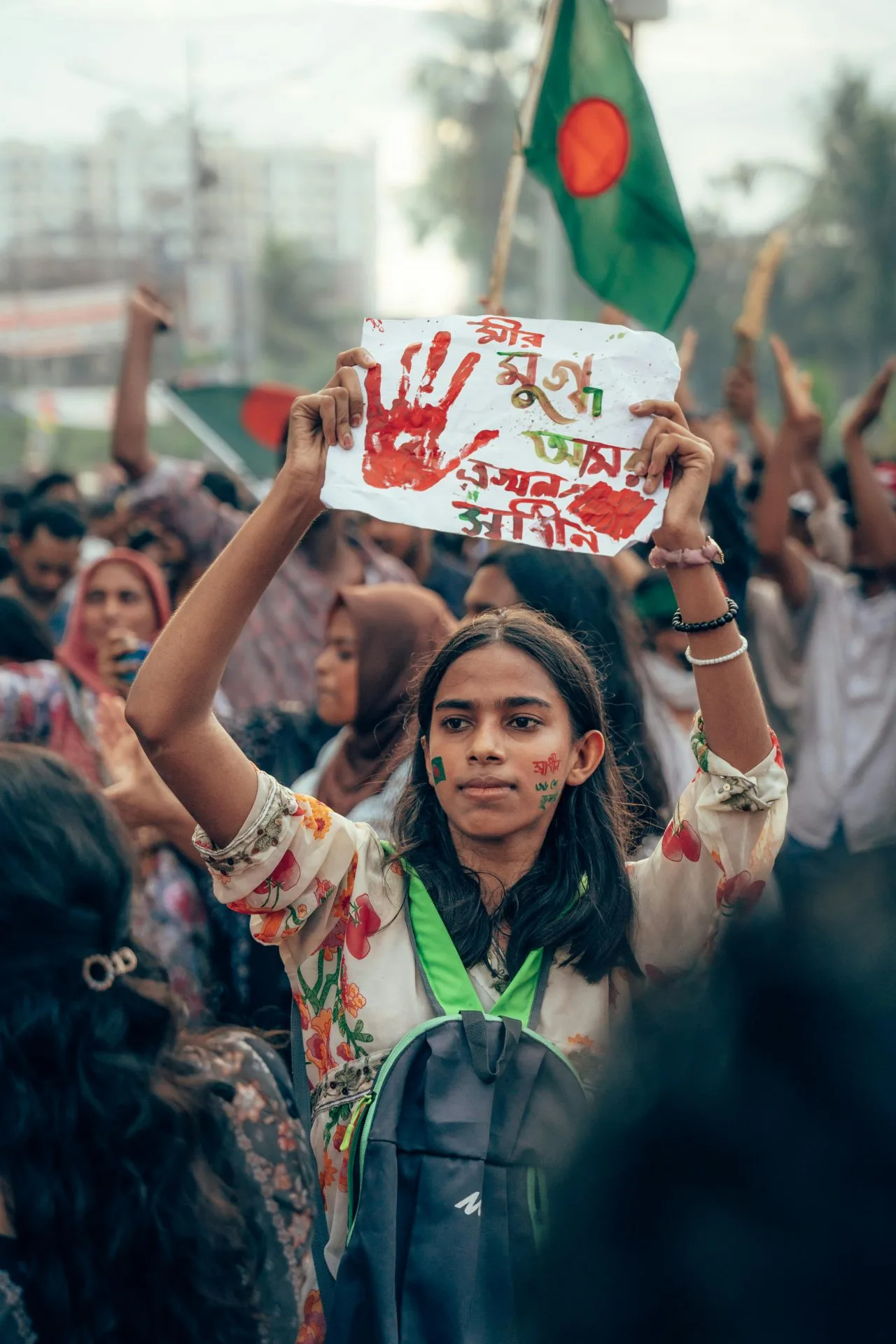
Bangladesh is at a turning point in its history as it deals with an increase in crime and political unrest after former Prime Minister Sheikh Hasina was overthrown by a student-led movement. Former Prime Minister Sheikh Hasina was overthrown in July 2024 as a result of widespread protests sparked by decades of systemic corruption, socioeconomic inequality, and an intense distrust of current law enforcement. Public outrage over a contentious public sector employment quota served as the starting point for the movement, which quickly expanded to include demands for extensive democratic reforms and accountability for widespread violations of human rights. Public dissatisfaction was heightened by the ruthless crackdown that followed under Hasina’s rule, which resulted in the detention of thousands of activists, journalists, and political dissidents.
- GHRD Team
- 8 April 2025
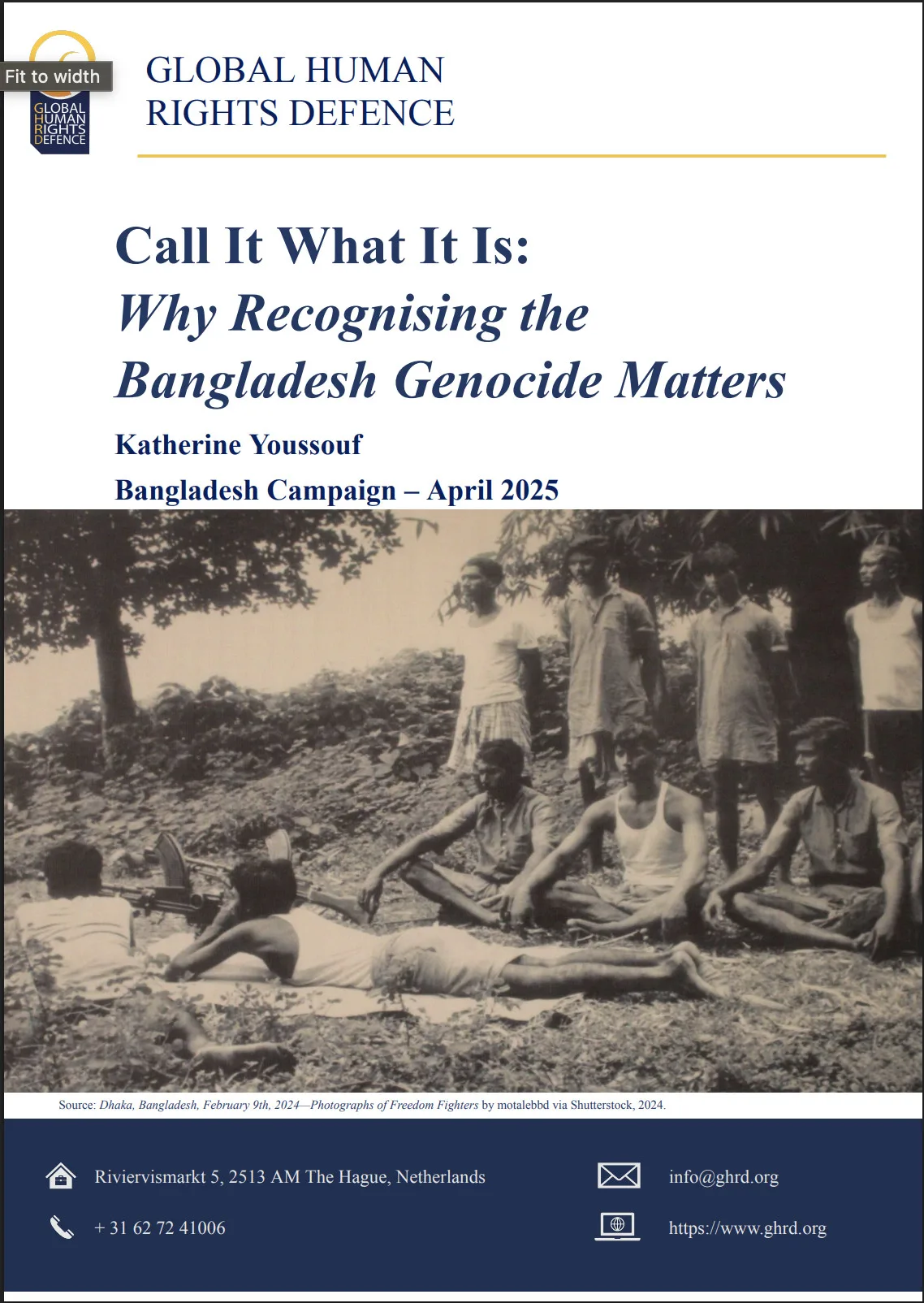
Genocide is marked by such unimaginable horror and devastation that, for some, it raises the question: why remember it at all? The answer is multifaceted. We remember it because doing so is important to recognising the truth of what has happened, and recognition is how we show empathy to others, secure justice for victims, preserve historical truth, prevent future atrocities, and uphold the rule of law.
- GHRD Team
- 5 April 2025
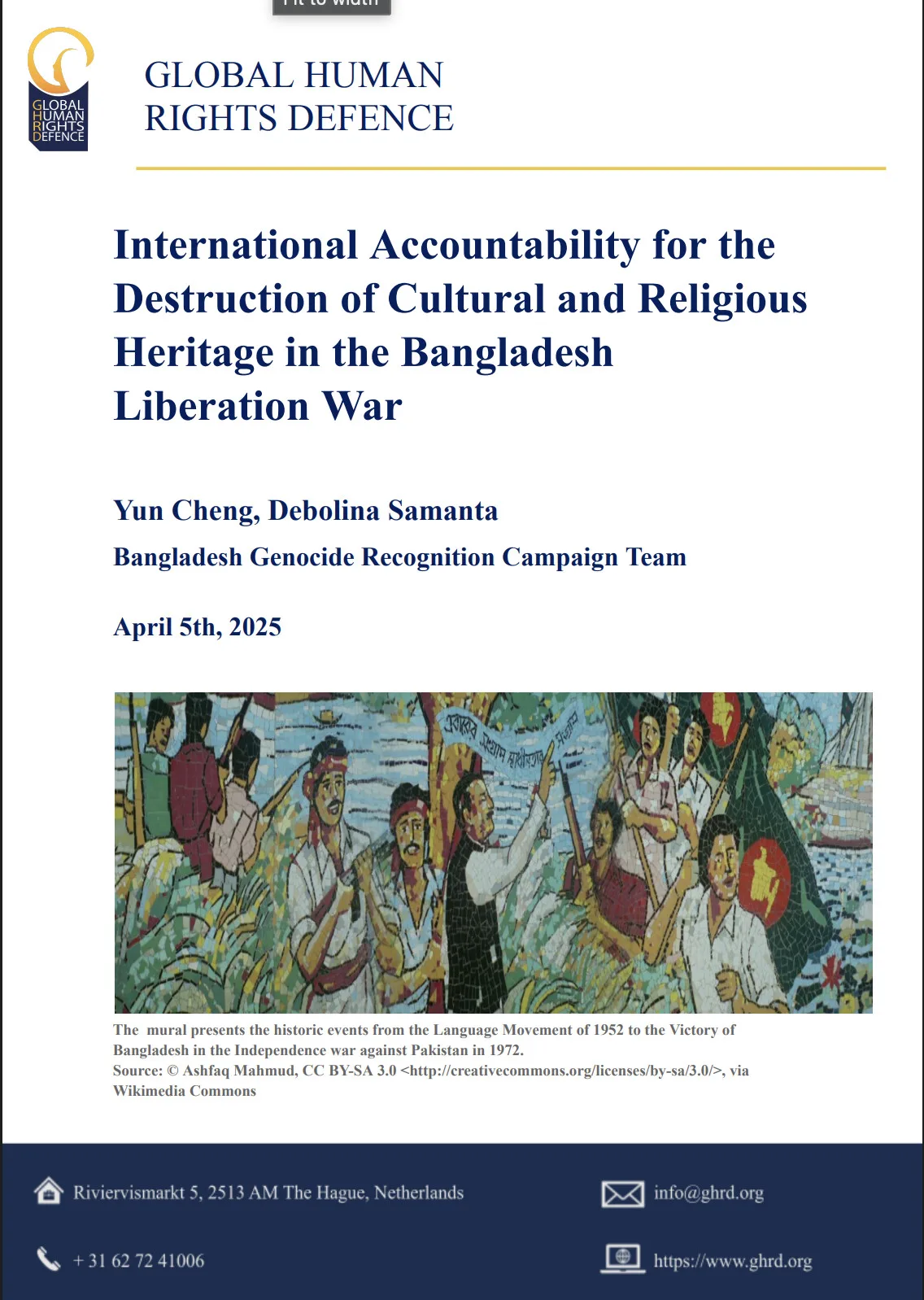
Bangladesh is currently undergoing a political and societal transformation. The country was formed in 1971 after a brutal genocide launched by the Pakistani military. The genocide that began on March 25th, 1971, resulted in the deaths of between 300,000 and three million people (Zakaria, 2019). Women and girls were also victims of violence and sexual assault with some experts estimating that between 200,000 and 400,000 were raped during the genocide (Begum, 2023). Similar to the partition of India, sexual violence was used as a military tactic. The stories of these women and girls remain largely unknown due to the stigma regarding sexual violence. Furthermore, the lack of recognition of the genocide allows for impunity of these crimes to continue. The effects of the genocide are still felt today in Bangladesh, made evident by the recent protests that gripped the country.
- GHRD Team
- 5 April 2025
In an era marked by armed conflict, mass displacement, climate collapse, and techno governance, international law finds itself in a profound identity crisis. Once hailed as the normative framework to prevent war, protect rights, and uphold global order, it now faces accusations of irrelevance, hypocrisy, and impotence. In 2025, what do we mean by “international law”? Is it a coherent legal system grounded in shared values, or a patchwork of norms invoked selectively by powerful actors? Traditionally, international law referred to treaties, conventions, and principles governing the conduct of sovereign states. But today, that definition feels increasingly inadequate. The global stage is no longer shaped solely by nation-states. Multinational corporations, billionaire technocrats, and transnational platforms exert influence that challenges the foundations of state-centric legal systems.
And states, even those states breaching international law, employ its logic to defend themselves against accusations (Bertamini, 2024). As power becomes more fragmented and legal norms more contested, International Law appears to oscillate between symbolic invocation and strategic manipulation. This paradox is particularly evident in how states and non-state actors alike selectively embrace legal language: not as a commitment to shared principles, but as a tool for legitimacy or deflection. The result is a global legal order marked by fragmentation, contested authority, and growing cynicism.
- GHRD Team
- 5 April 2025
They attack culturally significant properties as they believe that their enemies are culturally superior or inferior. With the destruction of cultural property, they wish to establish and exhibit unilateral political authority over “the others” by destroying their rich cultural heritage. (Rahim, 2018) An estimated 1.5 to three million people were killed between March 26th and December 16th, 1971 in occupied Bangladesh (Beachler, 2007). The loss of human life, the targeting of intellectuals, the suppression of Bengali identity, and the displacement of populations profoundly damaged the cultural heritage of Bangladesh during the 1971 Liberation War (Nishant & Hossain, 2022).