Monthly Research Reports

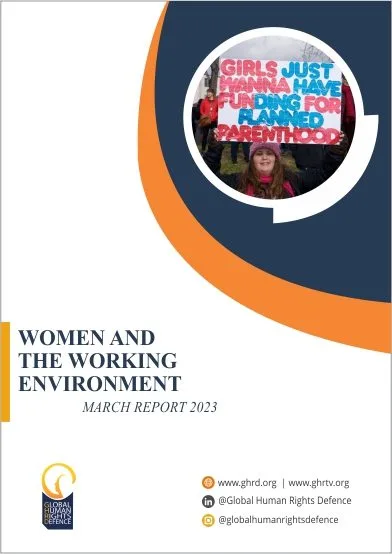
Women and the Working Environment

The present report explores the role of women in the working environment, focusing on academia and research, the role of women in leading positions, gender pay-gaps, and on maternity rights. Women play a role in the world economy and in the geopolitical system primarily as undervalued labourers — domestic workers, diplomats’ and politicians’ wives, and agricultural workers. It is important to underline that women represent half of the world population, and it is a lost opportunity to not fully
draw upon the talents and capacities of half of humanity.

The present report is divided into four different sections. The first section explores the gender gap in academia and research, emphasising how, despite the increased presence of women in the academia over the years, women still face significant levels of discrimination. The section continues exploring the gap between men and women in higher positions in academia, initiatives by the European Union (EU) to eliminate this disparity, and the discrimination that women face in higher education institutions.
Next, the report proceeds with the second section, where the realities of gender pay gaps are discussed alongside the factors contributing to the gender pay gap in Europe, its impact on women, and the actions taken to address this issue. Research shows that the gender pay gap is influenced by a number of factors, including occupational segregation, discrimination, and women’s disproportionate responsibility for caregiving. In fact, this “duty” is very important when it comes to maternity rights, which is the focus of the third section. While some countries in Europe regulate parental leave without distinguishing entitlements allocated to mothers or fathers, most states offer different regimes based on the parent’s , with paternity leave schemes only having been introduced in recent years, sometimes still considered as a taboo. This is resulting in the choice of part-time —and therefore lower-paying— jobs for women. Finally, the fourth section sheds light on media discrimination against women and the
impact of the COVID-19 pandemic on women’s opportunities to advance in their professional careers. In its final part, this unit discusses key events and initiatives adopted on the European stage aimed at boosting women’s access to leadership roles and their empowerment.
8th of March Report

International Women’s Day is celebrated annually on the 8th of March. This report explains why it
still remains important for us to celebrate this day, as a day to recognise the achievements women have
made to our societies in a patriarchal world.

Iran’s past, present and future in women’s rights : Research report

The state of women’s rights in the Republic of Iran has been the subject of national sorrow and
international scrutiny for the past decades, accelerated ever since the 1979 Islamic Revolution. But
the current “Woman. Life. Freedom” movement has gained momentum in unprecedented ways, as
the revolutionary and brave calls of women against restrictive policies have gained more international
attention than ever before. This report covers the significance of the current demonstrations by first
focusing on the historical context of women’s rights in Iran and how various factors have contributed
to their strengthening in some situations and their weakening in others.

Monthly Report on Philippines September 2022

This report collects information from various (local and international) organisations and media resources in order to present the situation of religious minorities and marginalised groups in the Philippines. In September 2022, the human rights of Indigenous groups, children, ethnic minorities, religious minorities, and women were affected. The present report intends to raise awareness on the situation of these groups in the Philippines and to encourage further protection measures on local and national levels as well as international cooperation.

The Interview of Nazley Sharif South Africa’s Shadow Deputy Minister of Women, Youth and Persons with Disabilities

The women’s rights team of Global Human Rights Defence aims to shed light on violations that have been left in the shadows while bringing encouraging developments and news to the stage. Women’s rights may seem to be an internal issue that takes place within the borders of countries. However, every advance or regression is important to all women around the world, thus proving that these issues are in fact transnational, international and universal.

The rise of populist discourse in Europe and its consequences. October 2022

There are numerous definitions of the notion of ‘Populism,’ a concept that is often difficult to capture.
In his review of Benjamin Moffit’s ‘Global rise of Populism’, Kaçar (2017) argues how the notion
of populism has changed over time, modifying its nature, contents and focal points, theorising
contemporary populism as a political style “encompassing an appeal to ‘the people’ versus ‘the elite’,
‘bad manners’, and crisis, breakdown, or threat”.

In Populism: A Very Short Introduction, Cas Mudde defines populism as “the idea that society is
separated into two groups at odds with one another – “the pure people” and “the corrupt elite”
(Molloy, 2018). Mudde also reported that
most successful populists today are on the right, particularly the radical right […] Politicians like
Marine Le Pen in France, Viktor Orbán in Hungary, and Donald Trump in the US, combine populism
with [anti-immigrant] nativism and authoritarianism (Mudde as cited by Molloy, 2018).

The present report aspires to shed some light on the increasing connections between the global
phenomenon of populism and the spread of racist sentiments, stressing how these two phenomena often
go hand in hand. Again, Mudde’s conceptualisation of populism is helpful for a better understanding
of the relationship between populism and racism. The opposition between the “pure people” and
the “corrupt elite” is at the very basis of the common discontent that commonly affects a nation.

The discourses of populists lie around the presence of external or internal others who engage in the
plunging fortunes of the “honest people” (Rattansi, 2020). It is in this context that racism has its roots:
the idea that minorities, immigrants, refugees, economic migrants, or LGBTQIA+ communities are
behind a nation’s discontent, resulting in the creation of “policies, behaviours, rules, etc. that result in
a continued unfair advantage to some people and unfair or harmful treatment of others based on race”
(The Cambridge Dictionary).

After this brief introduction to the concept of populism and racism, the present report starts with the
regions of eastern and South-Eastern Europe, where the presence of populists and the spread of racism
is rooted in the history of the regions themselves, as they were divided into numerous multi-ethnic
empires. Later, the second section discusses Southern Europe, where the populist discourses of Italy
and Greece are explored in connection with the notion of racist behaviours. Section three sheds light on
South-Western Europe, where Spain and Portugal developed far-right populist factions very recently
– unlike other European countries that have had far-right parties since the 1980s. Afterwards, the
chapter on Western Europe explores the spreading of right-wing and populist governments amongst
countries such as France, the United Kingdom, Ireland, the Netherlands, and Belgium. The fifth
section investigates how central European countries such as Hungary, Poland, and the Czech Republic
– i.e.: post-communist areas) are witnessing significant levels of democratic backsliding, with many
attributing it to the spread of populism. Lastly, the report delves into the increase of populist as well as
racist tendencies in Northern Europe, with a particular focus on Finland, Sweden, and Norway.

Extensive Country Report on Child Marriage in Indonesia October 2022

Indonesia is among the top ten countries with the highest rates of child marriage under the age of 18 years. Indeed, one out of nine girls in the country gets married before their 18th birthday (UNICEF, 2020). It’s concerning since studies have shown that girls who get married before the age of 18 are four
times less likely to graduate from secondary education (UNICEF, 2020). As mentioned by Nadiem Makarim, Minister of Education and Culture, in the National Seminar in 2021, “child marriage can deprive the rights of and opportunities for children to access quality education and get decent work
to build a prosperous life” (Dewi & Katriana, 2021). Additionally, it can be seen that girls who marry
before the age of 18, tend to have fewer decision-making powers in the household as well as are more
exposed to experiencing domestic violence. On top of that, there are many physical and mental health
issues that arise from child marriage. For example, pregnancy and the fact that childbirth is the leading
cause of death for girls between the ages of 15 and 19 (UNICEF, 2020).

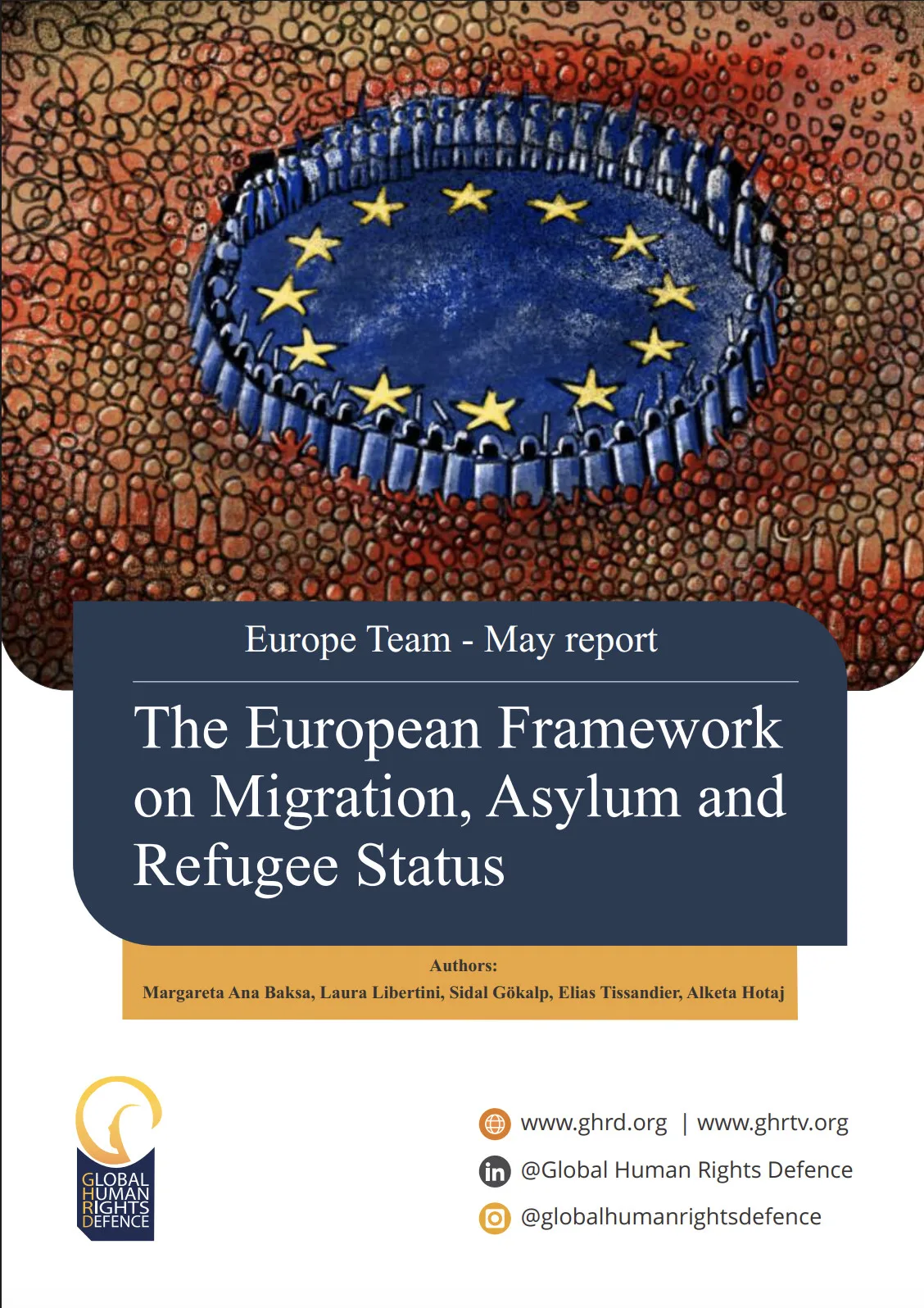
“Monthly report May: The European Framework on Migration, Asylum and Refugee Status”

Mediterranean (European Commission, 2015). Following the European Agenda, the European Commission issued a Communication to promote a reform of the common European asylum framework, intending to develop a more fair system that will offer systematic, secure, and sustainable pathways to Europe for non-EU nationals needing protection (European Commission, 2016). In 2017, the European Parliament proposed a reform on the Dublin III regulation, which determines the European member country responsible for processing requests for international protection (European Parliament, 2020).

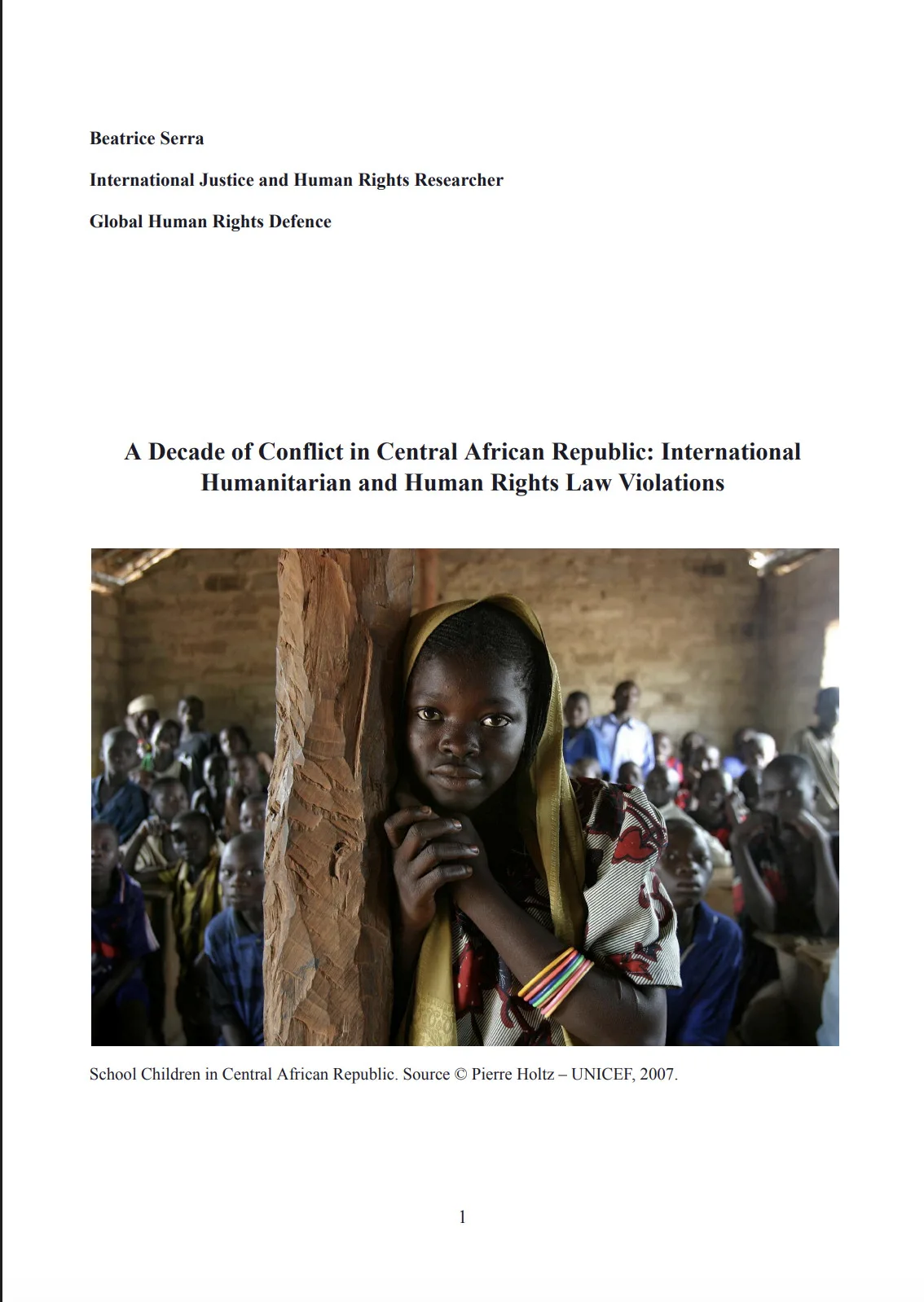
A decade of Conflict in CAR – Internatonal humanitarian and human rights law violations

The corruption and rebels’ repression perpetrated in the Muslim dominated northern territories of the Central African Republic (CAR) during Bozizé rule, from 2003 to 2013 paved the way for the ongoing conflict dominating the country (Lechner, 2022). Since the year 2013 an increase in ethnic tensions and violence have sharply deteriorated the already unstable security apparatus of the Central African Republic. The instability dominating the country has for long seen the majority Muslim Seleka coalition opposing the Anti-Balaka armed group of Christian fighters (Center for Preventive Action, 2022)

6th GHRD International Film Festival: Human Trafficking Edition
Submission Deadline: 9th August 2026