Monthly Research Reports

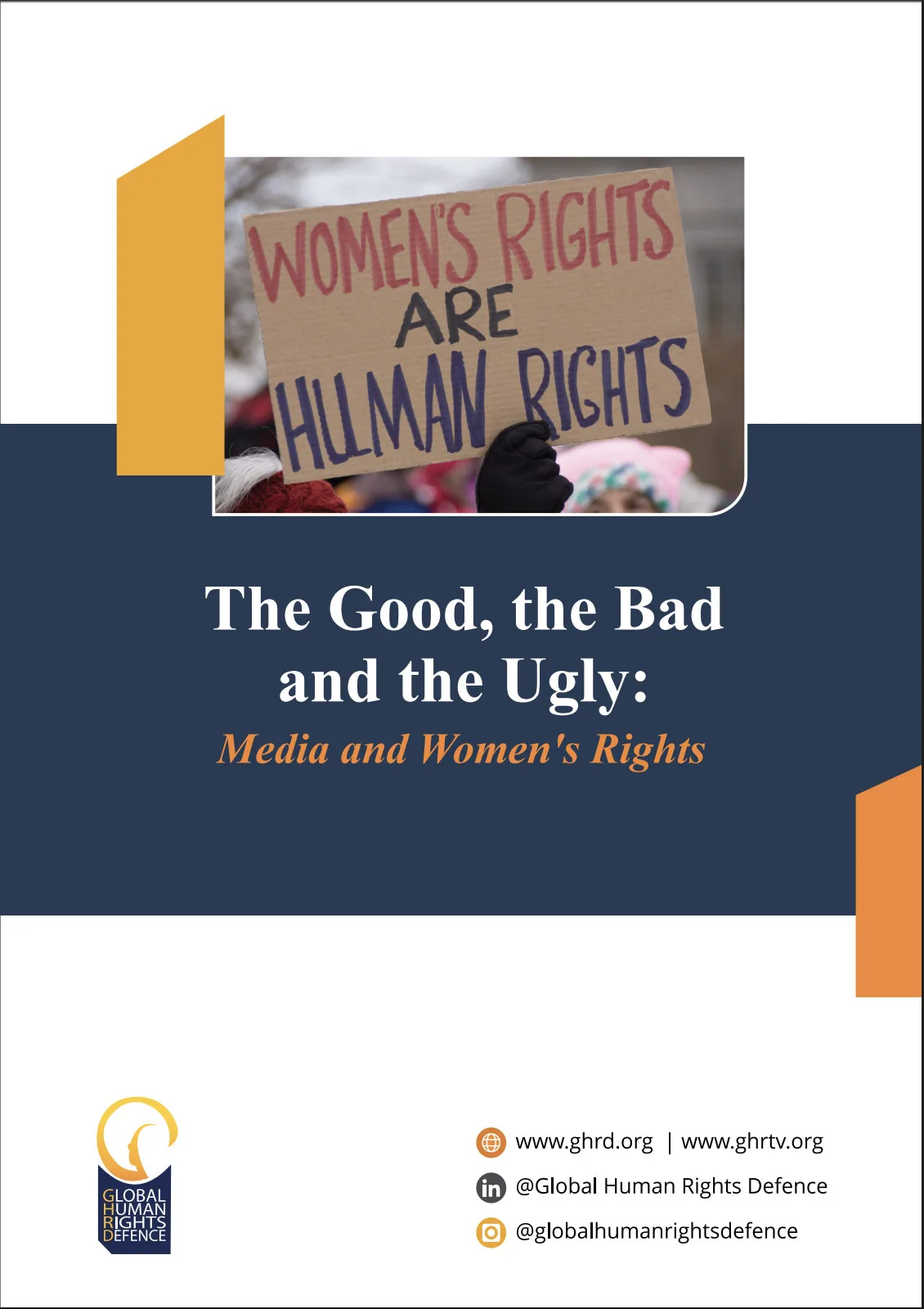
The Good, The Bad and The Ugly: Media and Women’s Rights

As technology has advanced greatly in the past century, the scope of media has expanded as well. Media encompasses various components of mass communication in society, from its beginnings in print media and publishing, to photography, broadcasting, news media, digital media, and more. As such, the media has and continues to play a significant role in shaping societal perceptions. It is commonly referred to as the fourth estate or power due to its explicit and implicit role in framing political issues and discussions. Alongside the evolution of media, various socio-political movements have also taken place, such as the women’s rights and feminist movements. Though the two movements are at times very interconnected and used interchangeably, it is important to distinguish between the two; while the women’s rights movement revolves around the legal and institutional aspect focusing on rights, feminism is the broader movement that includes women’s rights but goes further to examine ideologies such as sexism, patriarchy, oppression, and gender.

Breaking Barriers : Empowering and Advocating for Women in STEM

The women’s rights team at the Global Human Rights Defence (GHRD) aims to highlight violations
in women’s rights as well as champion them to increase their implementation globally. The broader
themes focused on in this interview report are gender disparity, equal opportunity, and discrimination
of girls and women in the fields of science, technology, engineering, and mathematics (STEM) given
their historical male dominance and lack of female participation. To gain first-hand experience and
insight into women’s experiences in education and working in STEM, the women’s rights team at
GHRD interviewed Mylène Brown-Coleman, a final year Artificial Intelligence student at the Vrije
Universiteit Amsterdam (VU Amsterdam). She is deeply committed to her work in the field of Artificial
Intelligence, Software Development, and empowering women within Computer Science.

Early in her career, Mylène gained hands-on experience as a Software Testing Intern at Solera. She
then took a leap into the data analysis domain, joining Morningstar as a Data Analyst Intern. Her
professional journey also led her to Adyen, where she served as a NextGen Desktop Support Engineer,
offering technical support and further sharpening her problem-solving skills.

In academia, Mylène has made a significant impact at VU Amsterdam, where she held multiple
teaching assistant roles. Through these positions, she had the opportunity to share her insights on
Data Structures & Algorithms and Intelligent Systems with fellow students. She is also Vice Chair
and co-founder of the diversity committee within her study association and pioneered for the first
hackathon for women at a Dutch university. Mylène continued to broaden her experience by securing a
position as a Software Engineer Intern at Momentive.ai. Currently, she is applying her AI and software
development expertise as an Artificial Intelligence Intern at the City of Amsterdam.

In addition to her rich professional experiences, Mylène has been recognis ed with several
honours, including the VGHC EMEA Student Scholarship, the Nutanix Heart Women in Technology
Scholarship, and the Generation Google Scholarship. These awards have celebrated her academic
prowess, leadership skills, and commitment to community involvement.

Mylène Brown-Coleman’s journey paints a picture of a dedicated and ambitious individual making
strides in the world of AI and software development. Her consistent growth and contributions to both
academia and industry are testaments to her passion and drive in this evolving field.

At the Intersections of Women’s Rights : Examining the Rights of Marginalised Women

Since the 19th century, the women’s rights movement has championed the rights and entitlements of women and girls all over the world. The movement has advocated for a number of rights, such as the right to vote and to hold public office, freedom from sexual violence, equal pay, bodily and reproductive autonomy, access to education and property ownership, and overall gender equality. Great advances have been made for women and girls in the decades since.

However, the women’s rights movement has historically failed to acknowledge the intersectionalities of so many women, such as race, sexuality, gender identity, age, migration status, and so on. As such, it is imperative to move away from the mainstream, middle class and white-dominated feminist movement which has often excluded women of colour and those of a less advantaged socioeconomic status, and to instead broaden the scope of inclusion to all women, regardless of their background. The path forward must include the experiences of all women, and ensure that rights are guaranteed for all, not just a select, privileged few. As the American writer and activist Audre Lorde stated, “I am not free while any woman is unfree, even when her shackles are very different from my own.”

The need to shed light on the grievances of those groups of women who have historically been, and continue to be, underrepresented by the traditional feminist movements, is unquestionable. This is especially true for women belonging to the more vulnerable subsets of society, whose demands for change are often unheard. As such, the purpose of this report is to illuminate the experiences of those women: migrant women, women with disabilities, transgender women, and sex workers, for instance.

While women around the world have many of the same qualms against sexism, misogyny and the patriarchy, the specific and sometimes distinct needs of different groups of individuals must be addressed. It must always be remembered that, for the women’s rights movement to truly achieve equality for all, it is important to be intentional about inclusion and look at women’s rights through an intersectional lens in order to advance the rights of all women.

Online GBV : implications, developments and the legal framework

The achievement of gender equality and the empowerment of women and girls is a priority in today’s society, as adopted in Sustainable Development Goal 5. The realisation of this goal also implies the assurance of equal and safe participation in, as well as access, of women to media and technology.

However, the increase in access to the participation of women online creates new challenges, includ- ing their vulnerability to online violence. These new forms of violence against women are referred to as online gender-based violence (OGBV). In summary, it consists of every form of violence that is directed against women and carried out in the digital sphere, which may take different forms, such as cyberstalking and cyber harassment.

The present Report aims at providing a comprehensive overview of the contemporaneous issue of online gender-based violence. For such means, in the first chapter, the problem will be investigated, addressing the concept of OGBV and the main aspects surrounding this issue. Furthermore, it will explain the different forms that OGBV can take, as well as who is affected by such violence, and the consequences it may lead to.

Chapter 2 moves to the examination of the effects of the COVID-19 pandemic, since the restrictions imposed due to the pandemic were a factor that contributed to an increase in violence against women and the use of technology, therefore directly impacting OGBV.

In Chapter 3, the forms of the legal protection of women from OGBV will be analysed, mainly through an analysis of the international legal framework. This chapter will also briefly address the means of protection provided in regional systems and domestic legislation, which are also essential factors for the effective combating of OGBV.

The fourth and last chapter moves to the explanation of the main challenges faced regarding the pro- tection of women from OGBV, including the lack of specific legislation and the absence of adequate training in judicial systems. Lastly, it elaborates recommendations for different stakeholders involved in the issue of online violence against women, aiming at contributing to the efficient prevention and suppression of OGBV.

Women Human Rights Defenders : Compounded Violence, Limited Protection

Women Human Rights Defenders (WHRDs) play a fundamental role in the promotion of human rights
worldwide, and their importance is particularly demonstrated in advocating for specific rights, such
as women’s rights, gender equality, and sexual and reproductive rights. Nonetheless, WHRDs face
several challenges; besides the issues common to Human Rights Defenders (HRDs), including verbal
and physical attacks, threats, torture, forced disappearances, murder, and arbitrary detentions, WHRDs
are faced with additional obstacles, such as gender-based violence.

Against this backdrop, the present report will be divided into two main parts. Firstly, it will identify
and explain the challenges and violations faced by WHRDs, and how they differ from the violations
faced by HRDs generally. In the second chapter, the report addresses the forms of protection available
in international law for WHRDs, and lastly, based on the analysis conducted, the report provides
recommendations with the intent of ensuring that WHRDs can carry out their work safely and effectively.

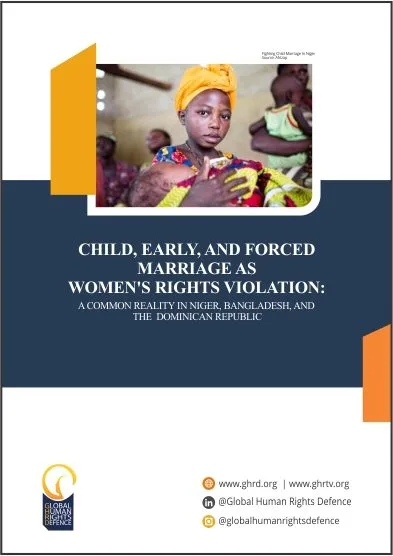
Child, Early and Forced Marriage as Women’s Rights Violation : A common reality in Niger, Bangladesh and the Dominic Republic

Achieving gender equality among girls and women around the world is a priority, yet an ambitious

goal that is far from being achieved by the year 2030. Among the numerous violations and gender-
based violence experienced is Child, Early, and Forced Marriage (CEFM), a fundamental violation of

human rights that has profound implications for the development, safety, and well-being of women
and girls around the world. It is estimated that the total number of girls married in childhood stands at
12 million per year (UNICEF, 2022), and while girls are disproportionately affected, boys can also be
victims.

CEFM is intrinsically related to social norms and gender constructions, and it is caused by a range of
factors, such as poverty and a lack of education, and is exacerbated by conflict, humanitarian crises,
and climate change. However, its prevalence is substantially varied across different contexts, regions,
and countries. On a global scale, today, more than half a billion women and girls were married in
childhood. Sub-Saharan Africa and South Asia have the highest rates of child marriage, and in Latin
America and the Caribbean, the levels are equivalent to those from 25 years ago (UNICEF, 2021/b).
The present report aimed to research and analyse the country with the worst data regarding child
marriage in each of the above-mentioned regions. According to the “Child Marriage Atlas” of the NGO
Girls Not Brides, in Niger, located in Sub-Saharan Africa, 76 percent of women aged 20–24 were first
married or in a union before they were 18 years old, making Niger the country with the highest rate of
child marriage in the world. In Bangladesh, located in South Asia, child marriage rate is 51 percent,
the highest in the region. Finally, the Dominican Republic, in Latin America and the Caribbean, has 36
percent (Girls Not Brides n.d/d).

The current report intends to provide an in-depth review of forced marriage and its causes, consequences,
and prevalence worldwide, seeking to inform and raise awareness about the seriousness of the issue.
Thus, it is organised around two main chapters. Chapter 1 aims to address the problem of forced
marriage through its definition, international mechanisms, and national legislation. It will then move
to an examination of the causes and consequences of CEFM.

Chapter 2 will provide a comprehensive overview of Niger, Bangladesh, and the Dominican Republic.
The countries’ cases will be analysed in terms of the prevalence of the issue in the country, its causes,
consequences, and challenges, and finally, what efforts and actions, in terms of policies and projects,
are taken by the country’s government to combat and eradicate CEFM.

Women’s Rights in Natural Disasters : A Gendered Perspective

Natural disasters affect all members of society, however, it is a misconception that their impacts are
indiscriminate. Groups of people who are marginalised are more vulnerable, either socially, economically,
culturally, politically, or institutionally, being impacted in more severe ways (Dagousset, 2020). Among
these vulnerabilities, it is widely observed that natural disasters possess huge gendered consequences.

The challenges of expecting women to prevent war, build peace, and represent the entire female body

The principle of equality was enshrined in Article 1 of the Charter of the United Nations in 1945.
The terms of reference of the United Nations Commission on the Status of Women, formulated at its
first session in 1947, emphasised that its task was to “prepare recommendations and reports for the
advancement of women’s rights in the political, economic, social and educational fields.” One of the first
results of the Commission’s work was the 1952 Convention on the Political Rights of Women, which
explicitly states that women “shall be admitted, on equal terms with men and without discrimination
of any kind, to all public elections established by national law” (Article 2) and “shall have the right to
hold public office and to exercise all public functions established by national law” (Article 3). Women
today have the right to vote and hold office in almost every country in the world. However, relatively
few women have been elected to national parliaments through the democratic process, and even fewer
have reached top positions (Gierycz, 1999), although various analyses have shown the positive impact
of women’s participation in decision making processes regarding conflict prevention and resolution.

Women and Girls in Refugee Settings

The 1951 UN Refugee Convention, the first international legal document relating to asylum and
migration, provides for a definition of what a refugee ought to be. Interestingly enough, this definition
is defined in the masculine as a person who, “owing to well-founded fear of being persecuted for
reasons of race, religion, nationality, membership of a particular social group or political opinion, is
outside the country of his nationality and is unable or, owing to such fear, is unwilling to avail himself
of the protection of that country; or who, not having a nationality and being outside the country of
his former habitual residence as a result of such events, is unable or, owing to such fear, is unwilling
to return to it.”1

While the inclusion of the term ‘sex’ was discussed in the list of grounds for non-
discrimination in Article 3 of the Convention, the delegates decided against it as, like pointed out by

the British delegate at the time, “the equality of the sexes was a matter for national legislation”2
and the
inclusion of gender might not coincide with national legislations.3 This was further underlined by the
UN High Commissioner for Refugee at the time, Van Heuven Goedhart, who pointed that the inclusion
of sex/gender in the discriminatory grounds was not necessarily as he “doubted strongly whether there
would be any cases of persecution on account of sex”.4
This absence of gender approach in the asylum framework was a large miscalculation on the part of the
delegates as it has been largely shown since that women and girls face disproportionate struggles
in seeking asylum. However, the mention of the specific struggle faced by women and girls in refugee
settings was only brought up decades later thanks to the work of NGOs and academics in the late
1980s, early 1990s.5

They pointed out that, although no one argued that women could be refugees, the
definition was applied in a way that ignored some of the persecution faced by women. Spijkerboer
notes for instance the common rejection of sexual violence as a ground for persecution as it was
defined as a private act. Similarly, issues of gender discrimination, even if brought up a level of harm
severe enough to amount to persecution in the sense of the Convention, were often just sent back as an
issue of national sovereignty.6

This grassroot work allowed for a change of perspective at the UN level,
focusing the 1995 UNHCR’s calendar on refugee women which led to the organization of multiple
conferences on the topic as well as the publication of conclusions7

and guidelines8

. The European
Asylum system, in copying the UN’s asylum policies down the line added the mention of gender and
gender sensitive language to its documents, particularly the Qualification Directive which define the
grounds receivable for asylum to be granted. Through the work of UN Women and CEDAW9
, the UN
has also now caught up on the inclusion of women and girls as a particular social group and of gender
as a ground for persecution.10 However, there is still immense work to be done in reporting, defining
and effectively responding to the harm faced by refugee women and girls around the globe.
It is in this context that this report will dwell into the gender specific harm suffered by women and girls
in refugee settings. To do so, it will follow the chronological journey of asylum seekers, highlighting at
every step of this process the gender specific hardships. In this sense, it will first look at (1) the causes
of flight and displacement , before looking at (2) the experience of the refugee journey for women and
girls, (3) the reception conditions and the life of women and girls in refugee camps. Finally, it will
highlight (4) the particular obstacles that LGBTQIA+ women have to overcome in the qualification
process.

6th GHRD International Film Festival: Human Trafficking Edition
Submission Deadline: 9th August 2026