Women's Rights Team

Women’s Rights in Afghanistan : A Periodic Review

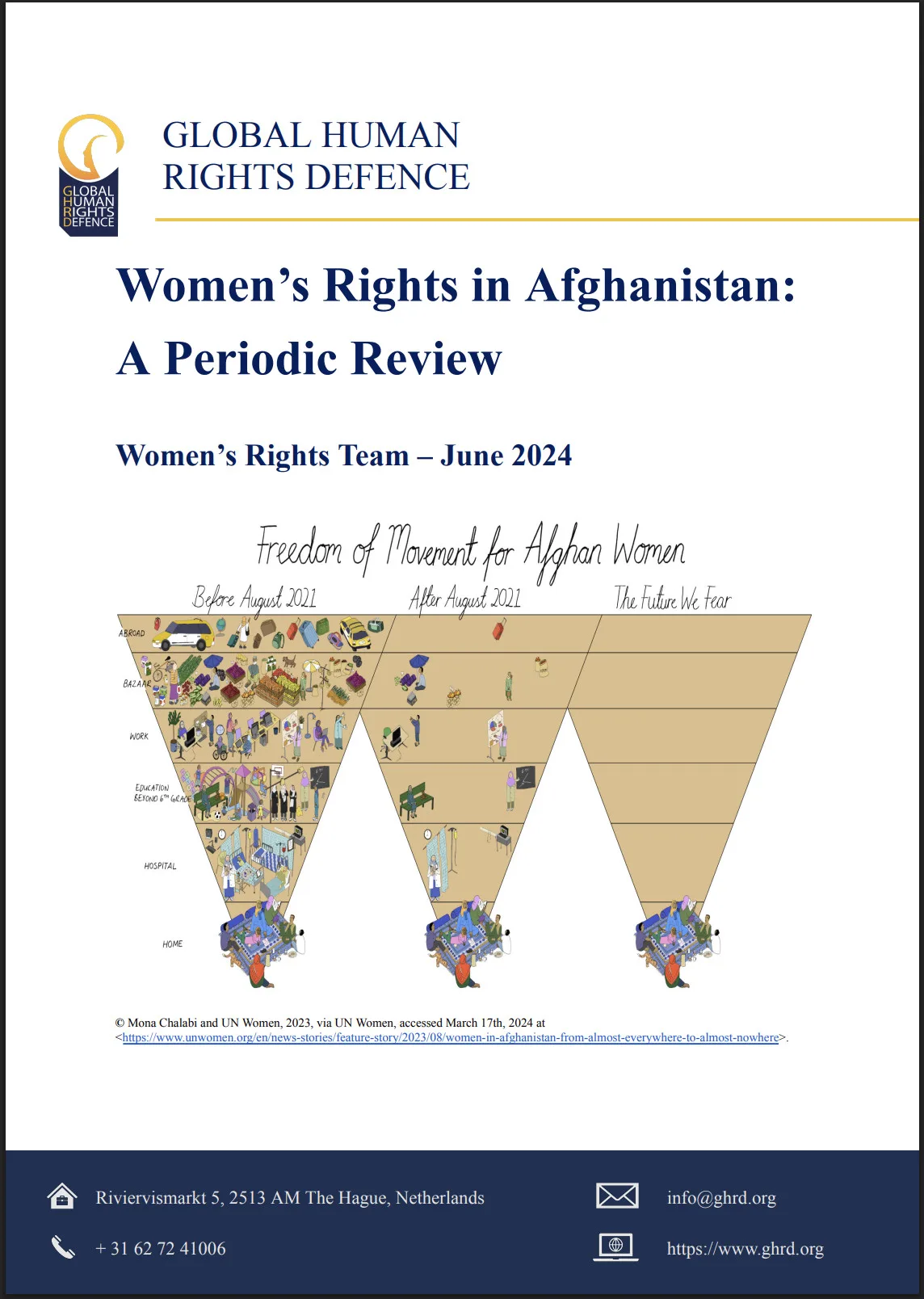
Afghanistan, a nation deeply marked by decades of conflict and complex social
dynamics, finds itself at a crucial juncture in the context of women’s rights. The progress
made in recent years is under threat as the country faces the harsh realities of the Taliban’s
return to power which has imposed significant restrictions on Afghan women’s education,
freedom of movement, and overall well-being. This report explores the intricate history and
current state of women’s rights in Afghanistan, a narrative that weaves through Afghan
culture, politics, and society, presenting a rich tapestry of resilience, struggle, and change.
From the multifaceted roles women played in traditional Afghan society to the
devastating consequences of the Taliban’s policies, the journey of Afghan women
encapsulates a broader story of human rights, gender equality, and the relentless pursuit of
dignity and justice. Despite confronting unprecedented challenges, the courage and resilience
of Afghan women shine through, highlighting their fight for a more just future. The recent
resurgence of the Taliban and its dire implications for women’s rights have reignited global
concern, emphasising the precarious nature of progress and the critical need for international
solidarity and support.

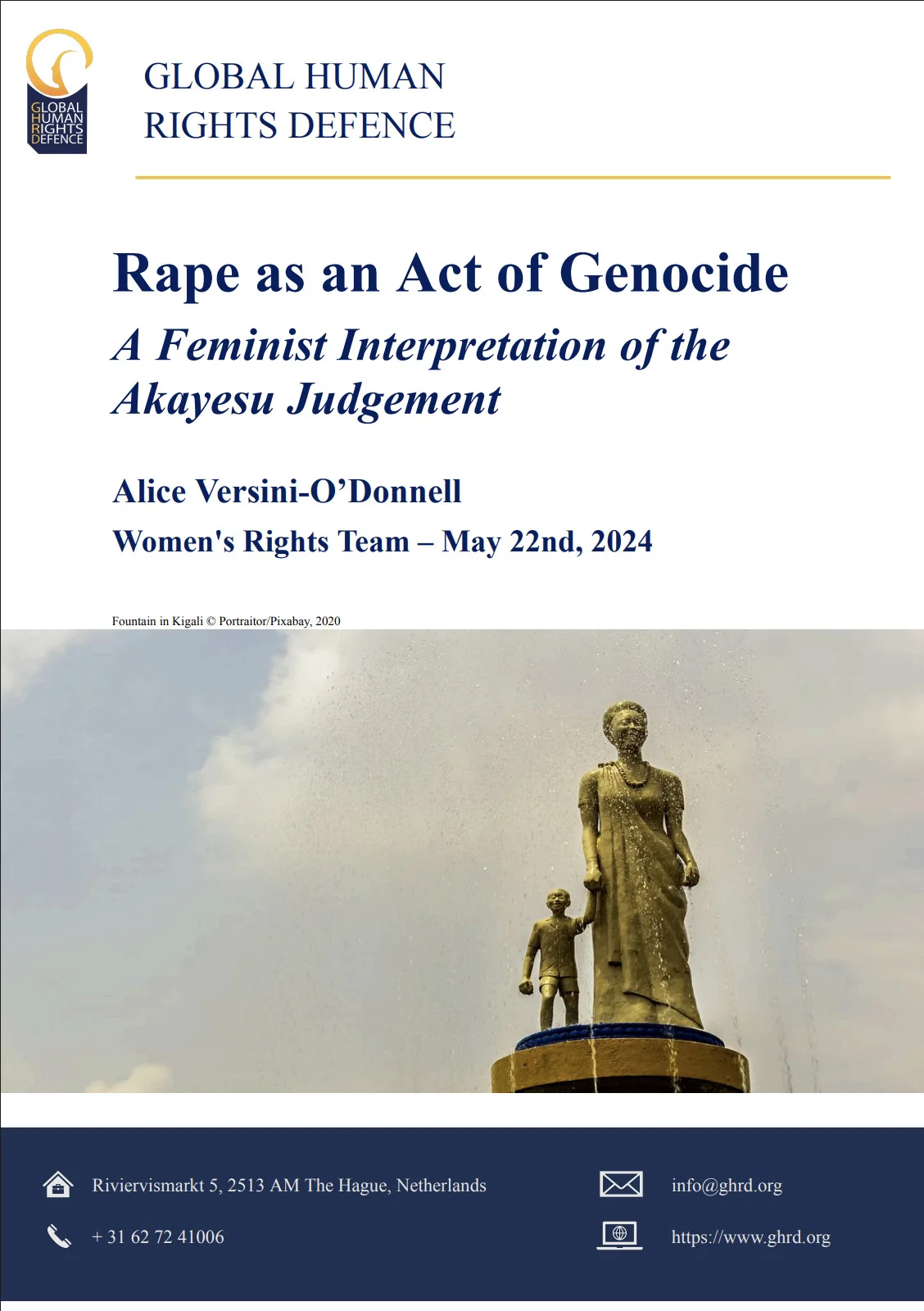
Rape as an Act of Genocide

Jean-Paul Akayesu’s trial was the first time that the crime of genocide had been prosecuted under the Genocide Convention, and its judgement was the first to rule that rape and sexual violence could constitute genocide. The judgement’s analysis of the issue of genocidal rape served as the foundation for many developments in international law, such as the UN Security Council’s Resolutions 1325 and 1820 on women, peace, and security, which recognise the impact of armed conflict on women.
It is of utmost importance to adopt a feminist perspective when considering the issue of genocidal rape, as it is an issue that primarily affects women. Without such an analysis, women could not be afforded full legal protection in wartime. The entire concept of genocidal rape owes its existence to the development of feminist thought, as applied in the Akayesu trial, which recognised the severity of the crime and called for its prosecution.

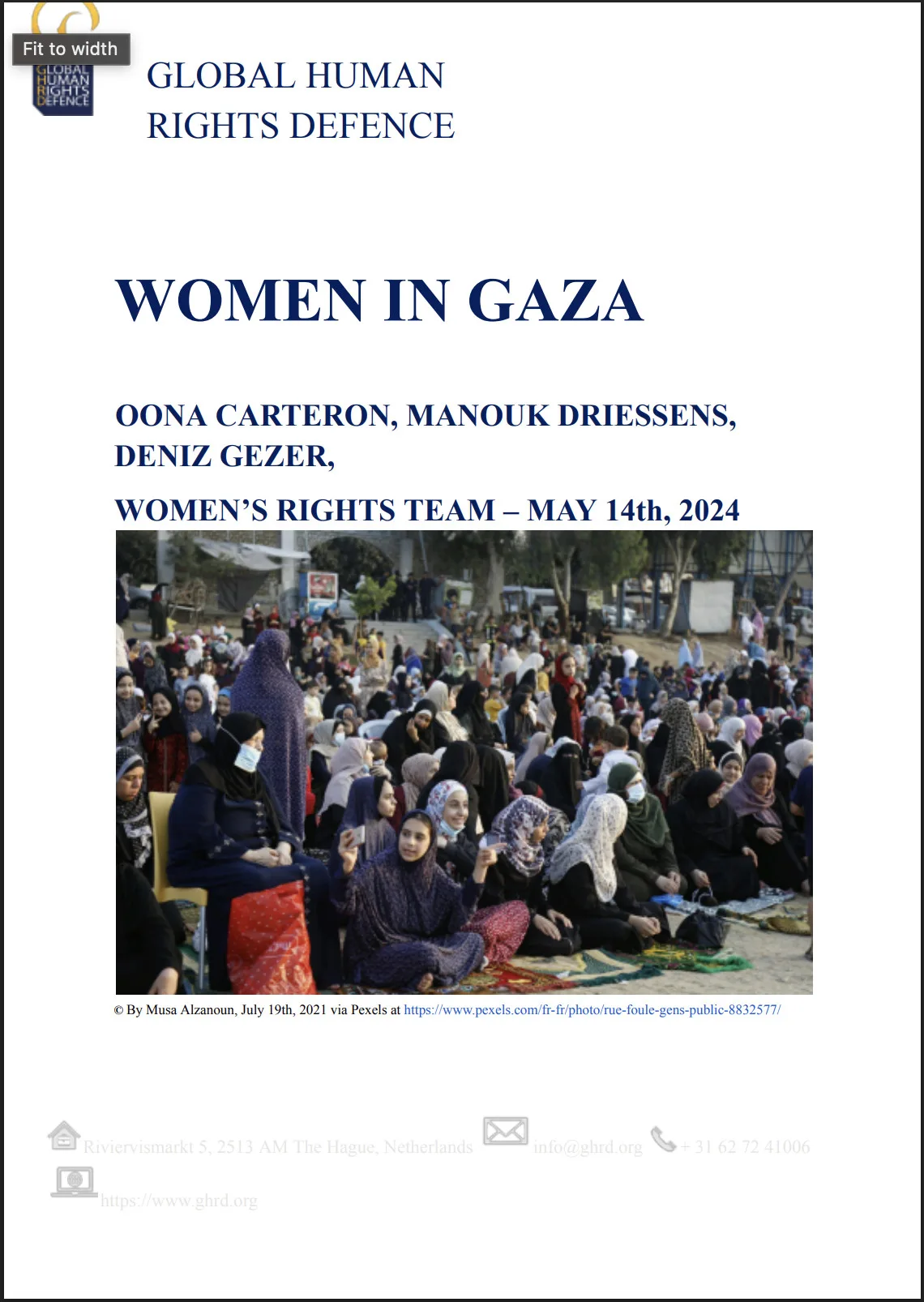
Women in Gaza

“A suffering I wouldn’t wish upon any woman” – these are the words of Nada Abdelsalam, 34, a Palestinian woman describing her situation in Deir el-Balah in the Gaza Strip, as she is interviewed by Al Jazeera (Humaid, 2024). Nada’s words perfectly set the tone of the present report, which aims to shed light on the situation of Palestinian women in Gaza. More specifically, the report covers the different types of gender-based violence (GBV) that the women of Gaza face (Chapter 1), the most pressing challenges related to their health, including their sexual and reproductive health (Chapter 2) and, finally, how all of it fits into the framework of the law of war, or International Humanitarian Law (IHL) (Chapter 3).

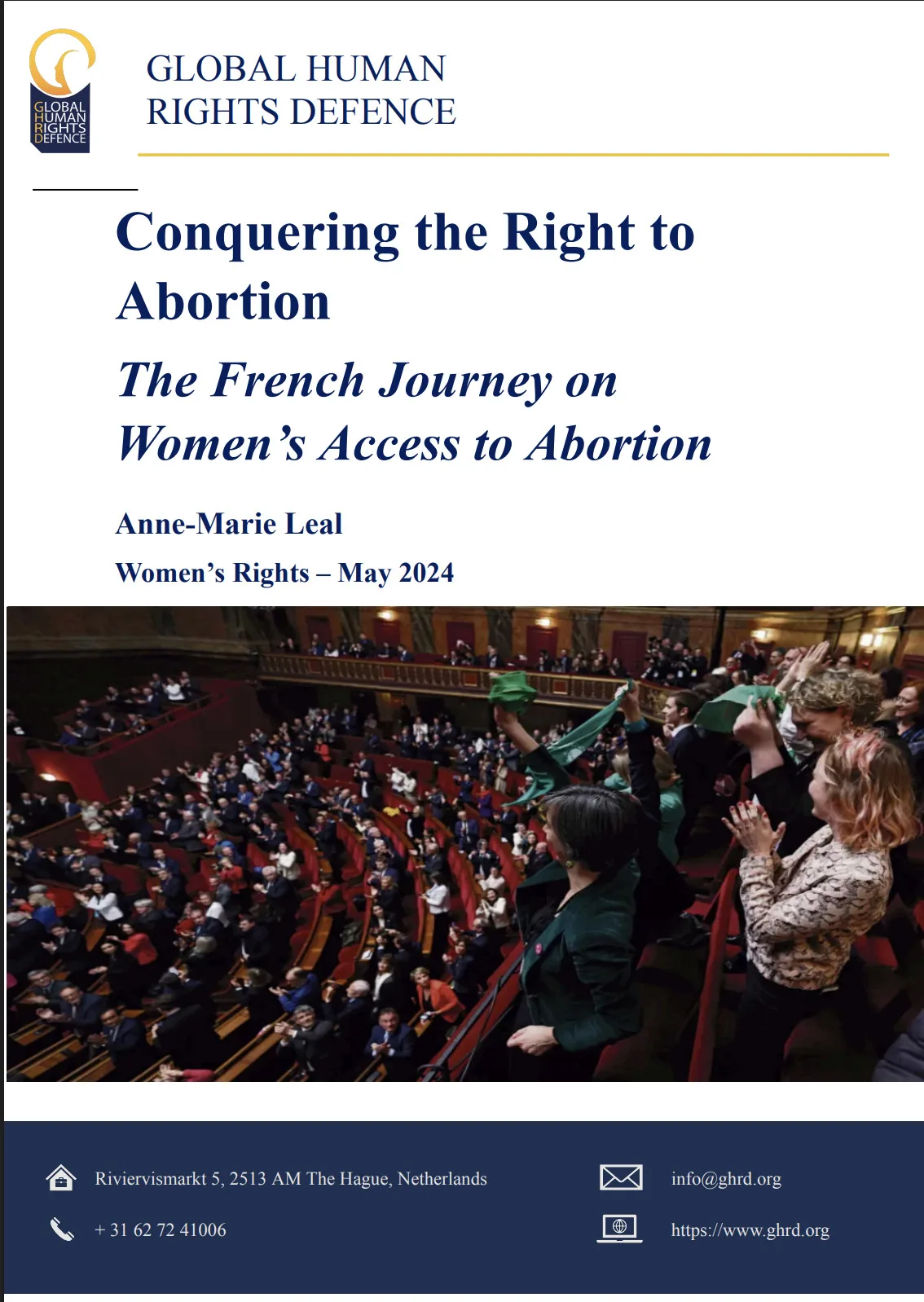
Conquering the Right to Abortion

“Never forget that it only takes a political, economic, or religious crisis for
women’s rights to be called into question. These rights can never be taken for granted.
You must remain vigilant throughout your life” (de Beauvoir, 1949).
This famous French quote from Simone de Beauvoir from 1949 still resonates
strongly with feminist activist movements today. Unfortunately, even though de Beauvoir is a
feminist figure of the previous century, her powerful words remain relevant in today’s society
to drive the fight for women’s rights.

2024 European Elections : What is at stake for women’s rights in Europe

In October 2023, the UN Special Rapporteur on violence against women denounced a
“global epidemic of femicide” (OHCR, October 2023). On September 20th, 2022, Mahsa
Alimi was murdered by the Iranian Regime. Poland enforced a near-total ban on abortion in
January 2021 and the American Supreme Court overturned Roe vs Wade in June 2022 while
Afghan women have been unwaveringly disappearing from public life since August 2021.
Setbacks and retrogression of women’s rights are not solely issues confined to outside Europe
but a pressing challenge to be tackled by all European nations.

Understanding the Barriers : Analysis of Women’s Access to Justice

This report will examine the various challenges and obstacles encountered by women
who pursue justice. Access to justice is not only a fundamental human right, but also a
mechanism for the realisation of other human rights. According to the United Nations
Development Program (UNDP), access to justice encompasses “the ability of people to seek
and obtain remedy through formal or informal institutions of justice, and in conformity with
human rights standards” (UN Women et al. 2018, p. 17). Additionally, the United Nations
considers justice as “an ideal of accountability and fairness in the protection and vindication
of rights and the prevention and punishment of wrongs” and emphasises that fostering the
rule of law and ensuring access to justice are essential for sustaining peace (UN Women et al.
2018, p. 17).

Women Domestic Workes in Diplomatic Households in The Netherlands: Challenges and Recommendations

Migrant domestic workers face significant vulnerability as they are highly susceptible to abuse and exploitation, often enduring these injustices behind closed doors. This hidden nature of their plight makes it challenging for them to seek assistance and for outsiders to detect the abuse. In diplomatic households, which serve as residences for international diplomats and embassy staff, women domestic workers are commonly hired to carry out diverse household responsibilities. Tackling this issue poses a serious and complex challenge for host governments (Human Rights Watch, March 21, 2014).

Exploring Article 4 of the ECHR: Analysis of the ECtHR’s Jurisprudence on Human Trafficking for Sexual Exploitation and Forced Prostitution

Human trafficking is a complex and dynamic issue that constitutes a tremendous human rights violation, and it is prohibited under numerous treaties and conventions. According to the Counter Trafficking Data Collaborative, there are currently 156,330 individual human trafficking cases across 189 countries of exploitation and 187 nationalities (CTDC, 2023). In terms of global distribution, Eastern Europe is the region where the majority of victims are from, including Romania, Ukraine, Russia and Bulgaria
(UNODC, 2022).

However, he number of detected victims had decreased for the first time due to the COVID-19 pandemic. For example, trafficking with the purpose of sexual exploitation decreased by 24 percent compared to 2019. It is suggested that this happened because the pandemic either led to a decrease in trafficking for sexual exploitation as a result of lockdown procedures, and/or there was a decrease in the ability to identify this type of crime (UNODC, 2022). One way or another, one of the greatest challenges in developing adequate policies and responses is the lack of reliable data, especially about the number
of victims and their profiles. The majority of human trafficking court cases are filled by victims who manage to exit exploitation on their own, evidencing how the scope for action in identifying and eradicating the issue remains limited (Migration Data Portal, 2023; UNODC, 2022).

Women and girls are disproportionately affected by human trafficking, which corresponds to the large majority of identified victims. In 2020, 60 percent of the total number of detected victims were women and children, and for every 10 victims detected, four were adult women and two were girls. The risk of physical assault is also higher for female and child victims during trafficking. They are three times more likely to suffer explicit or extreme violence compared to men. In addition, trafficking for sexual exploitation is the most common form of trafficking worldwide, corresponding to 54 percent, and has women as the main targets. Of all sexual exploitation victims, 96 percent are female. Human trafficking has explicit gender motivations and violates women’s human rights (ICAT, 2017; UNODC, 2022).

The root causes of the disproportionate impact of human trafficking on women and girls are plentiful. For example, gender inequality in educational and employment opportunities or limited control over financial resources can exacerbate the vulnerability of women and girls to trafficking. Furthermore, gender-based violence and cultural norms that normalise such violence are also contributing factors. The presence of discriminatory labour or migration laws can restrict women’s mobility and their capacity to change jobs, pushing them towards seeking employment in unregulated and informal sectors. As a result, women become more susceptible to the risks of trafficking and exploitation. Finally, conflict, post-conflict settings, and humanitarian crises are risk multipliers for women and girls as they are more exposed to exploitation in the absence of the rule of law and more frequently targeted by armed groups for sexual slavery, domestic servitude, and forced and child marriages (ICAT, 2017). In conflict contexts, the escalation of poverty and limited economic prospects further enhances the vulnerability
of women to trafficking. For instance, the current conflict in Ukraine has led to the largest forced population movement in Europe since the Second World War, with over 6 million people seeking refuge in neighbouring countries. Among these refugees, approximately 90 percent are women and children, making them highly vulnerable to human trafficking as throughout their migration journey, women face gender-specific vulnerabilities and risks that increase their susceptibility to trafficking
The present report aims to shed light on the specific context of human trafficking throughout European, in light of Article 4 of the European Convention on Human Rights (ECHR), which prohibits slavery, servitude, and forced and compulsory labour, but does not explicitly mention the prohibition of human trafficking. It also seeks to emphasise the gender dimension of human trafficking and showcase the special vulnerabilities of women and girls in this regard. The challenges of prosecuting human
trafficking have been due to the lack of international agreement on the definition of human trafficking, resulting in the failure to prosecute this kind of human rights violation until the early 2000s. Since then, however, through the jurisprudence of the European Court of Human Rights (ECtHR), the concept of trafficking in human beings has gained greater clarity and uncovered the gender aspect of human trafficking, specifically in cases involving sexual exploitation and forced prostitution.

Consequently, this paper revolves around three legal cases from the ECtHR where violations of Articl e4 of the ECHR were established, concerning human trafficking related to sexual exploitation and/or forced prostitution. The paper consists of two parts. Chapter 1 seeks to provide a general overview of the content of Article 4, the positive obligations of State Parties, and the challenges of the prosecution of human trafficking in this regard. In Chapter 2, three legal case studies are presented which are
crucial to understand as they have set precedents for subsequent convictions of trafficking crimes at the European level. For example, through these judgments, the ECtHR has ruled, inter alia, that human trafficking falls within the scope of Article 4 of the ECHR, clarified the positive obligations upon State Parties, and identified the three constituent elements of the international definition of human trafficking, while in all instances highlighting the gender dimension of human trafficking.

Breaking Barriers : Empowering and Advocating for Women in STEM

The women’s rights team at the Global Human Rights Defence (GHRD) aims to highlight violations
in women’s rights as well as champion them to increase their implementation globally. The broader
themes focused on in this interview report are gender disparity, equal opportunity, and discrimination
of girls and women in the fields of science, technology, engineering, and mathematics (STEM) given
their historical male dominance and lack of female participation. To gain first-hand experience and
insight into women’s experiences in education and working in STEM, the women’s rights team at
GHRD interviewed Mylène Brown-Coleman, a final year Artificial Intelligence student at the Vrije
Universiteit Amsterdam (VU Amsterdam). She is deeply committed to her work in the field of Artificial
Intelligence, Software Development, and empowering women within Computer Science.

Early in her career, Mylène gained hands-on experience as a Software Testing Intern at Solera. She
then took a leap into the data analysis domain, joining Morningstar as a Data Analyst Intern. Her
professional journey also led her to Adyen, where she served as a NextGen Desktop Support Engineer,
offering technical support and further sharpening her problem-solving skills.

In academia, Mylène has made a significant impact at VU Amsterdam, where she held multiple
teaching assistant roles. Through these positions, she had the opportunity to share her insights on
Data Structures & Algorithms and Intelligent Systems with fellow students. She is also Vice Chair
and co-founder of the diversity committee within her study association and pioneered for the first
hackathon for women at a Dutch university. Mylène continued to broaden her experience by securing a
position as a Software Engineer Intern at Momentive.ai. Currently, she is applying her AI and software
development expertise as an Artificial Intelligence Intern at the City of Amsterdam.

In addition to her rich professional experiences, Mylène has been recognis ed with several
honours, including the VGHC EMEA Student Scholarship, the Nutanix Heart Women in Technology
Scholarship, and the Generation Google Scholarship. These awards have celebrated her academic
prowess, leadership skills, and commitment to community involvement.

Mylène Brown-Coleman’s journey paints a picture of a dedicated and ambitious individual making
strides in the world of AI and software development. Her consistent growth and contributions to both
academia and industry are testaments to her passion and drive in this evolving field.

At the Intersections of Women’s Rights : Examining the Rights of Marginalised Women

Since the 19th century, the women’s rights movement has championed the rights and entitlements of women and girls all over the world. The movement has advocated for a number of rights, such as the right to vote and to hold public office, freedom from sexual violence, equal pay, bodily and reproductive autonomy, access to education and property ownership, and overall gender equality. Great advances have been made for women and girls in the decades since.

However, the women’s rights movement has historically failed to acknowledge the intersectionalities of so many women, such as race, sexuality, gender identity, age, migration status, and so on. As such, it is imperative to move away from the mainstream, middle class and white-dominated feminist movement which has often excluded women of colour and those of a less advantaged socioeconomic status, and to instead broaden the scope of inclusion to all women, regardless of their background. The path forward must include the experiences of all women, and ensure that rights are guaranteed for all, not just a select, privileged few. As the American writer and activist Audre Lorde stated, “I am not free while any woman is unfree, even when her shackles are very different from my own.”

The need to shed light on the grievances of those groups of women who have historically been, and continue to be, underrepresented by the traditional feminist movements, is unquestionable. This is especially true for women belonging to the more vulnerable subsets of society, whose demands for change are often unheard. As such, the purpose of this report is to illuminate the experiences of those women: migrant women, women with disabilities, transgender women, and sex workers, for instance.

While women around the world have many of the same qualms against sexism, misogyny and the patriarchy, the specific and sometimes distinct needs of different groups of individuals must be addressed. It must always be remembered that, for the women’s rights movement to truly achieve equality for all, it is important to be intentional about inclusion and look at women’s rights through an intersectional lens in order to advance the rights of all women.

6th GHRD International Film Festival: Human Trafficking Edition
Submission Deadline: 9th August 2026