
Reports
- GHRD Team
- 8 July 2024
The origin of citizenship can be traced back to Ancient Greece, when “citizens” were those who had a legal right to participate in the affairs of the state. However, by no means was everyone a citizen: slaves, peasants, women or resident foreigners were mere subjects. (Council of Europe, n.d.)
This quote by the Council of Europe (CoE) highlights the underlying structure that, to this day, influences who is considered a citizen of a nation and who is not. Historically, citizenship is closely linked to belonging to a political and legal entity that grants individuals access to certain rights and imposes corresponding duties. The origins of citizenship can be traced back to ancient Greece, where one was only considered a citizen if he was “male aged 20, [from] an Athenian family, […] patriarch of a household [and] a warrior” (Bellamy, 2015, p. 31). Gender, race, and class were fundamental in defining the boundaries of citizenship, thus excluding women, children, immigrants, and slaves. Over time, this understanding changed, and the good citizen was the one who could naturally contribute to the reproduction of the state (Josephson, 2015). He was white, male, and heterosexual. Men were therefore at the centre of citizenship from the very beginning. This definition, according to which all persons within a state who do not meet the above criteria are excluded from the right to citizenship, is no longer valid. Article 15 of the Universal Declaration of Human Rights (UN General Assembly, 1948) recognises everyone’s right to a nationality and the right to change one’s nationality. It stipulates that no citizen shall be stateless because of the denial of their nationality.
- GHRD Team
- 8 July 2024
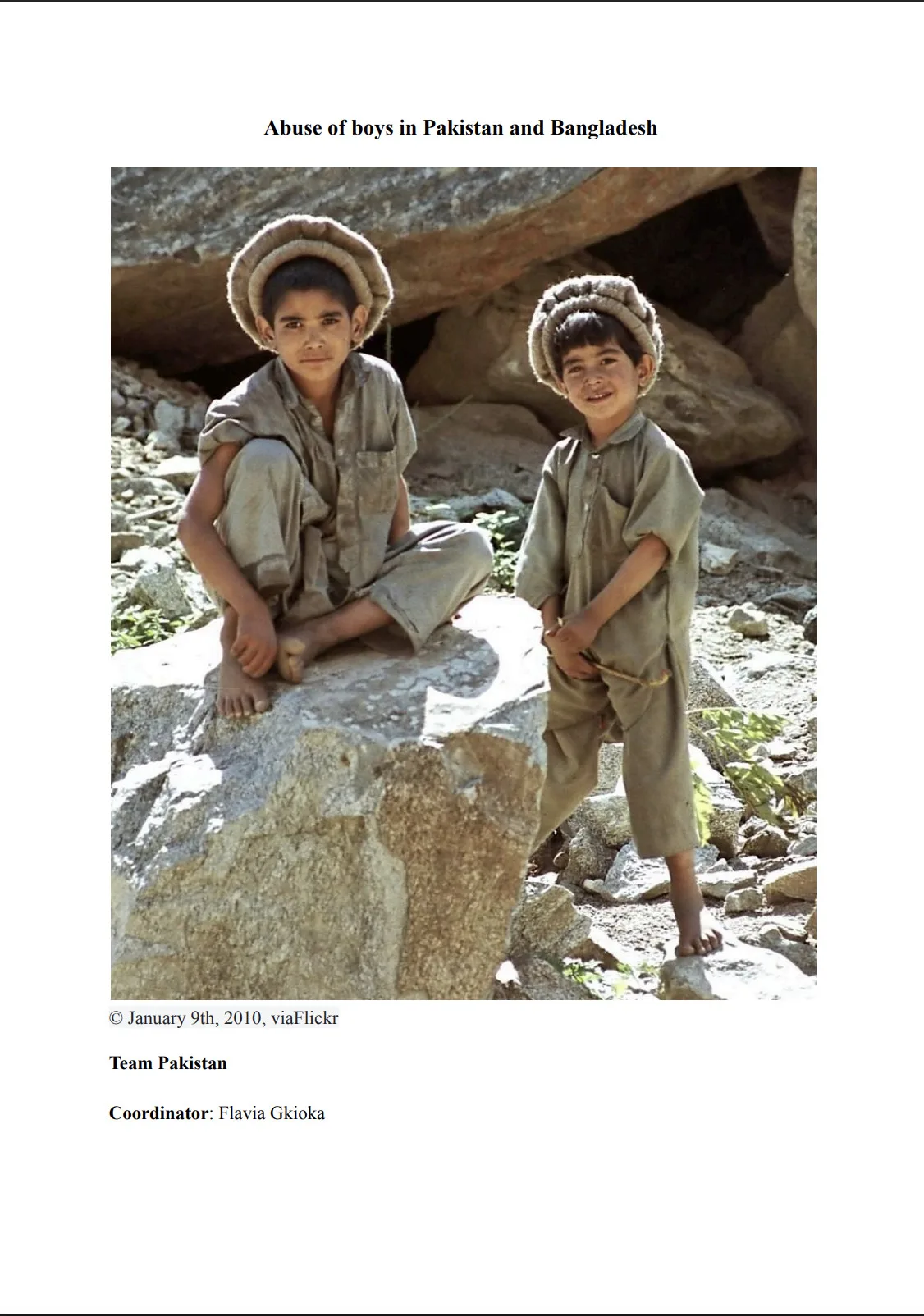
The abuse of boys in Bangladesh and Pakistan is deeply rooted in the historical and cultural frameworks of these societies. Both countries share common cultural elements stemming from their shared history under British colonial rule and, before that, the Mughal Empire, which shaped their societal structures, gender roles, and traditional practices.
In both Bangladesh and Pakistan, traditional gender roles have been heavily influenced by patriarchal systems. These roles dictate a rigid hierarchy where men are dominant figures in both public and private spheres, while women and children, including boys, are often subordinated. This patriarchal structure tends to normalise the subjugation and control of those perceived as weaker, including children, and boys are expected to conform to certain behavioural norms that align with traditional masculinity. Boys in these societies are often socialised from a young age to adopt traits such as toughness, emotional restraint, and obedience to authority figures. Deviation from these expectations can result in various forms of abuse as punishment or a method of enforcing conformity. The pressure to conform to these rigid gender norms not only perpetuates cycles of abuse but also silences boys who may otherwise seek help, as doing so could be perceived as a sign of weakness.
Moreover, societal norms in Bangladesh and Pakistan often dictate that boys are the bearers of family honour. Any perceived threat to this honour can lead to severe repercussions, whether through non-conformity or victimisation. This cultural emphasis on honour can result in families covering up abuse to avoid social stigma, further entrenching the cycle of violence and making it difficult for boys to seek help or receive justice.
Certain traditional practices and beliefs also contribute to the abuse of boys in these regions. For example, the practice of “bacha bazi” in Afghanistan, which borders Pakistan, is a known form of sexual exploitation of young boys by older men and has been reported in parts of Pakistan as well. Although it is officially illegal, the practice persists due to weak law enforcement, corruption, and deep-seated cultural attitudes that view boys as objects rather than individuals with rights. In Bangladesh, while not as publicly reported as in Pakistan, similar issues exist, often exacerbated by poverty and social inequalities. Boys from poorer families are particularly vulnerable to being exploited in the workforce, where they may face physical abuse and neglect or be trafficked for sexual exploitation. Traditional views that see boys as workers or economic assets rather than as children needing protection further perpetuate these abuses.
- GHRD Team
- 8 July 2024
The 21st century has seen a change in the way information is created, transmitted and consumed. Traditional media, namely newspapers, radio and television have been replaced by the internet and digital platforms. Although these are complementary, there are higher participation rates in social media than in conventional platforms (Arif, 2022). The intersection of this change can be the Arab Spring, which served as a lever to facilitate the communication of the protesters and the smooth organisation of the demonstrations. This practice raised public awareness and triggered public discourse (Batool, 2020).
- Asia Team
- 5 July 2024
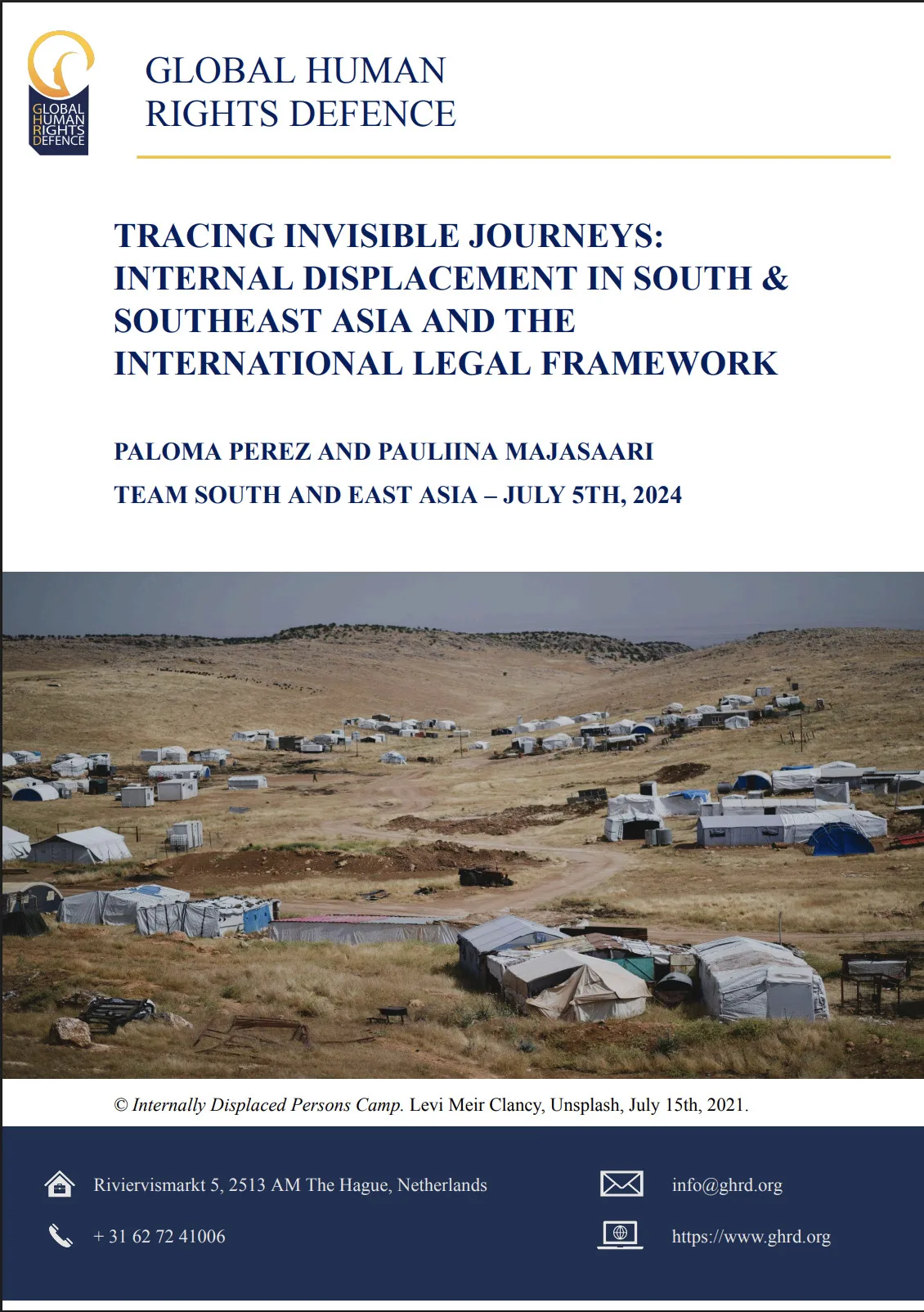
This report begins by contextualising internal displacement within the international legal framework, followed by an analysis of its impact on affected communities. Through case studies from Myanmar, Nepal, and India, the report illustrates the previously mentioned causes of internal displacement, emphasising human rights violations and socio-economic repercussions. Furthermore, the report discusses the roles of key stakeholders, including international organisations, governments, and humanitarian agencies, in responding to and mitigating the effects of displacement.
- GHRD Team
- 1 July 2024
The rapid advancement in generative Artificial Intelligence (AI) technology is marked by frequent launches of new large-scale models, heralding a transformative era in human work dynamics and communication (Hacker, 2023). However, Generative AI poses numerous risks and challenges. Ethical concerns and potential social exclusion are exemplified by the amplification of societal biases, discrimination, and inequities, notably in fields such as recruitment (Raub, 2018). Another significant risk involves privacy and data protection, encompassing lawful and compliant data collection, processing, and management of sensitive personal information.
- GHRD Team
- 1 July 2024
Over the last few decades, there has been an overall increase in the representation of women in political and decision-making positions, although this progress is uneven and uncertain (Fellegi, Hrbková, Dubrow, 2023). Feminists’ demands are increasingly heard and supported by institutions, both international and national. However, this progress in women’s representation and the defence of women’s rights can lead to two phenomena which are detrimental to these causes. Firstly, greater recognition of women’s rights can lead to a “backlash” phenomenon, a violent retreat from women’s rights in response to this advance. Backlash can be defined as “a response to feminist movements that are effectively making changes to create a more egalitarian and just society” (Bojanic, Abadía, Moro, 2021). Thus, when a backlash occurs in a country, it should be analysed as proof that women’s rights initially improved. The backlash phenomenon also highlights the fact that increasing the representation of women in politics does not systematically lead to an improvement in women’s rights.
- GHRD Team
- 10 June 2024
In the field of study and practice of human rights, the interplay between the right to freedom of religion and belief and the right to sexual education presents a compelling narrative, especially within the dynamic and culturally rich backdrop of the Americas. The Inter-American Court of Human Rights (IAtCHR), a pivotal arbiter in this complex dialogue, endeavours to balance these seemingly divergent rights under International Human Rights Law.
- GHRD Team
- 8 June 2024
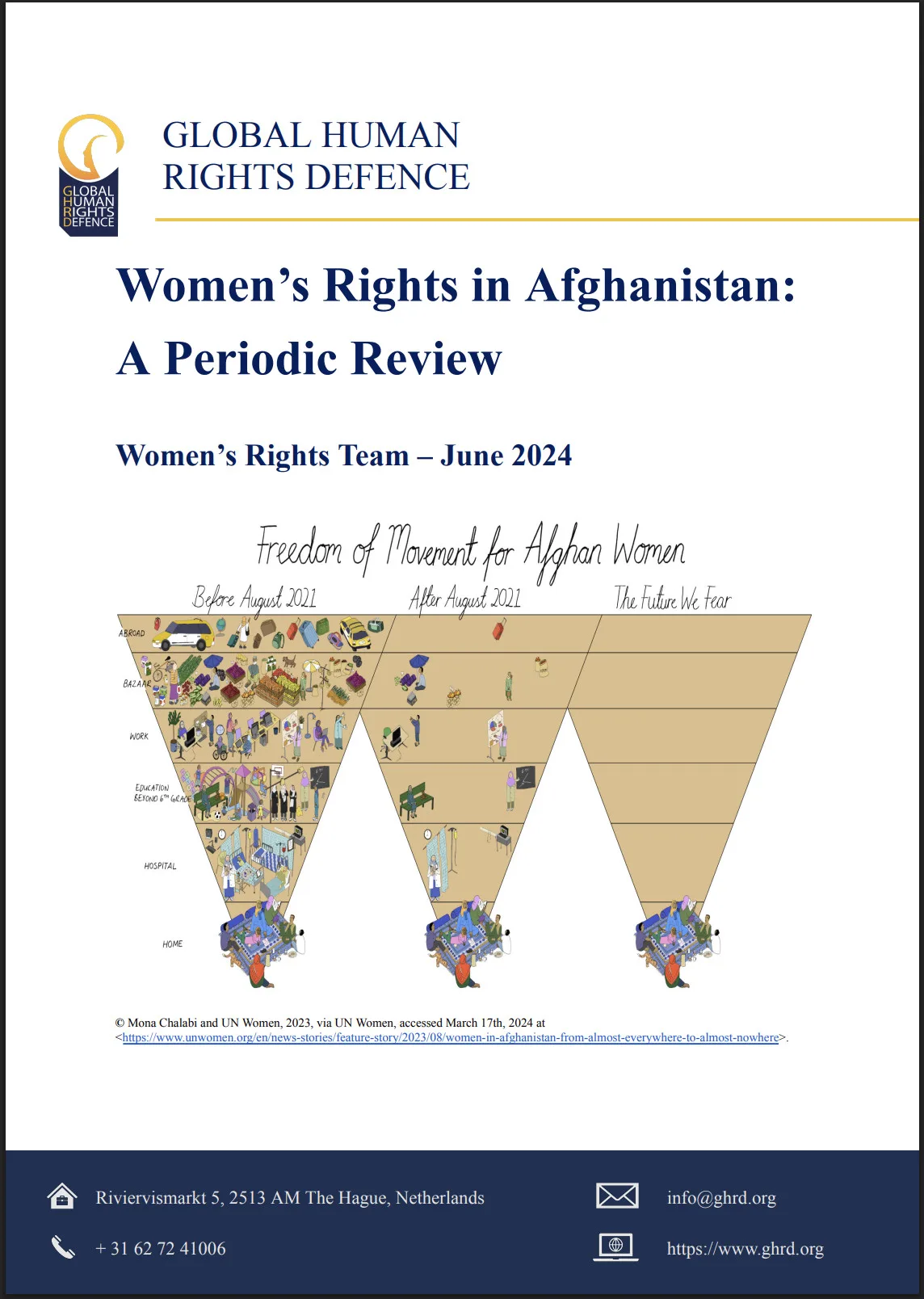
Afghanistan, a nation deeply marked by decades of conflict and complex social
dynamics, finds itself at a crucial juncture in the context of women’s rights. The progress
made in recent years is under threat as the country faces the harsh realities of the Taliban’s
return to power which has imposed significant restrictions on Afghan women’s education,
freedom of movement, and overall well-being. This report explores the intricate history and
current state of women’s rights in Afghanistan, a narrative that weaves through Afghan
culture, politics, and society, presenting a rich tapestry of resilience, struggle, and change.
From the multifaceted roles women played in traditional Afghan society to the
devastating consequences of the Taliban’s policies, the journey of Afghan women
encapsulates a broader story of human rights, gender equality, and the relentless pursuit of
dignity and justice. Despite confronting unprecedented challenges, the courage and resilience
of Afghan women shine through, highlighting their fight for a more just future. The recent
resurgence of the Taliban and its dire implications for women’s rights have reignited global
concern, emphasising the precarious nature of progress and the critical need for international
solidarity and support.
- Asia Team
- 6 June 2024
In the complex landscape of international human rights, the plight of North Korean asylum seekers in China presents an urgent and intricate challenge. According to Human Rights Watch, the Chinese government’s forced return of approximately 60 North Korean asylum seekers on April 26th, 2024 has sparked significant international concern. These individuals now face severe risks, including enforced disappearance, torture, sexual violence, wrongful imprisonment, forced labour, and execution upon their return to North Korea. This alarming incident followed a high-level meeting on April 13th, 2024 between North Korean leader Kim Jong Un and Zhao Leji, China’s third-highest official, heightening fears among North Korean exiles and human rights activists that China may accelerate its repatriation efforts.
- Asia Team
- 5 June 2024
The human right to a clean, healthy, and sustainable environment (in short, the right to a healthy environment), a relatively new human right, is a fascinating development that encapsulates environmental protection from a human rights perspective. Its recent recognition by the UN Human Rights Council (UNHRC) in October 2021 (HRC/RES/48/13) and by the UN General Assembly (UNGA) in July 2022 (A/RES/76/300) has brought it to the forefront of international discourse. This right, now considered an “internationally recognised human right,” demands our attention and engagement.