
Reports
- GHRD Team
- 16 November 2024
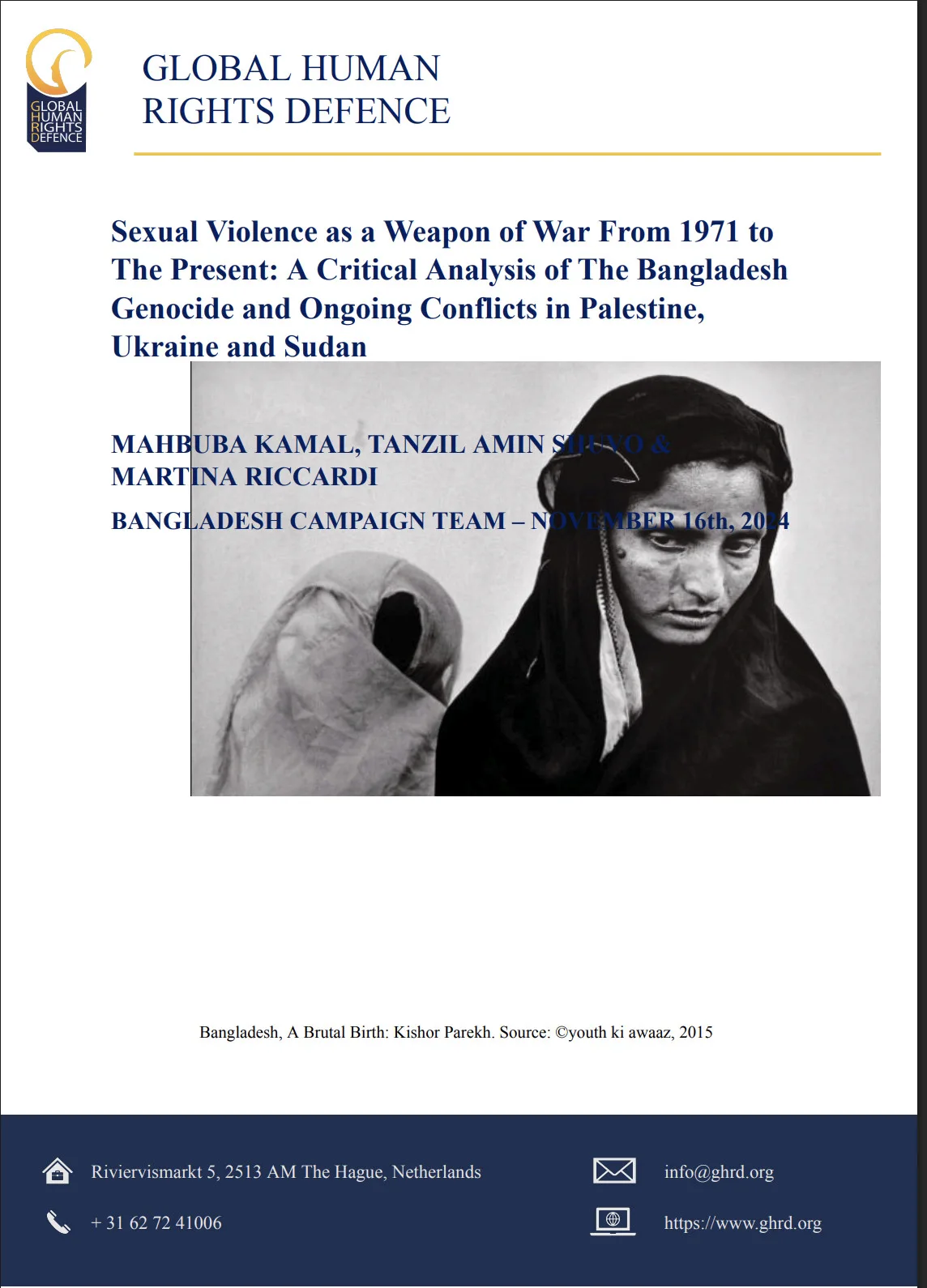
Sexual violence has emerged as one of the most horrific atrocities during conflicts around the world. Despite being explicitly prohibited by international human rights, humanitarian, and criminal law, it continues to be used as a weapon of war, underscoring its devastating impact across history. It is not only used as an act of terror and a form of reward during wartime but also a strategy to move opponents off the land and shame them. It serves not only as an instrument of terror and control but also as a means to displace populations and inflict deep psychological and social harm on communities. During the 1971 Bangladesh genocide, the Pakistani Army systematically raped and sexually abused Bengali women as part of a broader strategy of subjugation.
- GHRD Team
- 14 November 2024
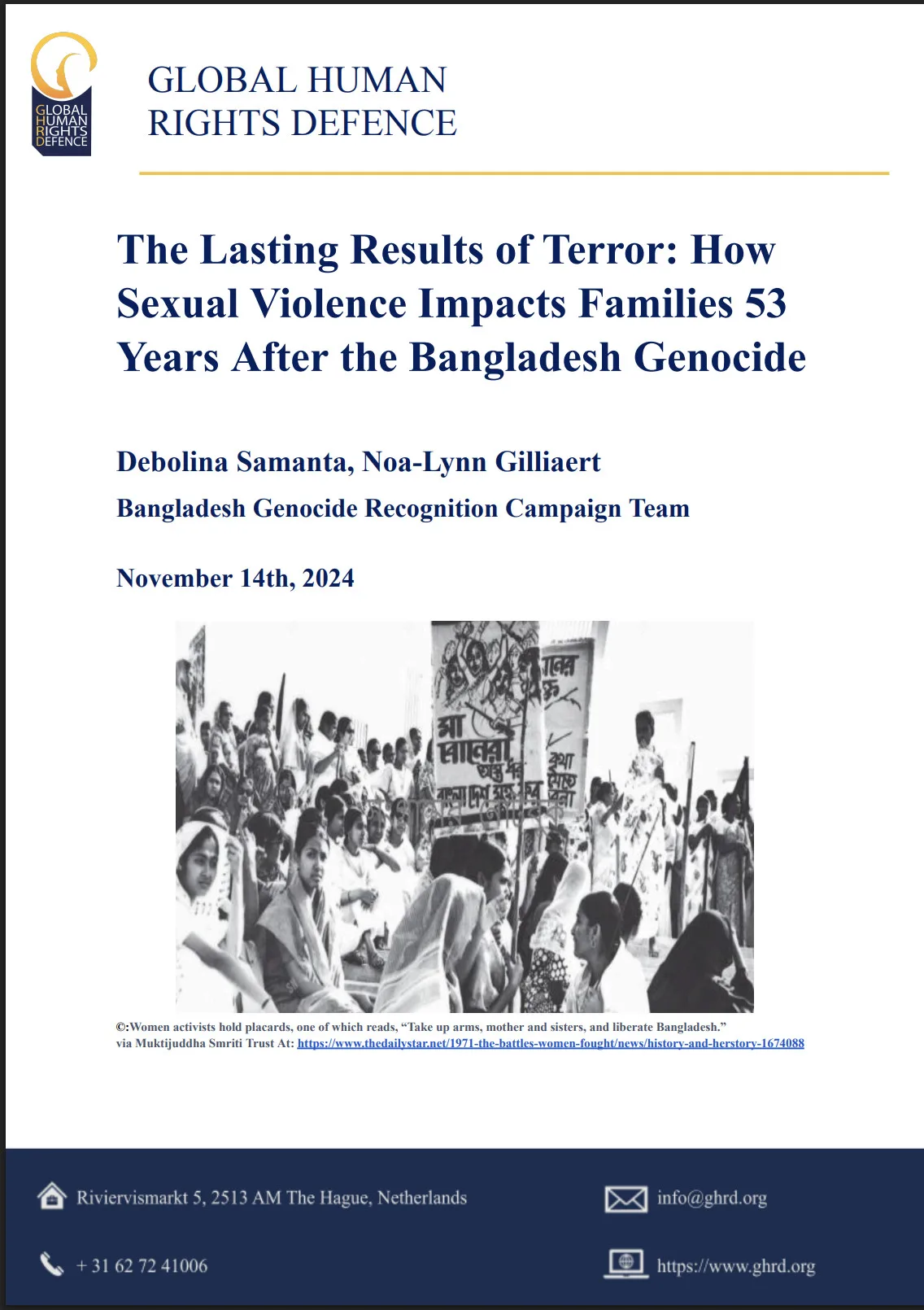
This report will address the historical context, and long-term consequences of the wartime crimes that have impacted Bangladesh’s family dynamics, social norms, and gender relations. Furthermore, it will examine the international legal framework, particularly human rights laws, and how it has evolved to recognise rape as a war crime, including remedies and support systems for sexual violence survivors in Bangladesh (EFSAS, 2021).
- GHRD Team
- 8 November 2024
With the overturning of Harvey Weinstein’s conviction by the New York State Court of Appeal in April 2024, the words of hundreds of women who denounced the former film mogul for sex crimes are once again being questioned. In cases of violence against women, it is nothing new to discredit the testimonies of women victims of patriarchy, always favouring the perpetrator of the act who goes unpunished. In 2020, after the first verdict in the Weinstein case that found him guilty, it seemed that something had woken up globally, a collective consciousness about gender-based violence and its scope in every sphere of life.
- GHRD Team
- 8 November 2024
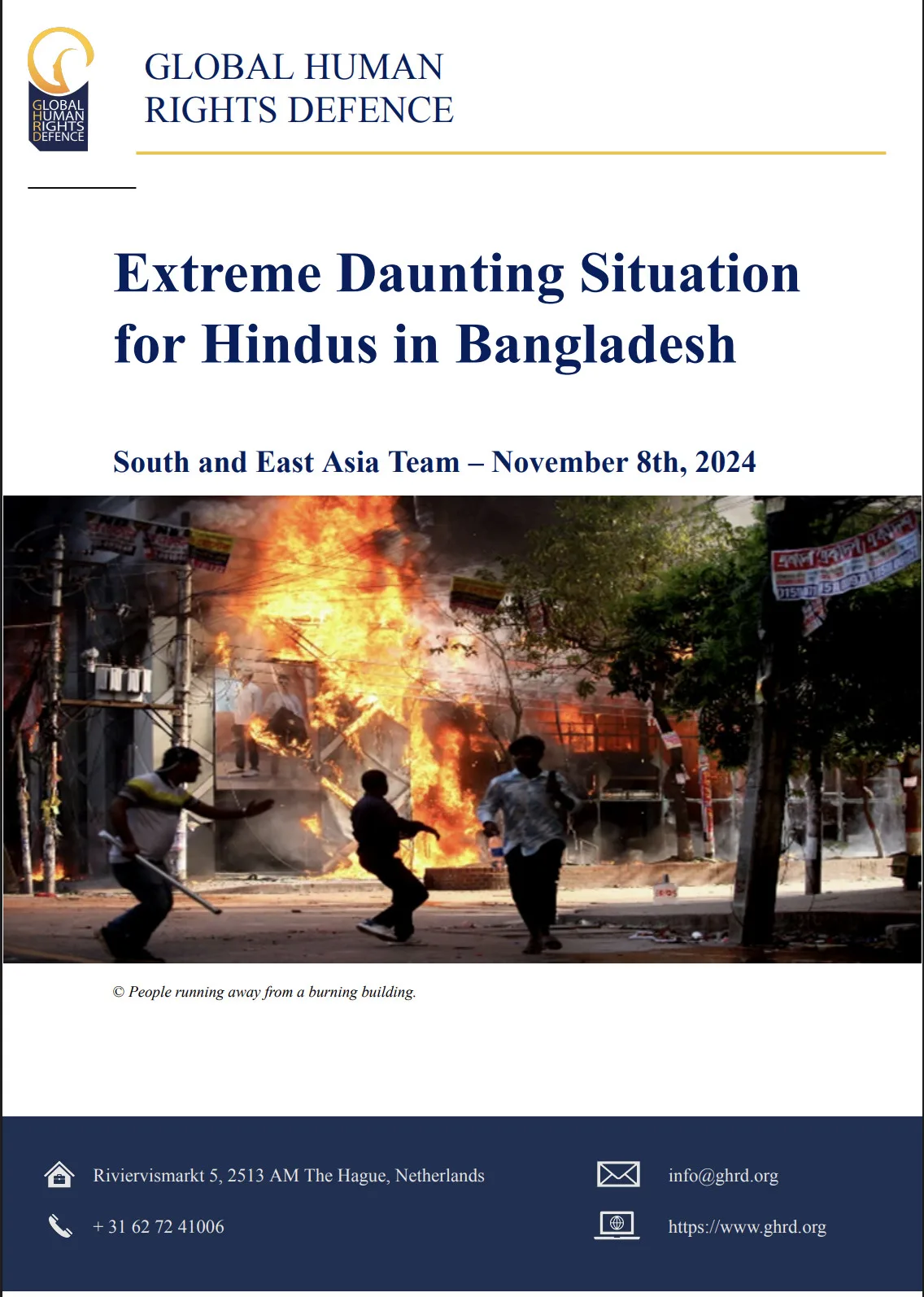
This report showcases the multitude of violence, disturbances, attacks, and vandalisms targeted towards the religious minorities living in Bangladesh and their respective livelihoods as well as their religious sites. Various perpetrators, such as terrorists, miscreants, and local thugs are present in targeting the minorities. The amount of incidents and attacks in Bangladesh is very alarming in combination with the frequency of these attacks. The following gives a detailed account of the incidents that have taken place for the victims in Bangladesh.
- GHRD Team
- 8 October 2024
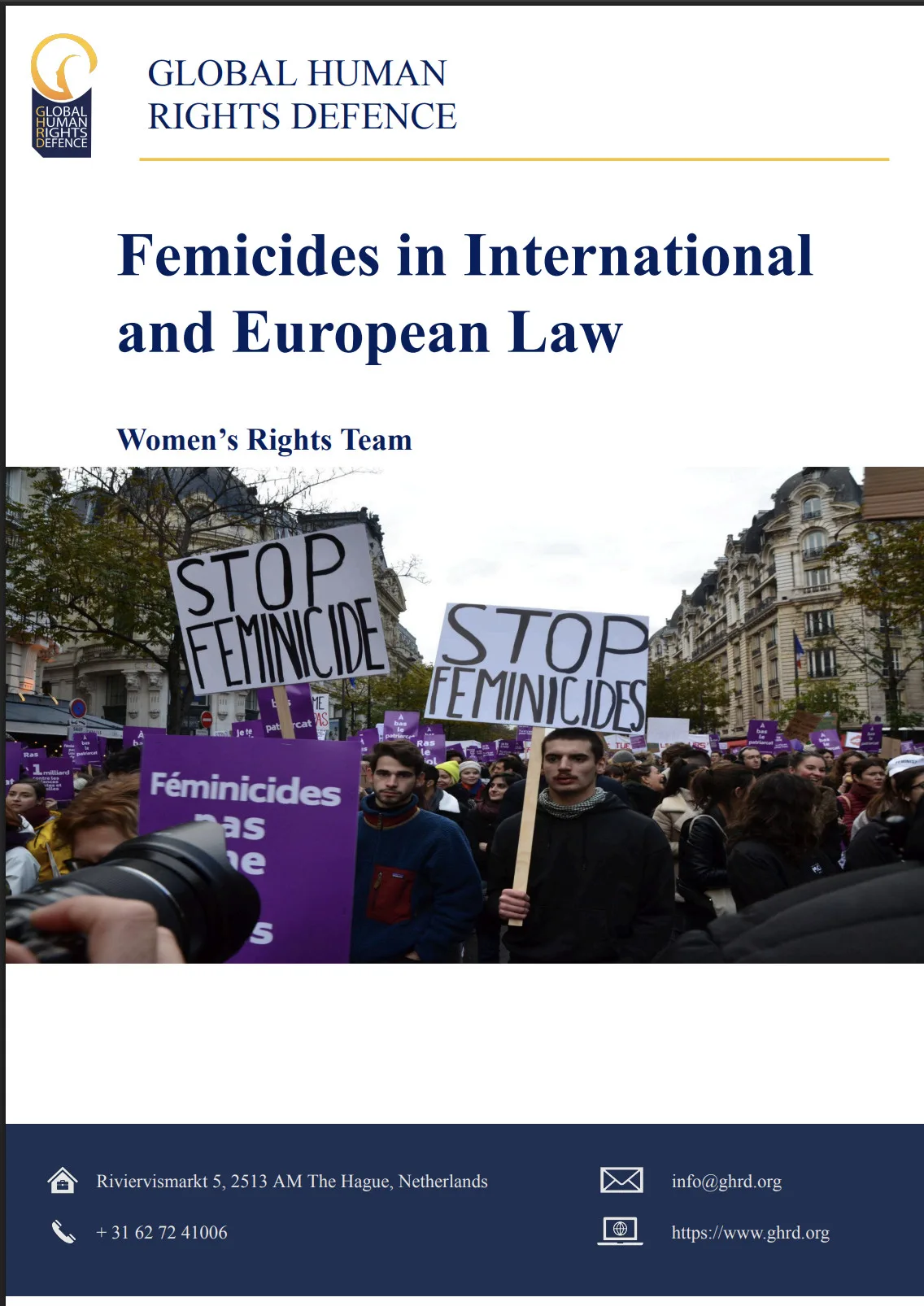
This report focuses mainly on femicide in International and European law. Chapter One scrutinises the history of a phenomenon unmanned and the controversies around the naming of femicide. Chapter Two focuses on the categorisation of an intersectional phenomenon, in the continuum of violence. Chapter Three analyses the international instruments agreed norms and standards addressing violence against women, and especially femicide. Chapter Four examines one of the most famous cases regarding femicide, the Ciudad Juarez case. Chapter Five details the limits to the recognition of femicide. Finally, Chapter Six encompasses the measures around the prevention and repression of femicide.
- Asia Team
- 8 October 2024
his report delves into the multifaceted landscape of China’s Social Credit System (SCS), a framework designed to evaluate and regulate the behaviour of its 1.4 billion citizens and businesses. Emerging from a historical backdrop dating back to the 1980s, the SCS highlights the Chinese government’s commitment to establishing trust and accountability across various sectors.
- GHRD Team
- 8 October 2024
Rape, one of the gravest forms of gender-based violence (GBV), exemplifies the deeply
entrenched inequalities and systemic discrimination that women face globally. It reflects not
only individual acts of violence but also the pervasive patriarchal norms that underlie social
structures, reinforcing male dominance and the subordination of women.

- GHRD Team
- 23 September 2024
The twentieth century, often referred to as “the bloodiest century in human history” (Forsythe, 1997; Akmam, 2002, p. 543), is also regarded by scholars as “an age of genocide” (Chalk & Jonassohn, 1990, as cited in Akmam, 2002, p. 543). However, despite their undeniable occurrence, many genocides are yet to be recognised. Since its formal adoption in 1948, the Convention on the Prevention and Punishment of the Crime of Genocide has officially recognised only three genocides: the Rwandan genocide of 1994, the Bosnian genocide of 1995, and the Cambodian genocide between 1975 and 1979.
- Asia Team
- 8 September 2024
This report provides an overview of the types of online sex crimes, from cyberstalking to image-based sexual abuse, and the international legal frameworks developed to combat them. It explores key treaties such as the Convention on the Rights of the Child (CRC), the Budapest Convention, and the Lanzarote Convention, which collectively address issues like child pornography, online grooming, and sexual exploitation.
- GHRD Team
- 8 September 2024
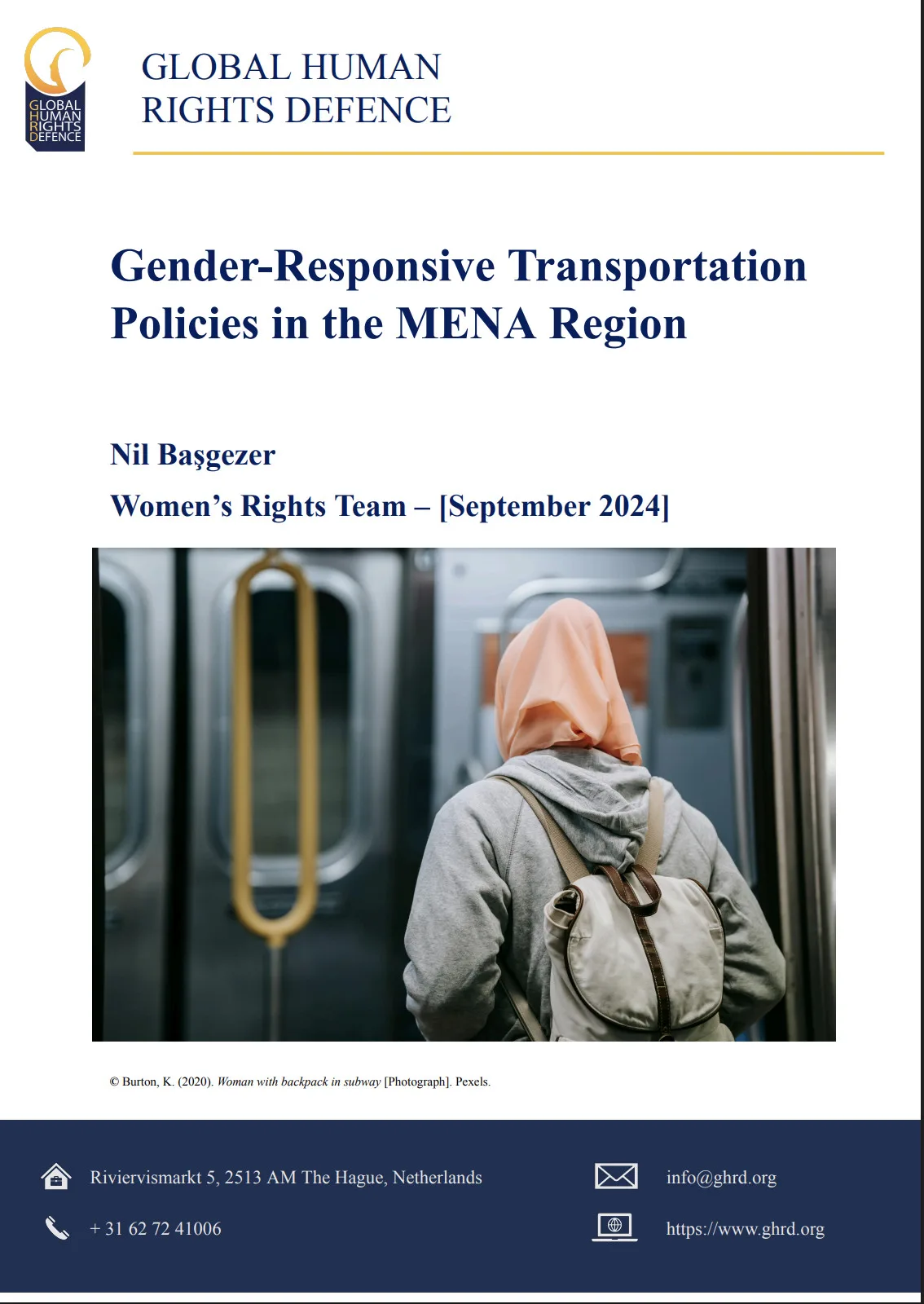
Infrastructure is a cornerstone for national progress, driving economic growth, improving societal well-being, and supporting sustainable development. It serves as the foundation for key policy goals like expanding access to employment, reducing poverty, addressing income disparities, minimising regional inequalities, and improving overall quality of life. However, a common misconception is that infrastructure development benefits all genders equally. This assumption overlooks the reality that men and women have distinct needs and use infrastructure differently due to their varying social roles, economic circumstances, and preferences (OECD, 2021).