
Reports
- GHRD Team
- 27 May 2024
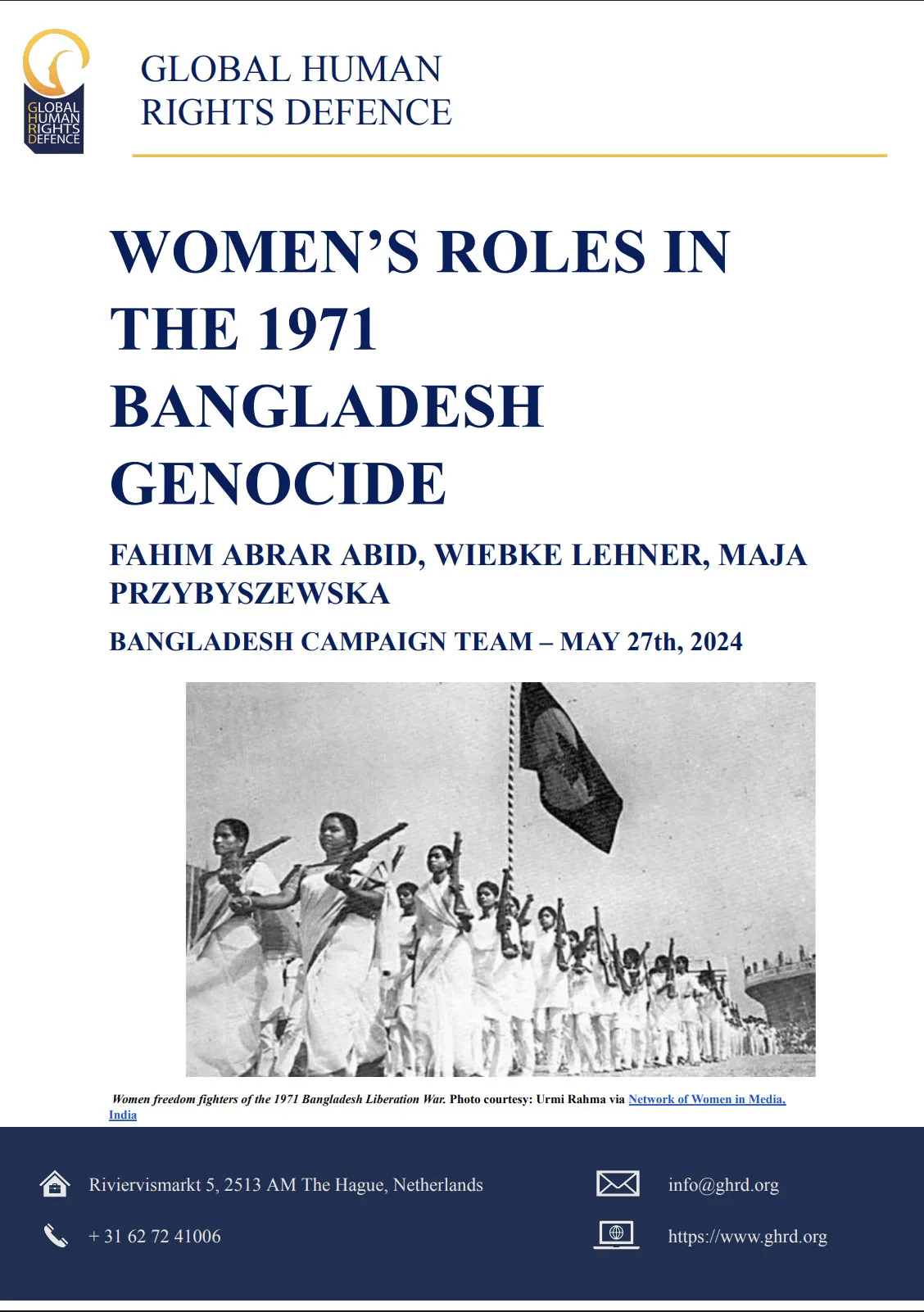
In the context of armed conflict, women fulfil a wide variety of roles. They confront issues of survival, engage in resistance, and build resilience. Yet their experiences and contributions are often erased from collective consciousness in the process of post-conflict societal rebuilding (Mookherjee, 2006). The Bangladesh Liberation War of 1971 is a noteworthy example of how the lack of acknowledgment of women’s experiences and involvement feeds into, and is mutually reinforced by, the failure to recognise atrocities occurring during conflict. Specifically, the survivors of widespread rape and sexual torture are often purposively excluded from public discourse about the conflict experience, since their identity contradicts cultural stigma about sexuality, the role of women in the community, and perceptions of national honour (Sharlach, 2000). The lack of recognition contributes to Bangladesh’s contemporary political contestation as well as the perception of the role of women (Bass, 2016, p. 262). Therefore, this report sheds light on the intricacy of women’s wartime experiences, their subjugation to sexual aggression, and their contribution to the cause of national self-determination through their participation in liberation movements.
- GHRD Team
- 27 May 2024
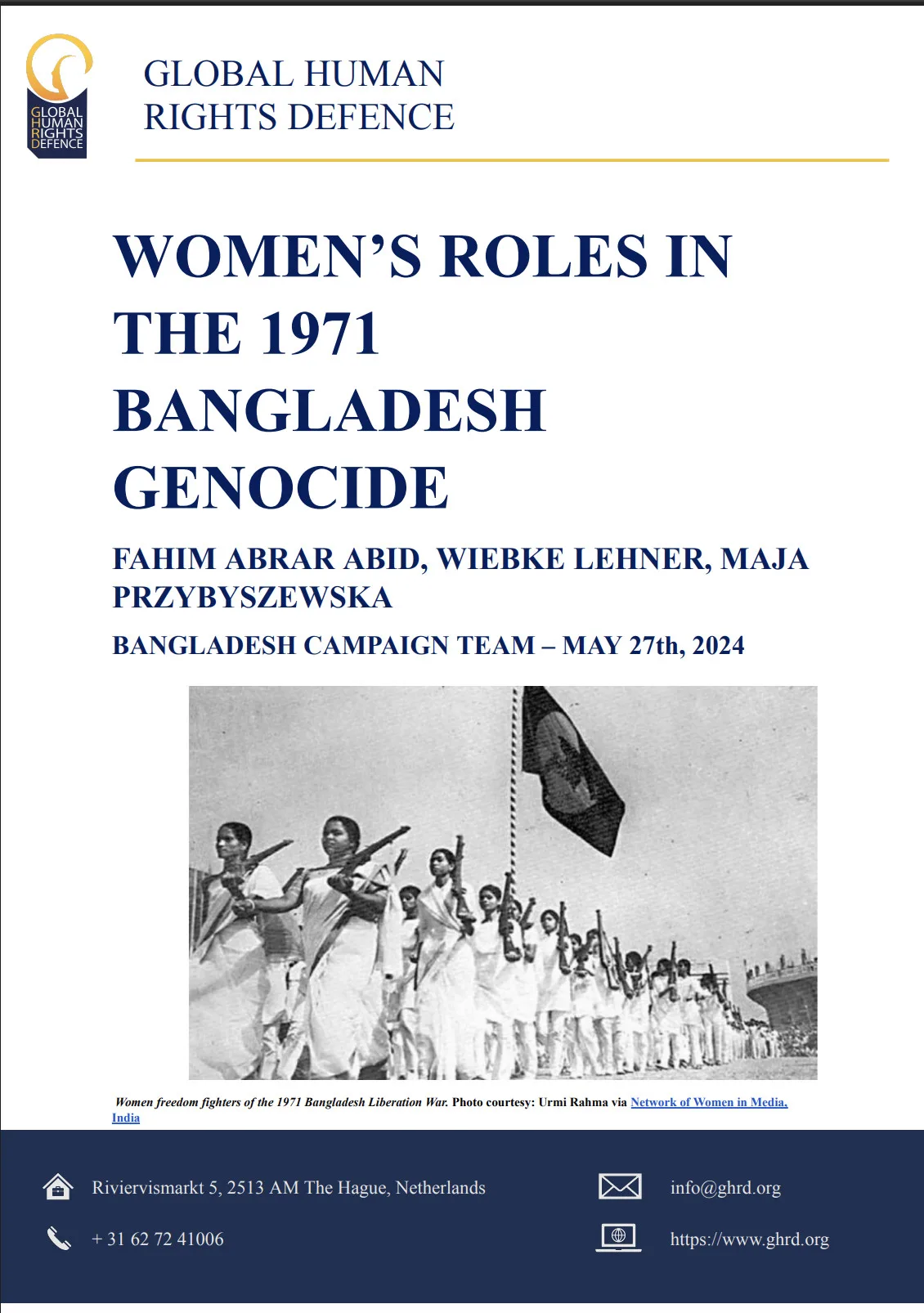
In the context of armed conflict, women fulfil a wide variety of roles. They confront issues of survival, engage in resistance, and build resilience. Yet their experiences and contributions are often erased from collective consciousness in the process of post-conflict societal rebuilding (Mookherjee, 2006). The Bangladesh Liberation War of 1971 is a noteworthy example of how the lack of acknowledgment of women’s experiences and involvement feeds into, and is mutually reinforced by, the failure to recognise atrocities occurring during conflict. Specifically, the survivors of widespread rape and sexual torture are often purposively excluded from public discourse about the conflict experience, since their identity contradicts cultural stigma about sexuality, the role of women in the community, and perceptions of national honour (Sharlach, 2000). The lack of recognition contributes to Bangladesh’s contemporary political contestation as well as the perception of the role of women (Bass, 2016, p. 262). Therefore, this report sheds light on the intricacy of women’s wartime experiences, their subjugation to sexual aggression, and their contribution to the cause of national self-determination through their participation in liberation movements.
- GHRD Team
- 22 May 2024
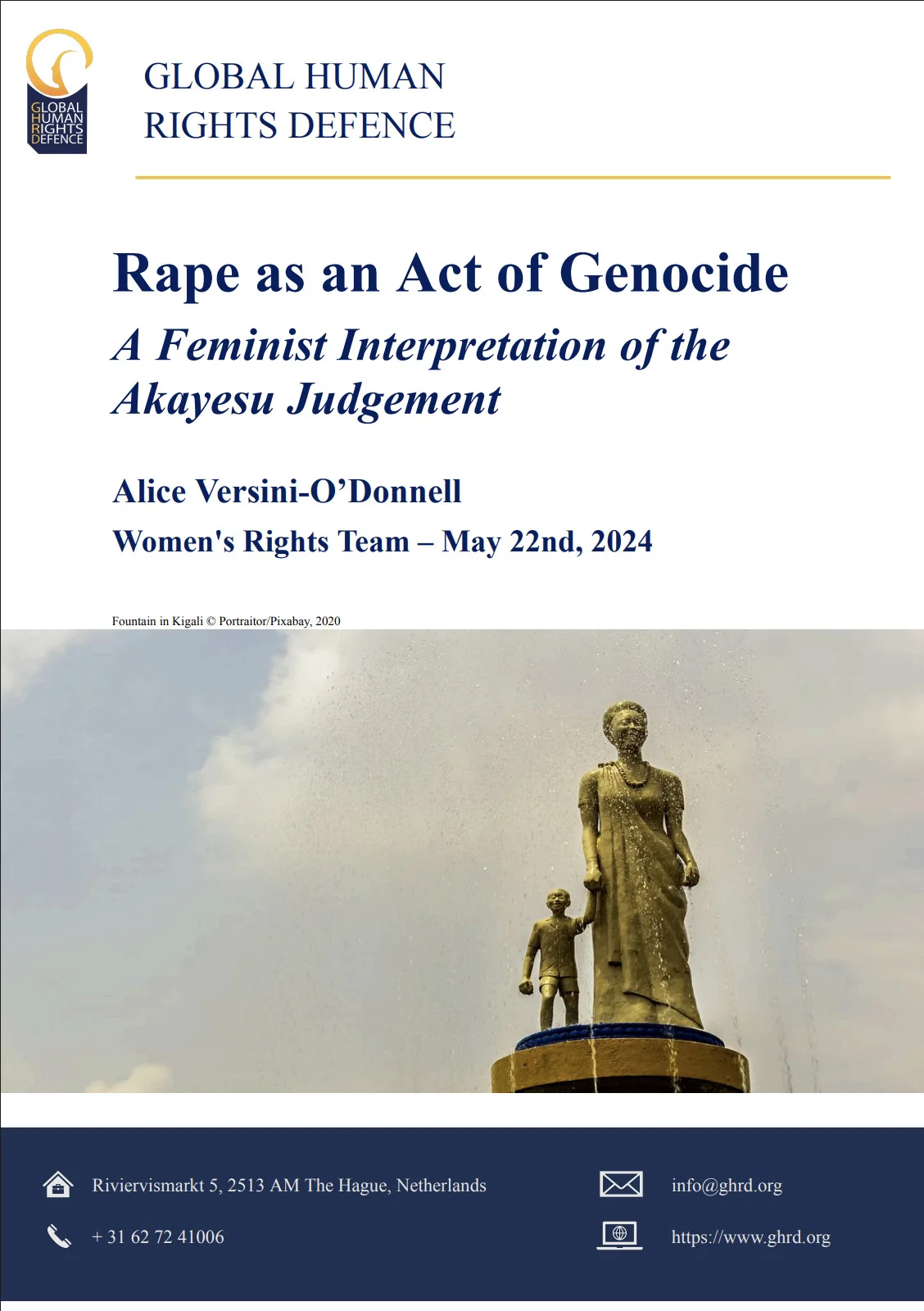
Jean-Paul Akayesu’s trial was the first time that the crime of genocide had been prosecuted under the Genocide Convention, and its judgement was the first to rule that rape and sexual violence could constitute genocide. The judgement’s analysis of the issue of genocidal rape served as the foundation for many developments in international law, such as the UN Security Council’s Resolutions 1325 and 1820 on women, peace, and security, which recognise the impact of armed conflict on women.
It is of utmost importance to adopt a feminist perspective when considering the issue of genocidal rape, as it is an issue that primarily affects women. Without such an analysis, women could not be afforded full legal protection in wartime. The entire concept of genocidal rape owes its existence to the development of feminist thought, as applied in the Akayesu trial, which recognised the severity of the crime and called for its prosecution.
- GHRD Team
- 14 May 2024
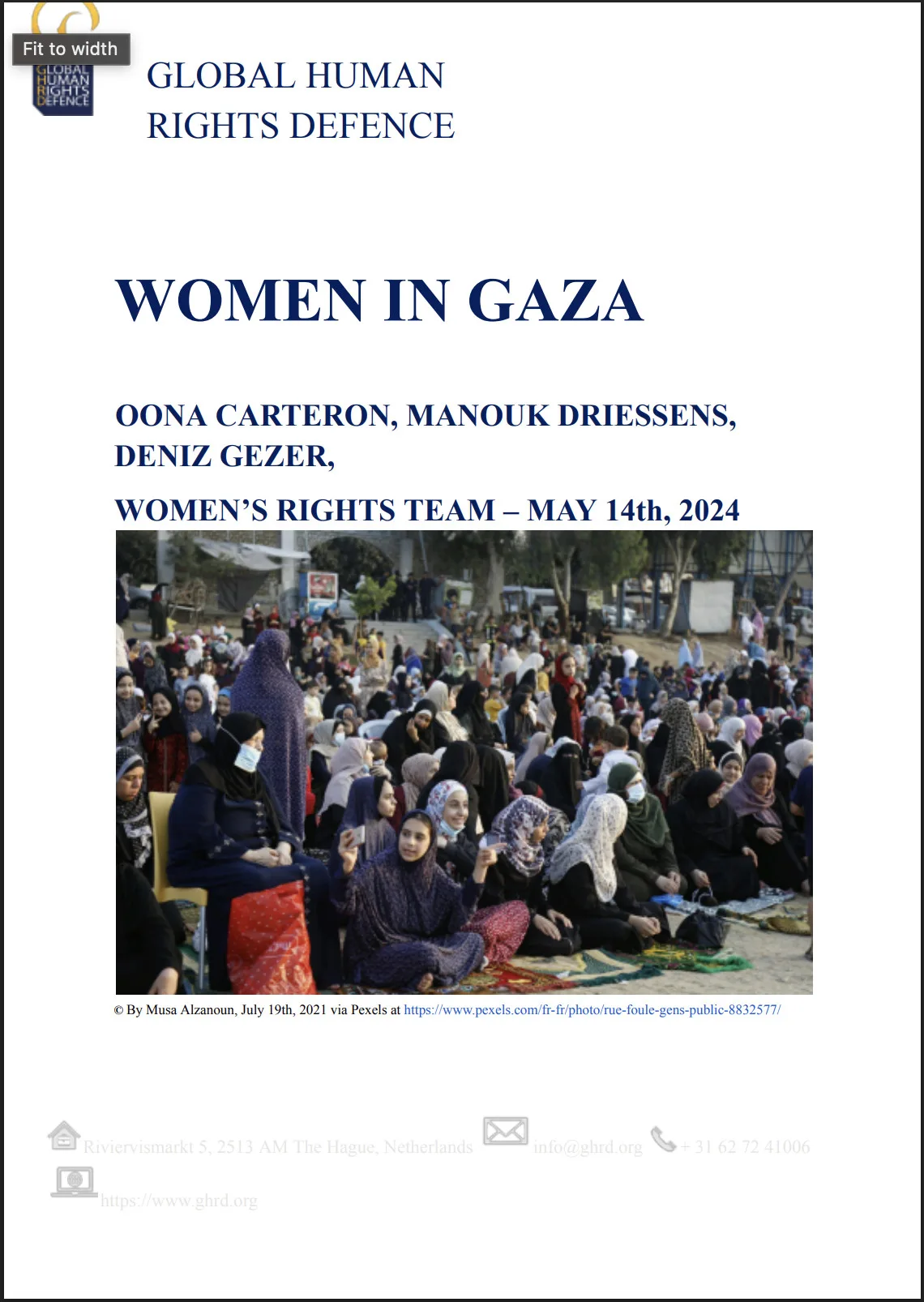
“A suffering I wouldn’t wish upon any woman” – these are the words of Nada Abdelsalam, 34, a Palestinian woman describing her situation in Deir el-Balah in the Gaza Strip, as she is interviewed by Al Jazeera (Humaid, 2024). Nada’s words perfectly set the tone of the present report, which aims to shed light on the situation of Palestinian women in Gaza. More specifically, the report covers the different types of gender-based violence (GBV) that the women of Gaza face (Chapter 1), the most pressing challenges related to their health, including their sexual and reproductive health (Chapter 2) and, finally, how all of it fits into the framework of the law of war, or International Humanitarian Law (IHL) (Chapter 3).
- Asia Team
- 14 May 2024
Health is a fundamental human right necessary for the exercise of other human rights, as expressed by the Committee on Economic, Social and Cultural Rights. However, within the fast paced life in our current society, the importance of mental health can be easily overlooked. A balanced mental health is a cornerstone in being able to participate in social life, including work, hobbies, relationships, and education. Mental and physical health are very closely intertwined and it is therefore of utmost importance to take care of both aspects of health, as ill-health can have far reaching implications for the individual and for society as a whole. As a fundamental human right, every individual should be able to enjoy the right to health and thereby live their life to the fullest.
- Asia Team
- 10 May 2024
This report aims to provide a comprehensive analysis of the death penalty in Japan,
focusing on its historical evolution, legal frameworks, and the contentious conditions under
which death row inmates are detained and executed. Central to our exploration is the
environment within Japanese detention centres, where inmates are held in isolation up to the
moment of their execution.
- GHRD Team
- 8 May 2024
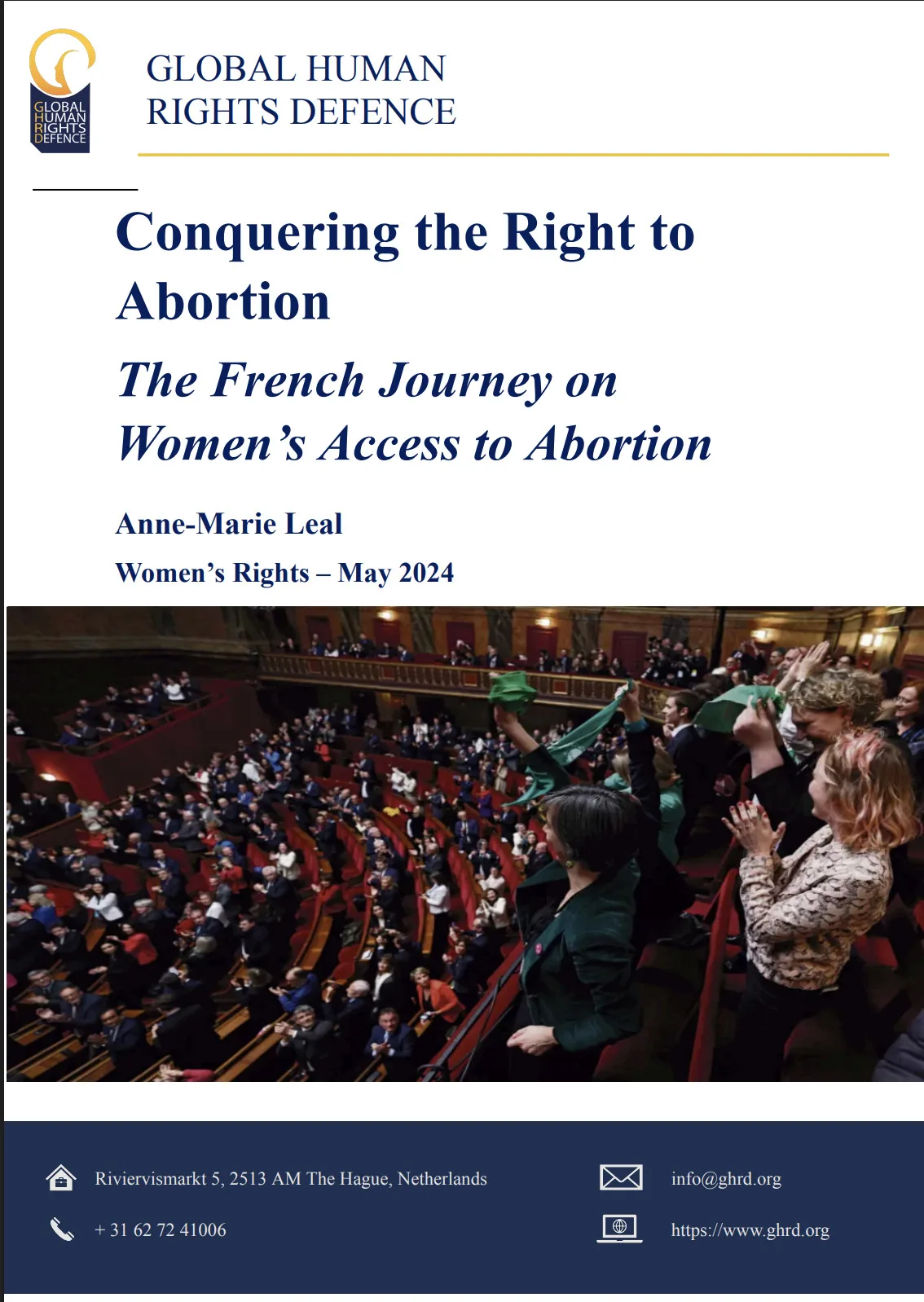
“Never forget that it only takes a political, economic, or religious crisis for
women’s rights to be called into question. These rights can never be taken for granted.
You must remain vigilant throughout your life” (de Beauvoir, 1949).
This famous French quote from Simone de Beauvoir from 1949 still resonates
strongly with feminist activist movements today. Unfortunately, even though de Beauvoir is a
feminist figure of the previous century, her powerful words remain relevant in today’s society
to drive the fight for women’s rights.
- GHRD Team
- 24 April 2024
In October 2023, the UN Special Rapporteur on violence against women denounced a
“global epidemic of femicide” (OHCR, October 2023). On September 20th, 2022, Mahsa
Alimi was murdered by the Iranian Regime. Poland enforced a near-total ban on abortion in
January 2021 and the American Supreme Court overturned Roe vs Wade in June 2022 while
Afghan women have been unwaveringly disappearing from public life since August 2021.
Setbacks and retrogression of women’s rights are not solely issues confined to outside Europe
but a pressing challenge to be tackled by all European nations.
- GHRD Team
- 17 April 2024
This report will examine the various challenges and obstacles encountered by women
who pursue justice. Access to justice is not only a fundamental human right, but also a
mechanism for the realisation of other human rights. According to the United Nations
Development Program (UNDP), access to justice encompasses “the ability of people to seek
and obtain remedy through formal or informal institutions of justice, and in conformity with
human rights standards” (UN Women et al. 2018, p. 17). Additionally, the United Nations
considers justice as “an ideal of accountability and fairness in the protection and vindication
of rights and the prevention and punishment of wrongs” and emphasises that fostering the
rule of law and ensuring access to justice are essential for sustaining peace (UN Women et al.
2018, p. 17).
- GHRD Team
- 12 April 2024
India is a diverse and expansive country, structured as a union of states, and operating under a sovereign, secular, and democratic republic, with a parliamentary system of government. At its helm, the President serves as the constitutional head of the executive of the Union elected by both houses of Parliament for a five-year term, while the governors act as the President’s representatives in the states, mirroring the Union’s executive structure. The nation comprises 28 states and 8 Union Territories (UT), with each Union Territory being administered directly by the President through appointed administrators. This intricate quasi-federal administrative setup reflects the country’s unique demographics, histories, cultures, languages, attire, and festivals. Understanding the geographic and cultural diversity of India is crucial, as it significantly influences the electoral processes and their outcomes, shaping the political landscape and governance of each state and UT.