
Reports

- GHRD Team
- 7 June 2023
Women Human Rights Defenders (WHRDs) play a fundamental role in the promotion of human rights
worldwide, and their importance is particularly demonstrated in advocating for specific rights, such
as women’s rights, gender equality, and sexual and reproductive rights. Nonetheless, WHRDs face
several challenges; besides the issues common to Human Rights Defenders (HRDs), including verbal
and physical attacks, threats, torture, forced disappearances, murder, and arbitrary detentions, WHRDs
are faced with additional obstacles, such as gender-based violence.
Against this backdrop, the present report will be divided into two main parts. Firstly, it will identify
and explain the challenges and violations faced by WHRDs, and how they differ from the violations
faced by HRDs generally. In the second chapter, the report addresses the forms of protection available
in international law for WHRDs, and lastly, based on the analysis conducted, the report provides
recommendations with the intent of ensuring that WHRDs can carry out their work safely and effectively.
- GHRD Team
- 7 June 2023
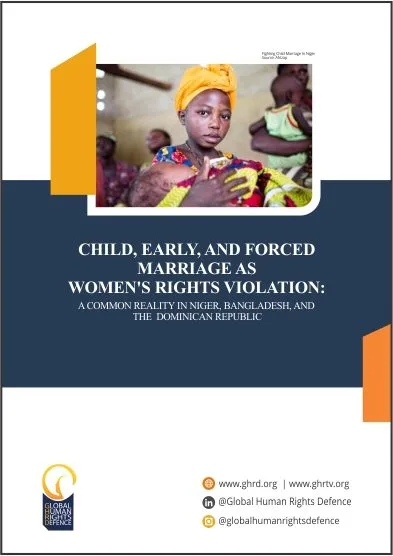
Achieving gender equality among girls and women around the world is a priority, yet an ambitious
goal that is far from being achieved by the year 2030. Among the numerous violations and gender-
based violence experienced is Child, Early, and Forced Marriage (CEFM), a fundamental violation of
human rights that has profound implications for the development, safety, and well-being of women
and girls around the world. It is estimated that the total number of girls married in childhood stands at
12 million per year (UNICEF, 2022), and while girls are disproportionately affected, boys can also be
victims.
CEFM is intrinsically related to social norms and gender constructions, and it is caused by a range of
factors, such as poverty and a lack of education, and is exacerbated by conflict, humanitarian crises,
and climate change. However, its prevalence is substantially varied across different contexts, regions,
and countries. On a global scale, today, more than half a billion women and girls were married in
childhood. Sub-Saharan Africa and South Asia have the highest rates of child marriage, and in Latin
America and the Caribbean, the levels are equivalent to those from 25 years ago (UNICEF, 2021/b).
The present report aimed to research and analyse the country with the worst data regarding child
marriage in each of the above-mentioned regions. According to the “Child Marriage Atlas” of the NGO
Girls Not Brides, in Niger, located in Sub-Saharan Africa, 76 percent of women aged 20–24 were first
married or in a union before they were 18 years old, making Niger the country with the highest rate of
child marriage in the world. In Bangladesh, located in South Asia, child marriage rate is 51 percent,
the highest in the region. Finally, the Dominican Republic, in Latin America and the Caribbean, has 36
percent (Girls Not Brides n.d/d).
The current report intends to provide an in-depth review of forced marriage and its causes, consequences,
and prevalence worldwide, seeking to inform and raise awareness about the seriousness of the issue.
Thus, it is organised around two main chapters. Chapter 1 aims to address the problem of forced
marriage through its definition, international mechanisms, and national legislation. It will then move
to an examination of the causes and consequences of CEFM.
Chapter 2 will provide a comprehensive overview of Niger, Bangladesh, and the Dominican Republic.
The countries’ cases will be analysed in terms of the prevalence of the issue in the country, its causes,
consequences, and challenges, and finally, what efforts and actions, in terms of policies and projects,
are taken by the country’s government to combat and eradicate CEFM.
- GHRD Team
- 7 June 2023
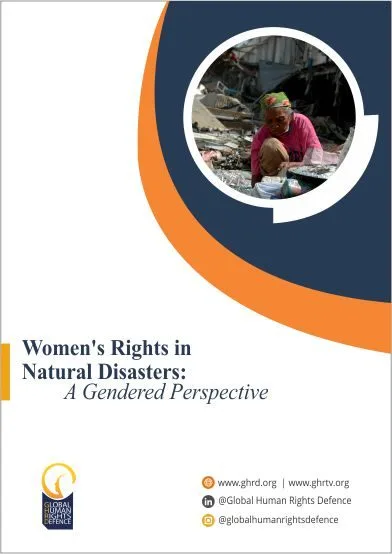
Natural disasters affect all members of society, however, it is a misconception that their impacts are
indiscriminate. Groups of people who are marginalised are more vulnerable, either socially, economically,
culturally, politically, or institutionally, being impacted in more severe ways (Dagousset, 2020). Among
these vulnerabilities, it is widely observed that natural disasters possess huge gendered consequences.
- GHRD Team
- 7 June 2023
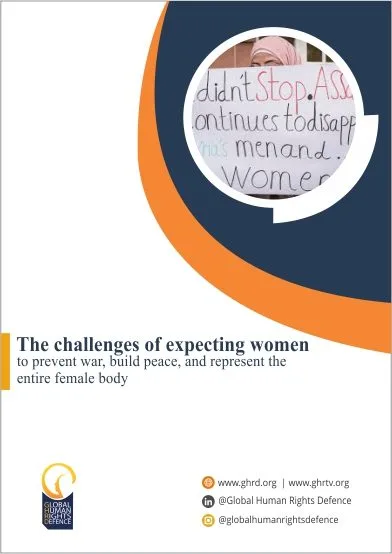
The principle of equality was enshrined in Article 1 of the Charter of the United Nations in 1945.
The terms of reference of the United Nations Commission on the Status of Women, formulated at its
first session in 1947, emphasised that its task was to “prepare recommendations and reports for the
advancement of women’s rights in the political, economic, social and educational fields.” One of the first
results of the Commission’s work was the 1952 Convention on the Political Rights of Women, which
explicitly states that women “shall be admitted, on equal terms with men and without discrimination
of any kind, to all public elections established by national law” (Article 2) and “shall have the right to
hold public office and to exercise all public functions established by national law” (Article 3). Women
today have the right to vote and hold office in almost every country in the world. However, relatively
few women have been elected to national parliaments through the democratic process, and even fewer
have reached top positions (Gierycz, 1999), although various analyses have shown the positive impact
of women’s participation in decision making processes regarding conflict prevention and resolution.
- GHRD Team
- 7 April 2023
The 1951 UN Refugee Convention, the first international legal document relating to asylum and
migration, provides for a definition of what a refugee ought to be. Interestingly enough, this definition
is defined in the masculine as a person who, “owing to well-founded fear of being persecuted for
reasons of race, religion, nationality, membership of a particular social group or political opinion, is
outside the country of his nationality and is unable or, owing to such fear, is unwilling to avail himself
of the protection of that country; or who, not having a nationality and being outside the country of
his former habitual residence as a result of such events, is unable or, owing to such fear, is unwilling
to return to it.”1
While the inclusion of the term ‘sex’ was discussed in the list of grounds for non-
discrimination in Article 3 of the Convention, the delegates decided against it as, like pointed out by
the British delegate at the time, “the equality of the sexes was a matter for national legislation”2
and the
inclusion of gender might not coincide with national legislations.3 This was further underlined by the
UN High Commissioner for Refugee at the time, Van Heuven Goedhart, who pointed that the inclusion
of sex/gender in the discriminatory grounds was not necessarily as he “doubted strongly whether there
would be any cases of persecution on account of sex”.4
This absence of gender approach in the asylum framework was a large miscalculation on the part of the
delegates as it has been largely shown since that women and girls face disproportionate struggles
in seeking asylum. However, the mention of the specific struggle faced by women and girls in refugee
settings was only brought up decades later thanks to the work of NGOs and academics in the late
1980s, early 1990s.5
They pointed out that, although no one argued that women could be refugees, the
definition was applied in a way that ignored some of the persecution faced by women. Spijkerboer
notes for instance the common rejection of sexual violence as a ground for persecution as it was
defined as a private act. Similarly, issues of gender discrimination, even if brought up a level of harm
severe enough to amount to persecution in the sense of the Convention, were often just sent back as an
issue of national sovereignty.6
This grassroot work allowed for a change of perspective at the UN level,
focusing the 1995 UNHCR’s calendar on refugee women which led to the organization of multiple
conferences on the topic as well as the publication of conclusions7
and guidelines8
. The European
Asylum system, in copying the UN’s asylum policies down the line added the mention of gender and
gender sensitive language to its documents, particularly the Qualification Directive which define the
grounds receivable for asylum to be granted. Through the work of UN Women and CEDAW9
, the UN
has also now caught up on the inclusion of women and girls as a particular social group and of gender
as a ground for persecution.10 However, there is still immense work to be done in reporting, defining
and effectively responding to the harm faced by refugee women and girls around the globe.
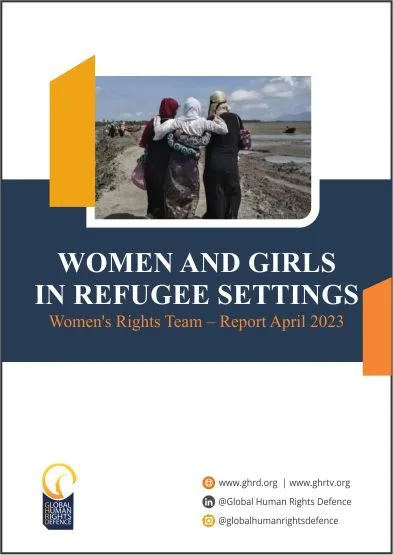
It is in this context that this report will dwell into the gender specific harm suffered by women and girls
in refugee settings. To do so, it will follow the chronological journey of asylum seekers, highlighting at
every step of this process the gender specific hardships. In this sense, it will first look at (1) the causes
of flight and displacement , before looking at (2) the experience of the refugee journey for women and
girls, (3) the reception conditions and the life of women and girls in refugee camps. Finally, it will
highlight (4) the particular obstacles that LGBTQIA+ women have to overcome in the qualification
process.
- GHRD Team
- 4 April 2023
This article will provide a summary and analysis of the judgment, diving into the arguments of the
German government subsequently supported by the Court, as well as exposing the weaknesses of the
decision and its argumentation.
- Europe Team
- 23 March 2023
The present report explores the role of women in the working environment, focusing on academia and research, the role of women in leading positions, gender pay-gaps, and on maternity rights. Women play a role in the world economy and in the geopolitical system primarily as undervalued labourers — domestic workers, diplomats’ and politicians’ wives, and agricultural workers. It is important to underline that women represent half of the world population, and it is a lost opportunity to not fully
draw upon the talents and capacities of half of humanity.
The present report is divided into four different sections. The first section explores the gender gap in academia and research, emphasising how, despite the increased presence of women in the academia over the years, women still face significant levels of discrimination. The section continues exploring the gap between men and women in higher positions in academia, initiatives by the European Union (EU) to eliminate this disparity, and the discrimination that women face in higher education institutions.
Next, the report proceeds with the second section, where the realities of gender pay gaps are discussed alongside the factors contributing to the gender pay gap in Europe, its impact on women, and the actions taken to address this issue. Research shows that the gender pay gap is influenced by a number of factors, including occupational segregation, discrimination, and women’s disproportionate responsibility for caregiving. In fact, this “duty” is very important when it comes to maternity rights, which is the focus of the third section. While some countries in Europe regulate parental leave without distinguishing entitlements allocated to mothers or fathers, most states offer different regimes based on the parent’s , with paternity leave schemes only having been introduced in recent years, sometimes still considered as a taboo. This is resulting in the choice of part-time —and therefore lower-paying— jobs for women. Finally, the fourth section sheds light on media discrimination against women and the
impact of the COVID-19 pandemic on women’s opportunities to advance in their professional careers. In its final part, this unit discusses key events and initiatives adopted on the European stage aimed at boosting women’s access to leadership roles and their empowerment.
- GHRD Team
- 8 March 2023
International Women’s Day is celebrated annually on the 8th of March. This report explains why it
still remains important for us to celebrate this day, as a day to recognise the achievements women have
made to our societies in a patriarchal world.
- GHRD Team
- 7 February 2023
The state of women’s rights in the Republic of Iran has been the subject of national sorrow and
international scrutiny for the past decades, accelerated ever since the 1979 Islamic Revolution. But
the current “Woman. Life. Freedom” movement has gained momentum in unprecedented ways, as
the revolutionary and brave calls of women against restrictive policies have gained more international
attention than ever before. This report covers the significance of the current demonstrations by first
focusing on the historical context of women’s rights in Iran and how various factors have contributed
to their strengthening in some situations and their weakening in others.
- GHRD Team
- 28 December 2022
This report collects information from various (local and international) organisations and media resources in order to present the situation of religious minorities and marginalised groups in the Philippines. In September 2022, the human rights of Indigenous groups, children, ethnic minorities, religious minorities, and women were affected. The present report intends to raise awareness on the situation of these groups in the Philippines and to encourage further protection measures on local and national levels as well as international cooperation.